
For centuries, the Canaanites have existed on the edge of myth and memory — a people mentioned in the Old Testament, feared and fabled, said to have been destroyed as Israelite tribes rose to power.
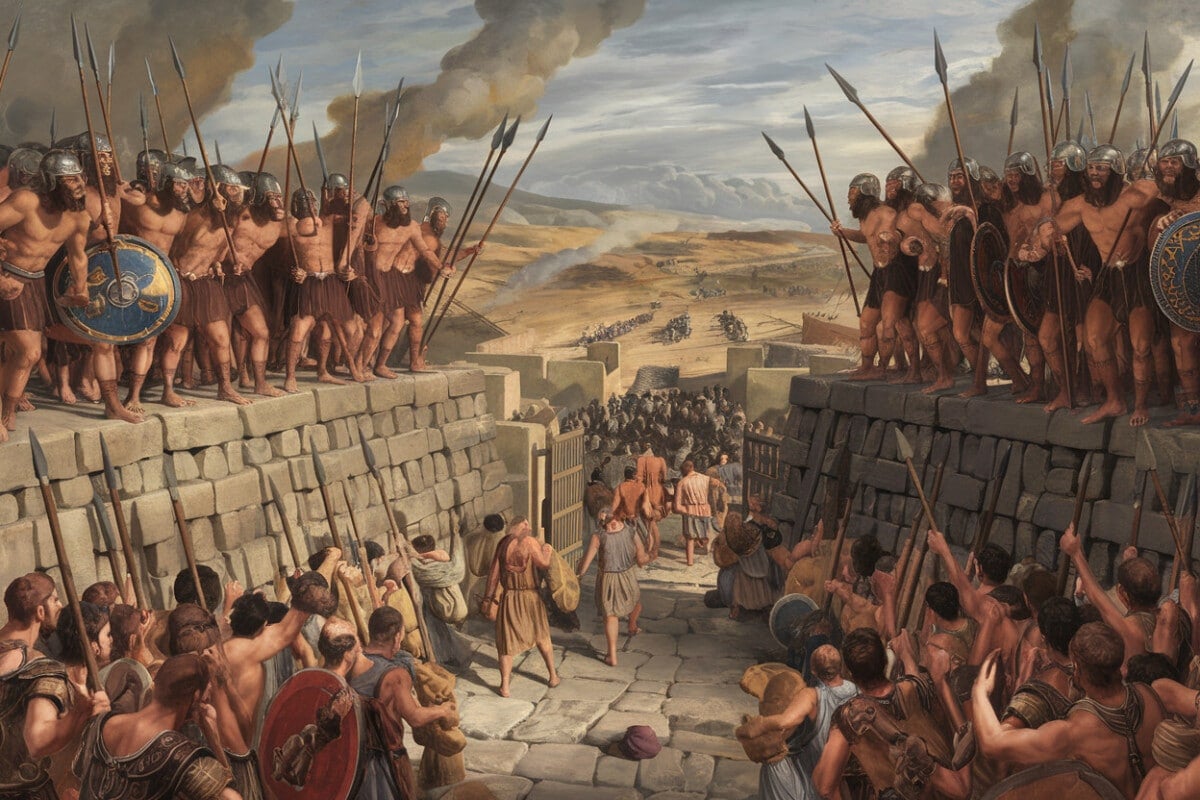
According to scripture, they were wiped from history. But now, science tells a different story.
In 2017, archaeologists excavating a 3,700-year-old burial site in Sidon, Lebanon, uncovered a secret the earth had been keeping for millennia: preserved human remains that still contained viable ancient DNA.
What that DNA revealed shook historians, theologians, and geneticists alike. The so-called “lost” Canaanites were never truly lost — they are still here, living in the bloodlines of modern-day Lebanese people.
The Discovery Beneath Sidon
The city of Sidon, one of the oldest continuously inhabited places on Earth, sits along Lebanon’s Mediterranean coast. For thousands of years, its stone streets and sea-swept cliffs have witnessed the rise and fall of empires — Egyptian, Assyrian, Babylonian, Persian, and Greek.
But beneath Sidon’s modern skyline lies an older world — one that dates back to the Bronze Age.

During a routine excavation led by the British Museum and the Directorate General of Antiquities in Lebanon, archaeologists unearthed a cluster of tombs filled with remarkably well-preserved skeletons. The burial goods — pottery, jewelry, and weapons — identified the site as Canaanite, dating between 1800 and 1550 BCE.
At first, the team expected little more than artifacts. But inside those bones lay an unprecedented scientific opportunity: a genetic time capsule from the world of the Bible.
Using next-generation sequencing technology, scientists at the Wellcome Sanger Institute in the U.K. extracted and mapped the genomes from five Canaanite individuals. The data was then compared with the DNA of 99 modern Lebanese volunteers.
The result was extraordinary.
Over 90 percent of the modern Lebanese genetic profile matched that of these ancient Canaanites.
In other words, the Canaanites — long thought to be annihilated or displaced — were never truly gone. Their descendants had simply adapted, intermarried, and endured through centuries of conquest and cultural transformation.
“This was a continuous population,” said Dr. Marc Haber, a geneticist and lead researcher on the project. “Despite invasions, despite empire after empire, the core ancestry of the people in Lebanon today remains deeply Canaanite.”
The Empire That Never Died

The findings challenge not only long-held religious interpretations but also historical assumptions. The Bible portrays the Canaanites as enemies to be eradicated — their cities destroyed, their culture erased.
Yet the genetic record tells another story: the Canaanites’ lineage survived every invasion. When the Israelites, Assyrians, and Persians came and went, the Canaanite bloodline remained.
Their civilization evolved into the Phoenicians, the great seafarers and traders of the Mediterranean, whose language and alphabet helped shape Western civilization. From Phoenicia rose the ancient city-states of Tyre, Byblos, and Sidon — centers of trade, culture, and innovation.
The people changed names. The culture adapted. But the DNA — the core of who they were — remained unbroken.
The discovery reignited debates among theologians and historians alike.
Was the Biblical “destruction” of the Canaanites a metaphor — or an incomplete story?
Some scholars suggest that the Biblical accounts were written centuries after the events, during periods when the Israelites were defining their own national identity. The Canaanites, as neighbors and rivals, became symbols of what Israel was not.
Now, with genetic evidence in hand, modern science offers a counterpoint: while kingdoms may rise and religions may rewrite, genetic memory never lies.
“It’s a remarkable intersection of history and identity,” says Dr. Habib Abi Saad, an archaeologist at the American University of Beirut. “The people who walk the streets of Lebanon today share the same genetic heritage as those who built the walls of ancient Sidon. The Canaanites never vanished — they simply became us.”
A Bridge Between Past and Present

Beyond theology and genetics, this discovery is deeply human.
The Canaanites — farmers, merchants, sailors — once traded cedar, glass, and purple dye across the ancient world. Their language influenced Hebrew, Aramaic, and Arabic. Their symbols appear in art from Egypt to Greece.
And now, 3,700 years later, we know that their legacy isn’t just written in stone or scripture — it’s written in DNA, carried silently through the generations.
Modern Lebanon, despite its modern challenges, stands as living proof of an ancient continuity that defied time, war, and myth.
From myth to molecule, the story of the Canaanites is one of survival.
The discovery beneath Sidon did more than uncover bones — it uncovered a lineage, a bridge between the world of the Bible and the people of today.
They were never wiped from the earth.
They were never lost.
They are the unbroken thread connecting ancient civilization to modern identity — proof that sometimes, science doesn’t erase faith; it illuminates it.
News

🐹 At 62, Julian Lennon Admits “I Utterly Hated Her”
Julian Lennon was born into a world that already belonged to someone else — a world consumed by Beatlemania and…

🐹 Top 6 Actors Ron Howard Hated the Most – You Won’t Believe Who’s!
Hollywood has spent decades painting Ron Howard as the industry’s gentle soul — the calm director, the childhood icon, the…
🐹 Photo from 1961: A Maid Poses Behind the Family… But Her Fate Was Very Different
In the dusty boxes of an estate sale in Veracruz, a single photograph was discovered wedged between yellowed newspapers from…

🐹 What They Found In Gene Hackman’s Mansion Will Leave You Sh*cked
Police Photos Taken Inside Gene Hackman and Betsy Arakawa’s $4 Million Home Show It Filled With Clutter and Garbage. Santa…

🐹 The Top 7 Actors Harrison Ford Refused To Forgive
Hollywood loves its legends quiet, polished, and polite. But Harrison Ford was never built for that kind of performance. Behind…

🐹 US forces kill 3 narco-terrorists in Eastern Pacific lethal strike operation targeting drug networks
U.S. forces carried out a lethal strike Saturday on a narcotics vessel operated by a designated terrorist organization in the…
End of content
No more pages to load






