
Abilene, Kansas. 1882.

The night the men tried to buy her, the sky above Abilene burned low and red, the color of old whiskey and sin. The Silver Mare Saloon was half-empty—just a haze of pipe smoke, a crooked piano tune, and laughter that had too much meanness in it.
Clara Boone stood behind the bar, wiping glasses clean though no one noticed. She was eighteen, tall and rawboned, with auburn hair that always fell out of its braid, and eyes too sharp for a girl who’d never left the plains.
Her mama, Elsie Boone, worked upstairs—what the men called “company.” She wasn’t cruel, but life had carved the softness right out of her. Folks said her daughter would follow in her steps one day, because that’s what blood did: it flowed downhill, toward the same kind of dirt.
But that night, Clara changed the flow.
The Offer
They came in near midnight—three cowboys with trail dust on their boots and rotgut courage in their veins. The leader, a man named Chet Duggan, slammed a handful of coins on the table and called for whiskey. When he saw Clara, he grinned.
“Pretty thing for a place like this,” he said, voice thick with liquor. “What’s your price, girl?”
Clara stiffened. “Ain’t for sale.”
The second cowboy laughed, a mean sound. “He ain’t talkin’ to you. We’ll make our deal with your ma. Everyone’s got a price.”
Elsie appeared at the top of the stairs, shawl pulled tight, eyes glassy but clear enough to know trouble. Chet turned toward her, slapping another coin onto the wood.
“Half an ounce o’ gold,” he said. “For the girl.”
The saloon went still. Even the piano player stopped mid-note.
Elsie’s voice came soft, trembling. “You take your gold and ride on.”
But Chet just smiled wider. “You’ve been sellin’ what you got your whole life, woman. Don’t act holy now.”
Clara’s hand found the neck of a bottle. “I said—” she began, but Chet reached for her arm.
The bottle cracked clean across his jaw, sending him sprawling. The second man lunged and got a fistful of her hair, but Elsie swung a poker and drove him back, screaming. The third cowboy drew a knife but didn’t use it—just stared at the girl standing there, blood and glass glittering at her feet. Something in her eyes—wild, unbroken—made him hesitate.
By dawn, the men were gone. Chet’s jaw hung crooked, his pride left in the sawdust. The sheriff, who drank there often, called it “a misunderstanding.”
But Clara knew better.
Before the sun climbed high, she packed a satchel with what little they owned: her mother’s shawl, a comb, and a Bible missing half its pages. Then she and Elsie walked east out of Abilene, the prairie wind at their backs.
The Road
They lived rough—first in a church stable, then in a wagon camp by the Smoky Hill River. Clara mended clothes for travelers, her needle moving steady through torn fabric and quiet grief.
Her mother’s cough worsened as the nights grew cold. Sometimes Clara woke to find her shivering beside the dying fire, lips blue.
“Don’t you worry, Mama,” Clara whispered. “We’re headed somewhere better.”
But the road was long, and heaven always a mile farther than they could walk.
In the spring of ’83, Elsie passed away beneath a cottonwood tree outside Hays City. Clara buried her with the shawl wrapped tight and the Bible in her hands. She marked the grave with stones and sang a hymn she half-remembered.
Then she turned toward Dodge City, because there was nowhere else left to go.
The Boardinghouse on Front Street
By 1889, the name Clara Boone was known up and down the Santa Fe line. Folks said she ran the cleanest boardinghouse in Dodge—three rooms, two rules: No whiskey under her roof, and no man lays a hand on a woman.
She took in girls no one else wanted—the orphaned, the shamed, the lost. They worked for food and safety, not favors.
“Miss Boone,” they called her. Strict but fair.
She never married. Men tried—some honest, some not—but she kept her heart like a locked chest.
Sometimes, when a drunken ranch hand would stumble in and sneer, “What’s a woman like you doing in charge?” she’d just look at him long and cold until he found the door himself.
There was one story folks whispered late at night. A rancher from Abilene came through once, gray-haired and limping. Said his jaw still clicked when it rained. He didn’t stay long. Word spread that Miss Boone ran him clean out of town.
The Letter
One winter morning in 1901, a letter arrived from a young woman in Wichita—a former boarder named Maggie Holt.
It read: Dear Miss Boone,
You once told me a girl’s worth ain’t written in her blood but in her backbone. I never forgot that. I’m married now, with a daughter of my own. I named her Clara.
The letter was folded neat, ink faded by the time Clara read it. She sat by the fire for a long while, staring at the words.
Then she smiled—small, tired, proud.
Outside, snow drifted soft against the windows. Inside, the fire burned low but steady.
When Clara Boone died in 1912, the whole town turned out for her funeral. The preacher said she’d “walked through hell and built a home on the ashes.”
The girls she’d sheltered stood in a row behind her casket, each holding a single white flower.
No family came forward. No blood kin claimed her. But she was far from unloved.
They buried her beside the church she’d helped build, under a marker that read:
CLARA BOONE
1864 – 1912
She refused to be bought.
And for years after, mothers told their daughters her story — of the girl who broke a bottle across the jaw of fate and carved her own name into history.
She was the daughter they tried to buy, the woman who taught others they couldn’t be sold, and the legend who turned dust into dignity.
News

🐹 At 62, Julian Lennon Admits “I Utterly Hated Her”
Julian Lennon was born into a world that already belonged to someone else — a world consumed by Beatlemania and…

🐹 Top 6 Actors Ron Howard Hated the Most – You Won’t Believe Who’s!
Hollywood has spent decades painting Ron Howard as the industry’s gentle soul — the calm director, the childhood icon, the…
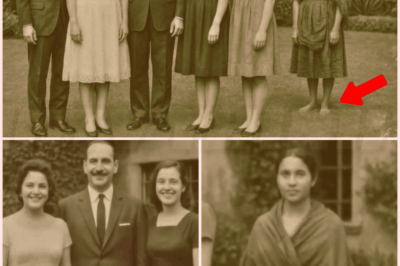
🐹 Photo from 1961: A Maid Poses Behind the Family… But Her Fate Was Very Different
In the dusty boxes of an estate sale in Veracruz, a single photograph was discovered wedged between yellowed newspapers from…

🐹 What They Found In Gene Hackman’s Mansion Will Leave You Sh*cked
Police Photos Taken Inside Gene Hackman and Betsy Arakawa’s $4 Million Home Show It Filled With Clutter and Garbage. Santa…

🐹 The Top 7 Actors Harrison Ford Refused To Forgive
Hollywood loves its legends quiet, polished, and polite. But Harrison Ford was never built for that kind of performance. Behind…

🐹 US forces kill 3 narco-terrorists in Eastern Pacific lethal strike operation targeting drug networks
U.S. forces carried out a lethal strike Saturday on a narcotics vessel operated by a designated terrorist organization in the…
End of content
No more pages to load






