
The small-town street was quiet that Sunday afternoon, shimmering under the heat of the late summer sun. The only sounds were the hum of cicadas and the occasional rumble of engines passing by on their way to the coast.

At the edge of the market square, an old man named Harold Kent shuffled along the sidewalk, balancing a paper bag full of apples in one hand and his cane in the other. The apples were from his backyard tree — small, imperfect, but sweet. He’d brought them into town to give to the kids at the park, just as he did every weekend.
He moved slowly, every step careful, but his eyes were kind and bright. Life had weathered him, yes, but it had not hardened him. He still smiled at strangers and said hello to dogs.
That was when the noise came — the sharp snarl of an engine, sudden and arrogant, slicing through the peaceful air like a blade.
A sleek black motorcycle came tearing around the corner, engine screaming, tires screeching against the asphalt. The rider — a young man in a leather jacket with wild hair and mirrored sunglasses — leaned low, grinning as he sped straight through the quiet square.
People turned, startled. Harold froze halfway across the street.
The biker saw him — but instead of slowing down, he twisted the throttle, laughing. The bike shot past, wind whipping Harold’s coat. The force made him stumble; his cane clattered to the ground. The paper bag tore open, spilling a dozen red apples across the pavement.
The biker circled back once, still laughing. “Watch where you’re going, old man!” he shouted, before gunning the engine again and vanishing down the road in a roar of smoke and sound.
For a long moment, there was silence. Then Harold bent slowly, picking up the bruised apples one by one. His hand trembled, not from anger, but from sadness.
People nearby muttered in disgust, shaking their heads. One young man stepped forward to help, but Harold waved him off gently.
“It’s alright,” he said softly. “They’re just apples.”
Half an hour later, the sound of engines returned — not one this time, but many.
A line of motorcycles rolled into the square, chrome glinting, engines growling low and deep like distant thunder. There were six of them, maybe seven — older riders, leather jackets worn with years, faces marked by sun and life.
At their head was a broad-shouldered man with a silver beard and a calm, steady gaze. He cut the engines, and the others followed. The noise died, leaving only the sound of the cicadas again.
The townsfolk watched nervously. The old man looked up from his bench, an apple still in his hand.
The leader stepped forward, helmet tucked under his arm. “You alright, sir?” he asked, his voice deep but gentle.
Harold nodded. “I’m fine, thank you.”
“We heard what happened,” the biker said. “One of ours, but not one of us. The kid who hit you — he rides with our patch. New recruit. We were coming to find him.”
The others stood silent, their expressions hardening. They looked like men who had seen their share of wrongs — and righted them the hard way.
Harold sighed. “He didn’t hit me. Just my apples.” He smiled faintly, shaking his head. “I think he was trying to show off.”
The leader’s jaw tightened. “We’ll make sure he learns some respect.”
But Harold raised a hand. “No. Don’t.”
The bikers glanced at one another.
“He disrespected you,” the leader said quietly. “And us, by doing it in our colors.”
“I understand,” Harold said. “But… revenge doesn’t fix hearts. It just breaks more of them.”
The man frowned. “You’re just gonna let it go?”
Harold looked down at the apple in his palm — small, bruised, imperfect. He rolled it once between his fingers, then offered it to the biker.
“Here,” he said. “Take this to him.”
The man stared at it. “You want me to give him an apple?”
Harold smiled. “Tell him it’s enough that he understands.”
That night, at the edge of a quiet service station, the reckless biker sat alone beside his motorcycle, smoking and fuming. His friends had found him, told him the old man hadn’t pressed charges — that he’d just gone home.
He didn’t feel guilty — not yet. Just restless. Annoyed that everyone had made such a big deal over nothing.
That’s when he heard the engines.
Seven bikes pulled into the station, headlights cutting through the dusk. His smile faded. He knew those bikes.
The silver-bearded leader dismounted, walked over, and stopped a few feet away.
“Kid,” he said, voice low and controlled. “You know what you did today?”
The young biker shrugged. “Yeah, I scared an old man. Big deal. He’s fine.”
The older man looked at him for a long moment, then reached into his jacket and pulled something out — a single red apple, bruised and dented.
“He said to give you this,” the leader said. “Said, ‘It’s enough that you understand.’”
The kid frowned, taking the apple hesitantly. “What’s that supposed to mean?”
“Means he forgave you,” the leader said. “Before you even asked for it.”
The words hung in the air.
Something shifted in the young man’s chest — a tightness he hadn’t noticed until now. He looked at the apple again, the smudges of dirt, the small brown bruise.
“He forgave me?” he muttered. “After I…”
The older man nodded slowly. “Yeah. And that’s more than you deserve.”
The kid swallowed hard, the bravado gone from his voice. He turned the apple over in his hand again, then set it gently on his seat, as if afraid to drop it.
“I’ll… I’ll go find him,” he said quietly. “I’ll make it right.”
The leader smiled faintly. “Good. But remember something, kid — forgiveness doesn’t mean forgetting. It means you carry the lesson yourself.”
The next morning, Harold was watering his garden when he heard the faint rumble of a single engine approaching. He turned, and there was the young man from the day before — helmet under his arm, head bowed.
Harold said nothing.
The biker walked up, holding a small wooden crate. Inside were apples — shiny, red, perfect ones.
“I’m sorry,” he said, voice trembling. “For what I did. For being an idiot.”
Harold smiled gently. “You brought these for me?”
The young man nodded. “I thought… maybe I could replace the ones I ruined.”
Harold looked down at the crate, then back at him. “These are store-bought.”
The biker blinked, confused. “Yeah. I thought—”
“They’re too perfect,” Harold said with a smile. “Life’s better when it has a few bruises. Means it’s been lived.”
The young man laughed weakly, eyes wet. “You really don’t hate me?”
“No,” Harold said simply. “It’s enough that you understand.”
When the biker rode away that day, he left the crate behind. Harold kept one apple from it — not to eat, but to remind himself that sometimes, the hardest hearts soften not through punishment, but through mercy.
And somewhere down the highway, a young man rode slower, quieter, and maybe a little wiser — the bruised apple still tucked safely in his jacket pocket.
News

🐹 At 62, Julian Lennon Admits “I Utterly Hated Her”
Julian Lennon was born into a world that already belonged to someone else — a world consumed by Beatlemania and…

🐹 Top 6 Actors Ron Howard Hated the Most – You Won’t Believe Who’s!
Hollywood has spent decades painting Ron Howard as the industry’s gentle soul — the calm director, the childhood icon, the…
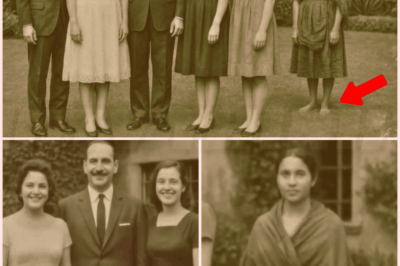
🐹 Photo from 1961: A Maid Poses Behind the Family… But Her Fate Was Very Different
In the dusty boxes of an estate sale in Veracruz, a single photograph was discovered wedged between yellowed newspapers from…

🐹 What They Found In Gene Hackman’s Mansion Will Leave You Sh*cked
Police Photos Taken Inside Gene Hackman and Betsy Arakawa’s $4 Million Home Show It Filled With Clutter and Garbage. Santa…

🐹 The Top 7 Actors Harrison Ford Refused To Forgive
Hollywood loves its legends quiet, polished, and polite. But Harrison Ford was never built for that kind of performance. Behind…

🐹 US forces kill 3 narco-terrorists in Eastern Pacific lethal strike operation targeting drug networks
U.S. forces carried out a lethal strike Saturday on a narcotics vessel operated by a designated terrorist organization in the…
End of content
No more pages to load






