
The story of Bob Backlund is one of the most unusual rises and falls in professional wrestling history.

On February 20, 1978, inside the legendary walls of Madison Square Garden, Backlund defeated “Superstar” Billy Graham to win the WWWF Championship.
What followed was a monumental title reign—2,135 days of pure wrestling excellence, athletic mastery, and unwavering moral conviction.
At a time when the industry was chaotic and changing rapidly, Backlund was a beacon of technical brilliance and old-school respect.
He wasn’t just a champion; he was the steady heartbeat of the company.
But time changes the business, and Backlund simply refused to change with it.
By 1983, Vince McMahon had a new vision for the future of his rapidly expanding empire.
He needed a different kind of hero—someone larger than life, someone colorful, someone who could electrify arenas across the country.
That vision was Hulk Hogan, and the only way to make Hogan the face of the company was for Backlund to step aside and turn heel.
Backlund refused.

He believed in his character’s purity, believed in the values he had represented for years, and would not sacrifice those principles for the sake of spectacle.
McMahon moved forward without him.
Instead of using Backlund directly, he inserted the Iron Sheik as the transitional champion, giving Hogan his iconic launchpad.
Within months, Backlund—a man who had carried the company longer than nearly anyone—was phased out quietly.
He wrestled his final match in August 1984 and then disappeared completely from the mainstream wrestling world.
For eight long years, Bob Backlund was a ghost.
His return in 1992 was supposed to be triumphant, a nostalgic comeback fueled by respect.
Instead, it revealed just how drastically the industry had changed.
The WWF had become a cartoonish spectacle of neon colors, wild gimmicks, and over-the-top personalities.
Backlund, still obsessed with conditioning, morality, and old-school wrestling fundamentals, looked like a man trapped in another era.

Audiences didn’t reject him out of malice—they simply didn’t know what to do with someone who no longer fit the show they were watching.
Years of frustration, alienation, and cultural displacement built up until they finally detonated.
In 1994, Backlund snapped in spectacular fashion, transforming from a wholesome role model into an unstable, unhinged villain.
He locked opponents in the Crossface Chickenwing, refusing to let go, screaming in manic fury about discipline and society’s decay.
The heel turn he had once rejected in 1983 now became his only lifeline to relevance.
Ironically, the moment he abandoned his integrity was the moment he became interesting again.
Against all odds, Backlund won the WWF Championship once more at Survivor Series 1994.
But his second reign was a cruel reflection of how far he had fallen.

Just three days later, at Madison Square Garden—the sacred arena where he once stood atop the world—he lost the title to Diesel in a humiliating eight seconds.
The building that had crowned him a hero now witnessed his swift and brutal downfall.
The bizarre career of Bob Backlund is a cautionary tale about the price of purity in an industry built on reinvention.
His integrity made him a champion, but his refusal to evolve turned him into a relic.
He became a man out of time, trapped between eras, unable to reconcile the wrestler he believed he should be with the entertainer the modern audience demanded.
In the end, Bob Backlund wasn’t defeated by a rival—he was defeated by the business itself.
This is the strange and unforgettable story of how wrestling’s most honest man became one of its most tragic casualties, a living reminder that even the strongest values can crumble when the world around them moves on.
News

🐹 At 62, Julian Lennon Admits “I Utterly Hated Her”
Julian Lennon was born into a world that already belonged to someone else — a world consumed by Beatlemania and…
🐹 Top 6 Actors Ron Howard Hated the Most – You Won’t Believe Who’s!
Hollywood has spent decades painting Ron Howard as the industry’s gentle soul — the calm director, the childhood icon, the…
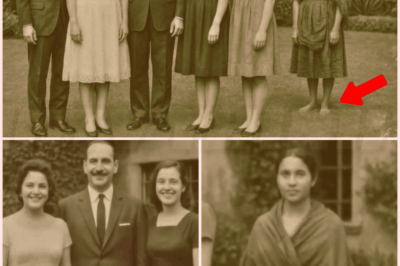
🐹 Photo from 1961: A Maid Poses Behind the Family… But Her Fate Was Very Different
In the dusty boxes of an estate sale in Veracruz, a single photograph was discovered wedged between yellowed newspapers from…

🐹 What They Found In Gene Hackman’s Mansion Will Leave You Sh*cked
Police Photos Taken Inside Gene Hackman and Betsy Arakawa’s $4 Million Home Show It Filled With Clutter and Garbage. Santa…

🐹 The Top 7 Actors Harrison Ford Refused To Forgive
Hollywood loves its legends quiet, polished, and polite. But Harrison Ford was never built for that kind of performance. Behind…

🐹 US forces kill 3 narco-terrorists in Eastern Pacific lethal strike operation targeting drug networks
U.S. forces carried out a lethal strike Saturday on a narcotics vessel operated by a designated terrorist organization in the…
End of content
No more pages to load






