
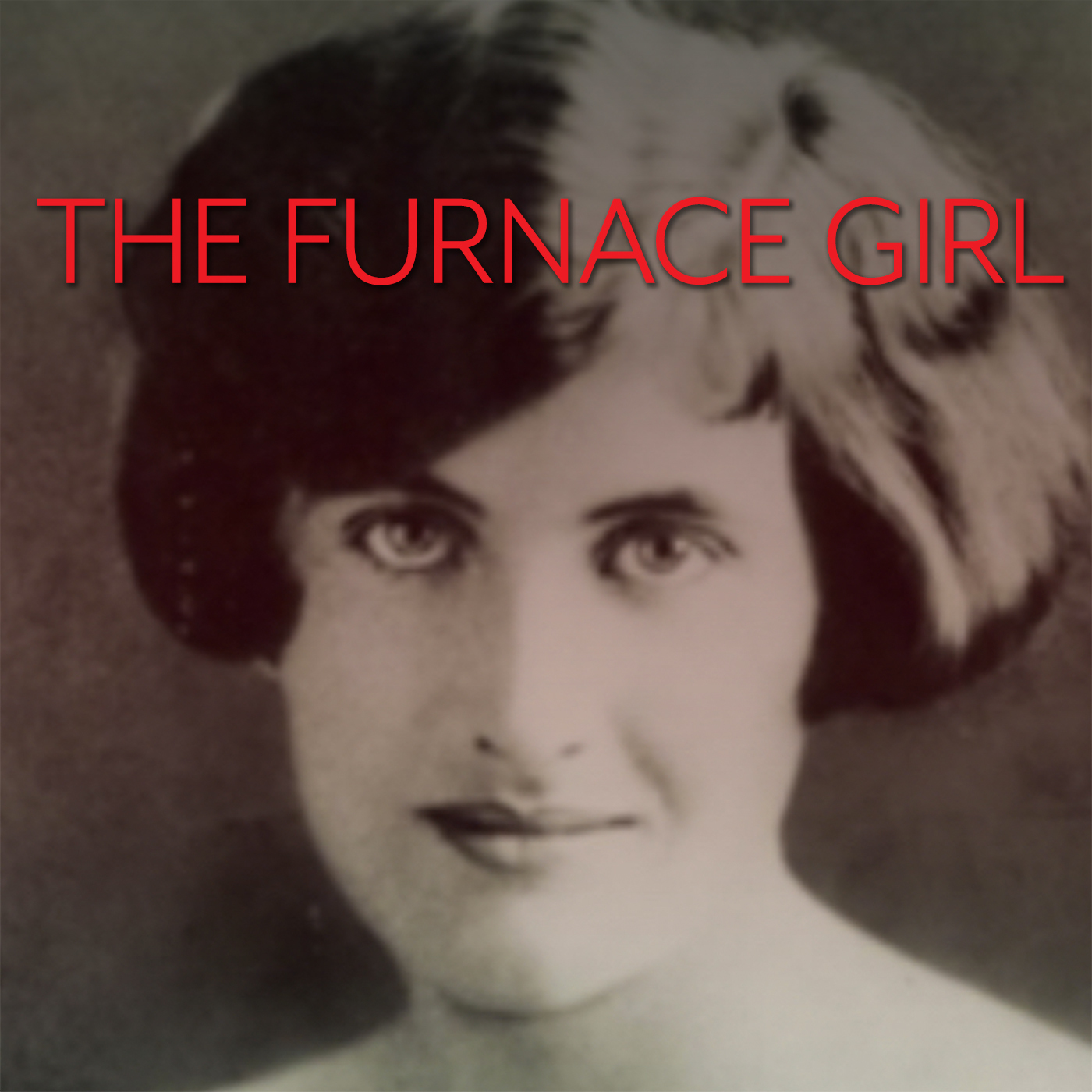
In October 1928, the discovery of 30-year-old Elfrieda Knaak, found severely burned in the basement of the Lake Bluff, Illinois Town Hall, sent shockwaves through the community. Dubbed the “Furnace Girl,” the circumstances surrounding her death remain a mystery.
On October 30, 1928, at approximately 7:30am, Barney Rosenhagen, the 62-year-old chief of police for the small village of Lake Bluff, Illinois, arrived at the multifunctional village hall alongside Chris Louis, a 50-year-old municipal worker. The building, serving as the town hall, police station, and firehouse all rolled into one, greeted them with an unexpected chill. Believing the furnace might be out, Barney sent Chris to the basement to investigate the cause of the cold.
Chris ventured out to the furnace room, reached by an external stairway at the back of the building. Using his keys, he unlocked the chain securing the cellar doors, before pulling them open. Stepping into the small, dim room, a dark shape startled him. Partially upright in the corner, it resembled a human figure cloaked in black. Convinced he’d seen a ghost, Chris bolted back inside and frantically recounted his chilling encounter to Barney.
Suspecting an intruder lurking in the shadows, Barney followed Chris back to the furnace room. He braced himself, but to his surprise, as they entered, the dark figure spoke, uttering, “I’m cold.” Drawing closer, the horrific reality washed over the pair; the figure was a naked woman, her body ravaged by severe burns. Barney wrapped her in a blanket and called for an ambulance.
He shared a harrowing description of the scene with local journalists;
“She was standing naked, leaning against a pipe in front of the furnace. Her forearms were burned black. The hair was burned from her head and her face and her forehead was black with charred flesh, the skull being laid bare at the forehead. Her fingers and toes had burned to cinders. Yet, she was standing.”
The woman, identified as 30-year-old Elfrieda Knaak, hailed from the nearby town of Deerfield. The Knaak family held a prominent position within the community. Elfrieda was one of eleven children born to the late Dr. Theodore Knaak and Elise Knaak. Dr. Knaak, who passed away in 1920, played a pivotal role in Deerfield’s history, serving as the town’s first physician and establishing its first pharmacy.
Elfrieda was discovered in the furnace room, which contained two separate heating units. Although she sustained severe burns, the main furnace was determined not to be the cause. Instead, it was determined she was burned in the second unit; a smaller, gravity-fed water boiler. This unit, approximately four feet tall with an opening measuring roughly nine and three-quarters by twelve and three-quarters inches, served as a water heater for the building.
On the floor in the furnace room detectives found Elfrieda’s watch, shoes, and handbag. Notably absent were her winter coat and most of her clothing, though several metal clasps, possibly from lingerie, were later discovered in the furnace ashes.
Elfrieda sustained third-degree burns across 30 percent of her body. The extreme heat completely incinerated her fingers and toes, and caused such deep tissue damage that her heel bones were left exposed. The most severe burns were located on her head, where it had rested on the boilers hot coals. A burn mark on the back of Elfrieda’s neck, believed to be from the edge of the water boiler, suggested she was face-up when her head entered the small opening.
Elfrieda fought for three grueling days, heavily sedated and teetering on the edge of consciousness. Detectives, desperate for answers, tried to piece together the events through her fragmented words. Unexpectedly, Elfrieda confessed she was the one responsible for her condition, muttering over and over “I did it, it was me.” However, during her semi-conscious ramblings, Elfrieda would repeatedly also utter phrases such as, “Oh Hitch, my Hitch!” and “He pushed me down.” Followed by the question, “Why did they do it?” Sadly on November 2nd, Elfrieda succumbed to her injuries.
Detectives discovered at the time of her death, Elfrieda was employed as a door-to-door encyclopedia salesperson. On October 29 she left her Deerfield home and went to Chicago for a sales conference for work. At 6:30pm the conference ended. Elfrieda phoned home and spoke to her sibling, telling them she would be home around 7. She also added she picked up some new sheet music for the family to play that evening. Elfrieda took a train in Highland Park to the Deerpark train station only to find the bus she would normally take home was broke down. Instead, she purchased a bus ticket to Lake Bluff. She got off at the Village Hall stop. After that, her movements are unknown.
Detectives also learned that in order to help enhance her speaking abilities, Elfrieda had taken a speech class ran by Lake Bluff resident, 45-year-old Charles “Hitch” Hitchcock. In addition to his role as a speech instructor, Charles was also employed as an actor, having even shared the stage with Charlie Chaplin. Furthermore, his contributions to the community extended to serving as both the town watchman and police radio operator. Notably, he resided only two blocks from the town hall and was scheduled for duty on the night of October 29th.
Theorizing the pair may have been involved in an ill-fated love affair, Charles was questioned at his Lake Bluff home. However, the married, father of four, denied having any kind of personal relationship with Elfrieda. According to him, she had been nothing more than a student to him. He also presented police with an alibi, he had been laid up in a cast for days after a recent ankle injury. A local physician confirmed that he had treated Charles for a broken ankle a week prior.
While Charles’ wife, Estelle, denied he was responsible for Elfrieda’s death, she was unable to account for her husband’s whereabouts on the night in question. During a police interview, she explained she had been working as a bookkeeper for a music store in Highland Park that night. According to her, Charles was asleep upon her return home.
Detectives broadened their investigation and began interviewing anyone who may have had a link to Elfrieda. Among them was a violin instructor who shared Charles’ studio space for his lessons. Another was a known “spiritualist” who had visited Elfrieda in the hospital. However after finding no incriminating evidence, they began to question their initial assumption of a male perpetrator.
Among Elfrieda’s belongings, detectives discovered letters from a “B. Lock,” which were traced to a Mrs. Roch from Libertyville. One letter said in part;
“Not once did I think of being anything beyond being a friend until the third time you came and the way you looked at me. Then the next time you came you mastered me more than ever.”
Mrs. Roch was questioned, however she denied their relationship was based on anything more than a mutual interest in spiritualism. Additionally, a second woman, Marie Mueller, Elfrieda’s best friend who admitted to harboring romantic feelings for Charles, was also interviewed. Again, police found no evidence connecting the friend to the crime.
With no other known suspects, detectives focused their investigation on the theory that Elfrieda had been the one responsible for her own demise. A search of her Deerfield home revealed a clue that would suggest suicide; on a bookshelf was a book titled “Christ in You.” Inside was an underlined passage that read, “As you unfold in the consciousness of God many inexplicable things become clear. One is the purifying power of pain. This is the process called The Refiner’s Fire.”
Elfrieda’s death was eventually classified as a suicide, however, several inconsistencies prompted the Knakk Family to continue to pursue alternative theories. Aside from her unusual injuries, one other such discrepancy involved the presence of unidentified bloodstains on both the front and back of the door leading to the furnace room. Additionally, upon entering the room, Chris had discovered it locked and had to use a key that very few had access to. A private investigator was tasked with working the case.
Dr. Arthur Rissenger, the physician who had overseen Elfrieda’s care while she was in the hospital, suspected foul play. He told the Knakk’s private investigator:
“To believe her story you would have to believe these facts; that she placed her right foot in the furnace and kept it there for several minutes. Then that she stood on the burned foot and put the other one in the fire after which, standing on the two injured feet, she thrust her head and arms into the fire, upside down. The pain would have been excruciating.”
Unfortunately, despite their suspicions, the Knaak’s private investigator was unable to uncover any definitive evidence to alter Elfrieda’s official cause of death.
In the months following her death, numerous individuals falsely confessed to being responsible for taking Elfrieda’s life. These included a chauffeur for a wealthy family, a self-proclaimed occultist, and a man claiming to be an Egyptian hypnotist. Each confession was ultimately proven to be untrue.
Fourteen years after Elfrieda’s murder, her closest friend, Marie, married Charles. After Charles’ passing in 1964, Marie’s niece revealed that Marie had confessed to a romantic involvement between herself, Elfrieda, and Charles. Marie also claimed to have knowledge of Elfrieda’s demise, but refused to share the details. Nevertheless, these claims remain unsubstantiated.
In the 1980’s it was discovered a substantial amount of crucial evidence in the case had mysteriously disappeared after the death of Barney Rosenhagen’s successor, Chief Eugene Spade. This included the official coroner’s report, autopsy photos, and the items collected from the furnace room. The whereabouts of the missing evidence remains unknown.
Sadly, what really happened to Elfrieda Knaak will most likely forever remain mystery.
News

🐹 At 62, Julian Lennon Admits “I Utterly Hated Her”
Julian Lennon was born into a world that already belonged to someone else — a world consumed by Beatlemania and…

🐹 Top 6 Actors Ron Howard Hated the Most – You Won’t Believe Who’s!
Hollywood has spent decades painting Ron Howard as the industry’s gentle soul — the calm director, the childhood icon, the…
🐹 Photo from 1961: A Maid Poses Behind the Family… But Her Fate Was Very Different
In the dusty boxes of an estate sale in Veracruz, a single photograph was discovered wedged between yellowed newspapers from…

🐹 What They Found In Gene Hackman’s Mansion Will Leave You Sh*cked
Police Photos Taken Inside Gene Hackman and Betsy Arakawa’s $4 Million Home Show It Filled With Clutter and Garbage. Santa…

🐹 The Top 7 Actors Harrison Ford Refused To Forgive
Hollywood loves its legends quiet, polished, and polite. But Harrison Ford was never built for that kind of performance. Behind…

🐹 US forces kill 3 narco-terrorists in Eastern Pacific lethal strike operation targeting drug networks
U.S. forces carried out a lethal strike Saturday on a narcotics vessel operated by a designated terrorist organization in the…
End of content
No more pages to load






