
The Discovery of 3I/ATLAS: A Unique Interstellar Comet
Introduction
The recent discovery of the interstellar object 3I/ATLAS has captured the attention of scientists and space enthusiasts alike.
This object, which has been described as having a one-in-a-million chance of being a natural comet, presents fascinating characteristics that challenge our understanding of celestial bodies.
As researchers delve deeper into its properties, they are uncovering details that could reshape our knowledge of comets and interstellar phenomena.

The Nature of 3I/ATLAS
3I/ATLAS has been observed displaying remarkable features, including jets of material shooting out from its surface.
These jets indicate that the object is actively shedding material, a behavior typically associated with comets.
Recent images have revealed a strange tail alongside a smaller anti-tail, further supporting the classification of 3I/ATLAS as a comet.
Avi Loeb, a prominent astrophysicist, estimates that this object has a mass of tens of billions of tons, which is significantly larger than the well-known interstellar object 1I/ʻOumuamua.
The size and activity of 3I/ATLAS raise intriguing questions about its origin and the processes that govern its behavior.
Comparison with Other Interstellar Objects
Comparing 3I/ATLAS to previous interstellar objects like 1I/ʻOumuamua provides valuable insights.
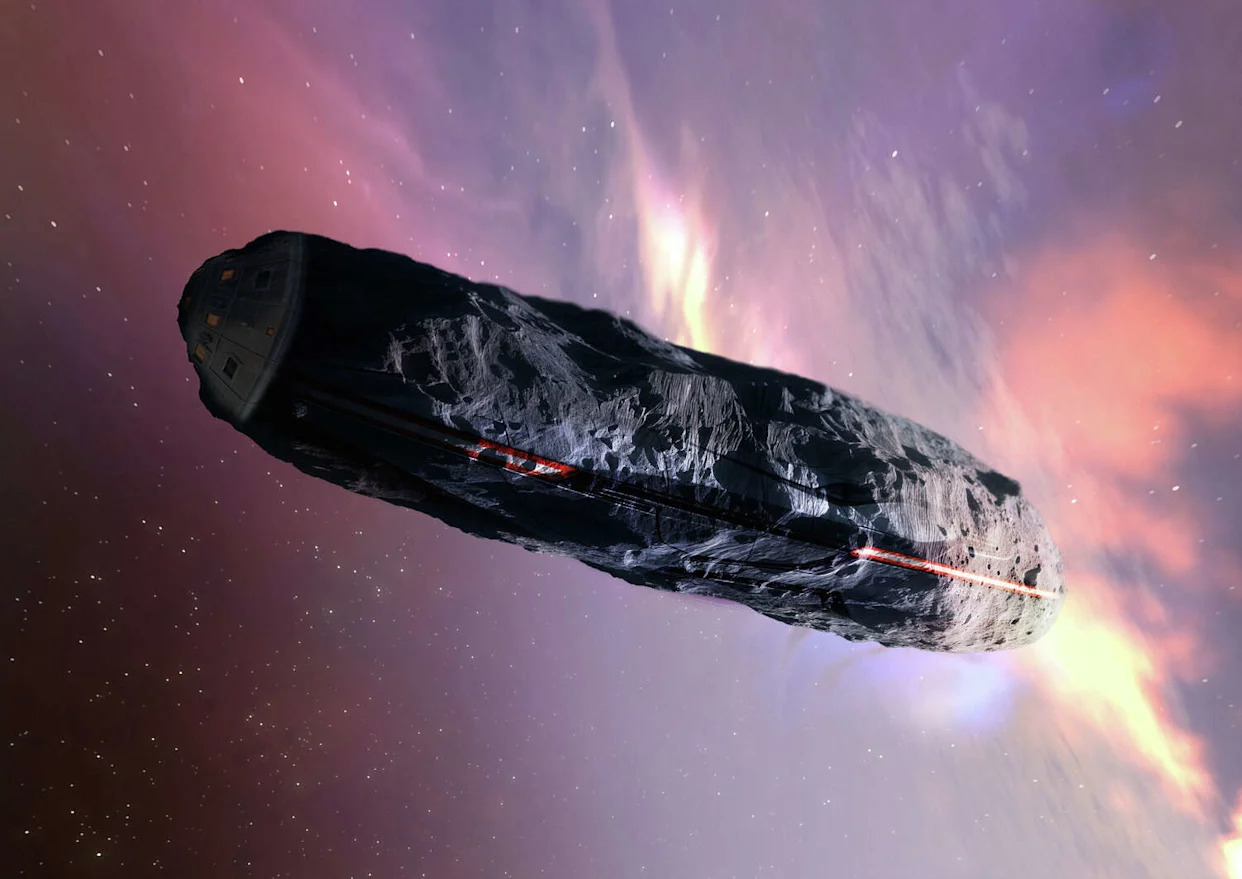
1I/ʻOumuamua was notable for its unusual shape and lack of a visible cometary tail, leading to various theories about its nature.
In contrast, 3I/ATLAS exhibits clear comet-like features, indicating that not all interstellar objects behave the same way.
This difference highlights the diversity of celestial bodies that can originate from outside our solar system.
The study of 3I/ATLAS could help scientists understand the formation and evolution of comets in different environments.
The Significance of the Discovery
The discovery of 3I/ATLAS holds significant implications for our understanding of the universe.
It challenges the notion that interstellar objects are primarily rocky or metallic, suggesting that comets can also travel between stars.
This finding opens up new avenues for research into the composition and behavior of these distant bodies.
Understanding how comets like 3I/ATLAS form and evolve could provide insights into the early solar system and the conditions that lead to the formation of planetary systems.
Impacts on Astrobiology
The potential for comets to harbor organic materials is another critical aspect of this discovery.
Comets are thought to contain the building blocks of life, and studying objects like 3I/ATLAS could shed light on the origins of life on Earth.
If interstellar comets can deliver essential compounds to planets, this might explain how life began in our own solar system.
The exploration of 3I/ATLAS could enhance our understanding of astrobiology and the potential for life beyond Earth.

Observational Challenges
Studying interstellar objects like 3I/ATLAS presents unique observational challenges.
The vast distances involved make it difficult to gather detailed data.
Astronomers rely on advanced telescopes and imaging techniques to capture the object’s features and behavior.
The transient nature of these objects means that they can change rapidly, complicating efforts to study them over time.
As 3I/ATLAS continues its journey, researchers must act quickly to gather as much information as possible.
Technological Innovations
Innovations in technology are crucial for observing and analyzing interstellar objects.
The development of powerful telescopes and imaging systems enables scientists to capture high-resolution images of distant bodies.
These advancements allow for more precise measurements of an object’s size, shape, and composition.
As technology continues to evolve, the ability to study interstellar objects will improve, providing deeper insights into their nature and origins.
Future Research Directions
The discovery of 3I/ATLAS paves the way for future research in several areas.
Scientists are eager to explore the implications of this comet for our understanding of celestial mechanics and the dynamics of interstellar travel.
Further studies could focus on the chemical composition of 3I/ATLAS, revealing the materials that make up its structure.
Additionally, researchers may investigate how such objects interact with solar radiation and other forces as they traverse the galaxy.
Collaborative Efforts
International collaboration will be essential in the study of 3I/ATLAS and similar objects.
Astronomers and scientists from various countries can share resources and expertise to enhance our understanding of these phenomena.
Collaborative efforts can lead to more comprehensive studies and a greater accumulation of knowledge about interstellar bodies.
By working together, the global scientific community can unlock the mysteries of the universe and expand our understanding of its complexities.

Conclusion
The discovery of 3I/ATLAS as a potential natural comet represents a significant advancement in our understanding of interstellar objects.
Its unique characteristics challenge existing theories and open new avenues for research.
As scientists continue to study this remarkable object, they hope to uncover insights that could reshape our understanding of comets and their role in the universe.
The implications for astrobiology, planetary formation, and celestial mechanics are profound, emphasizing the importance of ongoing research in this field.
As we look to the future, the study of 3I/ATLAS will undoubtedly contribute to our quest for knowledge about the cosmos and our place within it.
News

At 56, The Tragedy Of Jennifer Aniston Is Beyond Heartbreaking
Behind the laughter, the fame, and the seemingly perfect Hollywood image of Jennifer Aniston lies a life marked by struggle,…

R. KELLY ATTACKED IN PRISON? Disturbing REPORTS and WHISPERS From Behind Bars Spark a Terrifying Question
R.Kelly’s collapse from global stardom did not end with a courtroom sentence. According to filings submitted by his legal team,…

What happened to Cesar Millan from Dog Whisperer? Is He Going to Jail?
The Truth Behind the Viral Claim About Cesar MillanWhy the Internet Suddenly Believed the Famous Dog Behaviorist Was Sentenced to…

Albert Lin Just Exposed What’s Hidden Beneath the Terracotta Army — And It’s Not What You Think
The world of television often appears polished and effortless, yet the truth behind the camera tells a very different story….

UK EXPLODES as King Charles DECLARES Divorce From Camilla After SHOCKING Betrayal
The Shocking Announcement of King Charles III’s Divorce from Queen Camilla In a dramatic turn of events, King Charles III…
After Locating Cleopatra’s Lost Tomb Archaeologists Found Terrifying Detail That Defies Explanation
For nearly two millennia, the final resting place of Cleopatra remained one of the greatest unsolved mysteries of the ancient…
End of content
No more pages to load






