
Africa’s Future is Being REWRITTEN – A New Ocean is Emerging
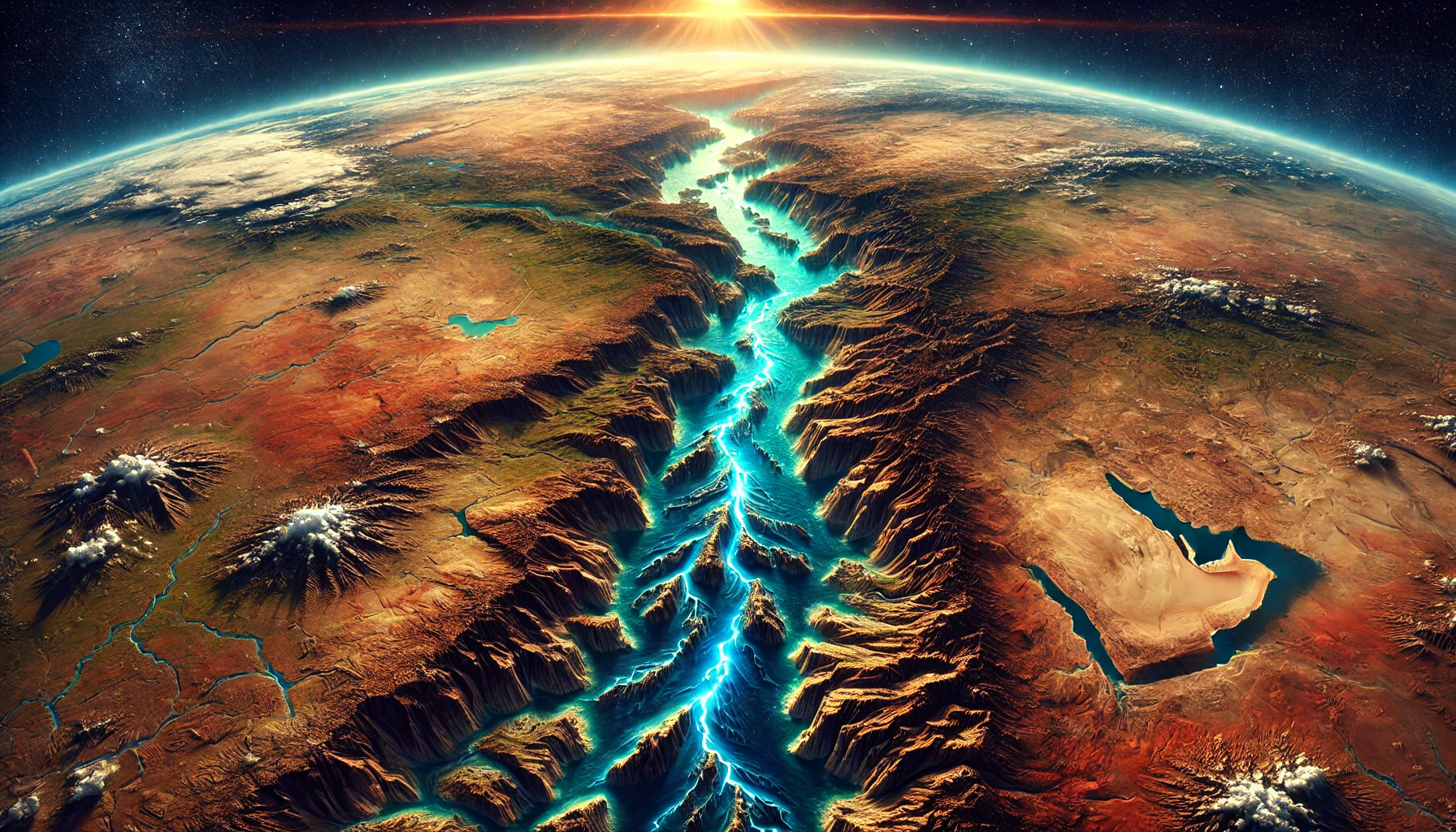
The ground is breaking in Africa.
Villages are vanishing, and scientists are observing that the continent is literally tearing itself in two.
In various locations across Africa, cracks have widened significantly, enough to swallow roads, homes, and even rivers.
This geological phenomenon is not merely a theory or a distant prediction; it is happening right now.
The Earth beneath Africa is shifting inch by inch, and this movement is creating the birthplace of a brand-new ocean.
This transformation is monumental and will alter the continent’s landscape forever.
As we explore this fascinating and alarming development, it is crucial to understand how it all began and the forces powerful enough to tear a continent apart.
Understanding the Geological Forces
The process of continental rifting is a natural phenomenon caused by tectonic activity.
Tectonic plates are massive sections of the Earth’s crust that float on the semi-fluid mantle below.
These plates are constantly moving, albeit very slowly, and their interactions can lead to various geological events.
In Africa, the East African Rift System is the primary area of focus.
This rift stretches over 4,000 kilometers from the Afar Triangle in Ethiopia down to Mozambique.
It is a divergent boundary where the African Plate is splitting into two smaller plates: the Somali Plate and the Nubian Plate.
As these plates drift apart, they create tension that results in the formation of cracks and fissures in the Earth’s surface.

The Birth of a New Ocean
As the rifting process continues, scientists predict that a new ocean will eventually emerge.
The East African Rift is gradually widening, and over millions of years, it could evolve into a full-fledged ocean.
This process is similar to what occurred millions of years ago when the Atlantic Ocean began to form as the supercontinent Pangaea broke apart.
The creation of a new ocean is a slow but inevitable process driven by the relentless movement of tectonic plates.
As the rift deepens, it will lead to significant geological changes in the region, including the potential for volcanic activity.
Volcanic Activity and Its Implications
Volcanoes are already showing signs of awakening in this region.
The East African Rift is home to several active volcanoes, including Mount Kilimanjaro and Mount Kenya.
As the tectonic plates shift, magma from the Earth’s mantle is pushed closer to the surface, increasing volcanic activity.
This can lead to eruptions that may reshape the landscape and affect local ecosystems.
The interplay between rifting and volcanism creates a dynamic environment that can be both fascinating and dangerous.
Communities living near these volcanic areas must remain vigilant as the geological processes unfold.
The Impact on Local Communities
The consequences of this geological transformation extend beyond the Earth itself.
Local communities are already feeling the effects of the rifting process.
As cracks widen and land shifts, villages are at risk of being swallowed by the Earth.
Infrastructure, including roads and homes, can be severely damaged or destroyed.
This creates challenges for residents who rely on these structures for their daily lives.
In some cases, entire communities may need to relocate, leading to social and economic upheaval.
Ecological Changes
The emergence of a new ocean will also have profound implications for the region’s ecology.
As the rift continues to evolve, it will alter habitats and ecosystems.
New bodies of water can create unique environments that support diverse forms of life.
However, the disruption caused by rifting and volcanic activity can also threaten existing species and ecosystems.
The changes in the landscape may lead to shifts in biodiversity, with some species thriving while others face extinction.
Climate Considerations
The formation of a new ocean could also influence the climate of the surrounding regions.
Oceans play a crucial role in regulating weather patterns and temperatures.
As the East African Rift evolves into a new ocean, it may alter atmospheric conditions, leading to changes in rainfall and temperature.
These climatic shifts can impact agriculture, water resources, and overall livelihoods for local populations.
Understanding these potential changes is vital for communities to adapt and prepare for the future.

Scientific Observations and Research
Scientists are closely monitoring the East African Rift to better understand these geological processes.
Advanced technologies, including satellite imagery and seismic monitoring, allow researchers to track the movements of tectonic plates in real-time.
This data provides valuable insights into the dynamics of the rift and its potential consequences.
Ongoing research efforts aim to predict future developments and assess the risks associated with rifting and volcanic activity.
By studying these processes, scientists hope to provide communities with the information they need to prepare for the changes ahead.
The Future of Africa
As Africa continues to undergo these dramatic geological transformations, the continent will never look the same again.
The emergence of a new ocean will reshape not only the landscape but also the social, economic, and environmental fabric of the region.
The process of continental rifting is a reminder of the Earth’s dynamic nature and the powerful forces at work beneath our feet.
While the changes may pose challenges for local communities, they also present opportunities for scientific discovery and ecological adaptation.
The future of Africa is being rewritten, and it is essential for both scientists and residents to work together to navigate the complexities of this transformation.
Conclusion
In conclusion, the ongoing rifting process in Africa is a remarkable geological phenomenon that is reshaping the continent.
As the East African Rift continues to widen, the potential for a new ocean to emerge becomes increasingly real.
This transformation is not just a scientific curiosity; it has profound implications for local communities, ecosystems, and the climate.
Understanding the forces at play and the potential consequences is crucial for preparing for the future.
As we witness Africa literally tearing itself in two, we are reminded of the Earth’s ever-changing nature and the importance of adapting to these changes.
The emergence of a new ocean is a testament to the power of geological processes and their ability to alter the world as we know it.
News

At 56, The Tragedy Of Jennifer Aniston Is Beyond Heartbreaking
Behind the laughter, the fame, and the seemingly perfect Hollywood image of Jennifer Aniston lies a life marked by struggle,…

R. KELLY ATTACKED IN PRISON? Disturbing REPORTS and WHISPERS From Behind Bars Spark a Terrifying Question
R.Kelly’s collapse from global stardom did not end with a courtroom sentence. According to filings submitted by his legal team,…

What happened to Cesar Millan from Dog Whisperer? Is He Going to Jail?
The Truth Behind the Viral Claim About Cesar MillanWhy the Internet Suddenly Believed the Famous Dog Behaviorist Was Sentenced to…

Albert Lin Just Exposed What’s Hidden Beneath the Terracotta Army — And It’s Not What You Think
The world of television often appears polished and effortless, yet the truth behind the camera tells a very different story….

UK EXPLODES as King Charles DECLARES Divorce From Camilla After SHOCKING Betrayal
The Shocking Announcement of King Charles III’s Divorce from Queen Camilla In a dramatic turn of events, King Charles III…

After Locating Cleopatra’s Lost Tomb Archaeologists Found Terrifying Detail That Defies Explanation
For nearly two millennia, the final resting place of Cleopatra remained one of the greatest unsolved mysteries of the ancient…
End of content
No more pages to load






