
Ancient DNA Mystery Solved What REALLY Happened to First Americans
For centuries, scientists have been grappling with a significant question: how did humans first reach the American continent, which is so far removed from the rest of the world?
This question has intrigued researchers, historians, and anthropologists alike.
Many theories have been proposed over the years, each attempting to explain this monumental migration.
Some researchers suggest that humans crossed a land bridge known as Beringia, which once connected Asia and North America during the last Ice Age.
This land bridge allowed early humans to migrate into the Americas as they followed herds of large game animals.
Others argue that instead of traveling over land, these early humans may have taken to the seas, navigating along coastlines that are now submerged beneath the ocean due to rising sea levels.
These theories have sparked extensive debates and investigations, yet none have provided a complete and definitive answer to the question of how the first Americans arrived.
For years, the search for evidence remained elusive, leaving many aspects of this migration shrouded in mystery.
However, recent scientific advancements and discoveries have begun to shed light on this ancient puzzle.

New Discoveries Beneath the Waters
Recently, scientists have turned their attention to deep caves hidden beneath the waters of Mexico.
These underwater caves have long been of interest to researchers due to their potential to preserve ancient artifacts and biological materials.
Exploring these submerged environments has opened new avenues for understanding human history and migration patterns.
As scientists dive into these caves, they have begun to uncover significant findings that may provide crucial insights into the arrival of the first Americans.
The discoveries made in these caves are not just remnants of human activity; they include ancient DNA that could help reconstruct the genetic history of the earliest inhabitants of the continent.
The Importance of Ancient DNA
The analysis of ancient DNA is a powerful tool for understanding human migration and evolution.
By extracting DNA from archaeological finds, scientists can trace the lineage and movements of ancient populations.
This genetic evidence can reveal connections between different groups and provide insights into their interactions with one another and their environments.
In the case of the first Americans, ancient DNA can help answer questions about their origins and the paths they took to reach the continent.
Recent studies have focused on DNA extracted from remains found in the submerged caves of Mexico, leading to groundbreaking revelations about the early inhabitants of the Americas.
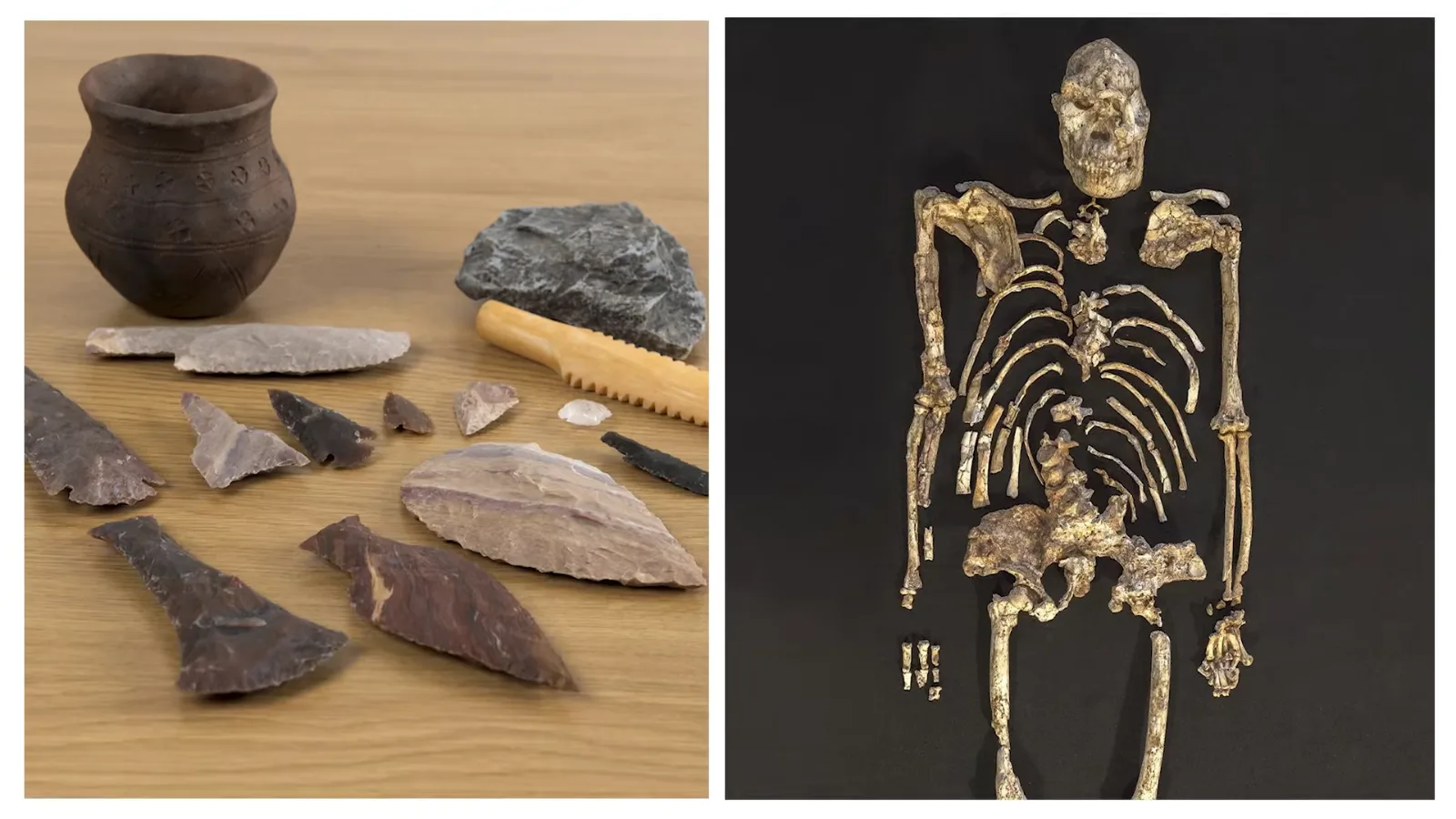
Unraveling the Mystery of Migration
The findings from the underwater caves have begun to change our understanding of how the first Americans arrived.
Genetic analysis has shown that the early populations in the Americas were diverse and had complex ancestral backgrounds.
This evidence suggests that multiple waves of migration may have occurred, rather than a single event.
Some of the DNA recovered indicates connections to ancient populations in Asia, supporting the theory that some early Americans crossed the Bering land bridge.
However, other genetic markers point to maritime routes, suggesting that some groups may have traveled by sea, navigating along the Pacific coast.
These revelations are reshaping the narrative of human migration into the Americas, highlighting the complexity of early human history.
Implications for Understanding Human History
The implications of these discoveries extend beyond the question of how the first Americans arrived.
They challenge long-held assumptions about the timeline and nature of human migration.
For years, the prevailing belief was that the Americas were populated primarily by groups that migrated over land during the Ice Age.
However, the evidence from ancient DNA suggests a more intricate picture, with multiple migration routes and diverse populations.
This complexity reflects the adaptability and resilience of early humans as they explored new environments and sought resources.
Understanding these dynamics provides valuable insights into the history of human migration and the factors that influenced settlement patterns.

The Role of Technology in Discoveries
The advancements in technology have played a crucial role in uncovering these historical truths.
Techniques such as DNA sequencing and radiocarbon dating have allowed researchers to analyze ancient materials with unprecedented accuracy.
These technologies enable scientists to reconstruct timelines and trace genetic lineages, providing a clearer picture of human history.
Moreover, the ability to explore underwater caves has opened new frontiers for archaeological research.
The combination of these technological advancements and innovative exploration methods has led to significant breakthroughs in our understanding of the first Americans.
Cultural Significance of the Findings
The discoveries made in the submerged caves hold cultural significance for Indigenous peoples of the Americas.
Many Indigenous communities have oral histories that speak of their ancestors’ migrations and connections to the land.
The scientific findings provide a way to validate and enrich these narratives, bridging the gap between traditional knowledge and modern research.
This intersection of science and culture fosters a deeper appreciation for the rich history of Indigenous peoples and their enduring connection to the land.
As researchers continue to explore these themes, it is essential to engage with Indigenous communities and respect their perspectives on history and ancestry.
Future Research Directions
The ongoing research into the origins of the first Americans is far from over.
As scientists continue to analyze ancient DNA and explore new sites, more discoveries are likely to emerge.
Future studies may focus on expanding the geographic scope of research, investigating other potential migration routes and archaeological sites.
Additionally, interdisciplinary collaboration between geneticists, archaeologists, and anthropologists will be crucial in piecing together the complex puzzle of human history.
With each new finding, our understanding of the first Americans will become more nuanced, providing a richer narrative of human migration and adaptation.
Conclusion
In conclusion, the question of how humans first reached the American continent has captivated scientists and historians for centuries.
Recent discoveries in submerged caves in Mexico have begun to provide answers, revealing a complex picture of migration and diversity among early populations.
The analysis of ancient DNA is transforming our understanding of human history, challenging long-held assumptions and highlighting the adaptability of early humans.
As research continues, it is essential to recognize the cultural significance of these findings and engage with Indigenous perspectives.
The journey to uncover the truth about the first Americans is ongoing, and with each discovery, we move closer to understanding the intricate tapestry of human history.
News

At 56, The Tragedy Of Jennifer Aniston Is Beyond Heartbreaking
Behind the laughter, the fame, and the seemingly perfect Hollywood image of Jennifer Aniston lies a life marked by struggle,…

R. KELLY ATTACKED IN PRISON? Disturbing REPORTS and WHISPERS From Behind Bars Spark a Terrifying Question
R.Kelly’s collapse from global stardom did not end with a courtroom sentence. According to filings submitted by his legal team,…

What happened to Cesar Millan from Dog Whisperer? Is He Going to Jail?
The Truth Behind the Viral Claim About Cesar MillanWhy the Internet Suddenly Believed the Famous Dog Behaviorist Was Sentenced to…

Albert Lin Just Exposed What’s Hidden Beneath the Terracotta Army — And It’s Not What You Think
The world of television often appears polished and effortless, yet the truth behind the camera tells a very different story….

UK EXPLODES as King Charles DECLARES Divorce From Camilla After SHOCKING Betrayal
The Shocking Announcement of King Charles III’s Divorce from Queen Camilla In a dramatic turn of events, King Charles III…
After Locating Cleopatra’s Lost Tomb Archaeologists Found Terrifying Detail That Defies Explanation
For nearly two millennia, the final resting place of Cleopatra remained one of the greatest unsolved mysteries of the ancient…
End of content
No more pages to load






