
The Enigma of Comet 3I/ATLAS: Is It an Alien Vessel?
Introduction
The Harvard astrophysicist Avi Loeb has captivated audiences with his intriguing theories regarding the interstellar object known as 3I/ATLAS.
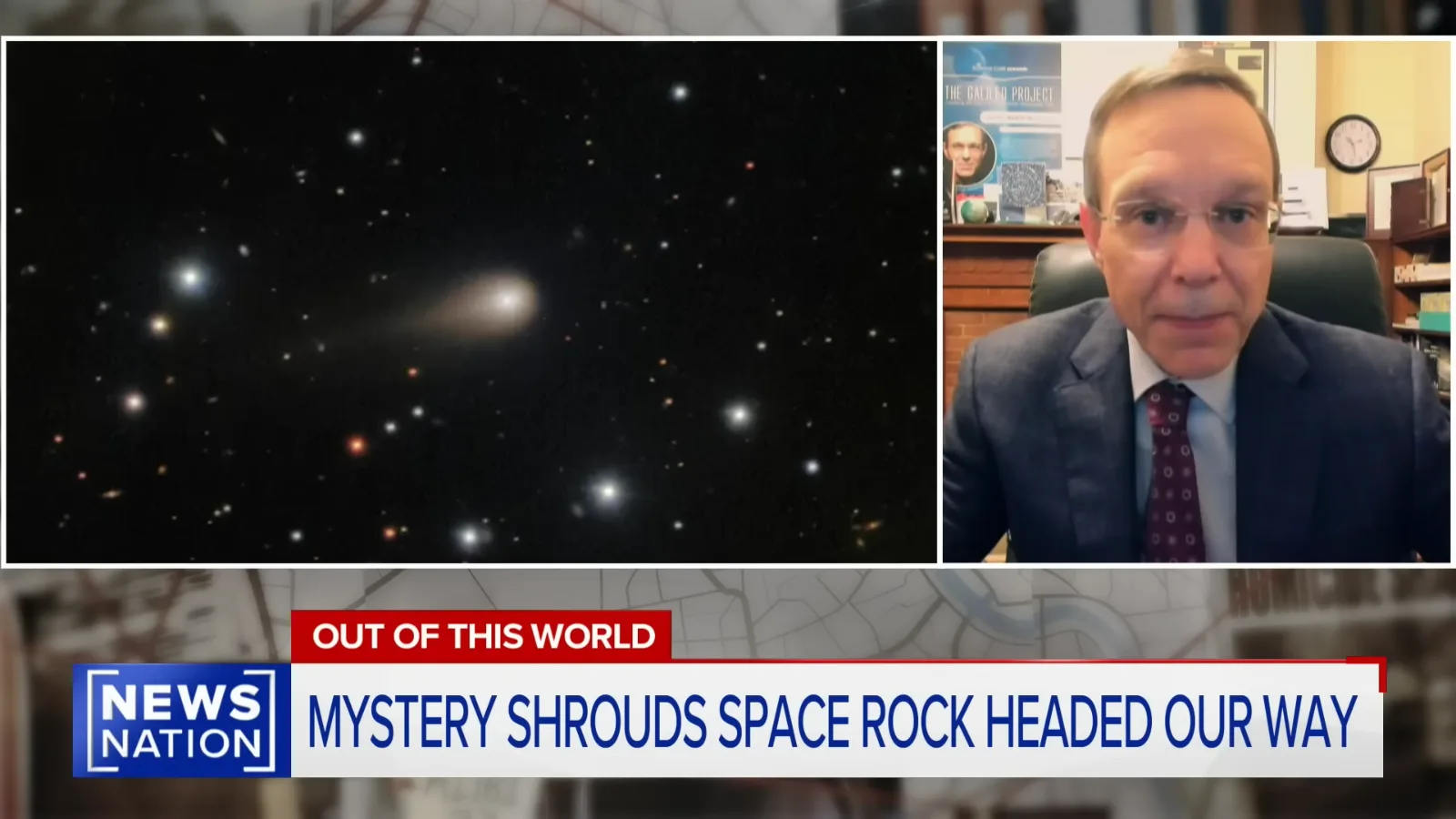
This comet, which has drawn attention from scientists and space enthusiasts alike, is under scrutiny for its unusual behavior in space.
Loeb has suggested that the object may not be a typical comet but rather an alien spacecraft, a notion that has sparked considerable debate within the scientific community.
In a recent interview on the show “Banfield,” he shared his observations about 3I/ATLAS, focusing on what he describes as its mysterious propulsion mechanism.
This article explores Loeb’s claims and the implications they hold for our understanding of interstellar objects.

The Discovery of 3I/ATLAS
3I/ATLAS was first identified by astronomers using the Asteroid Terrestrial-impact Last Alert System, hence the name ATLAS.
Initially classified as a comet, its trajectory and behavior have raised questions about its true nature.
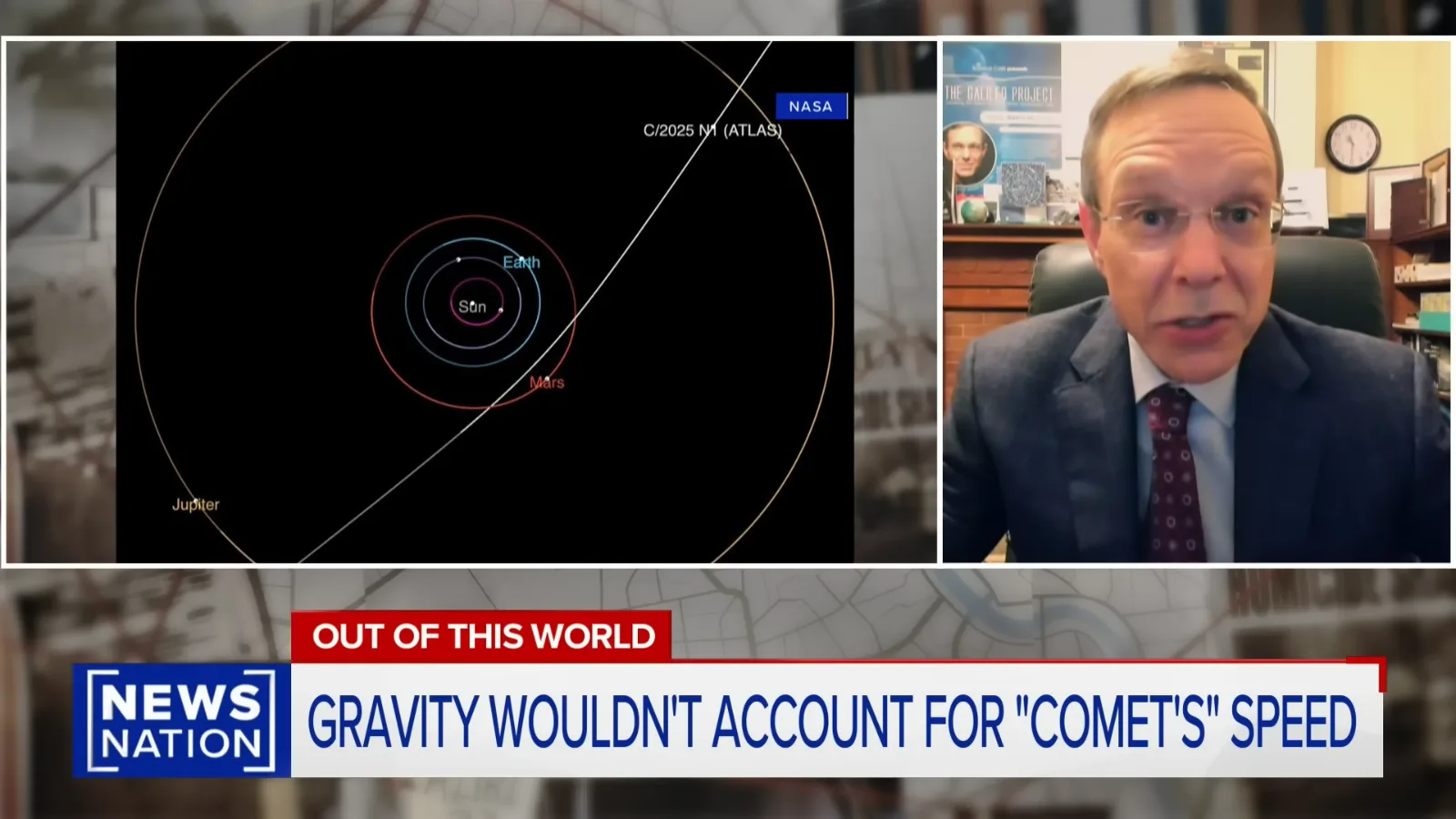
Unlike typical comets, which exhibit predictable patterns of movement influenced by gravity, 3I/ATLAS has displayed what some scientists refer to as “non-gravitational acceleration.”
This unexpected behavior has led to speculation that there may be more to this object than meets the eye.
Avi Loeb’s Observations
Avi Loeb has been vocal about his belief that 3I/ATLAS exhibits characteristics that suggest it could be an artificial object.
During his appearance on “Banfield,” he noted that the comet appears to be moving away from its original trajectory in a manner that cannot be solely attributed to gravitational forces.
Loeb posits that this could indicate some form of propulsion at work, suggesting that the object may have been engineered rather than occurring naturally.
His assertion raises profound questions about the possibility of extraterrestrial technology.
The Nature of Non-Gravitational Acceleration
Non-gravitational acceleration refers to movements of celestial bodies that cannot be explained by gravitational forces alone.
In the case of 3I/ATLAS, this phenomenon has been observed as the comet deviates from expected paths based on gravitational calculations.
Loeb argues that such behavior is indicative of propulsion, which is typically associated with engineered spacecraft.
This perspective challenges the conventional understanding of comets and asteroids, which are generally considered to be natural formations.
The Scientific Community’s Response
Loeb’s theories have elicited a mixed response from the scientific community.
While some researchers support his inquiries into the unusual characteristics of 3I/ATLAS, others remain skeptical.
Critics argue that there may be alternative explanations for the comet’s behavior, such as the effects of solar radiation or outgassing, which can alter a comet’s trajectory.
Despite the skepticism, Loeb’s ideas have reignited discussions about the search for extraterrestrial intelligence and the nature of interstellar objects.
The Implications of Extraterrestrial Technology
If 3I/ATLAS is indeed an alien vessel, the implications for humanity would be monumental.
The discovery of extraterrestrial technology would challenge our understanding of life beyond Earth and prompt a reevaluation of our place in the universe.
It could also lead to advancements in technology and science, as we seek to understand the mechanisms behind such advanced engineering.
Loeb’s assertions push the boundaries of scientific inquiry, encouraging researchers to consider possibilities beyond traditional frameworks.
The Role of Media in Science Communication
The media plays a crucial role in shaping public perception of scientific discoveries.
Avi Loeb’s appearance on “Banfield” highlights how discussions about space and potential extraterrestrial life can capture the public’s imagination.
By presenting complex scientific ideas in an accessible manner, media outlets can foster interest in astronomy and encourage further exploration of these topics.
This engagement is essential for promoting scientific literacy and expanding the audience for space exploration.
Future Research Directions
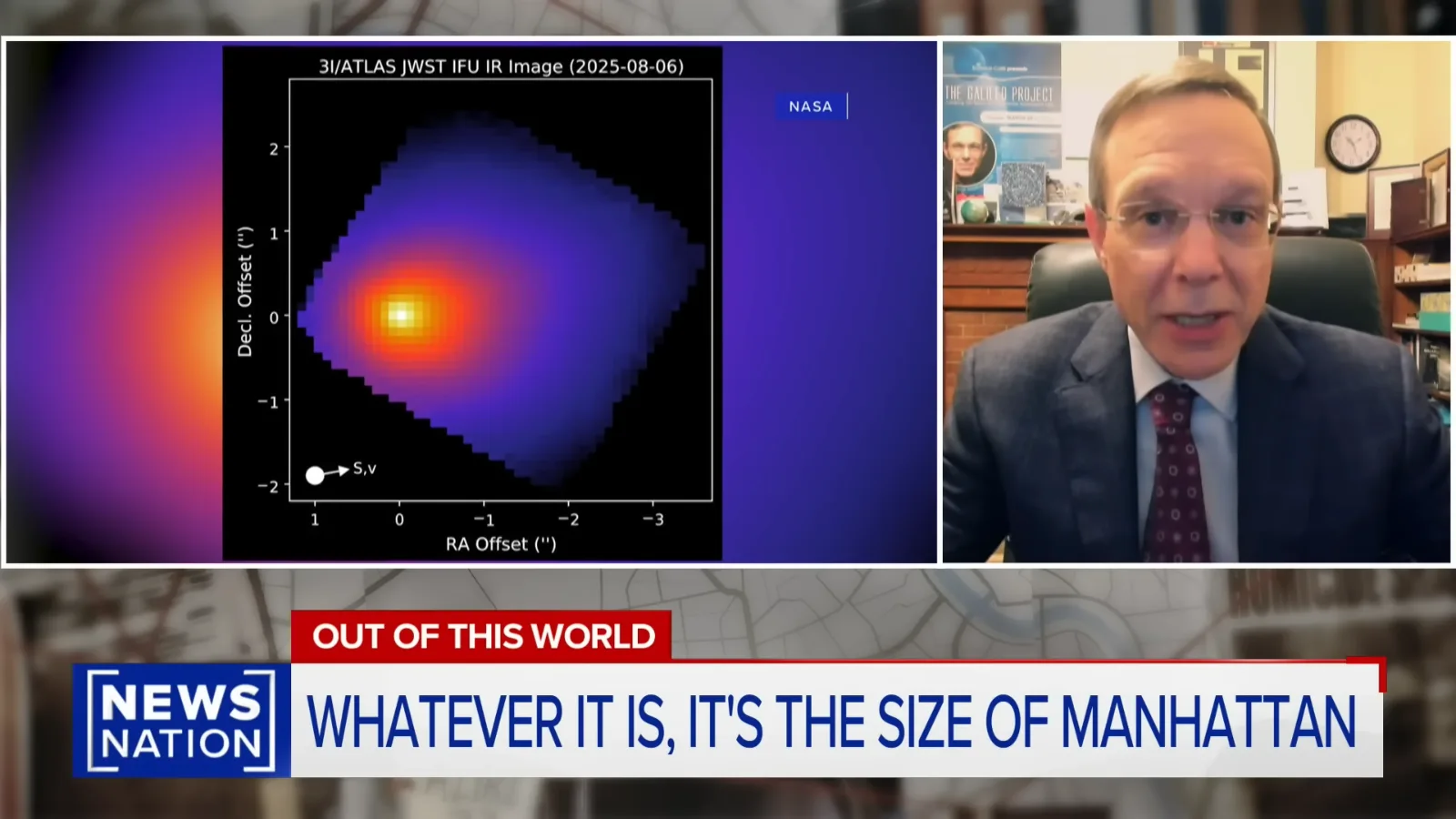
As interest in 3I/ATLAS grows, future research will likely focus on gathering more data about the comet.
Astronomers may employ advanced observation techniques to monitor its trajectory and behavior more closely.
Understanding the composition of 3I/ATLAS could also provide insights into its origins and mechanics.
If further evidence emerges supporting the notion of artificial propulsion, it could galvanize a new wave of research into the study of interstellar objects.
Conclusion
The mystery surrounding 3I/ATLAS continues to intrigue scientists and the public alike.
Avi Loeb’s theories regarding its potential as an alien vessel challenge existing paradigms in astronomy.
As research progresses and more data becomes available, the scientific community will be tasked with investigating these claims further.
Whether 3I/ATLAS is a natural celestial body or something more extraordinary remains to be seen.
However, the discussions it has sparked remind us of the vast unknowns that exist in our universe and the ongoing quest to understand them.
As we look to the stars, the possibility of discovering life beyond our planet becomes a tantalizing prospect that fuels both scientific inquiry and human imagination.
News

At 56, The Tragedy Of Jennifer Aniston Is Beyond Heartbreaking
Behind the laughter, the fame, and the seemingly perfect Hollywood image of Jennifer Aniston lies a life marked by struggle,…

R. KELLY ATTACKED IN PRISON? Disturbing REPORTS and WHISPERS From Behind Bars Spark a Terrifying Question
R.Kelly’s collapse from global stardom did not end with a courtroom sentence. According to filings submitted by his legal team,…

What happened to Cesar Millan from Dog Whisperer? Is He Going to Jail?
The Truth Behind the Viral Claim About Cesar MillanWhy the Internet Suddenly Believed the Famous Dog Behaviorist Was Sentenced to…

Albert Lin Just Exposed What’s Hidden Beneath the Terracotta Army — And It’s Not What You Think
The world of television often appears polished and effortless, yet the truth behind the camera tells a very different story….

UK EXPLODES as King Charles DECLARES Divorce From Camilla After SHOCKING Betrayal
The Shocking Announcement of King Charles III’s Divorce from Queen Camilla In a dramatic turn of events, King Charles III…
After Locating Cleopatra’s Lost Tomb Archaeologists Found Terrifying Detail That Defies Explanation
For nearly two millennia, the final resting place of Cleopatra remained one of the greatest unsolved mysteries of the ancient…
End of content
No more pages to load






