
Pablo Escobar’s Funeral: A Reflection on Power, Legacy, and Public Sentiment
Introduction
The death of Pablo Escobar on December 2, 1993, marked a significant turning point in Colombia’s history.
As the most powerful dr*g lord of all time, Escobar’s life and death were surrounded by controversy, admiration, and fear.
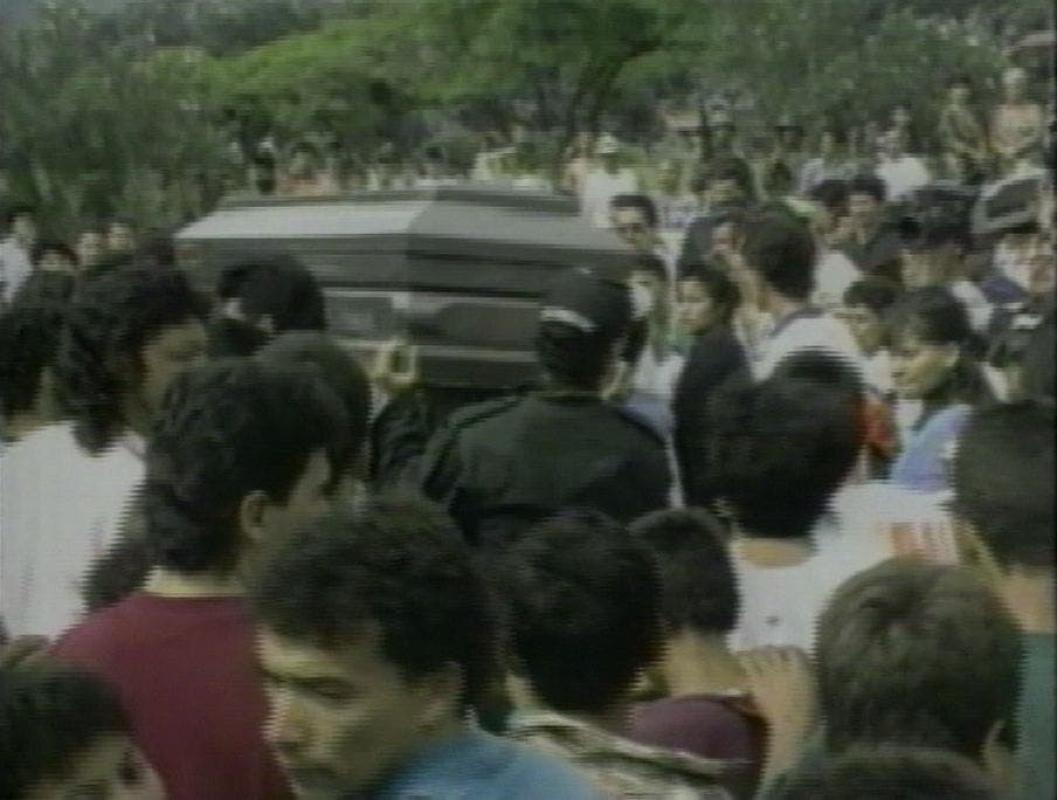
His funeral, held in Medellín, became a spectacle that drew approximately 25,000 people, a testament to his complex legacy.
This article explores the events surrounding Escobar’s funeral, the public’s reaction, and the implications of his life and death on Colombian society.

The Context of Escobar’s Life
Pablo Escobar was born on December 1, 1949, in Rionegro, Colombia.
He rose to prominence in the 1970s and 1980s as the leader of the Medellín Cartel, which controlled a significant portion of the cocaine trade in the United States.
Escobar’s wealth was astronomical; at the height of his power, he was one of the richest men in the world.
His influence extended beyond the dr*g trade, as he invested in various social projects, earning him the nickname “Robin Hood” among some segments of the Colombian population.
However, this image was juxtaposed with the violence and terror that accompanied his reign.
Escobar was responsible for countless deaths, including those of police officers, judges, and politicians.
His methods of intimidation and brutality created a climate of fear in Colombia, leading to widespread chaos and suffering.
The Day of the Funeral
On December 3, 1993, Escobar’s funeral took place in Medellín.
The event was not just a farewell to a man; it was a reflection of the societal divisions that Escobar had both exploited and embodied.
The sheer number of attendees—estimated at 25,000—illustrated the complex feelings Colombians had towards him.
Many mourners viewed Escobar as a hero who provided for the poor and built infrastructure in neglected communities.
They remembered the social programs he funded, including housing projects and sports facilities.
For these individuals, his death was a significant loss, marking the end of an era.
Conversely, others viewed him as a ruthless criminal whose actions led to untold suffering.
The presence of law enforcement at the funeral highlighted the tension between these conflicting perspectives.
The police and military were deployed to maintain order, reflecting the ongoing struggle between the state and the remnants of Escobar’s empire.
Public Sentiment and Reactions
The public’s reaction to Escobar’s death was a mix of grief, anger, and relief.
For some, the funeral was an opportunity to celebrate the life of a man who had become a symbol of resistance against the state.
His supporters chanted slogans and carried banners, emphasizing his contributions to their communities.
In stark contrast, the families of the victims of Escobar’s violence viewed the funeral as a grotesque celebration of a criminal’s life.
They expressed their outrage at the public mourning of a man who had caused so much pain.
This dichotomy illustrates the deep divisions within Colombian society, where loyalty and betrayal were often intertwined.
The Media’s Role
The media played a crucial role in shaping the narrative surrounding Escobar’s life and death.
Coverage of the funeral highlighted the spectacle of the event, focusing on the massive crowds and emotional displays of grief.
News outlets struggled to balance the portrayal of Escobar as both a criminal and a folk hero, reflecting the complexities of public sentiment.
Television broadcasts captured the chaos of the funeral, showcasing the emotional responses of attendees.
Some mourners wept openly, while others celebrated Escobar’s life with music and dance.
The images broadcasted worldwide contributed to the mythos surrounding Escobar, solidifying his status as a cultural icon in Colombia.
The Aftermath of Escobar’s Death
Escobar’s death did not mark the end of the dr*g trade in Colombia.
Instead, it created a power vacuum that led to increased violence and the rise of other criminal organizations.
The Medellín Cartel eventually fragmented, giving rise to new players in the dr*g trade.
The chaos that followed Escobar’s death further complicated the already tumultuous landscape of Colombian society.
In the years following his death, Colombia continued to grapple with the legacy of dr*g violence.
The government’s efforts to combat dr*g trafficking intensified, leading to a prolonged conflict that involved not only cartels but also guerrilla groups and paramilitary organizations.
The societal scars left by Escobar’s reign remained palpable, influencing politics and culture for decades.
Cultural Impact
Pablo Escobar’s life and death have left an indelible mark on Colombian culture.
His story has been the subject of numerous books, documentaries, and television series.
These portrayals often oscillate between glorification and condemnation, reflecting the ongoing debate about his legacy.
The fascination with Escobar extends beyond Colombia.
International audiences have been captivated by the narrative of a man who rose from humble beginnings to become one of the world’s most notorious criminals.
This fascination has contributed to a romanticized view of the dr*g lord, often overshadowing the real-life consequences of his actions.
Lessons Learned
The events surrounding Pablo Escobar’s funeral serve as a poignant reminder of the complexities of human nature and societal values.
They highlight the ways in which individuals can be viewed through vastly different lenses, depending on personal experiences and societal context.
The legacy of Escobar’s life and death underscores the need for a nuanced understanding of crime, power, and public sentiment.
It challenges us to consider the broader implications of our choices and the impact they have on society as a whole.
Conclusion
Pablo Escobar’s funeral was not merely an event marking the death of a dr*g lord; it was a reflection of a society grappling with its past and present.
The reactions of the public, the role of the media, and the cultural impact of Escobar’s life all contribute to a complex narrative that continues to evolve.
As Colombia moves forward, the lessons learned from Escobar’s legacy remain relevant.
It is essential to acknowledge the multifaceted nature of individuals and the systems that shape our world.
In doing so, we can better understand the challenges that lie ahead and work towards a more just and equitable future.
News

At 56, The Tragedy Of Jennifer Aniston Is Beyond Heartbreaking
Behind the laughter, the fame, and the seemingly perfect Hollywood image of Jennifer Aniston lies a life marked by struggle,…
R. KELLY ATTACKED IN PRISON? Disturbing REPORTS and WHISPERS From Behind Bars Spark a Terrifying Question
R.Kelly’s collapse from global stardom did not end with a courtroom sentence. According to filings submitted by his legal team,…

What happened to Cesar Millan from Dog Whisperer? Is He Going to Jail?
The Truth Behind the Viral Claim About Cesar MillanWhy the Internet Suddenly Believed the Famous Dog Behaviorist Was Sentenced to…
Albert Lin Just Exposed What’s Hidden Beneath the Terracotta Army — And It’s Not What You Think
The world of television often appears polished and effortless, yet the truth behind the camera tells a very different story….

UK EXPLODES as King Charles DECLARES Divorce From Camilla After SHOCKING Betrayal
The Shocking Announcement of King Charles III’s Divorce from Queen Camilla In a dramatic turn of events, King Charles III…
After Locating Cleopatra’s Lost Tomb Archaeologists Found Terrifying Detail That Defies Explanation
For nearly two millennia, the final resting place of Cleopatra remained one of the greatest unsolved mysteries of the ancient…
End of content
No more pages to load






