
The Tragic and Mysterious Death of Natalie Wood: Hollywood’s Golden Girl Lost to the Sea
Natalie Wood’s death has haunted Hollywood for over four decades.
Officially ruled a tragic accident, the circumstances surrounding her demise have long raised questions that remain unanswered.
Recent revelations and eyewitness testimonies have reignited public and legal scrutiny, suggesting that the true story of that fateful night may be darker than anyone previously imagined.
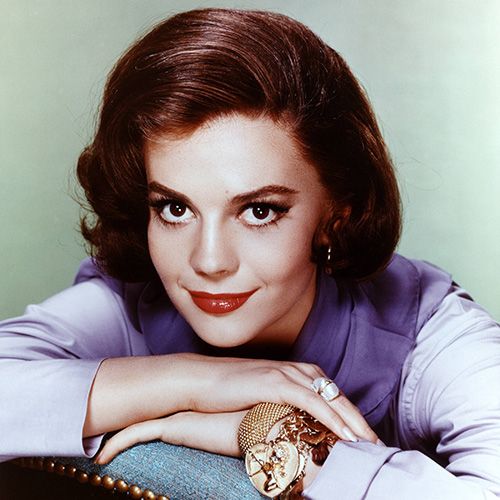
Natalie Wood was more than just a Hollywood icon; she was a symbol of grace, talent, and allure.
Born Natalia Nikolaevna Zakharenko on July 20, 1938, in San Francisco, she was the daughter of Russian immigrants Maria and Nikolai.
Her parents fled their homeland seeking a better life, only to encounter financial hardship in the United States.
Maria, her mother, became convinced that her daughter’s path to security and success lay in show business.
By the age of four, Natalie was already immersed in acting, moving from small roles to the demanding world of Hollywood child stardom.
Her introduction to acting was far from gentle.
On one notorious film set, when Natalie struggled to cry on cue, her mother tore apart a butterfly in front of her, forcing the young girl into a state of authentic distress.
Though it achieved the desired effect for the camera, the moment left an indelible mark on Natalie’s psyche.
Her early experiences with fear and control shaped her understanding of Hollywood, setting the stage for a life defined by both brilliance and hidden pain.
Despite these early challenges, Natalie’s talent was undeniable.
She had the rare ability to blend innocence with emotional intensity, distinguishing her even among the crowded ranks of child actors.
Her breakthrough came at the age of eight in Miracle on 34th Street, where she portrayed the intelligent, skeptical young girl who doubted the existence of Santa Claus.
The film launched her into national recognition and established her career trajectory for decades to come.
But the world only saw Natalie’s radiant smile and charm.
Few knew of the long hours, relentless pressure, and constant balancing act between school and career.
As she matured, Natalie sought to escape the constraints of her child-star image.
Her defining role came in Rebel Without a Cause, where she played Judy, a troubled teen navigating love and loneliness.
Her performance was raw, authentic, and earned her an Oscar nomination at just seventeen, proving she was a serious actress capable of commanding the screen.
Following that success, Natalie delivered memorable performances in West Side Story and Splendor in the Grass.
In West Side Story, she played Maria, a young Puerto Rican caught in a tragic romance, while in Splendor in the Grass, she portrayed a girl grappling with heartbreak and mental illness.
Both roles showcased her remarkable emotional range and solidified her status as one of Hollywood’s brightest stars.
On the surface, Natalie seemed to have everything: fame, wealth, talent, and a fairy-tale romance with Robert Wagner.
She had first declared to her mother, as a child, that she would marry Wagner — a prediction that would come true years later.

Their first marriage was celebrated as the union of Hollywood’s golden couple, a love story the media adored.
Yet behind the glamorous facade, Natalie’s life was heavily controlled, first by her mother, then by studio demands, and finally by the pressures of public expectation.
Natalie’s fear of dark water was a lifelong and profound anxiety.
A psychic had once predicted that she would die by drowning, leaving her terrified of open water and boats.
Yet fate would place her on a yacht, in rough seas at night, circumstances that would eventually lead to her death.
The events of November 27, 1981, on the yacht Splendour off Catalina Island remain one of Hollywood’s most enduring mysteries.
Natalie, Robert Wagner, her Brainstorm co-star Christopher Walken, and the yacht’s captain Dennis Davern embarked on what was supposed to be a peaceful weekend getaway.
The night, however, ended in tragedy, leaving questions that remain unanswered decades later.
Recent developments in 2024 and 2025 have brought new testimonies to light.
Two eyewitnesses have come forward, claiming they heard screams and sounds of struggle on the yacht that night.
One of these witnesses, only seventeen at the time, recalls hearing a violent argument followed by a woman’s desperate cries.
Another eyewitness, Marilyn Wayne, anchored nearby, reported hearing a woman repeatedly pleading for help, saying, “Help me, someone please help me, I’m drowning.
Wayne claimed that Natalie confided to her privately, stating, “Wagner is going to kill me.
These accounts, coupled with investigative work by author Marti Rulli, suggest that there may be sufficient evidence to reopen the case.
Rulli’s upcoming book, Natalie Wood and the Devil She Knew, argues that a grand jury investigation is justified to compel testimony and review all evidence under oath.
Despite these revelations, Robert Wagner remains a free man.
Designated a person of interest in 2018, Wagner has consistently refused to cooperate fully with authorities, leaving many to question how he could evade legal scrutiny.
The timeline of the night remains critical.
Wagner claims Natalie went to bed early, and when he checked, she was gone.
Davern, the captain, asserts that Wagner delayed raising the alarm, instructing him not to contact the Coast Guard immediately.
In maritime emergencies, minutes are crucial.
Natalie’s body was recovered hours later, floating roughly a mile from the yacht, wearing a nightgown, a down jacket, and socks.
Autopsy findings add layers of complexity.
Natalie had a blood alcohol content of 0.
14 percent, as well as traces of motion sickness pills and painkillers, impairing her coordination.
She also bore bruises on her arms, legs, and face, raising questions about whether a struggle occurred before she fell into the water.
In 2012, the Los Angeles coroner amended her cause of death to “drowning and other undetermined factors,” acknowledging the possibility of foul play.
Natalie’s marriage to Wagner was fraught with tension and control, marked by jealousy and emotional complexity.
Though celebrated publicly, insiders reported that Wagner resented Natalie’s fame and her attention from other men.
Rumors suggest that their first divorce in 1962 followed Natalie discovering Wagner in an intimate situation with another man.
Despite these challenges, the couple remarried in 1972, nearly a decade later, reconnecting under circumstances that remain difficult to fully understand.
The second marriage brought apparent domestic stability and children, yet tensions reportedly resurfaced.
Friends and colleagues described Wagner’s possessiveness, particularly regarding Natalie’s career and relationships with male co-stars.
Observers noted that while Wagner could be devoted to family life, controlling tendencies were never fully absent.
This duality, along with Natalie’s lifelong traumas, complicates our understanding of the events on the Splendour.
Natalie’s early life trauma may have shaped her later relationships.
Her mother’s pressure and a reported assault by Kirk Douglas at sixteen instilled lasting fear and vulnerability.
Douglas, a powerful figure in Hollywood, allegedly harmed Natalie during a meeting arranged by her mother for career advancement.
For decades, she kept the incident private, reflecting the broader culture of silence in mid-century Hollywood, where speaking out could destroy careers.
The combination of early trauma, Hollywood pressures, and complex personal relationships paints a picture of a woman navigating a perilous world, even as she shone brightly on screen.
It also raises questions about whether the events on the Splendour were a simple accident or the culmination of deeper, unresolved conflicts.
The night itself remains enigmatic.
Tensions among Natalie, Wagner, and Walken escalated during a dinner ashore, exacerbated by alcohol consumption.
Back on the yacht, arguments reportedly continued, culminating in Wagner smashing a wine bottle on the table.
Witnesses heard cries and disturbances, yet no one on board promptly reported the emergency.
Delays in contacting the Coast Guard and discrepancies in accounts from those present have fueled speculation that critical evidence was overlooked or suppressed.
Even today, key questions remain unanswered.
Who was the last person to see Natalie alive?
Why were cries for help ignored or dismissed?
Why do inconsistencies persist in eyewitness accounts, official statements, and autopsy reports?
Natalie’s story is not merely one of tragic death; it is a reflection of the dark underbelly of Hollywood’s Golden Age.
Her career was built on exceptional talent, yet it was also shaped by control, trauma, and exploitation.
Her personal life mirrored the complexities of her professional world, filled with love, betrayal, fear, and resilience.
The investigation into her death continues to captivate and disturb.
With new evidence emerging, there is renewed hope that the truth may finally be revealed.
Marti Rulli’s work, along with public interest and media coverage, keeps pressure on authorities to reexamine the case.
For Natalie Wood, the golden girl of Hollywood, the quest for justice and clarity may yet uncover answers long denied to her and to the world.
Her legacy remains powerful.
Natalie Wood continues to be remembered for her brilliance on screen, her captivating presence, and her enduring influence on generations of actors and audiences.
But behind the glamour lies a cautionary tale of fame, fear, and the price of navigating a world where appearances often mask hidden truths.
The mystery of her death serves as a stark reminder of the vulnerabilities that even the brightest stars can face and the importance of seeking truth, no matter how long it takes to surface.
Natalie Wood’s story is one of triumph and tragedy, of light and shadow, of talent and vulnerability.
As the decades pass, the world continues to grapple with the unanswered questions of that night on the Splendour.
Every new testimony, every fresh investigation, brings us closer to understanding the true circumstances of her death.
It also forces a reckoning with Hollywood’s past, its hidden abuses, and the enduring power of secrets that can shape a life — and ultimately, a legacy.
Even now, more than forty years later, Natalie Wood’s life and death provoke fascination, sorrow, and reflection.
She remains a symbol of the glamour, the talent, and the peril that have defined Hollywood for generations.
Her story reminds us that beneath the red carpets and flashing cameras lies a world of complexity, risk, and human vulnerability.
And while her death remains officially unresolved, the pursuit of truth continues, honoring a woman whose brilliance deserves more than silence.
Natalie Wood was Hollywood’s golden girl — dazzling, talented, and unforgettable.
But the darkness surrounding her final hours reminds us that fame cannot shield anyone from tragedy, and that the search for justice may take decades, yet it must never cease.
Her legacy endures, not just in the films she left behind, but in the enduring questions, the pursuit of truth, and the indelible mark she made on Hollywood and the hearts of millions worldwide.
News

At 56, The Tragedy Of Jennifer Aniston Is Beyond Heartbreaking
Behind the laughter, the fame, and the seemingly perfect Hollywood image of Jennifer Aniston lies a life marked by struggle,…

R. KELLY ATTACKED IN PRISON? Disturbing REPORTS and WHISPERS From Behind Bars Spark a Terrifying Question
R.Kelly’s collapse from global stardom did not end with a courtroom sentence. According to filings submitted by his legal team,…
What happened to Cesar Millan from Dog Whisperer? Is He Going to Jail?
The Truth Behind the Viral Claim About Cesar MillanWhy the Internet Suddenly Believed the Famous Dog Behaviorist Was Sentenced to…

Albert Lin Just Exposed What’s Hidden Beneath the Terracotta Army — And It’s Not What You Think
The world of television often appears polished and effortless, yet the truth behind the camera tells a very different story….
UK EXPLODES as King Charles DECLARES Divorce From Camilla After SHOCKING Betrayal
The Shocking Announcement of King Charles III’s Divorce from Queen Camilla In a dramatic turn of events, King Charles III…

After Locating Cleopatra’s Lost Tomb Archaeologists Found Terrifying Detail That Defies Explanation
For nearly two millennia, the final resting place of Cleopatra remained one of the greatest unsolved mysteries of the ancient…
End of content
No more pages to load






