
When President John F.Kennedy first committed American personnel to Vietnam in 1961, it was with the belief that the United States held a unique responsibility to lead the Free World.
Kennedy, still a young and charismatic figure, had inspired many Americans with a vision of defending democracy globally.
This sense of moral obligation resonated with ordinary Americans, who often viewed service in Vietnam as a continuation of the president’s call to “bear any burden, support any friend.
” Many who volunteered in the early years of the conflict did so out of a sincere belief in defending freedom and containing the spread of communism.
At the onset, the United States viewed its involvement through the lens of Cold War geopolitics.
American leaders believed that communism functioned as a global, interconnected threat and that allowing its spread in Southeast Asia could imperil the balance of power worldwide.
The strategy of containment, designed to prevent the expansion of communist influence, became central to American policy in Vietnam.
This approach required the U.S.to support the government of South Vietnam against both the North Vietnamese Army and the communist-backed guerrilla forces operating within the South, commonly known as the Viet Cong.
The conflict, however, quickly revealed its complexity.

Vietnam was not a straightforward battlefield; it was a divided nation with deep political, social, and cultural cleavages.
American forces had to navigate unfamiliar terrain, confront a determined enemy, and adapt to the unconventional tactics of guerrilla warfare.
By 1968, nearly half a million American soldiers were stationed in South Vietnam, and the expectation among U.S.commanders was that victory was achievable, though the war had already become long and arduous.
The Tet Offensive, launched by the North Vietnamese and Viet Cong forces in January 1968, dramatically altered perceptions of the conflict.
On the eve of the Vietnamese Lunar New Year, coordinated attacks swept across South Vietnam, striking not only military targets but urban centers, including the capital, Saigon.
The scale and location of the offensive shocked U.S.forces and civilians alike.
The intent of the Tet Offensive was to provoke a general uprising against the South Vietnamese government, leveraging both urban attacks and rural guerrilla operations.
From a military standpoint, the Tet Offensive was ultimately contained.
American and South Vietnamese forces regained control of the cities within weeks.
Yet the psychological impact on both the American public and the world at large was profound.
Television coverage brought the realities of the war directly into American living rooms, showing the vulnerability of U.S.forces and the resilience of the communist insurgents.
Historians and media analysts have noted that this exposure contributed significantly to shifts in public opinion, even as military objectives were temporarily achieved.
The use of television as a primary medium for news coverage in Vietnam was unprecedented.
While prior conflicts had been reported via print and radio, the immediacy and visual power of television provided a level of detail and intimacy that audiences had rarely experienced.
Footage of battles, casualties, and destroyed cities allowed viewers to witness the war’s human cost.
The constant presence of cameras highlighted the contrast between American technological sophistication and the determination and ingenuity of the Vietnamese fighters.
Understanding the Tet Offensive requires a closer look at the strategic preparations behind it.
Despite heavy U.S.surveillance and intelligence capabilities, American commanders were largely unaware of the scale of planning occurring within South Vietnam.
Key Viet Cong units operated under the noses of U.S.and South Vietnamese personnel, utilizing ordinary facilities and civilian structures for coordination.
This concealment underscored the difficulties in distinguishing between combatants and non-combatants in a conflict where guerrilla tactics blurred conventional definitions of the battlefield.
Critical to the success of the Tet Offensive was the movement of troops and supplies from North to South Vietnam via the Ho Chi Minh Trail.
This extensive network of trails and supply routes spanned thousands of miles, winding through difficult terrain in Laos and Cambodia before reaching South Vietnam.
The trail facilitated the transfer of men, weapons, and equipment, allowing North Vietnamese forces to maintain operational capabilities even under sustained U.S.bombardment.
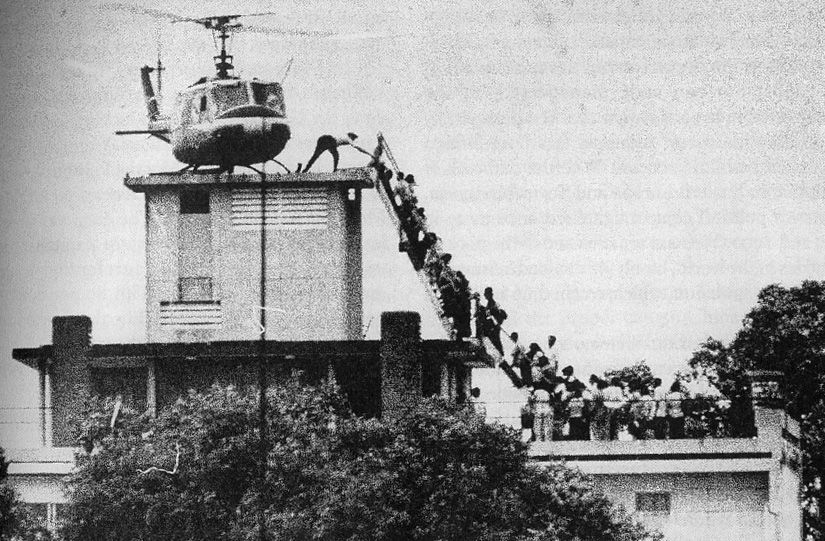
Efforts to disrupt these supply lines, including aerial surveillance, bombing, and the deployment of advanced sensors, were met with remarkable countermeasures from the Vietnamese.
Simple yet effective solutions, such as using decoys and multiple route networks, allowed supplies to continue flowing despite intensive American efforts.
The ingenuity displayed by the North Vietnamese in maintaining the Ho Chi Minh Trail reflects the broader theme of adaptability throughout the Vietnam War.
While U.S.forces relied on advanced technologies, including aircraft, helicopters, and sensors, the Vietnamese leveraged intimate knowledge of terrain, communal labor, and traditional skills to counter these advantages.
This dynamic created a conflict where technological superiority often clashed with unconventional tactics and resourceful problem-solving on the ground.
In addition to logistical innovation, the Vietnamese employed extensive tunnel networks to protect troops, facilitate movement, and sustain operations.
These tunnels, particularly in regions like Củ Chi, were complex, multi-level structures that included living quarters, hospitals, and storage areas.
They allowed Viet Cong fighters to evade detection, conduct surprise attacks, and maintain resilience against American offensives.
Anthropological studies have revealed the engineering skill and strategic planning involved in constructing and utilizing these subterranean networks.
The tunnels also underscore the communal commitment to the war effort, with entire families contributing to the maintenance and defense of these spaces over extended periods.
The American military strategy in Vietnam emphasized the use of helicopters and air mobility to implement the “search and destroy” doctrine.
The approach aimed to locate enemy forces, engage them, and inflict maximum casualties while leveraging technological superiority.
Helicopters provided rapid deployment, reconnaissance, and logistical support.
Yet despite these advantages, the strategy often met with limited success due to the mobility, intelligence, and terrain familiarity of the Viet Cong and North Vietnamese forces.
The dense jungles, river networks, and urban environments favored smaller, highly adaptable units capable of evading large conventional forces.
Combat in Vietnam also highlighted the psychological toll on soldiers.
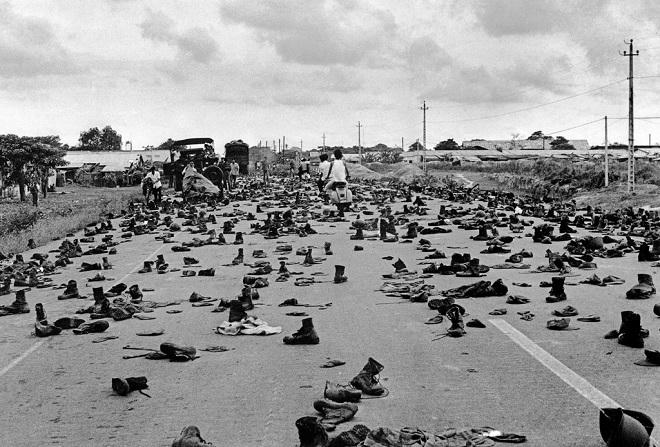
The unpredictability of guerrilla warfare, the prevalence of booby traps and mines, and the constant threat of ambushes created extreme stress conditions for U.S.personnel.
Soldiers faced a war where distinguishing enemy from civilian was often impossible, and where even routine movements carried life-threatening risk.
Experts in combat stress have observed that the constant exposure to danger, combined with the loss of comrades and the perceived futility of operations, had profound effects on morale and mental health.
The Vietnam War marked one of the first major conflicts in which these psychological dimensions were widely documented and studied, revealing the challenges of sustaining a volunteer force under prolonged high-stress conditions.
Weaponry also reflected the asymmetrical nature of the conflict.U.S.forces typically employed advanced firearms such as the M16 rifle, while the North Vietnamese and Viet Cong frequently used older, reliable weapons such as the AK-47.
The simplicity and durability of the AK-47 made it highly effective for irregular troops, demonstrating that technological sophistication alone did not guarantee battlefield success.
In addition, the extensive use of booby traps, improvised explosive devices, and other low-cost weapons allowed the Vietnamese to inflict casualties disproportionate to their technological means, emphasizing strategy and local knowledge over firepower.
Civilian involvement in the conflict further blurred conventional distinctions of combatant and non-combatant.
Women, children, and the elderly contributed to the resistance effort in various ways, including logistics, intelligence gathering, and direct combat.
This broad-based participation illustrated the depth of societal commitment to the North Vietnamese cause, contrasting with the American military’s reliance on a conventional, professional force.
The determination of ordinary citizens to resist and sustain the war effort played a critical role in shaping the conflict’s dynamics and extending its duration.
By the conclusion of the Tet Offensive, the casualty toll was significant on both sides.
Thousands of American soldiers were killed or wounded, and even more Vietnamese combatants and civilians perished.
Despite the apparent military success of U.S.forces in repelling the offensive, the psychological and political effects were profound.
American public opinion shifted dramatically as televised images and news reports conveyed the ferocity of the fighting and the resilience of the Vietnamese forces.
The discrepancy between battlefield outcomes and public perception highlighted the unique challenges of conducting a war under intense media scrutiny.
The Vietnam War also emphasized the limits of conventional military power in irregular conflicts.
American forces, despite advanced weaponry, logistical capabilities, and numerical superiority, struggled to achieve lasting strategic outcomes against a determined and adaptive adversary.
The resilience of North Vietnamese and Viet Cong forces, their integration with civilian populations, and their innovative logistical and combat strategies undermined the conventional metrics of military success.
In many ways, the war demonstrated that victory in a conflict of this nature required more than technology and firepower; it required an understanding of local conditions, culture, and political realities.
The media’s role in shaping perceptions of the war cannot be overstated.
Television coverage brought the realities of the battlefield into homes across the United States, influencing public opinion and political discourse.
Iconic broadcasts, including reports from journalists such as Walter Cronkite, framed the war as increasingly difficult and questioned the prospects for success.
This media presence contributed to a growing skepticism among the American public, even as the military continued to engage in conventional operations with measurable tactical successes.
The war became not only a military struggle but also a battle for perception and narrative.
Understanding the Tet Offensive and its aftermath requires examining the broader context of the Vietnam War.
The conflict was characterized by a clash of ideologies, contrasting military strategies, and differing national objectives.
The United States sought to contain communism and support an allied government, while North Vietnamese and Viet Cong forces aimed to unify the country under communist rule.
The war was fought across multiple domains, including conventional battlefields, urban centers, and dense jungles, and it involved both large-scale engagements and small-scale guerrilla operations.
The long-term consequences of the Vietnam War were significant.
The United States faced the withdrawal of its forces in 1973, and the fall of South Vietnam to communist control occurred two years later.
The human cost was immense, with millions of Vietnamese and tens of thousands of American casualties.
The war also left lasting effects on U.S.military strategy, public policy, and societal attitudes toward international interventions.
Lessons from Vietnam continue to inform military planning, intelligence analysis, and considerations of the political and human dimensions of armed conflict.
The enduring legacy of the Vietnam War is also reflected in its historical, cultural, and scholarly examination.
Museums, memorials, and historical studies preserve the experiences of soldiers, civilians, and communities affected by the conflict.
Sites such as Củ Chi and other preserved battlefields provide tangible reminders of the complex realities of guerrilla warfare and civilian participation.
These spaces allow for reflection on the interplay of strategy, resilience, and human experience in one of the twentieth century’s defining conflicts.
In the final analysis, the Vietnam War illustrates the challenges of engaging in a foreign conflict where conventional military superiority is insufficient to achieve strategic objectives.
The determination of North Vietnamese and Viet Cong forces, the integration of civilian support, and the adaptability of logistical and combat systems enabled sustained resistance against a technologically advanced opponent.
The conflict highlighted the limits of firepower, the importance of understanding the operational environment, and the role of psychological and societal factors in shaping the outcomes of war.
The experiences of soldiers, both American and Vietnamese, demonstrate the human dimension of warfare.
Combat stress, exposure to unconventional threats, and the constant presence of danger shaped the conduct and perception of military operations.
The strategic and tactical lessons of the war, combined with its social and political consequences, continue to resonate in military and historical scholarship.
By studying the Vietnam War through multiple perspectives, including military strategy, logistics, combat experience, and media influence, a more nuanced understanding of the conflict emerges.
The Tet Offensive, the Ho Chi Minh Trail, tunnel networks, and civilian participation illustrate the multifaceted nature of the war.
The interplay of conventional and unconventional tactics, technology and ingenuity, and domestic and international perceptions all contributed to a complex and protracted conflict with lasting global significance.
Ultimately, the Vietnam War serves as a case study in the limits of conventional power, the resilience of determined adversaries, and the profound influence of societal and media factors on modern conflicts.
It underscores the importance of cultural awareness, adaptive strategies, and recognition of human resilience in shaping military and political outcomes.
The conflict remains a pivotal moment in twentieth-century history, offering lessons for both historical reflection and contemporary policy considerations.
News

At 56, The Tragedy Of Jennifer Aniston Is Beyond Heartbreaking
Behind the laughter, the fame, and the seemingly perfect Hollywood image of Jennifer Aniston lies a life marked by struggle,…

R. KELLY ATTACKED IN PRISON? Disturbing REPORTS and WHISPERS From Behind Bars Spark a Terrifying Question
R.Kelly’s collapse from global stardom did not end with a courtroom sentence. According to filings submitted by his legal team,…

What happened to Cesar Millan from Dog Whisperer? Is He Going to Jail?
The Truth Behind the Viral Claim About Cesar MillanWhy the Internet Suddenly Believed the Famous Dog Behaviorist Was Sentenced to…
Albert Lin Just Exposed What’s Hidden Beneath the Terracotta Army — And It’s Not What You Think
The world of television often appears polished and effortless, yet the truth behind the camera tells a very different story….

UK EXPLODES as King Charles DECLARES Divorce From Camilla After SHOCKING Betrayal
The Shocking Announcement of King Charles III’s Divorce from Queen Camilla In a dramatic turn of events, King Charles III…

After Locating Cleopatra’s Lost Tomb Archaeologists Found Terrifying Detail That Defies Explanation
For nearly two millennia, the final resting place of Cleopatra remained one of the greatest unsolved mysteries of the ancient…
End of content
No more pages to load






