
The sinking of the Titanic in 1912 remains one of the most devastating maritime tragedies in history.
More than fifteen hundred people lost their lives in the freezing waters of the North Atlantic, leaving behind countless stories of terror, bravery, and unimaginable suffering.
While the world remembers the grand ship, the iceberg, and the dramatic rescue of the survivors, the fate of the victims after the ship slipped beneath the surface is far less known.
The full reality of what happened in those icy waters is darker and more haunting than any film has been able to capture.
The tragedy did not end when the Titanic vanished.
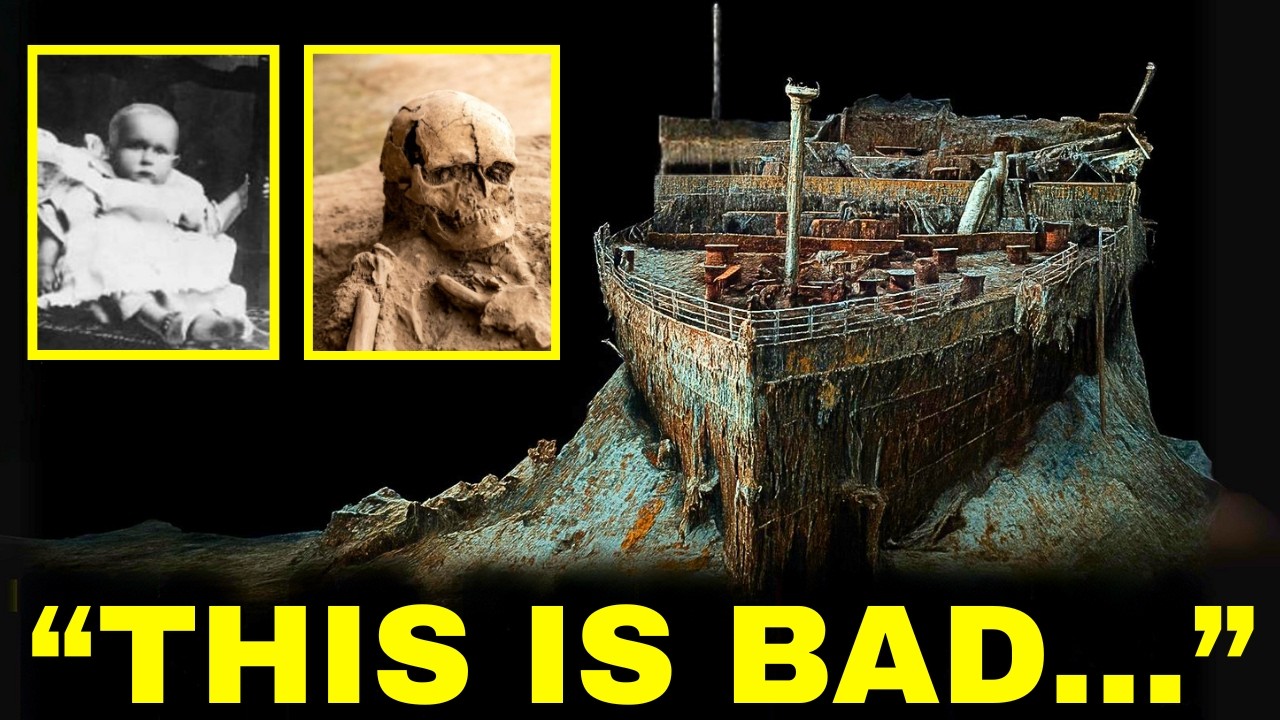
For many, that moment marked only the beginning of a far more chilling story.
When the Titanic sank in the early hours of April fifteenth, the cold night air was filled with desperate cries for help.
The ocean temperature hovered around twenty eight degrees Fahrenheit, cold enough to kill within minutes.
Anyone who fell into the water lost feeling in their limbs almost immediately, as numbing cold took over and prevented them from swimming or even calling for long.
Hypothermia set in quickly, slowing movements and weakening voices until the icy water silenced them completely.
Survivors later recalled hearing the agonizing screams of people fighting for life, only to hear those cries slowly fade as one person after another slipped beneath the waves.
Some victims clung to bits of wreckage, hoping for rescue that would not come.
The lifeboats that remained near the scene were far too few, and many held only partial numbers of survivors despite having room for more.
Those who watched from the lifeboats saw heartbreaking sights as people were pulled under by waves, dragged down by waterlogged clothes, or simply gave up as the cold drained the strength from their bodies.
The sea was filled with floating bodies, drifting debris, and the silent darkness of a world that had just swallowed an ocean liner.
Within the first hour, it became tragically clear that many victims would never be recovered.
In the days that followed, the grim task of recovering bodies fell to several ships sent to the disaster site.
The first and most famous of these was the Mackay Bennett, a cable ship from Halifax, Canada.
When its crew arrived, they found the North Atlantic scattered with wreckage and lifeless bodies, some frozen solid from the cold, others already beginning to decompose.
The crew worked tirelessly in harsh conditions, dragging bodies from the water and placing them carefully on deck.
In total, the Mackay Bennett recovered about one hundred ninety bodies.
Other ships, including the Minia, Montmagny, and Algerine, arrived later and continued the recovery efforts, bringing the total to just over three hundred bodies.
Identifying the victims became an emotional and painstaking process.
Clothing, jewelry, physical features, and personal items were often the only clues.
When identification was not possible, victims were recorded as unknown, with a number assigned to each body.
Some bodies were in such poor condition that they could not be transported back to land, either due to decay or the limited embalming materials on board.
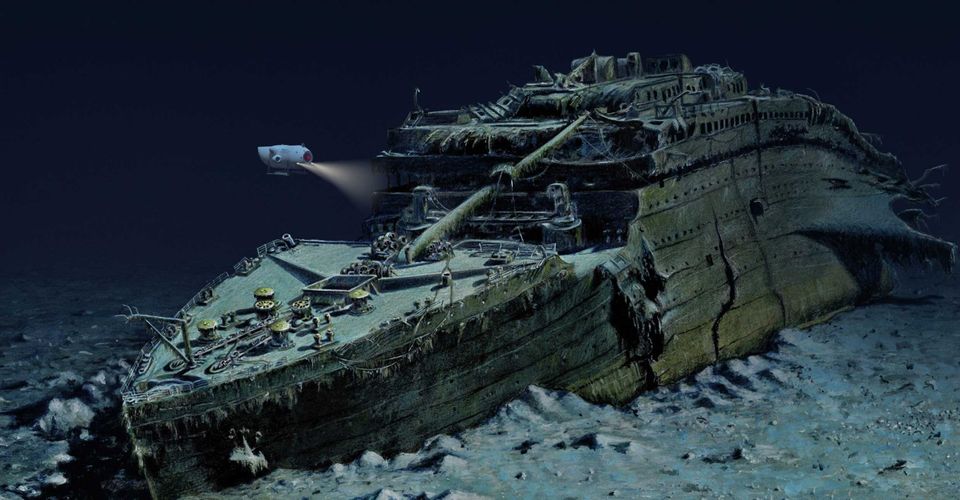
For these unfortunate souls, burial at sea became the only option.
Burial at sea was one of the most heartbreaking aspects of the recovery mission.
Crew members wrapped bodies in canvas and weighed them down with heavy objects before lowering them into the depths.
The sight of row after row of canvas wrapped forms slipping beneath the waves left a permanent mark on those who carried out the task.
Many of the crew later described the emotional toll of this work, saying that lowering so many bodies into the cold ocean was nearly unbearable.
Yet it was a necessity due to limited space and the condition of some remains.
The victims who could be transported were brought to Halifax.
There, more than two hundred were given proper burials in three cemeteries, many of which still hold rows of Titanic graves.
Some gravestones bear names, while others remain marked only with numbers.
These cemeteries in Halifax became the final resting place for victims who never made it home, standing today as solemn reminders of the human cost of the disaster.
For the thousands who were never recovered, the sea itself became their grave.
Bodies sank to the bottom, carried by currents or consumed by marine life, slowly disappearing into the silence of the deep.
The freezing temperatures preserved some remains for a short time, but the relentless power of the ocean ensured that most victims would never be found.
Even today, imagining the vast number of lost lives resting in the darkness of the Atlantic is almost incomprehensible.
The Titanic disaster had lasting effects on maritime safety.
International regulations were rewritten, with stricter requirements for lifeboats and safety protocols.
The tragedy served as a stark reminder that overconfidence in engineering could never replace proper preparation and caution.
Decades later, modern expeditions returned to the site of the sinking.
In 1985, the wreck was discovered by Robert Ballard and his team, resting over twelve thousand feet below the surface.
Using advanced underwater technology, they mapped the wreckage and documented the surrounding debris field.
No human remains were found, as the cold and pressure had long since claimed them, but artifacts recovered over the years told poignant stories of the victims.

Items like clothing, shoes, watches, letters, and dishes offered a glimpse into the final moments of passengers whose lives had been cut short.
These modern explorations allowed the world to witness the ghostly remains of the Titanic in a way that had never been possible before.
The broken hull, the scattered belongings, and the silent deck plates served as a stark contrast to the luxury and pride that once defined the ship.
Explorers spoke of an eerie calm at the wreck site, a silence that seemed to echo the pain and suffering left behind so long ago.
The story of the Titanic also lives on through the memory of individual victims.
Among the most well known were Isidor and Ida Straus, a couple who chose to remain together on the sinking ship rather than be separated.
Another remembered victim was Joseph Philippe Lemercier Laroche, a Haitian engineer who helped his family onto a lifeboat before returning to the sinking ship.
The story of the Unknown Child, later identified as Sidney Leslie Goodwin, reminded the world of the youngest victims whose lives ended before they had truly begun.
Each recovered item, each surviving photograph, and each marked grave represents a life cut short.
The victims were not mere numbers.
They were families, children, friends, workers, and dreamers.
Their lost futures form the real legacy of the Titanic tragedy.
Today, memorials, museums, and documentaries continue to explore the story of the Titanic and its passengers.
But no matter how much is told, the full depth of the tragedy remains beyond human understanding.
The sinking of the Titanic was not just a mechanical failure or a historical event.
It was a human catastrophe on a scale rarely seen, a moment in time when nature overpowered human ambition and left a world in mourning.
The icy Atlantic still holds most of the victims in its depths.
Their stories linger in the cold, dark silence of the ocean floor.
The Titanic remains a symbol of fragility, reminding us of the vulnerability of life and the unpredictable power of the natural world.
The tragedy endures in memory because the human cost was immense.
Behind every statistic was a life that mattered.
Behind every lost soul was a story left unfinished.
Remembering them ensures that the disaster is not reduced to a legend or a spectacle.
It remains a solemn reminder of the people who boarded the Titanic with dreams and left behind a legacy of sorrow, courage, and human endurance.
https://youtu.be/-c7URTVR2Is?si=GZCejLqM1wNq6OYt
News

At 56, The Tragedy Of Jennifer Aniston Is Beyond Heartbreaking
Behind the laughter, the fame, and the seemingly perfect Hollywood image of Jennifer Aniston lies a life marked by struggle,…

R. KELLY ATTACKED IN PRISON? Disturbing REPORTS and WHISPERS From Behind Bars Spark a Terrifying Question
R.Kelly’s collapse from global stardom did not end with a courtroom sentence. According to filings submitted by his legal team,…

What happened to Cesar Millan from Dog Whisperer? Is He Going to Jail?
The Truth Behind the Viral Claim About Cesar MillanWhy the Internet Suddenly Believed the Famous Dog Behaviorist Was Sentenced to…

Albert Lin Just Exposed What’s Hidden Beneath the Terracotta Army — And It’s Not What You Think
The world of television often appears polished and effortless, yet the truth behind the camera tells a very different story….

UK EXPLODES as King Charles DECLARES Divorce From Camilla After SHOCKING Betrayal
The Shocking Announcement of King Charles III’s Divorce from Queen Camilla In a dramatic turn of events, King Charles III…

After Locating Cleopatra’s Lost Tomb Archaeologists Found Terrifying Detail That Defies Explanation
For nearly two millennia, the final resting place of Cleopatra remained one of the greatest unsolved mysteries of the ancient…
End of content
No more pages to load






