
3I/ATLAS: The Startling Bet That Could Change Everything We Know About Alien Life!
Hey everyone! For those who have been following the saga of 3I/ATLAS here on the channel, things just got much more serious.
Avi Loeb from Harvard has made an official bet that by 2030, we will have undeniable evidence of extraterrestrial technology—and he’s putting his money where his mouth is.
But it doesn’t stop there.
Loeb has made a statement that is setting the scientific community ablaze.
He compared comet experts to limited artificial intelligence systems that only know how to repeat what they’ve learned.
The implications of this analogy are devastating for those who still insist that 3I/ATLAS is just a comet.
Let’s get straight to what matters.
Loeb recently published on Medium, revealing that seven jets were observed around 3I/ATLAS.
Here’s the crucial point he raises: while comet experts insist these jets are the result of ice sublimation, Loeb questions whether they could actually be spacecraft thrusters.
This is where it gets really interesting.
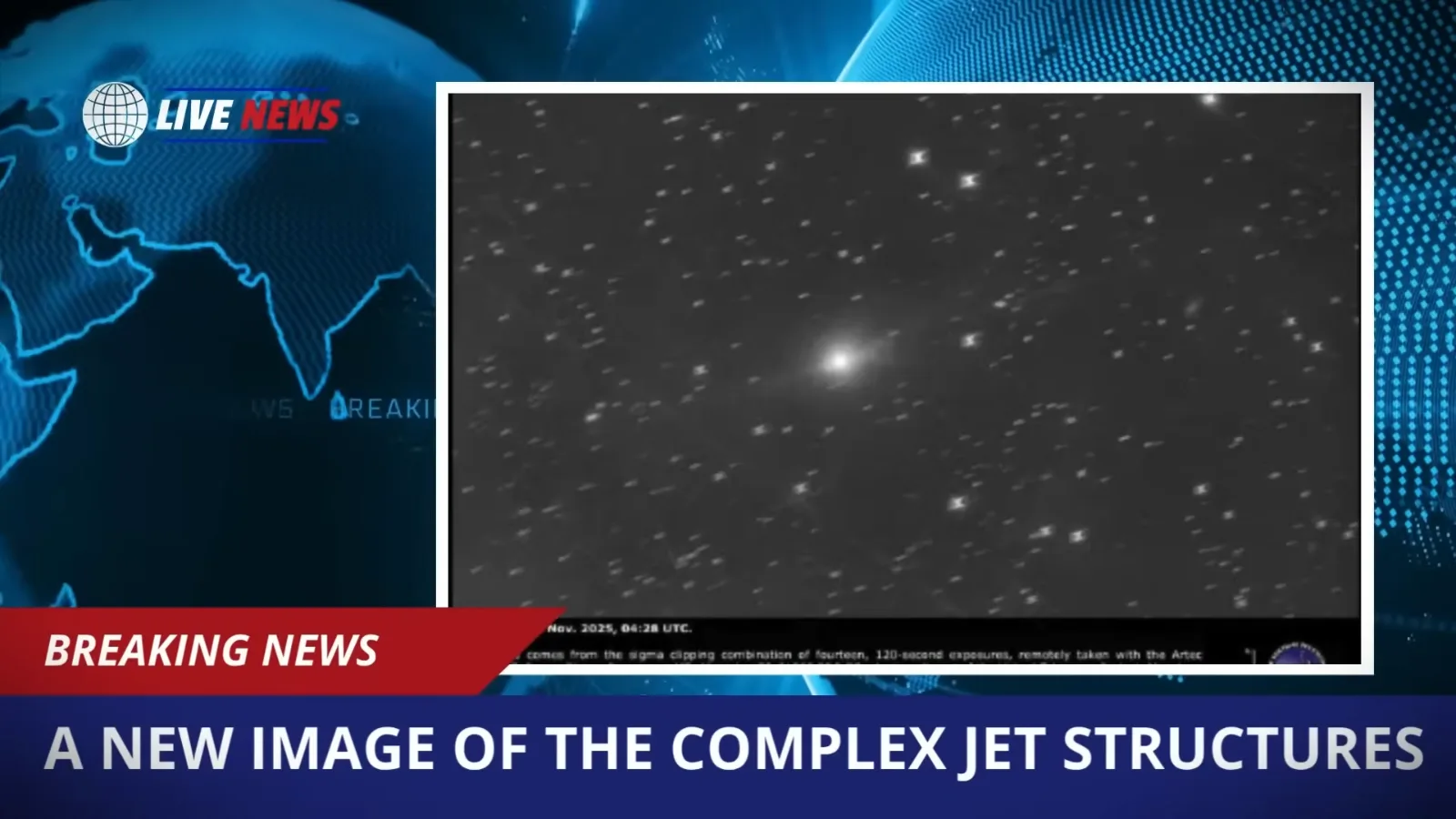
According to Loeb, comet experts are akin to artificial intelligence systems trained solely with comet data.
If you train an AI only on comet data, it will classify any object in the sky as a comet, regardless of the anomalies it presents.
Loeb argues that this is precisely why ‘Oumuamua was classified as a dark comet, despite not exhibiting typical comet characteristics.
It accelerated without leaving gas or dust trails, which is highly unusual.
Loeb draws a brilliant parallel: technological objects like SpaceX’s Tesla Roadster and NASA probes behave like dark comets because they originate from technology.
Now, here comes the moment of truth that Loeb is proposing.
He stated that in the coming weeks, leading up to 3I/ATLAS’s closest approach to Earth on December 19th, we will be able to measure the velocity, mass density, and composition of these seven jets.
Loeb was specific about what we should expect.
If 3I/ATLAS is a natural comet, we should find multiple fragments from the perihelion fireworks.
If we don’t find them, we will have our definitive answer.
Additionally, between October 2nd and 3rd, the high-rise camera on the Mars Reconnaissance Orbiter captured images of 3I/ATLAS with 30 km per pixel resolution when it passed 29 million km from Mars.
Starting today, November 11th, Loeb noted that ground-based observatories can refocus on 3I/ATLAS because its angular separation from the sun has exceeded 30 degrees.
Now, here’s the bombshell: Avi Loeb made an official bet with Michael Shermer, the executive director of the Skeptic Society.
Loeb wagered that by December 31, 2033, we will have indisputable scientific evidence of an extraterrestrial technological artifact.
Loeb’s statements to the Long Now Foundation are striking.
He declared that the search for technological artifacts actually began in 2025 with the discovery of the anomalous interstellar object 3I/ATLAS.
He is not joking around, folks.
Loeb also made a chilling observation: given that there are billions of Earth and Sun analogs in the Milky Way, most of them billions of years older than our solar system, we should engage in the scientific search for extraterrestrial technological artifacts.
When questioned by eight podcasters and reporters about why experts are so dismissive of alternative interpretations, Loeb made a brutal comparison.
He stated that scientists without imagination are like limited AI systems—they simply repeat their training data sets.
He emphasized that if you trained AI systems only with comet data, they would argue that any object in the sky is a comet, regardless of the anomalies it presents.
Loeb pointed out that experts refuse to include examples of technological objects like NASA’s 2020 probes or SpaceX’s Tesla Roadster, which exhibit behaviors akin to dark comets due to their technological origin.
He closed with a profound reflection: “We are born for a short stay on a rock we call Earth, a small relic from the formation of a nearby star we call the Sun, which formed in the last third of cosmic history.”
For those just joining or wanting to remember this incredible story that Loeb is scientifically documenting, let’s recap.
According to Loeb, this could be the discovery that marks the official beginning of the search for extraterrestrial technological artifacts.
3I/ATLAS is the third confirmed interstellar object we know of, and as Loeb emphasized, it’s radically different from anything we’ve ever seen.
Loeb highlights the size of 3I/ATLAS, claiming it is a million times more massive than ‘Oumuamua and a thousand times larger than Borisov.
He calculated that the statistical probability of an object being simultaneously so large and so fast is less than 0.1%.
Now, let’s delve into the anomalies that have made Loeb stake his scientific reputation.
The first anomaly is its impossible trajectory.
Loeb calculated that the probability of this retrograde trajectory aligning with the ecliptic plane is only 0.2%.
As he stated, it’s statistically almost impossible.
3I/ATLAS is moving in a retrograde trajectory opposite to the direction of planetary movement.
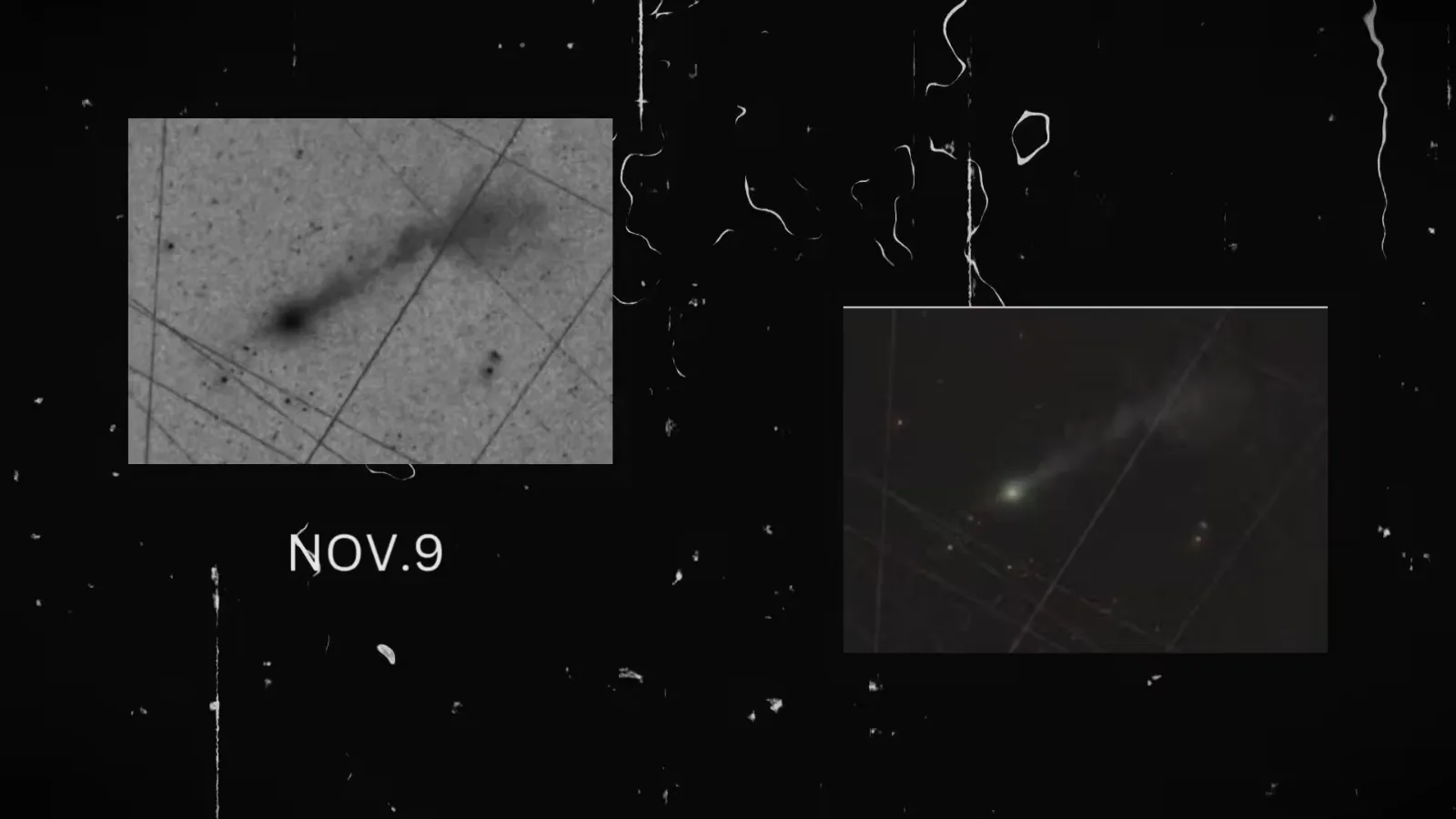
The second anomaly involves the seven directional jets.
Loeb recently published findings that seven jets were observed around 3I/ATLAS.
He poses the question that many are reluctant to answer: why assume these jets are the result of ice sublimation rather than thrusters? If technological objects like NASA probes behave like dark comets, why not consider this possibility for 3I/ATLAS?
The third anomaly is its size and speed.
Loeb repeatedly emphasizes that 3I/ATLAS is gigantic compared to other interstellar objects and is also faster.
According to his calculations, larger objects in nature tend to move slower due to energy conservation.
The probability of this combination occurring is less than 0.1%.
The fourth anomaly is perfect timing.
Loeb finds it statistically impressive that 3I/ATLAS arrived at the exact moment to pass close to Mars, Venus, and Jupiter while remaining invisible from Earth during its perihelion.
He calculated the probability of this occurring at a mere 0.005%—that’s 5 in 100,000.
The fifth anomaly is its strange metallic composition.
Analyses suggest that 3I/ATLAS has a much higher nickel-to-iron ratio than any known comet.
Loeb noted that this ratio resembles the metallic alloys produced industrially here on Earth.
The sixth anomaly is the lack of water.
Avi Loeb points out that comets are typically considered “dirty snowballs,” but 3I/ATLAS has only 4% water by mass.
He likened it to finding an iceberg that is 96% rock.
The seventh anomaly is extreme negative polarization.
Observations indicate that 3I/ATLAS shows an extreme negative polarization pattern that has never been seen in any other comet.
It’s as if 3I/ATLAS is twisting light in a way that known natural materials simply do not.
The eighth anomaly is the direction of the Wow! signal.
Loeb highlighted that 3I/ATLAS came from a direction that coincides within a margin of only 9 degrees with the origin of the famous Wow! signal from 1977.
He calculated that this is statistically significant in the context of interstellar space.
The ninth anomaly is its impossible blue brightness.
Recently discovered near perihelion, 3I/ATLAS appeared more intensely than any known comet and became bluer than the Sun itself.
According to Loeb, this is physically very difficult to explain with normal cometary materials.
Loeb elevates the discussion to another level by stating that the main threat to new knowledge is the arrogance of experts.
He also made a profound observation about our position in the cosmos: most of the 100 billion stars in our galaxy formed billions of years before the Sun.
Our track record is not very impressive in the cosmic scheme of things.
He concluded with a humbling thought: there’s a vast amount of space and time we’ve never explored.
We can learn new things as long as we maintain humility and an open mind.
According to Loeb, we should consider that our Voyager probes will take less than a billion years to cross the Milky Way disc.
If we can do that, civilizations billions of years older certainly can achieve much more.
Loeb was specific about what to expect in the coming weeks before December 19th.
We will be able to measure the velocity, density, and composition of the jets.
If we don’t find the expected fragments of a natural comet, we will have our answer.
He also mentioned that it’s better to be optimistic because life is sometimes a self-fulfilling prophecy.
Loeb noted that the search is intensifying with the launch of the Rubin Observatory and the construction of three Galileo project observatories.
According to him, we are entering a new era of systematic search for technological artifacts.
When a Harvard astrophysicist bets money that we will have evidence of extraterrestrial technology by 2030 and states that the search for technological artifacts began in 2025 with 3I/ATLAS, we need to pay attention.
As Loeb himself said, “By maintaining curiosity and humility while gathering clues in this detective story, science unites us.”
And his final reflection struck me: we are engaged in a scientific search for extraterrestrial technological artifacts because it’s better to be optimistic—because life is sometimes a self-fulfilling prophecy.
News

Ella Mai’s Shocking Confession: The Hidden Truth Behind Her Secret Baby and R&B Royalty!
Ella Mai’s Shocking Confession: The Hidden Truth Behind Her Secret Baby and R&B Royalty! Ella Mai, the voice behind the…

Nicole Kidman Breaks Her Silence: The Shocking Truth Behind Her Divorce from Keith Urban!
Nicole Kidman Breaks Her Silence: The Shocking Truth Behind Her Divorce from Keith Urban! After nearly two decades of a…

The Heartbreaking Reality of Tom Selleck: From Fame to Fear of Losing It All!
The Heartbreaking Reality of Tom Selleck: From Fame to Fear of Losing It All! Tom Selleck, the iconic actor known…

King Arthur’s Tomb Found: The Shocking Truth Behind the Legend That Changes Everything!
King Arthur’s Tomb Found: The Shocking Truth Behind the Legend That Changes Everything! The legend of King Arthur has captivated…

Keanu Reeves’ Heartbreaking Farewell: The Real Reason He May Never Return to Action Films!
Keanu Reeves’ Heartbreaking Farewell: The Real Reason He May Never Return to Action Films! Keanu Reeves, the beloved action star…

Jeremy Wade Breaks His Silence: The Shocking Truth Behind the Cancellation of River Monsters!
Jeremy Wade Breaks His Silence: The Shocking Truth Behind the Cancellation of River Monsters! After nearly a decade of captivating…
End of content
No more pages to load






