
China Claims to Hear MH370’s Last Cry—Was the World Looking in the Wrong Place?
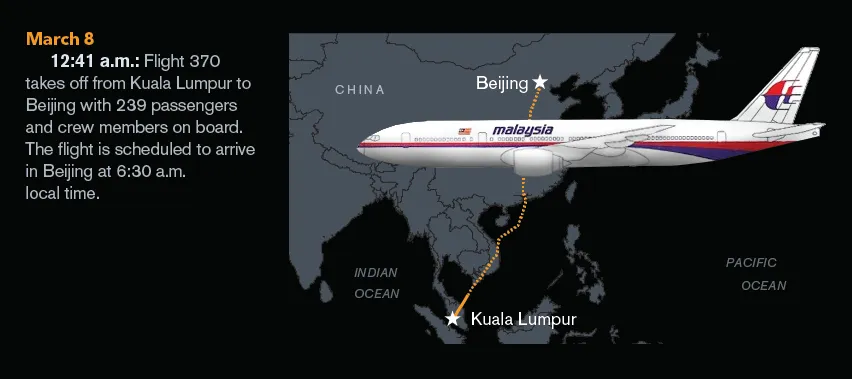
More than a decade has passed, yet the mystery of Malaysia Airlines Flight MH370 continues to perplex the world. On a quiet night in March 2014, a Boeing 777 lifted off from Kuala Lumpur, bound for Beijing, carrying 239 people from 14 different countries. The weather was clear, the climb smooth, and for the first 38 minutes, nothing seemed out of the ordinary. Then, as the aircraft approached Vietnamese airspace, the calm was shattered. Air traffic control received a final transmission from the cockpit: “Good night, Malaysian 370.” Those were the last words ever heard from the plane. Just two minutes later, the transponder that shared the aircraft’s identity, altitude, and speed went silent.
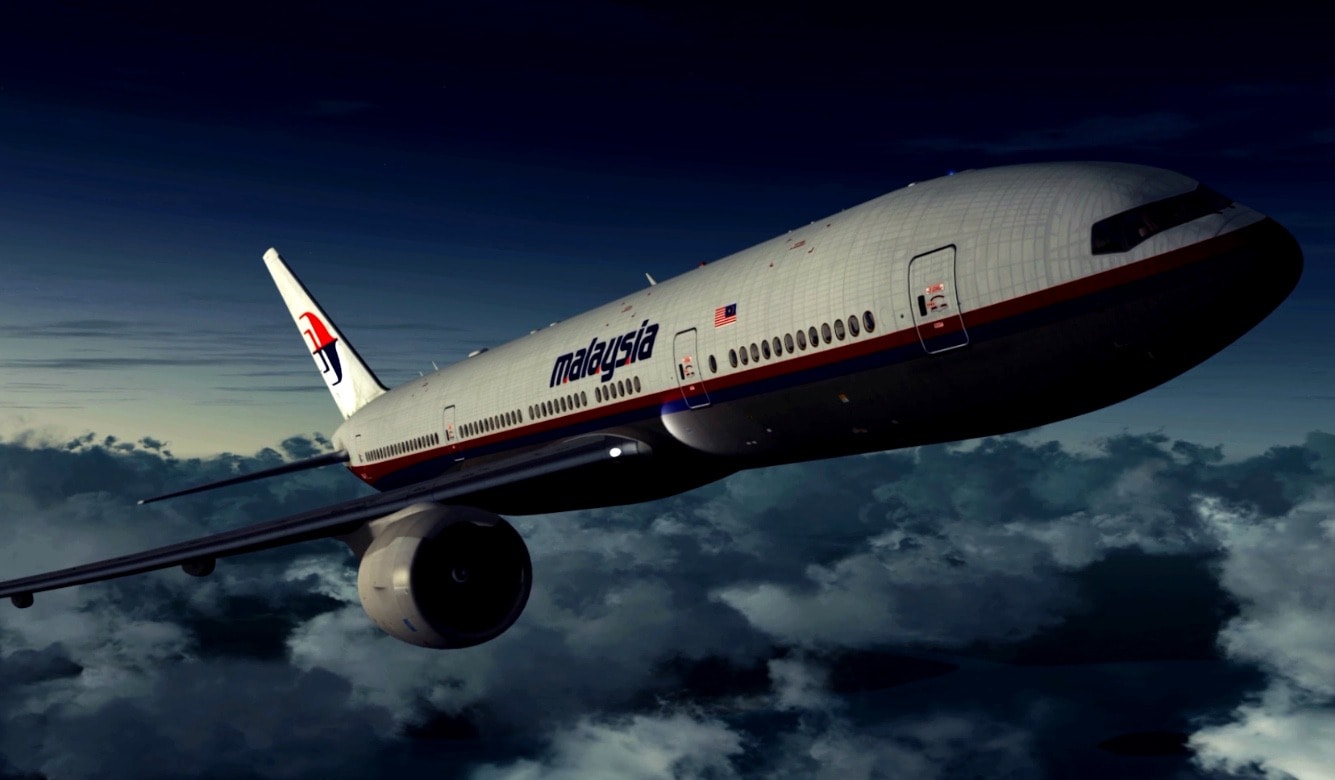
Civilian radar screens showed nothing, as if the jet had vanished into thin air. However, behind the scenes, military radar operators in Malaysia picked up a different story. They watched an unidentified target turn sharply west, flying back across the peninsula and heading out over the Strait of Malacca. The signature matched a large commercial aircraft, yet no official flight plan explained why it was there. For over an hour, this plane moved across the sky without lights, communication, or reason. Finally, radar contact ended over the Andaman Sea, leaving only silence behind.
Investigators were left with no direct trail, but a hidden system offered clues. Even with most communication systems switched off, the jet’s satellite data unit continued to send handshakes to an Inmarsat satellite. These digital signals did not reveal the exact position but allowed experts to calculate distance arcs stretching across the Indian Ocean. The final arc, known as the seventh arc, became the focus of the largest search in aviation history. For years, ships towed sonar equipment through one of the most hostile parts of the sea. The seafloor there is not flat but a broken landscape of mountains, ridges, and deep trenches, ranging from 2 to 4 kilometers below the surface.
Storms, currents, and crushing pressure turned every attempt into a slow battle against nature. Despite scanning more than 120,000 kilometers, the result was the same: no aircraft was found. Only a handful of fragments, including a flaperon discovered on Réunion Island in 2015, offered proof that MH370 had ended in the ocean. These pieces scattered across distant shores of Africa and the Indian Ocean confirmed the tragedy, but not the location.
As the years passed, frustration grew. Families demanded answers, governments argued, and theories multiplied. Yet, the sea refused to give up its secret. By 2017, the official search was called off, leaving behind grief, doubt, and a feeling of unfinished business. But silence does not erase evidence. In the noise of the ocean, one sound stood apart: a faint rhythmic pulse recorded in April 2014 by a Chinese patrol ship, the Hiken 01. The frequency was 37.5 kHz, almost identical to the beacon of a black box. It was heard once, then lost, and soon dismissed as interference. Yet, even a single sound can change everything.
In the first weeks after MH370 vanished, the world searched desperately for any sign in the vast Indian Ocean. Among the many ships sent out was the Chinese patrol vessel Hiken 01. It was not the most advanced ship in the mission, but it carried one important tool: a handheld hydrophone that could pick up sounds underwater. On April 5, 2014, less than a month after the plane disappeared, that device caught something extraordinary. The crew reported a steady pulse repeating every second at a frequency of 37.5 kHz. That number was not random; it was the exact frequency of black box pingers, the beacons designed to lead rescuers to flight recorders lying under the sea. For a brief moment, the silence was broken, and hope spread around the world.
Headlines suggested the search was almost over, and families believed the nightmare might finally end. Ships and planes from several nations rushed to the location to confirm the signal. The site was marked near 25° south and 101° east, inside the 84,000 square mile zone west of Australia. But the excitement faded quickly. The next day, the pulse could no longer be heard. Other ships equipped with more powerful pinger locators scanned the same waters but found nothing. The signal seemed to vanish as suddenly as it appeared, leading officials to doubt the report.
Some experts suggested it was interference from the ship’s own systems, while others pointed to the noisy environment of the sea, where both natural and artificial sounds can create false hope. Within days, the Hiken 01 discovery was pushed aside, labeled an anomaly, and the official search moved on, guided by satellite data from Inmarsat. Yet, the debate never ended. Unlike most reports, the announcement did not go through the Australian-led coordination center. Instead, it was broadcast directly by China’s state news agency, Xinhua, raising suspicion and even diplomatic tension as other nations felt excluded from the process.
Western experts voiced frustration, pointing out that Hiken 01 had used a simple hydrophone on a cable unlikely to detect a pinger from 4,500 meters deep. While advanced British and American equipment later found nothing, analysts suggested China may have rushed to announce the signal under domestic pressure, since 154 Chinese citizens were on the flight, wanting to be seen as leading the international investigation. Still, supporters insisted the reading was too precise to ignore. A black box pinger is built to emit at 37.5 kHz, and the pulse recorded by Hiken 01 matched it exactly. Even David Gallo, an ocean explorer who helped locate Air France Flight 447 in 2009, admitted the detection could not be easily dismissed as natural noise.
Families clung to the possibility that this was the last cry of MH370 hidden under miles of water. In later years, independent researchers suggested the Chinese vessel may have been right above the crash site. This view grew stronger when Ocean Infinity, a private exploration company, built a new search plan centered on that very signal. For them, it was not a ghost but a breadcrumb left by the missing jet itself. If Hiken 01 was correct, the world may have overlooked the most important clue in the case. But if it was wrong, what other evidence could still be trusted?
The search for MH370 became the largest operation in aviation history but also one of its most painful failures. Within weeks of the disappearance, 26 nations joined forces, deploying ships, aircraft, satellites, and advanced sonar systems. The price was staggering, running into hundreds of millions of dollars. Yet, the task was more complex than anyone had imagined. The chosen search zone stretched across 120,000 kilometers of the southern Indian Ocean, a place as hostile as it was remote. The ocean floor there was not smooth sand but a jagged landscape of ridges, canyons, and underwater mountains taller than the Alps.
Depths ranged from 2,000 to 4,000 meters, making every scan slow and uncertain. Sonar equipment had to be towed behind ships for weeks at a time, and even then, it could only cover small areas. Storms and rough seas forced long pauses, dragging the operation on for years. Despite all the effort, the results were heartbreaking. No fuselage, no engines, no tail section was ever found in the mapped zones. All that surfaced were fragments carried by currents to faraway shores. In July 2015, a flaperon washed up on Réunion Island, east of Madagascar, confirming for the first time that MH370 had indeed ended in the ocean.
Later, other pieces were discovered in Mozambique, South Africa, and Madagascar, eventually adding up to more than 40 suspected items. Of those, only three were officially confirmed as parts of the missing Boeing 777. These discoveries suggested a violent breakup at sea. Yet, they revealed nothing about why the aircraft had gone off course. The families of the passengers followed every update with desperate hope. But the years of silence wore them down. Malaysia, China, and Australia, who led much of the early operation, were forced to admit that the official search had failed. In January 2017, the mission was formally called off, with officials declaring the mystery unsolvable with the evidence available. That decision was met with grief and outrage.
Families accused governments of giving up too soon, while investigators admitted that the final resting place of the plane might lie just outside the mapped zones. Even experts acknowledged the painful truth: the ocean was simply too vast, and the tools available too limited to guarantee success. For the relatives left behind, the lack of answers was worse than confirmation of death. Every anniversary brought vigils and protests with banners demanding, “Find MH370.” The wreckage had not been located, the black boxes had not been recovered, and the cause of the disappearance remained a blank page.
What made this outcome even more bitter was the contrast with other accidents. Air France Flight 447 had also crashed into the ocean in 2009, but its recorders were located within two years. The technology had worked then, yet with MH370, the ocean seemed determined to keep its secrets. The search left scars not only on the families but on the reputation of modern aviation itself. How could an aircraft disappear in an age of satellites, radar, and global tracking? The world was left stunned by the limits of its own technology.
Yet, while the official effort ended, private companies and independent researchers refused to let the trail go cold. The mystery had not been solved, and new tools were already being prepared for another attempt. But before that second search began, more evidence would emerge in the form of drifting debris and unexplored theories.
When official searches failed to solve the mystery of MH370, independent researchers stepped into the void, determined to keep the case alive. One of the most visible figures was Blaine Gibson, an American lawyer who gave up his normal life to travel across the shores of the Indian Ocean. He followed ocean drift patterns, walked remote beaches in Mozambique and Madagascar, and personally handed several suspected pieces of wreckage to investigators. His discoveries embarrassed governments because while entire fleets had searched without success, a single private citizen found debris with little more than persistence and intuition.
At the same time, a group of engineers and scientists formed what became known as the Independent Group. Among them was Victor Iannello, who had once worked on advanced systems for the US military. He and others dissected the Inmarsat satellite data that guided the official search, publishing detailed analyses that suggested alternate crash sites outside the mapped zone. Their work kept pressure on authorities, showing that there were still credible areas left unexplored.
Another independent researcher, Richard Godfrey, used an unusual tool called WSPR, or Weak Signal Propagation Reporter. This global network of amateur radio stations records disruptions in radio waves, and Godfrey argued that the flight path of MH370 could be tracked through the small disturbances it left behind. His model suggested the jet may have flown in looping patterns, possibly a holding pattern, before its final descent. While some experts criticized the method, others admitted it added valuable clues that matched satellite and drift data.
Together, these outsiders challenged the idea that only governments could conduct serious investigations. They poured thousands of hours into studies, often unpaid and without access to full data sets. Yet, they advanced the debate further than many official reports. Their persistence also inspired private companies like Ocean Infinity to take bold risks, betting that advanced robotics and fresh theories could finally succeed where traditional efforts had failed.
The families of the 239 passengers played a quieter but still powerful role. They organized memorials, issued open letters, and used media attention to remind the world that this was not simply a technical puzzle but a human tragedy. Their grief gave weight to the work of independent researchers, making it harder for officials to ignore. Together, the debris hunters, data analysts, and families formed an unlikely alliance. They showed that even without official backing, the search for truth could continue through determination and innovation.
Yet, despite these efforts, the central question remains unanswered. If independent researchers have carried the case this far, will new technology finally prove them right? Or will the ocean keep its silence for another generation? When governments stepped back from the hunt for MH370, a private company stepped forward with a bold plan. The name was Ocean Infinity, a marine exploration firm known for daring missions and cutting-edge technology. In 2018, they offered to take on the search under a contract unlike any before, a no-find, no-fee deal. It meant spending millions of their own dollars on ships, crews, and high-tech equipment, with payment only if they located the wreck. The risk was massive, but the potential reward stood at $70 million. For Ocean Infinity, this was about more than money; it was a chance to prove that private innovation could succeed where governments had failed.
At the heart of their confidence was the pulse detected by the Chinese ship Hiken 01 in April 2014. While many experts dismissed it, Ocean Infinity treated the 37.5 kHz signal as a real lead—perhaps the closest clue to MH370’s resting place. The company was no stranger to high-stakes recoveries. In 2017, they located the Argentine submarine San Juan, missing for a year in the Atlantic. They also found the bulk carrier Stellar Daisy, lost with 22 crew members. Both successes gave them the credibility to take on MH370.
Their edge lay in a fleet of autonomous underwater vehicles (AUVs) able to dive thousands of meters. Unlike traditional sonar dragged behind slow ships, these robotic subs worked in swarms, scanning the seabed with precision. Each AUV acted like a satellite under the waves, mapping canyons and ridges in high resolution. Together, they could sweep up to 1,300 kilometers a day, far outpacing earlier methods. During their 2018 mission, they covered more than 112,000 kilometers in just three months—nearly equal to the government-led search, which had taken two and a half years. But despite the speed and accuracy, they found nothing. No engines, no fuselage, no black boxes. For a while, it seemed the gamble had failed.
Yet, Ocean Infinity did not walk away. In 2024, they returned with a new proposal, again willing to risk their own funds. This time, they focused sharply on the Hiken 01 signal, suggesting that the world may have overlooked the most important clue from the start. By 2025, they had secured an 18-month contract with Malaysia to relaunch the mission. Their armada of AUVs was once again bound for the southern Indian Ocean. For families, this was a fragile but vital lifeline, proof that the world had not forgotten. But could these robotic submarines finally succeed where everyone else had failed?
To search for MH370, Ocean Infinity deployed something the world had never seen before: a robotic navy called the Armada. This fleet was built around autonomous underwater vehicles (AUVs) able to travel miles beneath the surface without human control. Unlike older systems that dragged sonar behind a single slow ship, these AUVs could dive deep, spread out, and scan the seabed with speed and detail. Together, they formed a moving network, a kind of digital net stretched across the ocean floor. Each AUV carried high-frequency sonar and cameras sharp enough to capture objects as small as an engine blade. They could map the terrain in total darkness, covering up to 1,300 kilometers every day—dozens of times faster than the previous government search, which had taken years to scan similar ground.
Ocean Infinity’s flagship vessel, the Seabed Constructor, deployed several AUVs at once. They fanned out like scouts, diving thousands of meters into trenches and valleys once thought unreachable. After hours below, they surfaced with hard drives full of data quickly analyzed by teams on deck. It became a cycle: launch, dive, scan, return, repeat. This method had already brought results. The Armada located the Argentine submarine San Juan in 2018 after it had been missing for a year. They also discovered the bulk carrier Stellar Daisy in the South Atlantic, solving another maritime mystery. These successes proved the technology’s potential and raised hopes it could do the same for MH370.
Some experts even compared the AUVs to satellites, except these satellites were mapping the deep sea instead of orbit. By working independently, they reduced human error and expanded coverage, making them ideal for a search zone stretching thousands of miles. Still, the Indian Ocean is one of the harshest places on Earth. With high waves, shifting currents, and a jagged seafloor, the Armada had to adapt constantly. Yet, it performed with remarkable reliability.
For the families, the sight of these bright submarines being lowered into the waves carried symbolic weight. It was proof that determination had not died, that technology still pushed against the silence of the sea. Ocean Infinity believed if any tool could uncover MH370, it was this robotic fleet. But even the best machines are powerless without knowing the right place to look.
What if the plane lies outside the arcs that define the first search? For years, the search for MH370 relied on satellite data, not on signals like the one detected by Hiken 01. The British firm Inmarsat provided seven handshakes—digital pings exchanged between the plane and a satellite over the Indian Ocean. By measuring delay and frequency, investigators drew wide arcs where the jet might have flown. These arcs shaped the search, stretching deep into the southern ocean. But what if the math was wrong? If the wreck lies near where Hiken 01 heard the 37.5 kHz pulse, then the satellite data may have been misread.
Critics argue the signals were never meant for tracking. They were designed for communication, and the calculations relied on assumptions. Even a small error could shift the crash site by hundreds of kilometers. Meanwhile, debris carried by unpredictable currents clouded the picture further. Independent researchers turned to another source, WSPR, the Weak Signal Propagation Reporter. This global network records tiny disruptions in radio waves, and some experts believe MH370 disturbed it, leaving traces of a looping figure-eight flight. If correct, the wreck may lie in areas never fully searched.

Theories about why the plane went off course remain divided. Some point to Captain Zaharie Ahmad Shah, whose simulator once showed a route into the Southern Ocean. Others suspect a fire from lithium-ion batteries, while some argue hijacking or even remote takeover. Each theory sounds possible, yet none can be proven without the flight recorders. The black boxes could reveal whether the final minutes were a controlled descent or a chaotic fall. They could show if the cockpit went silent by choice or by tragedy. Until then, every explanation is speculation, and each clue sparks fresh debate. For families, only one truth matters: knowing their loved ones’ final moments. That truth still lies on the seabed, waiting to be uncovered.
So, will the next search finally bring closure, or will the ocean keep its secrets forever? The disappearance of MH370 did more than break hearts; it forced aviation to confront its weakest points. For decades, the world believed modern planes could never simply vanish. But this tragedy showed that even in the 21st century, a wide-body jet carrying 239 people could slip into silence without leaving a trace.
The first lesson was about tracking. Before 2014, international rules did not require real-time global tracking of commercial flights. After MH370, the United Nations Agency, ICAO, introduced new standards that demand aircraft report their position every 15 minutes and every minute during emergencies. This change aimed to make it impossible for a plane to go missing without a signal.
The second lesson was about flight recorders. Traditional black boxes send pings for only 30 days before their batteries die, which left search teams racing against time in the case of MH370. Now, manufacturers are working on longer-lasting beacons and deployable recorders that could float to the surface after a crash. These upgrades promise to give investigators a better chance to recover vital data.
The third lesson was about communication between nations. The MH370 search revealed gaps in how governments share radar data and coordinate search zones. Today, international agreements push for greater cooperation, with regional centers expected to exchange information faster during crises. For families, these changes are small comfort because their loved ones never came home. But for the industry, MH370 became a wake-up call, reminding everyone that safety is never finished work. Every regulation written since then carries the shadow of that night in March 2014.
And yet, even with new rules, the wreck has not been found. Technology may have improved, but the ocean has not given up its secret. The question lingers: will these lessons be enough when the next mystery appears? Or is the world still unprepared for another MH370? The disappearance of MH370 is more than a mystery of aviation. It is a test of how far humanity will go to find the truth. For over a decade, families have lived with silence, nations have spent fortunes, and technology has pushed into the darkest corners of the ocean. We will find MH370. Yet, the answer still waits beneath the waves. If the wreck is found, it could change everything we know about flight, safety, and even trust in global systems. But if the ocean keeps its secret, then one question remains: how do we prepare for the next time a plane vanishes without a trace?
News

Ella Mai’s Shocking Confession: The Hidden Truth Behind Her Secret Baby and R&B Royalty!
Ella Mai’s Shocking Confession: The Hidden Truth Behind Her Secret Baby and R&B Royalty! Ella Mai, the voice behind the…

Nicole Kidman Breaks Her Silence: The Shocking Truth Behind Her Divorce from Keith Urban!
Nicole Kidman Breaks Her Silence: The Shocking Truth Behind Her Divorce from Keith Urban! After nearly two decades of a…

The Heartbreaking Reality of Tom Selleck: From Fame to Fear of Losing It All!
The Heartbreaking Reality of Tom Selleck: From Fame to Fear of Losing It All! Tom Selleck, the iconic actor known…

King Arthur’s Tomb Found: The Shocking Truth Behind the Legend That Changes Everything!
King Arthur’s Tomb Found: The Shocking Truth Behind the Legend That Changes Everything! The legend of King Arthur has captivated…

Keanu Reeves’ Heartbreaking Farewell: The Real Reason He May Never Return to Action Films!
Keanu Reeves’ Heartbreaking Farewell: The Real Reason He May Never Return to Action Films! Keanu Reeves, the beloved action star…

Jeremy Wade Breaks His Silence: The Shocking Truth Behind the Cancellation of River Monsters!
Jeremy Wade Breaks His Silence: The Shocking Truth Behind the Cancellation of River Monsters! After nearly a decade of captivating…
End of content
No more pages to load






