
The Vanishing of MH370: The Plane That Disappeared Without a Trace—What Really Happened in the Sky?
How can a Boeing 777, one of the most advanced aircraft in the world, simply vanish without a trace? This question has haunted aviation experts, families, and the world for over a decade.
Malaysia Airlines Flight MH370, carrying 239 souls, disappeared on March 8, 2014, during a routine flight from Kuala Lumpur to Beijing.
This is the story of that flight, the events leading up to its disappearance, and the ongoing quest for answers that may never come.

On the night of March 7, 2014, the crew of Malaysian Airlines Flight 370 prepared for what was supposed to be a routine flight.
Captain Zaharie Ahmad Shah, a 53-year-old veteran with over 18,000 flight hours, arrived at the crew room at Kuala Lumpur International Airport.
He was known for his reliability and community involvement, often seen helping the elderly and engaging in local politics.
His passion for aviation extended beyond the cockpit; he had even built a home flight simulator.
Twenty-five minutes later, First Officer Fariq Abdul Hamid, a 27-year-old pilot in training, joined him.
This flight would be a significant step in Fariq’s career, as he was transitioning from the Airbus A330 to the Boeing 777.
The two pilots had never flown together before, which added a layer of excitement and nervousness to the flight.
The pre-flight briefing revealed favorable weather conditions, with only a potential turbulence issue due to a strong jet stream along their route.
They meticulously checked the flight plan and fuel requirements, deciding on a final fuel load of 49,100 kilos—sufficient for the journey with extra reserves.
As they walked towards the aircraft, they were joined by a seasoned cabin crew, ready to ensure a safe and comfortable flight for the 227 passengers aboard.
Among the passengers were families, business travelers, and tourists, each with their own stories and destinations.
At 12:40 AM on March 8, Flight MH370 was cleared for takeoff.
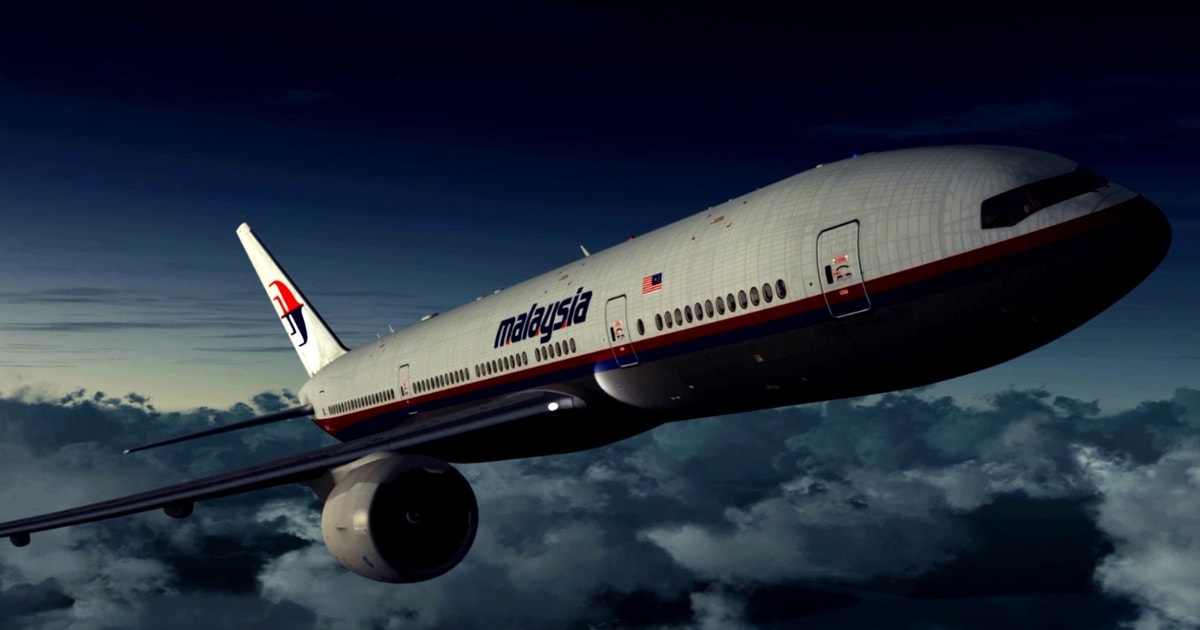
The aircraft, a majestic Boeing 777-200ER, roared down the runway and lifted into the night sky.
Everything seemed normal as the pilots communicated with air traffic control, smoothly transitioning through their initial climb.
They were instructed to proceed to a waypoint called Igari and climb to an altitude of 18,000 feet.
However, as they ascended, a subtle shift occurred.
At 1:19 AM, Captain Zaharie made a routine call to the area controller, confirming they were cruising at 35,000 feet.
His voice was calm, but a few minutes later, he repeated the same information, an unusual action that raised eyebrows among aviation experts later.
Just moments after this second call, the aircraft’s transponder was switched off.
This crucial device, responsible for sending the aircraft’s location and information to air traffic control, went silent.
At 1:21 AM, the aircraft made a sharp left turn, deviating from its flight path.
As the aircraft turned westward, it entered a critical phase.
The last communication with air traffic control came shortly after the turn, and then silence enveloped the flight.
The last radar contact was at 2:22 AM, after which all conventional tracking ceased.

What happened during those final moments? Theories began to swirl.
Some speculated a hijacking, while others suggested a catastrophic failure.
However, the evidence hinted at something more calculated.
The aircraft continued flying, avoiding military radar and air traffic control, indicating that someone in the cockpit had expert knowledge of aviation protocols and the airspace layout.
As the aircraft flew southwest, it was detected by primary radar, showing it was still under control.
But why was it not intercepted? A combination of miscommunication and confusion among air traffic controllers allowed the aircraft to slip through the cracks.
When the aircraft failed to arrive in Beijing, a massive search operation was launched.
Initially, the focus was on the South China Sea, where the plane was last known to be.
However, as days turned into weeks with no sign of the aircraft, the search area expanded to the southern Indian Ocean.
Families of the passengers were left in anguish, desperately seeking answers.
The media spotlight intensified, and theories about the fate of MH370 proliferated.
Some believed it was a deliberate act, while others thought it was a tragic accident.
In the months that followed, debris began washing ashore on distant islands and coastlines, providing the first tangible evidence that the aircraft had indeed crashed.
Pieces of the plane, including a flaperon, were confirmed to belong to MH370, but the main wreckage remained elusive.
As the investigation continued, advancements in technology offered new hope.
The Inmarsat satellite data became a focal point, providing crucial information about the aircraft’s potential flight path.
Analysts reverse-engineered the satellite signals to determine where MH370 might have traveled after losing contact.
Seven “handshakes” between the aircraft and the satellite indicated that the plane continued to fly for several hours after its last radar contact.
These handshakes created arcs that suggested possible routes over the Indian Ocean, but the search area was vast and challenging.
In 2021, a breakthrough occurred when researchers began analyzing whisper data—a protocol designed to track radio transmissions.
This data provided insights into the aircraft’s movements, suggesting a more complex flight path than initially believed.
As investigators pieced together the events leading to the crash, they faced a haunting question: What happened to the passengers and crew during those final moments? Some theories proposed that the cabin was depressurized, incapacitating everyone on board.
Others suggested that the flight was still under the control of someone in the cockpit, navigating manually.
The final handshake occurred at 8:19 AM, marking the last known communication from MH370.
The aircraft was believed to have been in a steep descent, possibly due to fuel starvation.
As the last signals faded, the mystery deepened.
Despite extensive search efforts, the main wreckage of MH370 has never been found.
The aviation community continues to learn from this tragedy, implementing new tracking technologies and improving safety protocols.
However, the families of the victims remain without closure, their loved ones lost in the vast expanse of the ocean.
In recent years, renewed calls for a search have emerged, fueled by advancements in technology and new theories about the aircraft’s final resting place.
As researchers continue to analyze data and propose new search areas, hope flickers for those who have waited so long for answers.
The story of MH370 is not just a tale of loss; it is a testament to the resilience of the human spirit.
The families of the passengers and crew have shown remarkable strength in their quest for truth.
As new technologies emerge and investigations continue, there is hope that one day, the mystery of MH370 will be solved, bringing closure to those left behind.
In the end, the disappearance of MH370 remains one of the greatest mysteries in aviation history.
With each passing year, the search for answers continues, driven by the desire to honor those who vanished into the night sky on that fateful day.
The world watches and waits, hoping for the day when the truth will finally be revealed.
News

Ella Mai’s Shocking Confession: The Hidden Truth Behind Her Secret Baby and R&B Royalty!
Ella Mai’s Shocking Confession: The Hidden Truth Behind Her Secret Baby and R&B Royalty! Ella Mai, the voice behind the…

Nicole Kidman Breaks Her Silence: The Shocking Truth Behind Her Divorce from Keith Urban!
Nicole Kidman Breaks Her Silence: The Shocking Truth Behind Her Divorce from Keith Urban! After nearly two decades of a…

The Heartbreaking Reality of Tom Selleck: From Fame to Fear of Losing It All!
The Heartbreaking Reality of Tom Selleck: From Fame to Fear of Losing It All! Tom Selleck, the iconic actor known…

King Arthur’s Tomb Found: The Shocking Truth Behind the Legend That Changes Everything!
King Arthur’s Tomb Found: The Shocking Truth Behind the Legend That Changes Everything! The legend of King Arthur has captivated…

Keanu Reeves’ Heartbreaking Farewell: The Real Reason He May Never Return to Action Films!
Keanu Reeves’ Heartbreaking Farewell: The Real Reason He May Never Return to Action Films! Keanu Reeves, the beloved action star…

Jeremy Wade Breaks His Silence: The Shocking Truth Behind the Cancellation of River Monsters!
Jeremy Wade Breaks His Silence: The Shocking Truth Behind the Cancellation of River Monsters! After nearly a decade of captivating…
End of content
No more pages to load






