Richard III’s Bloodline: A Shocking DNA Revelation That Could Rewrite History!
In a twist that could alter our understanding of royal lineage, recent DNA tests have cast doubt on the paternity of Richard III, England’s controversial king.
Once thought to be a straightforward case of identification, the genetic analysis of his remains has unveiled a hidden truth that might shake the very foundations of English history.
What secrets lie within Richard’s DNA, and how could they challenge our perception of royal bloodlines? Join us as we explore this extraordinary discovery.
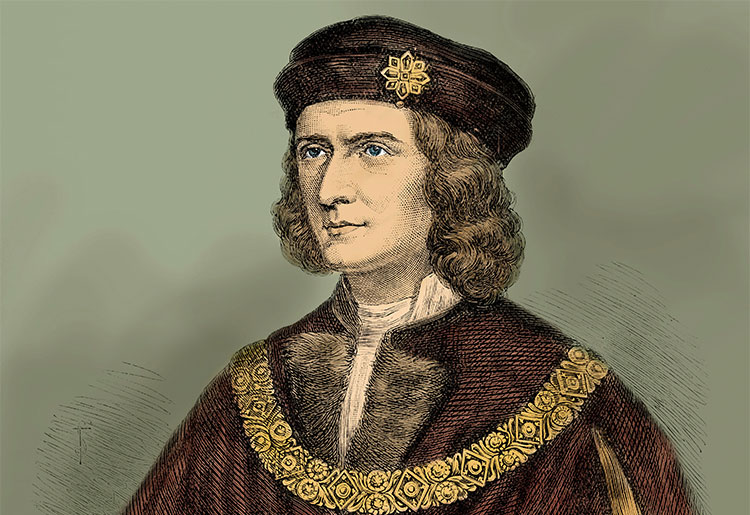
The story begins in an unexpected location—a city parking lot in Leicester, where archaeologists made a groundbreaking discovery in 2012.
Beneath layers of asphalt, they uncovered the long-lost grave of Richard III, who had been buried for over 500 years.
Known as the villain of the Wars of the Roses, Richard’s remains were thought to have been lost to history, supposedly tossed into a river following his defeat.
The excavation was not a grand royal affair but rather the work of a small team guided by a hunch and a historical map.
As they unearthed the twisted skeleton—curved into a sharp “S” shape with signs of violent trauma—the reality of Richard III’s existence became tangible.
The remains were meticulously transported to a lab, where scientists aimed to confirm the identity of the last Plantagenet king using modern genetic techniques.
The initial goal was to verify whether these bones belonged to Richard III.
This required finding living descendants to compare their DNA with the ancient remains.
After extensive work, the team successfully matched mitochondrial DNA with a living relative from Richard’s maternal line, confirming his identity beyond doubt.
However, as the researchers delved deeper, they realized that the DNA could reveal more than just identity; it held the potential to uncover secrets about Richard’s lineage.
If this was indeed Richard, the genetic markers could trace back to his father, grandfather, and even to Edward III, the powerful ruler from whom the York line claimed descent.
Yet, DNA often reveals truths that history has obscured.
The scientists understood that their findings might challenge long-held beliefs about royal bloodlines.
What if the lineage of kings was not as pure as previously thought?
After confirming Richard’s identity, the researchers turned their attention to the Y chromosome, a genetic marker passed exclusively from father to son.
This test aimed to determine if Richard was a direct descendant of Edward III.
The implications of this analysis were significant: a match would validate the legitimacy of Richard’s claim to the throne, while a mismatch could raise questions about the entire royal lineage.
As the team worked quietly to process the Y chromosome samples, they were acutely aware of the historical weight of their findings.
The results could either reinforce centuries of royal history or unravel the very fabric of the monarchy.
When the data finally emerged, it revealed a shocking truth: Richard III’s Y chromosome did not match that of modern male descendants of Edward III.

This unexpected outcome sent shockwaves through the historical community.
Generations of royal lineage, meticulously documented, had been contradicted by science.
Somewhere between Edward III and Richard III, a recorded father was not the biological one.
This “false paternity event” meant that the royal bloodline was not as unblemished as history claimed.
The implications were staggering.
While Richard III himself was not illegitimate, the revelation suggested that the official family tree had been rewritten, perhaps intentionally.
Historians began to speculate about where the break in the lineage occurred.
Was it Richard of Connisburg, Richard III’s great-grandfather, whose birth had always been shrouded in suspicion? Or could it have happened earlier, among Edward III’s many sons?
As discussions heated up, the notion that the Yorkist line could be based on a misattributed father raised profound questions about the legitimacy of the monarchy.
If the Yorkists were not true descendants of Edward III, what did that mean for the Lancastrians or the Tudors that followed? The very foundations of royal legitimacy, once thought to be solid, were now called into question.
The discovery forced historians to reconsider the concept of royal blood.
It highlighted the fragility of lineage and the complexities of human relationships, even among the nobility.
The idea that royal blood was sacred and unbroken was challenged by the reality that history is often messier than it appears.
The findings did not dethrone anyone or destroy legitimacy; rather, they revealed the human side of monarchy, filled with secrets, choices, and consequences.
Richard III’s story was no longer just about a king; it became a reflection of the broader human experience, encompassing love, loyalty, and betrayal.
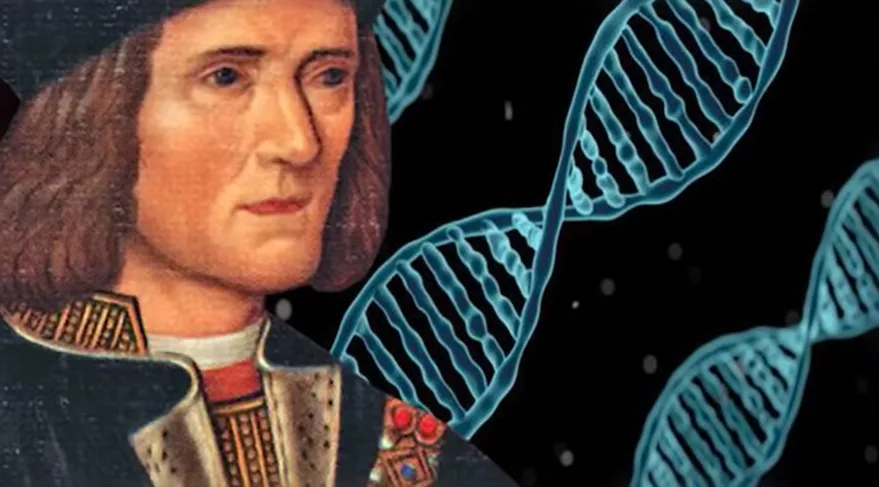
As the news of these findings spread, reactions were mixed.
Some hailed it as a breakthrough in historical science, while others found the implications unsettling.
The University of Leicester team carefully presented their results, emphasizing that they had not accused anyone but merely stated the facts.
The revelation that Richard III’s DNA did not match the expected royal lineage opened a Pandora’s box of historical inquiry.
Scholars began re-examining long-dismissed rumors and speculating about the true nature of Richard’s ancestry.
The truth, while elusive, had become undeniable: the royal bloodline was far more complicated than anyone had imagined.
In the end, the story of Richard III serves as a powerful reminder that history is not static; it evolves with each new discovery.
The remains of a forgotten king, found beneath a parking lot, have prompted a modern reckoning with the past.
As one historian aptly noted, “We didn’t just find Richard III.
We found a mirror,” reflecting the complexities of lineage, identity, and the human condition itself.
Could this shocking revelation about Richard III’s ancestry lead us to rethink the very nature of royal legitimacy today? The conversation continues, inviting us to explore the intricate tapestry of history that binds us all.
News
Ella Mai’s Shocking Confession: The Hidden Truth Behind Her Secret Baby and R&B Royalty!
Ella Mai’s Shocking Confession: The Hidden Truth Behind Her Secret Baby and R&B Royalty! Ella Mai, the voice behind the…

Nicole Kidman Breaks Her Silence: The Shocking Truth Behind Her Divorce from Keith Urban!
Nicole Kidman Breaks Her Silence: The Shocking Truth Behind Her Divorce from Keith Urban! After nearly two decades of a…

The Heartbreaking Reality of Tom Selleck: From Fame to Fear of Losing It All!
The Heartbreaking Reality of Tom Selleck: From Fame to Fear of Losing It All! Tom Selleck, the iconic actor known…
King Arthur’s Tomb Found: The Shocking Truth Behind the Legend That Changes Everything!
King Arthur’s Tomb Found: The Shocking Truth Behind the Legend That Changes Everything! The legend of King Arthur has captivated…
Keanu Reeves’ Heartbreaking Farewell: The Real Reason He May Never Return to Action Films!
Keanu Reeves’ Heartbreaking Farewell: The Real Reason He May Never Return to Action Films! Keanu Reeves, the beloved action star…

Jeremy Wade Breaks His Silence: The Shocking Truth Behind the Cancellation of River Monsters!
Jeremy Wade Breaks His Silence: The Shocking Truth Behind the Cancellation of River Monsters! After nearly a decade of captivating…
End of content
No more pages to load