
The Historical Jesus: Unraveling the Truth Behind the Man, the Myth, and the Legacy
In a world where the existence of historical figures is often taken for granted, the question of whether Jesus Christ truly existed has sparked heated debates for centuries. Was he a divine savior, a charismatic teacher, or merely a myth? As I delved into the evidence and narratives surrounding Jesus, I found myself drawn into a complex tapestry of history, belief, and scholarly inquiry. This exploration led me to uncover compelling arguments and historical references that suggest Jesus was indeed a real person whose impact reverberates through time.
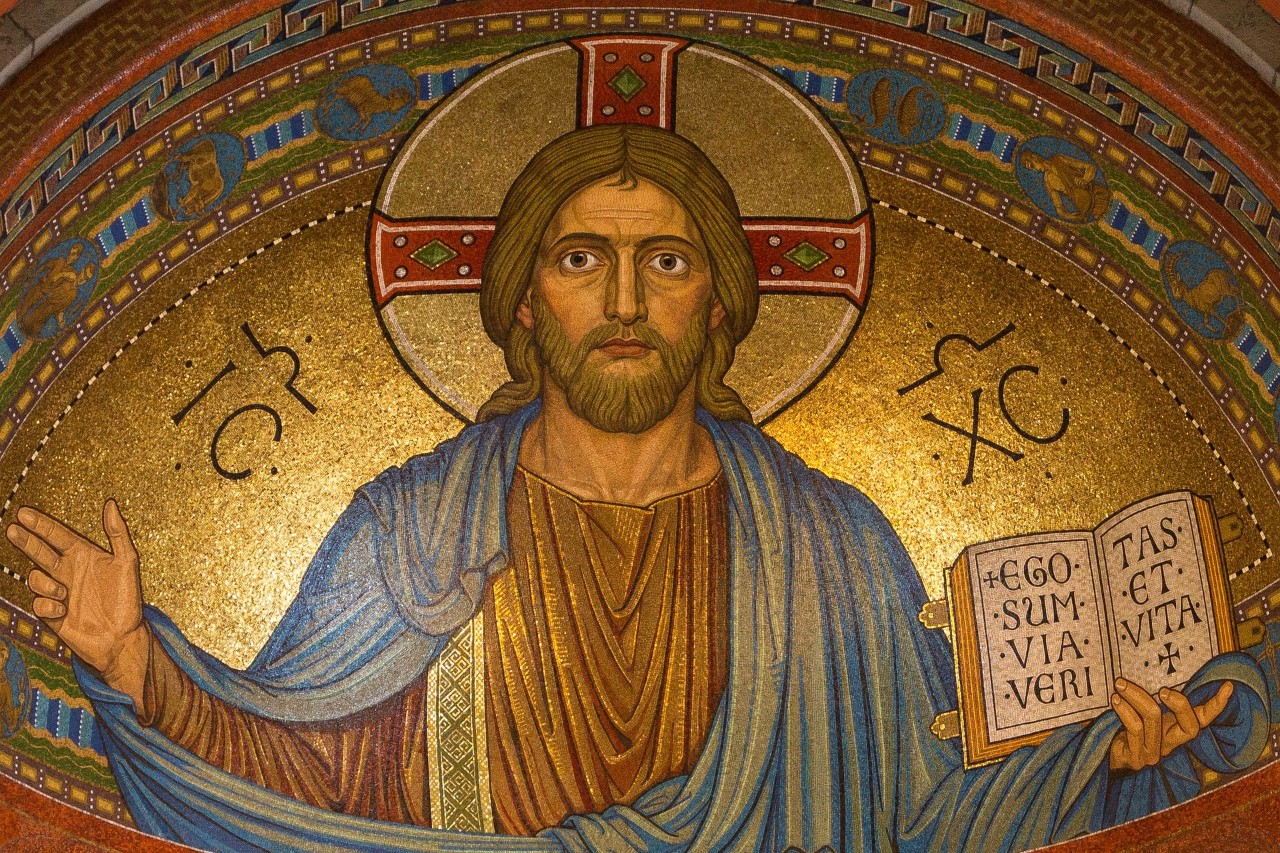
The debate surrounding Jesus’s existence often pits believers against skeptics. On one side, proponents of the mythicist theory argue that Jesus is a purely mythological figure, akin to characters from ancient myths or modern fiction. They contend that early Christians fabricated the narrative of Jesus to promote their beliefs, drawing parallels to other mythological figures. On the other hand, many historians and scholars assert that there is substantial evidence supporting Jesus’s existence as a historical figure.
To understand the arguments for Jesus’s existence, I began my research with the writings of notable historians from antiquity. One of the most significant non-Christian references to Jesus comes from Tacitus, a Roman historian who wrote in the early second century. In his work, Annals, Tacitus discusses the Great Fire of Rome in 64 AD, during which Emperor Nero famously blamed the Christians. Tacitus mentions “Christus,” a reference to Jesus, stating that he suffered the extreme penalty during the reign of Tiberius at the hands of Pontius Pilate. This account, written around 116 AD, is crucial because it provides external confirmation of Jesus’s existence and the early spread of Christianity from a historian who had no vested interest in promoting the faith.
Tacitus’s disdain for Christians adds weight to his account. He was known for his critical stance towards them, often portraying them as a superstitious sect. His mention of Jesus in connection with the persecution of Christians under Nero illustrates that Jesus was a recognized figure even among those who opposed his followers. This reinforces the argument that Jesus was a historical person whose life and death had significant repercussions in the sociopolitical landscape of the time.
Another key figure in the historical discussion is Flavius Josephus, a Jewish historian born shortly after Jesus’s death. His works, particularly Antiquities of the Jews, reference Jesus twice. In one passage, Josephus describes Jesus as a wise man and teacher who was crucified under Pontius Pilate. While some debate exists regarding the authenticity of certain passages, most scholars agree that Josephus’s references to Jesus provide further evidence of his historical presence. Josephus, writing for a Roman audience, had no reason to fabricate a favorable account of Jesus, especially since he himself was a Jew who did not acknowledge Jesus as the Messiah.
Josephus’s writings are particularly significant because they provide insight into the Jewish context of Jesus’s life. He notes that Jesus was known for his wisdom and miracles, and he acknowledges the existence of a group of followers who believed in his teachings. This acknowledgment from a Jewish historian adds credibility to the notion that Jesus had a substantial impact on his contemporaries, even if Josephus himself did not accept Jesus’s divinity.
In addition to Tacitus and Josephus, another significant source is Pliny the Younger, a Roman governor who wrote to Emperor Trajan around 112 AD. In his letters, Pliny describes Christians as followers of “Christus,” noting their refusal to renounce their faith even under the threat of execution. This indicates that within a generation of Jesus’s death, his followers were already organized into a distinct religious group, further supporting the notion that Jesus was a real historical figure.
Pliny’s correspondence with Trajan reveals the early Christian community’s commitment to their beliefs, even in the face of persecution. He describes how Christians would gather to sing hymns to Christ as to a god and how they would refuse to worship the Roman gods, even when faced with dire consequences. This dedication underscores the profound impact Jesus had on his followers and the rapid spread of his teachings.
The Gospels, while considered sacred texts by Christians, also serve as historical documents that provide insight into Jesus’s life and teachings. The Synoptic Gospels—Matthew, Mark, and Luke—are believed to have been written between 60 and 100 AD, after Jesus’s crucifixion. These texts detail Jesus’s actions, miracles, and interactions with various groups, including Jewish authorities. The Gospel of Mark, often regarded as the earliest and most straightforward, is particularly valued for its historical reliability. It offers a glimpse into the social and political context of first-century Judea, corroborating events and figures mentioned in non-Christian historical sources.
The Gospel of Mark’s portrayal of Jesus is strikingly human, emphasizing his compassion, struggles, and interactions with marginalized individuals. This representation aligns with the cultural and historical context of the time, providing a believable account of a charismatic leader who challenged societal norms. Additionally, the Gospel’s focus on Jesus’s suffering and crucifixion resonates with the experiences of early Christians, many of whom faced persecution for their beliefs.
The Gospel of John, written later, emphasizes the divine nature of Jesus but still contains historical elements that reflect early Christian beliefs. For instance, it describes specific details about Jesus’s crucifixion that align with known Roman practices. The geographical and cultural references within the Gospels further lend credibility to their accounts, as they match external sources and archaeological findings.

Speaking of archaeology, several discoveries support the existence of Jesus and the historical context in which he lived. For instance, the town of Nazareth, where Jesus is said to have grown up, was once questioned by skeptics regarding its habitation during his time. However, archaeological excavations have uncovered homes, tombs, and artifacts dating back to the first century, confirming that Nazareth was indeed inhabited during Jesus’s life.
In 2009, archaeologists uncovered a first-century house in Nazareth believed to be typical of the time. The discovery of pottery and other artifacts supports the notion that Nazareth was a small, rural village during Jesus’s upbringing. This finding counters earlier skepticism about the existence of Nazareth, further solidifying the historical context of Jesus’s life.
One of the most fascinating archaeological finds is the Pilate Stone, discovered in 1961 in Caesarea Maritima. This limestone block bears an inscription referring to Pontius Pilate, the Roman governor who presided over Jesus’s trial. Before this discovery, there was little archaeological evidence confirming Pilate’s existence, making the stone a significant link between the Gospel accounts and historical reality. The inscription, which identifies Pilate as the prefect of Judea, aligns with the role depicted in the Gospels and reinforces the historical accuracy of the trial narrative.
Another intriguing piece of evidence is the James Ossuary, a limestone box believed to have contained the bones of James, the brother of Jesus. The inscription on the ossuary reads, “James, son of Joseph, brother of Jesus.” While the authenticity of this inscription has been debated, if genuine, it serves as a direct archaeological link to Jesus and his family. The ossuary provides insight into early Christian beliefs and practices, as it suggests that Jesus’s family continued to play a significant role in the burgeoning Christian community.
Moreover, the discovery of burial practices from the time of Jesus provides context for the accounts of his burial in the Gospels. The remains of a crucified man named Yehohanan, found in a first-century tomb outside Jerusalem, offer insights into Roman crucifixion practices. The skeletal remains show a large nail driven through the heel bone, aligning with the descriptions of Jesus’s crucifixion in the New Testament. This discovery not only corroborates the method of execution but also sheds light on the brutal realities of Roman punishment during that era.
In addition to these archaeological findings, the letters of Paul, written around 50-60 AD, provide some of the earliest Christian documents. Paul’s letters reference Jesus’s crucifixion, resurrection, and teachings, indicating that Jesus was seen as a real historical figure shortly after his death. In 1 Corinthians 15, Paul recounts an early Christian creed that includes the belief in Jesus’s resurrection, a central tenet of Christianity.
Paul’s letters are particularly valuable as they offer insight into the beliefs and practices of the early Christian community. Despite not having met Jesus during his lifetime, Paul’s writings reflect the significance of Jesus’s teachings and the transformative impact they had on his followers. His references to interactions with Jesus’s close disciples, such as Peter and James, further validate the existence of a historical Jesus who had a profound influence on those around him.
While some non-canonical writings, such as the Gospel of Thomas, offer additional perspectives on Jesus’s teachings, they do not carry the same weight as the canonical Gospels. However, they demonstrate the influence of Jesus’s message and the varying interpretations of his life and teachings in the early Christian community. These texts, often attributed to early followers of Jesus, provide insight into the diverse beliefs that emerged in the years following his death.
Despite the wealth of evidence supporting Jesus’s existence, the mythicist theory persists, arguing that Jesus is a mythical construct borrowed from other ancient religions. Proponents of this theory highlight similarities between Jesus’s narrative and those of figures like Osiris and Dionysus. However, most historians reject this argument, asserting that the historical evidence for Jesus is robust and that any superficial similarities do not negate the reality of his life.
The scholarly consensus overwhelmingly supports the view that Jesus of Nazareth was a real person. While debates continue regarding his divinity and the interpretation of his teachings remain, the historical legitimacy of Jesus as a figure who lived and had a profound impact on his followers is widely accepted. The existence of multiple independent sources, both Christian and non-Christian, strengthens the case for Jesus’s historicity.

In conclusion, the evidence presented—from ancient historical texts to archaeological discoveries—paints a compelling picture of Jesus Christ as a historical figure. While questions about his divinity and the interpretation of his teachings remain, the assertion that Jesus existed as a real person is supported by a multitude of sources. The legacy of Jesus continues to resonate, shaping the beliefs and practices of billions around the world. As we explore the complexities of faith, history, and belief, the story of Jesus serves as a reminder of the power of one individual to inspire and transform lives across generations.
Ultimately, the inquiry into Jesus’s existence is not merely an academic exercise; it is a journey that invites us to reflect on the nature of faith, the power of belief, and the enduring impact of one man’s life on the course of human history. Whether viewed through the lens of faith or historical inquiry, the story of Jesus remains a central narrative in the tapestry of human experience, challenging us to consider our own beliefs and the legacies we leave behind.
News

Ella Mai’s Shocking Confession: The Hidden Truth Behind Her Secret Baby and R&B Royalty!
Ella Mai’s Shocking Confession: The Hidden Truth Behind Her Secret Baby and R&B Royalty! Ella Mai, the voice behind the…

Nicole Kidman Breaks Her Silence: The Shocking Truth Behind Her Divorce from Keith Urban!
Nicole Kidman Breaks Her Silence: The Shocking Truth Behind Her Divorce from Keith Urban! After nearly two decades of a…

The Heartbreaking Reality of Tom Selleck: From Fame to Fear of Losing It All!
The Heartbreaking Reality of Tom Selleck: From Fame to Fear of Losing It All! Tom Selleck, the iconic actor known…

King Arthur’s Tomb Found: The Shocking Truth Behind the Legend That Changes Everything!
King Arthur’s Tomb Found: The Shocking Truth Behind the Legend That Changes Everything! The legend of King Arthur has captivated…

Keanu Reeves’ Heartbreaking Farewell: The Real Reason He May Never Return to Action Films!
Keanu Reeves’ Heartbreaking Farewell: The Real Reason He May Never Return to Action Films! Keanu Reeves, the beloved action star…

Jeremy Wade Breaks His Silence: The Shocking Truth Behind the Cancellation of River Monsters!
Jeremy Wade Breaks His Silence: The Shocking Truth Behind the Cancellation of River Monsters! After nearly a decade of captivating…
End of content
No more pages to load






