
The Tomb of China’s First Emperor: Secrets, Scares, and the Fear of Opening Pandora’s Box!
He cheated death and built a tomb the likes of which mankind has never seen.
For over 2,000 years, the tomb of China’s first emperor has remained sealed, untouched by time and fear.
Buried beneath a massive earth mound near the Terracotta Army, this ancient chamber is rumored to hold secrets so deadly that scientists are terrified to break it open.
So why, in 2025, are experts still refusing to open it? What are they so afraid of uncovering? This is why scientists are terrified of opening the tomb of China’s first emperor, and the truth may be more dangerous than anyone imagined.
Over 2,000 years ago, China was not a unified country but a collection of powerful kingdoms often at war with one another.
This tumultuous period was known as the Warring States period.
Each state had its laws, coins, and traditions, and peace was rare.
Rulers constantly sought ways to defeat their neighbors and expand their territories.
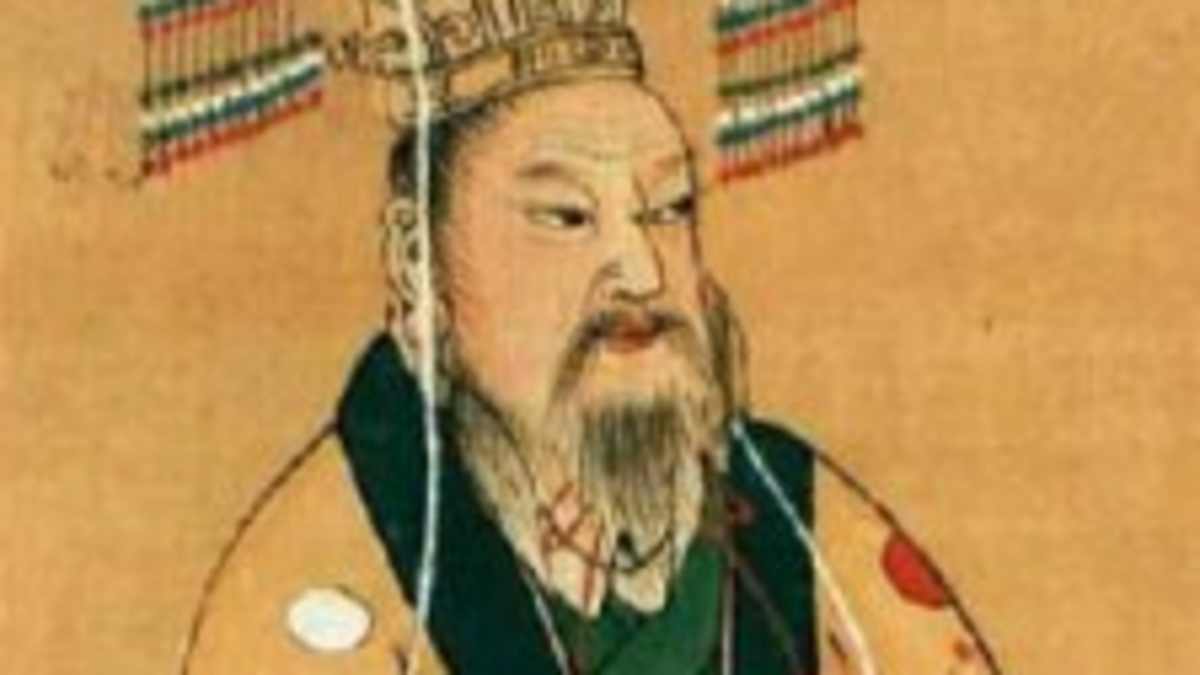
In the western state of Qin, a young prince named Ying Zheng was born in 259 BC.
He would later become known as Qin Shi Huang, the first emperor of China.
Ying Zheng ascended to the throne at just 13 years old after the death of his father, King Zhuangxiang.
Surrounded by ambitious ministers and generals, he quickly proved to be a strong leader with grand ambitions.
His dream was to unite all rival states under one ruler, one law, and one nation—a feat never before accomplished in China.
Over nearly a decade, he led military campaigns across the region, systematically conquering the other kingdoms.
By 221 BC, he had succeeded, declaring himself Qin Shi Huangdi, meaning “First Emperor of Qin.
” He believed his reign marked the beginning of a new era in Chinese history.
To ensure the longevity of his empire, he undertook sweeping reforms, introducing a single standard system of writing, creating a national currency, and standardizing weights and measures.
He ordered the construction of roads, bridges, and canals to connect distant provinces, facilitating the movement of armies and goods.
However, alongside his efforts to strengthen his empire, Qin Shi Huang harbored a deep-seated fear: the fear of death.
Obsessed with immortality, he sent scholars, doctors, and alchemists across the land to find ways to prolong his life.
Some were dispatched to distant islands in search of magical herbs, while others worked in secret laboratories to concoct potions to halt aging.
One toxic substance he frequently consumed was mercury, which he believed could grant him eternal life.
From the moment he became king, Qin Shi Huang began planning for his afterlife.
He envisioned a tomb unlike anything the world had ever seen, a vast underground complex that would serve as a kingdom beneath the earth.
To realize this vision, he commanded the labor of over 700,000 workers, including soldiers, craftsmen, and conscripted peasants.
The construction of this monumental project spanned nearly four decades, continuing even after his death in 210 BC.
The chosen location for the tomb was Mount Li, near the imperial capital of Shenyang, believed to be auspicious due to its natural resources.
Ancient texts describe the northern side of the mountain as rich in gold and the southern side abundant in jade.
The design of the tomb was meticulously planned, mirroring the layout of Xiangyang, the capital city of the Qin dynasty.
The underground tomb included city walls, watchtowers, and official buildings—everything a ruler needed in life was recreated in miniature form.
The complex was divided into an inner city, which housed the central tomb, and an outer city, extending over a much larger area.
Archaeologists have uncovered evidence of a detailed city plan within the tomb complex, including stables, kitchens, storehouses, ceremonial halls, and even an imperial park.
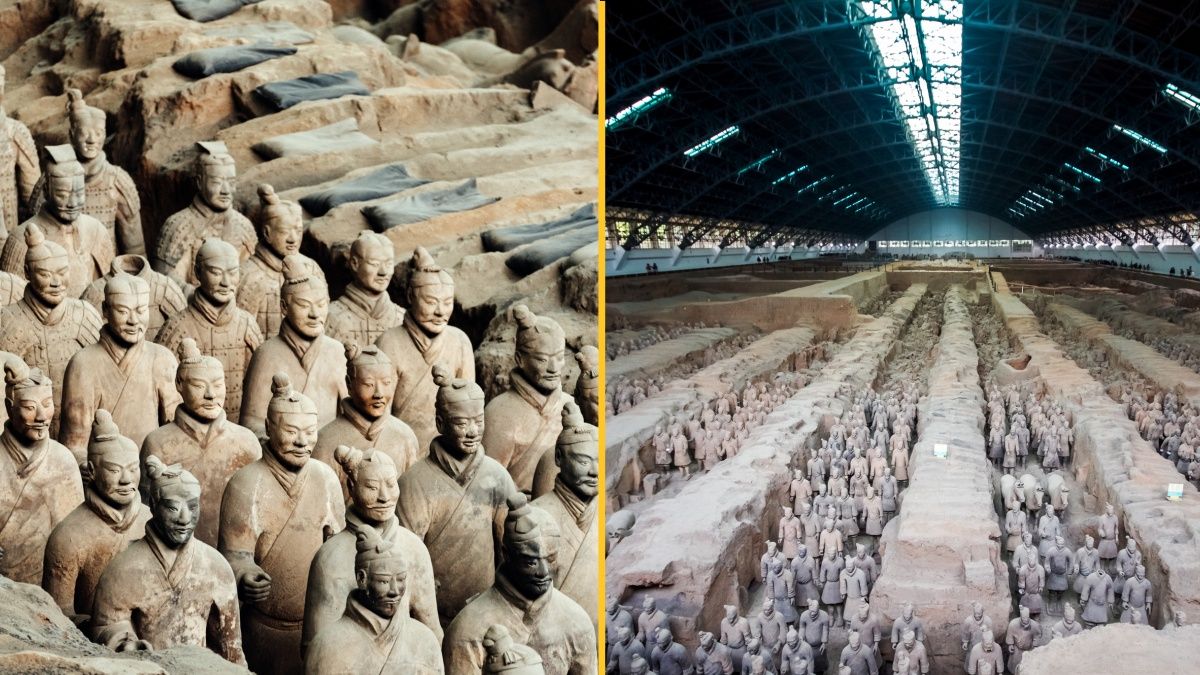
Among the most astonishing discoveries were bronze chariots and life-sized horses, intricately crafted and arranged for a royal parade.
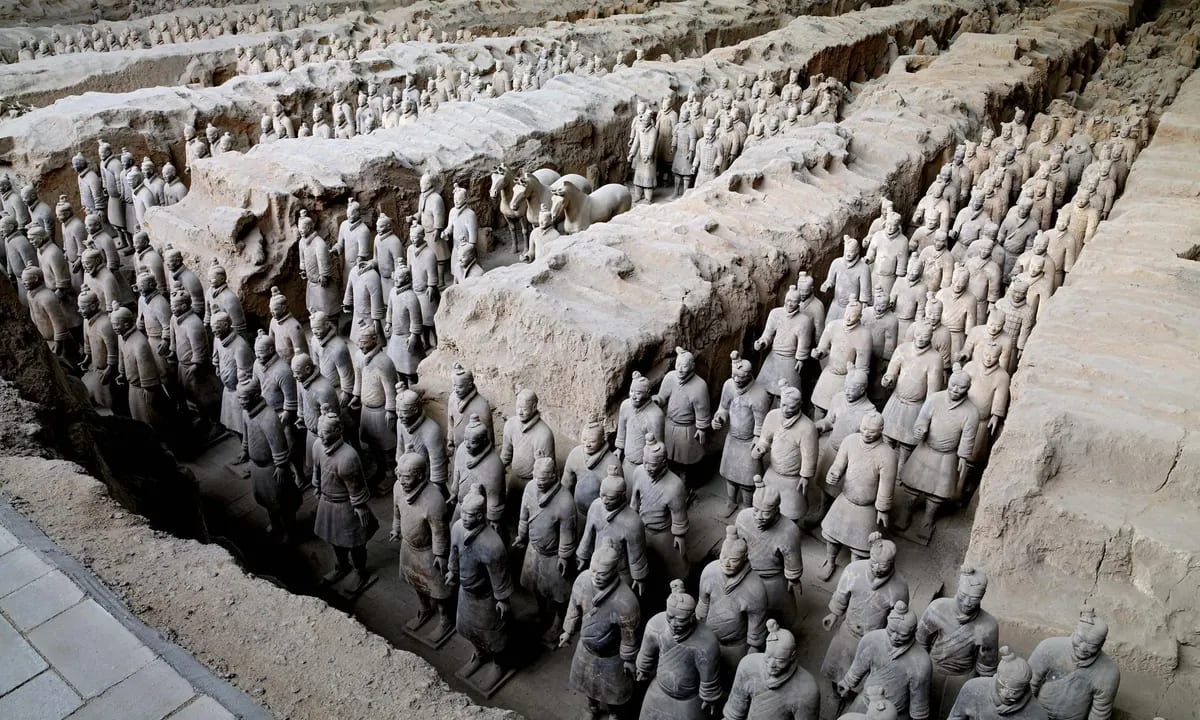
In 1974, a group of farmers digging a well near the city of Xi’an stumbled upon an extraordinary archaeological find: the Terracotta Army.
As they unearthed pieces of clay, they realized they had uncovered thousands of life-sized clay soldiers arranged in battle formations.
To date, more than 8,000 individual warriors have been found, each with unique features and expressions.
The army reflects the emperor’s desire for protection in the afterlife, and it wasn’t just soldiers that were buried with him.
Archaeologists also discovered figures of generals, archers, musicians, and acrobats, all meticulously crafted to represent the emperor’s court and the life he expected to enjoy in the afterlife.
Despite the remarkable craftsmanship, the figures suffered damage when exposed to air, losing their vibrant colors almost instantly.
This fragility has led to a cautious approach in excavating the site, with many parts remaining untouched.
At the center of this vast necropolis lies Qin Shi Huang’s tomb, a massive mound shaped like a low pyramid.
According to ancient texts, this central chamber contains a model of the world, rivers of flowing mercury, and treasures yet to be uncovered.
However, no one has ever entered the tomb, and the reason for this is steeped in fear.
The writings of the famous historian Sima Qian detail the tomb’s defenses, describing deadly traps meant to protect the emperor’s body and treasures.
Crossbows rigged to fire at intruders, hidden behind walls or ceilings, could kill instantly.
Initially, many historians dismissed these accounts as exaggerations.
However, modern testing around the burial mound revealed alarming levels of mercury, leading experts to believe that the ancient tales may have some truth.
The presence of mercury vapor trapped inside the sealed tomb poses a significant risk.
Even small amounts can cause severe health problems, making it dangerous for anyone to enter without proper precautions.
Additionally, the potential for ancient traps to still function raises concerns about the safety of any would-be explorers.

As scientists continue to study the area using non-invasive methods like ground-penetrating radar, the question of when or if the tomb will be opened remains uncertain.
Some experts believe it may happen one day, but only when safe technology is available.
Others fear it may never be opened at all.
Preservation is a major concern; the delicate treasures within the tomb could easily be damaged if exposed too soon.
Natural disasters, pollution, and even illegal digging pose threats to the site.
Researchers are working diligently to protect the tomb while exploring its mysteries from a distance.
The tomb of Qin Shi Huang represents one of the last great untouched archaeological sites in the world.
It holds the potential to reveal insights into ancient Chinese beliefs about life, death, and power.
The question remains: should we open it now or let Qin Shi Huang keep his secrets?
News

Ella Mai’s Shocking Confession: The Hidden Truth Behind Her Secret Baby and R&B Royalty!
Ella Mai’s Shocking Confession: The Hidden Truth Behind Her Secret Baby and R&B Royalty! Ella Mai, the voice behind the…

Nicole Kidman Breaks Her Silence: The Shocking Truth Behind Her Divorce from Keith Urban!
Nicole Kidman Breaks Her Silence: The Shocking Truth Behind Her Divorce from Keith Urban! After nearly two decades of a…

The Heartbreaking Reality of Tom Selleck: From Fame to Fear of Losing It All!
The Heartbreaking Reality of Tom Selleck: From Fame to Fear of Losing It All! Tom Selleck, the iconic actor known…

King Arthur’s Tomb Found: The Shocking Truth Behind the Legend That Changes Everything!
King Arthur’s Tomb Found: The Shocking Truth Behind the Legend That Changes Everything! The legend of King Arthur has captivated…

Keanu Reeves’ Heartbreaking Farewell: The Real Reason He May Never Return to Action Films!
Keanu Reeves’ Heartbreaking Farewell: The Real Reason He May Never Return to Action Films! Keanu Reeves, the beloved action star…

Jeremy Wade Breaks His Silence: The Shocking Truth Behind the Cancellation of River Monsters!
Jeremy Wade Breaks His Silence: The Shocking Truth Behind the Cancellation of River Monsters! After nearly a decade of captivating…
End of content
No more pages to load






