
💔 The Untold Scandal of King Solomon: From Divine Wisdom to Idolatry and National Collapse!
Welcome to the incredible story of King Solomon, one of the Bible’s wisest and most powerful figures. His journey is filled with divine intervention, wisdom beyond measure, and shocking choices that changed history. But did you know that Solomon, despite his immense wisdom, made decisions that led to the downfall of his kingdom? Stick with us as we uncover the fascinating life of this extraordinary king.
And don’t forget to subscribe to our channel so you don’t miss out on more incredible Bible stories that reveal the power, wisdom, and lessons of the ancient world. Solomon’s story begins long before he became the mighty king of Israel. Born to King David and Bathsheba, Solomon’s early life was marked by scandal. Bathsheba, once the wife of Uriah, whom David had arranged to be killed in battle, carried with her a great deal of shame, staining the royal family.
However, Solomon’s birth symbolized redemption and divine favor—a bright light in the midst of the darkness surrounding his family’s past. Solomon was the product of an event that had caused great pain; David’s adultery with Bathsheba led to the death of her husband, Uriah, and then the loss of their first child—a heavy consequence of their sin. Yet, Solomon’s birth became a powerful testimony of God’s grace. His name itself, which means “peace,” was a prophecy of the peace he would eventually bring to Israel.
Despite his complicated beginnings, Solomon’s destiny was set. God had chosen him to be more than just the son of a king; he was destined to rule Israel and fulfill the promise that God had made to David. God had promised David in 1 Chronicles 22:9 that his son Solomon would be the one to build the temple in Jerusalem. This promise was critical in understanding the divine purpose Solomon would fulfill.
Solomon’s rise to the throne was not without strife. David had many sons, but not all were fit to follow in his footsteps. His eldest son, Amnon, met a tragic end due to his own sin, while his son Absalom’s rebellion led to his violent death. These heartbreaking events left David with a difficult decision: who among his sons could inherit the throne? Although Solomon was younger, he was ultimately chosen as the one to carry on David’s legacy.
Solomon’s divine appointment as king was a crucial turning point. Although his older brother Adonijah was born first and thus had a higher status, God had chosen Solomon for this task. This was not a political decision but a fulfillment of God’s plan. In 1 Chronicles 22:9, God had promised David that Solomon would be the one to build the temple. This divine confirmation was further solidified when Solomon was anointed king by David and the prophet Nathan, marking the start of his reign.
Despite the political intrigue and power struggles within his family, Solomon’s early years as king were marked by God’s favor. In his first major act as king, Solomon sought wisdom from God. When God appeared to him in a dream, offering him anything he desired, Solomon could have asked for wealth, long life, or the defeat of his enemies. Instead, he humbly asked for wisdom to govern Israel justly. God, pleased by this request, granted him not only wisdom but also wealth and honor, making Solomon renowned throughout the ancient world.
Solomon’s early reign reflected his dependence on God. He asked for wisdom, not for personal gain, but to fulfill his divine calling. This request for wisdom was not just a desire for intellectual ability but for divine understanding—wisdom to govern a people chosen by God. Solomon’s reliance on God as the foundation of his leadership set the tone for much of his early reign, which was marked by peace, prosperity, and divine favor.
The defining moment of Solomon’s early reign came in a dream when God offered him anything he desired. Instead of asking for wealth, long life, or the defeat of his enemies, Solomon requested wisdom to govern God’s people with understanding and fairness. This request deeply pleased God, who granted Solomon wisdom greater than any king before or after him. Solomon’s wisdom was not just a gift; it was a responsibility. He understood that to rule over Israel, a people chosen by God, he needed a deep understanding of divine justice and the complexities of human nature.
This wisdom was put to the test early in his reign through a famous case that would solidify his reputation as a fair and wise ruler. Two women came before Solomon, both claiming to be the mother of the same child. Solomon, seeking to determine the true mother, proposed a shocking solution: to divide the child in half and give each woman a part. The true mother immediately offered to give up her claim to save the child’s life. Solomon, recognizing her compassion and selflessness, declared her to be the real mother and gave her custody of the child.
This decision was more than just a demonstration of Solomon’s intellect; it showed his divine ability to understand the human heart, and his wisdom became legendary. But Solomon’s wisdom wasn’t just confined to courtroom decisions. He became renowned for his teachings and writings, which still resonate today. Solomon wrote the books of Proverbs, Ecclesiastes, and the Song of Songs, each filled with deep reflections on life, wisdom, love, and the meaning of existence.
Proverbs, in particular, provided practical advice for living a righteous life. It offers insights on everything from relationships to personal character and decision-making. Ecclesiastes, on the other hand, takes a more philosophical approach, grappling with the meaning of life and the inevitability of death. In Ecclesiastes, Solomon acknowledges the vanity of worldly pursuits, noting that everything under the sun is fleeting. He reminds readers that life’s true meaning is found in a relationship with God rather than in wealth or earthly power.
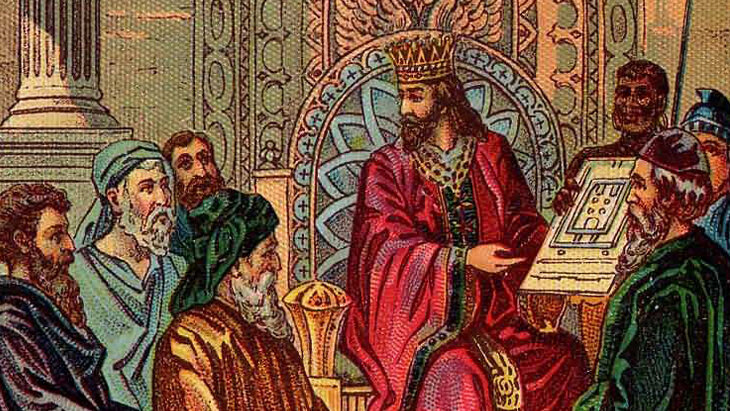
The Song of Songs, or Song of Solomon, is a celebration of love, beauty, and the sacredness of marriage. It’s believed by many scholars to also serve as an allegory for God’s love for his people, while also expressing the deep love between a husband and wife. This book highlights Solomon’s understanding of human emotions and relationships.
In addition to his spiritual writings, Solomon applied his wisdom to practical governance. Under his reign, Israel experienced peace, prosperity, and an era of intellectual flourishing. He strengthened the kingdom’s infrastructure and built alliances with neighboring nations, ensuring that Israel was a dominant power in the ancient world. Solomon’s reign was the golden age of Israel.
Under his rule, the kingdom reached its peak in terms of wealth, influence, and cultural significance. Solomon’s wisdom was not only displayed in his judgments and writings but also in the way he managed the kingdom and its resources. His reign marked a time of peace and prosperity, and Israel became a beacon of wealth and culture in the ancient world.
The construction of the temple in Jerusalem was Solomon’s crowning achievement. The temple was to be the dwelling place of God on earth, a symbol of His presence among the people of Israel. This monumental task, which took seven years to complete, was undertaken with the finest materials from all over the known world. Solomon imported vast quantities of cedar from Lebanon, the finest stone from quarries, and gold from Ophir, among other treasures.
The temple was not only a place of worship but also a masterpiece of ancient architecture. Its outer courts were adorned with intricate carvings, and its inner sanctum, the Holy of Holies, was made entirely of pure gold. When the temple was completed and the Ark of the Covenant was placed in its rightful home, God’s glory filled the temple. In 1 Kings 8:10-11, it’s recorded that when the priests withdrew from the holy place, the cloud filled the temple of the Lord, and the priests could not perform their service because of the cloud, for the glory of the Lord filled His temple.
This moment was a dramatic display of God’s presence and approval of Solomon’s work. Solomon’s building projects were not limited to the temple; he also built a grand palace for himself, a symbol of his wealth and power. The construction of the palace took 13 years, even longer than the temple. The palace, like the temple, was filled with treasures, gold, silver, and exquisite craftsmanship. It was said that the interior of Solomon’s palace was even more magnificent than the temple itself—a testament to the unparalleled prosperity of Solomon’s reign.
Under Solomon’s rule, Israel also became a center for trade and commerce. Solomon established trade routes and alliances with neighboring nations, making Israel one of the most influential and prosperous nations of the ancient world. He knew that the kingdom’s wealth and power depended not just on military strength but on diplomatic relations and the ability to engage in trade. Solomon’s political savvy led to peace with neighboring nations, and Israel prospered as a result.
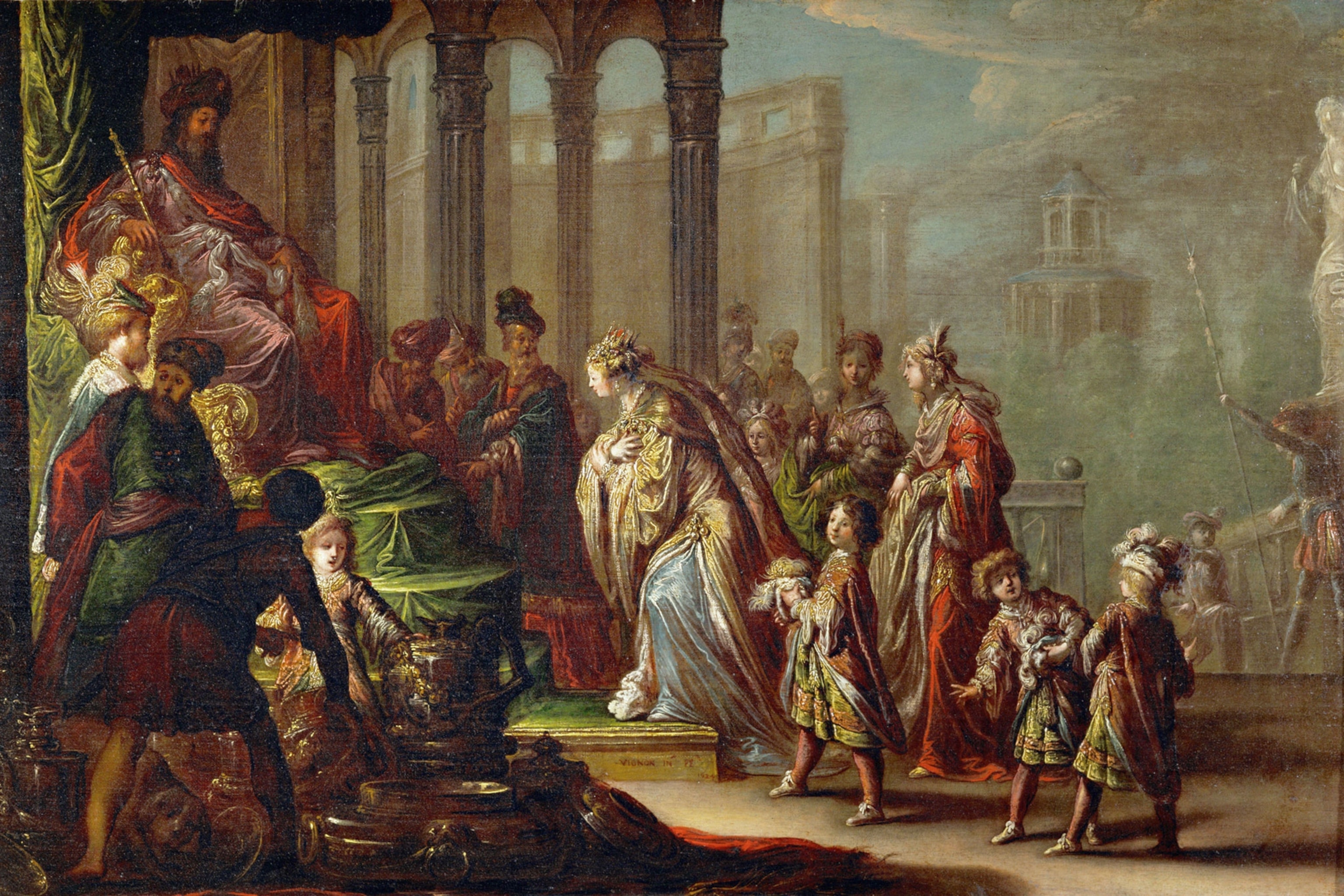
One of the most famous visitors to Solomon’s court was the Queen of Sheba, a powerful ruler from Arabia. She had heard of Solomon’s wisdom and wealth and decided to test him. She arrived in Jerusalem with a caravan filled with precious gifts, spices, gold, and jewels. After conversing with Solomon, she was astonished by his wisdom and the splendor of his court. In 1 Kings 10:6-7, she exclaimed, “The report I heard in my own country about your achievements and your wisdom is true. In wisdom and wealth, you have far exceeded the report I heard.”
The Queen of Sheba’s visit solidified Solomon’s reputation as the wisest and wealthiest king in the known world. During Solomon’s reign, Israel also flourished in the arts, culture, and intellectual pursuits. Solomon’s wisdom was not just evident in his governance but also in the way he promoted learning and culture. He established a center of knowledge and wisdom in Jerusalem where scholars, poets, and philosophers gathered to study and write.
Solomon’s writings, such as Proverbs, Ecclesiastes, and the Song of Songs, became foundational texts for future generations and continue to offer timeless wisdom today. Solomon’s reign also brought about the building of fortifications and military outposts. Although Solomon was known for his wisdom and diplomacy, he also understood the importance of securing the kingdom’s borders. He built fortified cities to protect Israel from external threats and maintained a strong military presence. His strategic approach to both diplomacy and defense allowed Israel to remain peaceful and prosperous throughout his reign.
Despite the outward peace and prosperity, Solomon’s dependence on material wealth and alliances would eventually set the stage for his downfall. The opulence and grandeur of his reign came at a cost. The heavy taxation required to fund his many projects placed a burden on the people of Israel. The extravagant lifestyle at court, with its lavish feasts and indulgences, would come to symbolize the excesses of Solomon’s reign and sow the seeds for future discontent.
Solomon’s downfall began as a slow and subtle drift away from God. Despite the incredible wisdom and favor that God had granted him, Solomon eventually allowed the temptations of wealth, power, and foreign alliances to lead him astray. His early years were marked by humility and devotion to God, but over time, his heart became entangled in the pursuit of worldly pleasures and power.
One of the most significant factors in Solomon’s downfall was his marriages to foreign women. Solomon married 700 wives and took 300 concubines, many of whom were from foreign nations. These marriages were not just personal choices; they were political alliances designed to strengthen Israel’s position in the ancient world. However, these foreign wives brought with them their own beliefs and practices, including the worship of pagan gods.
Solomon’s wives persuaded him to build high places and altars to their gods, a direct violation of God’s commandments in Deuteronomy 7:3-4. These high places became sites of pagan worship where gods like Molech, Chemosh, and Ashtoreth were worshiped. Solomon, once known for his devotion to the Lord, began to participate in these practices—a grave mistake that would lead to the spiritual decline of both Solomon and the nation of Israel.
In 1 Kings 11:9-10, we read that God became angry with Solomon for turning his heart away from Him. The Lord became angry with Solomon because his heart had turned from the Lord, the God of Israel, who had appeared to him twice. Despite God’s repeated warnings, Solomon’s heart was hardened, and he persisted in his idolatry.
Solomon’s turning to foreign gods and his involvement in idolatry marked a turning point in his reign. Once a king known for his wisdom and devotion to God, Solomon now allowed his desires for wealth, power, and political alliances to cloud his judgment. His disobedience led to God’s judgment. In 1 Kings 11:11, God declared, “Since this is your attitude and you have not kept my covenant and my decrees, I will most certainly tear the kingdom away from you and give it to one of your subordinates.”
Solomon’s idolatry was not just a personal sin; it had national implications. As the king, Solomon’s actions directly influenced the people of Israel. His participation in idolatry set a dangerous precedent, and the nation began to drift away from God. Solomon’s downfall, marked by his failure to remain faithful to God, became a warning to future generations of Israel. God’s judgment was inevitable. The kingdom would be divided after Solomon’s death, and Israel would never return to the glory it had under Solomon’s reign.
Solomon’s story serves as a powerful reminder that no matter how great one’s wisdom or success, the temptation to compromise one’s faith can lead to devastating consequences. Solomon, who had once been the wisest man to ever live, allowed his pride, reliance on wealth, and desire for political power to lead him down a path of spiritual ruin.
Solomon’s life and reign left an indelible mark on the history of Israel. His achievements in wealth, wisdom, and culture were unprecedented, and his contributions to the spiritual life of Israel, particularly through the construction of the temple, remain monumental. Yet Solomon’s legacy is not without its complexities. His downfall due to idolatry and his failure to remain faithful to God cast a shadow over his later years and the future of Israel.
Solomon’s greatest legacy is undoubtedly the temple in Jerusalem. The temple was not just an architectural wonder but a symbol of God’s presence among His people. It became the focal point of Jewish worship and was the center of religious life in Israel for centuries. The temple stood as a testament to Solomon’s devotion to God, a reminder of the covenant between God and Israel.
Solomon also left behind a wealth of wisdom in his writings. The books of Proverbs, Ecclesiastes, and the Song of Songs provide timeless guidance on life, relationships, and the pursuit of meaning. Proverbs offers practical advice for living a righteous life. Ecclesiastes questions the meaning of life and the vanity of worldly pursuits. And the Song of Songs celebrates the beauty of love and the sacredness of marriage.

But Solomon’s legacy is also a cautionary tale. His fall from grace, marked by idolatry and disobedience, ultimately led to the division of the kingdom after his death. His son Rehoboam inherited a fractured kingdom—Israel in the north and Judah in the south. This division marked the beginning of a long period of decline for Israel, a decline that was directly linked to Solomon’s failure to remain faithful to God.
The division of the kingdom had far-reaching consequences. It set the stage for centuries of conflict, political instability, and spiritual decline in Israel. Solomon’s story serves as a warning that even the wisest and most accomplished among us can fall if we stray from our faith in God. The pursuit of wealth, power, and human approval, while not inherently evil, can lead us away from the true source of wisdom and strength.
Despite these challenges, Solomon’s legacy still holds great significance. His contributions to the faith, his writings, and the temple he built in Jerusalem continue to inspire and guide people today. Solomon’s life reminds us that wisdom and success are not the ultimate goals; faithfulness to God and humility are what truly matter.
Solomon’s life is filled with lessons on wisdom, wealth, and the dangers of idolatry. His story is inspiring yet sobering, reminding us that true success comes not from material wealth or political power but from faithfulness to God. If Solomon’s life has inspired you, be sure to subscribe to our channel and continue exploring the incredible stories of faith, wisdom, and God’s enduring love.
News

Ella Mai’s Shocking Confession: The Hidden Truth Behind Her Secret Baby and R&B Royalty!
Ella Mai’s Shocking Confession: The Hidden Truth Behind Her Secret Baby and R&B Royalty! Ella Mai, the voice behind the…

Nicole Kidman Breaks Her Silence: The Shocking Truth Behind Her Divorce from Keith Urban!
Nicole Kidman Breaks Her Silence: The Shocking Truth Behind Her Divorce from Keith Urban! After nearly two decades of a…

The Heartbreaking Reality of Tom Selleck: From Fame to Fear of Losing It All!
The Heartbreaking Reality of Tom Selleck: From Fame to Fear of Losing It All! Tom Selleck, the iconic actor known…

King Arthur’s Tomb Found: The Shocking Truth Behind the Legend That Changes Everything!
King Arthur’s Tomb Found: The Shocking Truth Behind the Legend That Changes Everything! The legend of King Arthur has captivated…

Keanu Reeves’ Heartbreaking Farewell: The Real Reason He May Never Return to Action Films!
Keanu Reeves’ Heartbreaking Farewell: The Real Reason He May Never Return to Action Films! Keanu Reeves, the beloved action star…

Jeremy Wade Breaks His Silence: The Shocking Truth Behind the Cancellation of River Monsters!
Jeremy Wade Breaks His Silence: The Shocking Truth Behind the Cancellation of River Monsters! After nearly a decade of captivating…
End of content
No more pages to load






