
The UPS Plane Crash: An Unbelievable Mystery Unraveled – A Tragedy That Changed Aviation Forever
The skies above Louisville, Kentucky, were filled with anticipation on that fateful day, but they would soon be marred by tragedy.
A UPS cargo plane, an MD-11, took off from the local airport, only to meet a catastrophic end moments later.
This incident, which resulted in the loss of 12 lives, including a child, has left a haunting mark on the aviation community and raised questions about safety standards that had long been taken for granted.
The details of this crash are shocking, and the cause is something that no one could have predicted.

On the afternoon of the crash, the atmosphere at the Louisville airport was typical of any busy day.
The MD-11 was prepped for its long journey across the Pacific to Honolulu, loaded with packages and over 34,000 gallons of jet fuel.
The pilots, three seasoned professionals, conducted their pre-flight checks meticulously.
Everything seemed normal: clear weather, perfect visibility, and a runway that stretched ahead like an open highway.
As the engines roared to life and the aircraft began its roll down the runway, no one anticipated that they were witnessing the beginning of a disaster that would challenge the very foundations of aviation safety.
The plane accelerated, and as it reached a critical point known as V1—the speed at which the pilots must commit to takeoff—the captain announced, “V1.”
There was no turning back now.
Just after takeoff, the MD-11 began to climb, but something was terribly wrong.
Sparks erupted from the left wing, followed by flames that quickly engulfed the engine.
Alarms blared in the cockpit as the pilots grappled with a situation spiraling out of control.
The aircraft was designed to handle emergencies, but this was no ordinary failure.
The left engine was dying, and the other two engines struggled to compensate for the weight of the fully loaded plane.
Eyewitness accounts described the scene as surreal.
The MD-11 appeared to be flying unevenly, its left side ablaze while the right struggled to maintain power.
It was a chaotic moment that would end in tragedy.
The aircraft, once a symbol of reliability, was now limping through the air, fighting against gravity and its own destruction.
As the wreckage was examined, investigators were faced with a chilling reality.
The left engine had detached mid-flight, an event that had catastrophic consequences.
The separation of the engine caused fuel lines to rupture and parts of the wing to tear away, resulting in a fire that could not be contained.
CCTV footage revealed that the flames were not typical of an engine fire; they expanded rapidly, suggesting an internal explosion that compromised the engine’s integrity.
The investigation team from the National Transportation Safety Board (NTSB) arrived at the crash site, which stretched nearly a mile.
What they found was alarming.
The left engine was discovered far from the main wreckage, indicating that it had broken away before impact.
This discovery led to further scrutiny of the aircraft’s design and maintenance history.
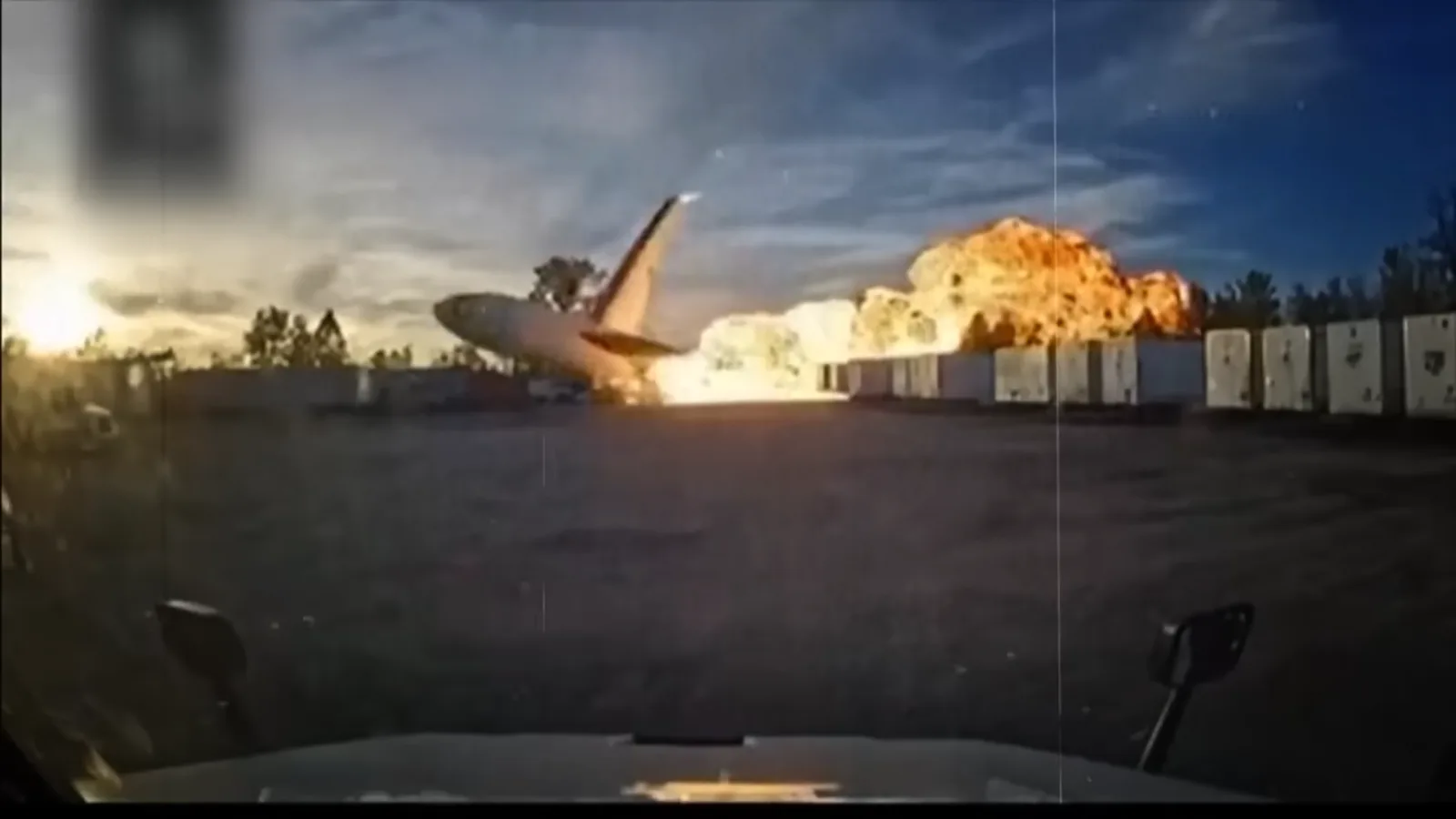
The MD-11, while considered a safe aircraft, shared components with the older DC-10, a model notorious for similar engine detachment incidents in the 1970s.
Despite warnings about potential design flaws, many of these concerns had been overlooked in favor of reducing maintenance costs and increasing service speed.
Investigators found that the left engine’s pylon, the structure that attached the engine to the wing, showed signs of fatigue and cracking.
Maintenance logs revealed that repairs had been conducted weeks before the crash, but these repairs may have inadvertently introduced hidden weaknesses.
Metallurgical tests uncovered micro-fractures in the pylon assembly, tiny cracks that were invisible to the naked eye but deadly under the stress of takeoff.
This was not a sudden failure; it was a mechanical issue that had been building over time, waiting for the right moment to reveal itself.
As the aircraft struggled to stay aloft, the pilots fought valiantly to regain control.
They called for maximum thrust, but the engines were failing.
Witnesses reported seeing the plane wobble before it clipped a power line and crashed into a warehouse, resulting in a massive fireball that could be seen for miles.
The impact was devastating, scattering debris across the industrial area and leaving the wreckage unrecognizable.
Firefighters battled the flames for hours, but the damage was done.
The crash claimed the lives of all on board, leaving families devastated and the aviation industry reeling from the implications of the disaster.
The official investigation concluded that the crash was caused by structural failure of the engine mount due to metal fatigue.
However, the underlying message was clear: this was not just a technical failure but a human one.
The incident served as a grim reminder that even the most sophisticated machines can harbor hidden flaws that, if left unchecked, can lead to catastrophic outcomes.
In the aftermath, the aviation community was forced to reevaluate safety standards and maintenance protocols.
The tragedy became a pivotal moment in aviation history, prompting changes that aimed to prevent such disasters from occurring again.
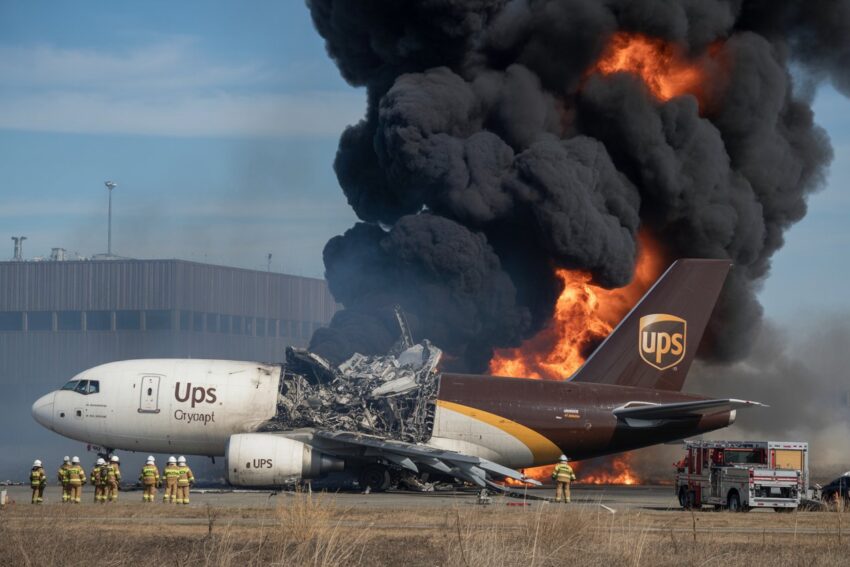
The UPS plane crash in Louisville is a somber chapter in aviation history, highlighting the delicate balance between trust and risk.
It serves as a stark reminder that behind every flight lies the potential for both wonder and consequence.
As the skies continue to be a realm of exploration and innovation, the lessons learned from this tragedy will echo through time, urging engineers and pilots alike to remain vigilant against the silent threats that may linger in the shadows of progress.
What do you think? Was this fate or a failure we simply refuse to see coming? The legacy of this crash will undoubtedly shape the future of aviation safety for years to come.
News

Ella Mai’s Shocking Confession: The Hidden Truth Behind Her Secret Baby and R&B Royalty!
Ella Mai’s Shocking Confession: The Hidden Truth Behind Her Secret Baby and R&B Royalty! Ella Mai, the voice behind the…

Nicole Kidman Breaks Her Silence: The Shocking Truth Behind Her Divorce from Keith Urban!
Nicole Kidman Breaks Her Silence: The Shocking Truth Behind Her Divorce from Keith Urban! After nearly two decades of a…

The Heartbreaking Reality of Tom Selleck: From Fame to Fear of Losing It All!
The Heartbreaking Reality of Tom Selleck: From Fame to Fear of Losing It All! Tom Selleck, the iconic actor known…

King Arthur’s Tomb Found: The Shocking Truth Behind the Legend That Changes Everything!
King Arthur’s Tomb Found: The Shocking Truth Behind the Legend That Changes Everything! The legend of King Arthur has captivated…
Keanu Reeves’ Heartbreaking Farewell: The Real Reason He May Never Return to Action Films!
Keanu Reeves’ Heartbreaking Farewell: The Real Reason He May Never Return to Action Films! Keanu Reeves, the beloved action star…

Jeremy Wade Breaks His Silence: The Shocking Truth Behind the Cancellation of River Monsters!
Jeremy Wade Breaks His Silence: The Shocking Truth Behind the Cancellation of River Monsters! After nearly a decade of captivating…
End of content
No more pages to load






