
😱 Where Did Jesus REALLY Go After His Death? The Shocking Secret of the 3 Days Nobody Talks About!
Where did Jesus go in the three days between his death and resurrection? It is finished.
The four Gospels of Matthew, Mark, Luke, and John all report that Jesus was crucified for about six hours before he passed on.
In his final moment, he said the immortal words, “It is finished,” as recorded in the Book of John 19:30.
He then bowed his head and surrendered his spirit.
His body remained on the cross only for a short time before it was taken down and wrapped for burial by Joseph of Arimathea, with the help of Nicodemus, one of his followers.
Three days later, his body and spirit were reunited, and he rose from the dead.
After his resurrection, he showed himself to his disciples, starting with Mary Magdalene.
Thereafter, he ascended into heaven.
However, many have wondered what happened in the three days between his death and resurrection.
Where did Jesus go? What did he do? This episode will attempt to answer these questions.
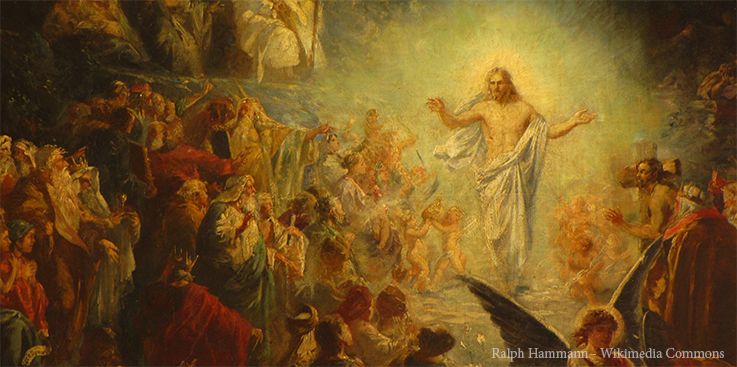
The Bible, particularly the Synoptic Gospels, does not offer a comprehensive account of Jesus’s activities during those three days, otherwise known as the Harrowing of Hell or the descent into hell.
The Gospels of Matthew, Mark, Luke, and John focus primarily on the events leading up to Jesus’s crucifixion and his resurrection.
The period between his death and resurrection is more rooted in theological interpretations and traditions rather than explicit biblical narratives.
Yet we can make sense of this very important period.
One of the clearest revelations of the whereabouts of Jesus during the three days of death can be gleaned from his conversation on the cross.
According to the Bible, Jesus was crucified next to two thieves.
One of them asked Jesus to remember him when Jesus came into his kingdom (Luke 23:42).
To this, Jesus replied, “Truly I tell you, today you will be with me in Paradise.
” This implies that after his death, Jesus went to Paradise or Heaven.
This makes sense because, in his final moments, Jesus declared the commitment of his Spirit into the hands of God, who, as we know, could not be anywhere else but in a place of bliss and eternal love that is Heaven.
However, there is another interesting report of Jesus’s whereabouts in 1 Peter 3:18-20.
It says, “For Christ also suffered once for sins, the righteous for the unrighteous, to bring you to God.
He was put to death in the body but made alive in the Spirit.
After being made alive, he went and made proclamation to the imprisoned spirits—to those who were disobedient long ago when God waited patiently in the days of Noah while the ark was being built.”
This passage could be interpreted in two ways.
First, it could mean that Jesus, sometime between his death and resurrection, went to hell or Hades and made an announcement of some type to the spirits that were imprisoned there.
From this perspective, these spirits could be either demonic or human; they could also be errant angels.
It is likely that the spirits mentioned in the passage are fallen angels—angels who were imprisoned for violating the law of God along with Lucifer, who deceived them and turned them against their God.
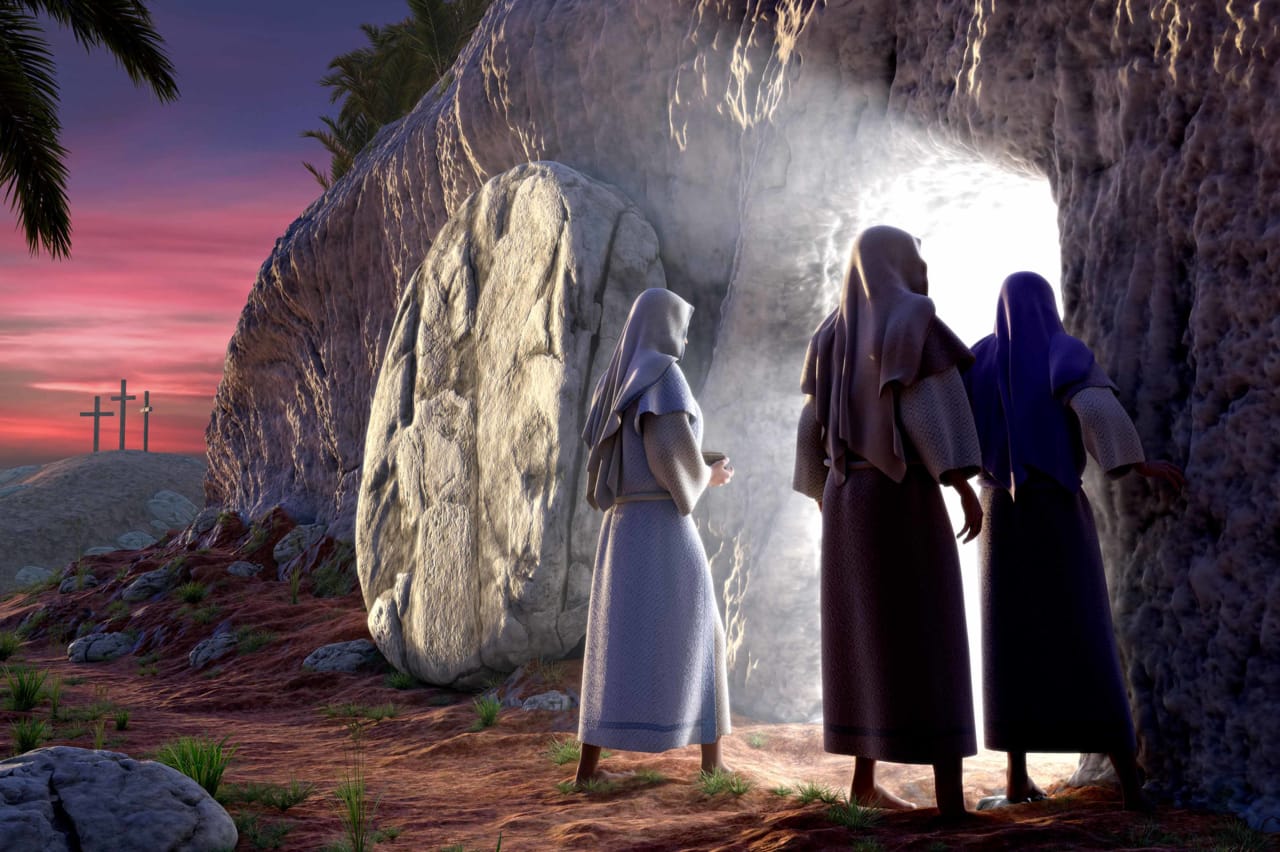
The reference to the flood of Noah indicates that the violation occurred before the time of Noah.
Although the passage does not tell us exactly what Jesus told the imprisoned spirits, it seems unlikely that it would have been a message of redemption since angels cannot be saved, as per Hebrews 2:16.
It is likely that Jesus proclaimed and declared his victory over Satan and his hosts.
So from this perspective, Jesus went to hell to announce his triumph and declare his victory over death and Satan.
Another Bible passage that tells us of the whereabouts and activities of Jesus in the three days between his death and resurrection is Ephesians 4:8-10.
This is why it says, “When he ascended on high, he took many captives and gave gifts to his people.
” What does “he ascended” mean except that he also descended to the lower earthly regions? “He who descended is the very one who ascended higher than all the heavens in order to fill the whole universe.”
As Paul wrote, referencing Psalm 68:18, when Jesus ascended on high, he took many captives.
This is interpreted to mean that Jesus, after securing their salvation on the cross, gathered all the redeemed who were in Paradise and took them to their permanent dwelling in heaven.
These were people like Abraham, David, Joshua, Daniel, Lazarus, the thief on the cross, and everyone else who had previously been justified by faith.
He led them from Hades, the dwelling place of the dead, to their new spiritual home.
Another way to interpret Ephesians 4 is that in the three days between death and resurrection, Jesus defeated and caged our spiritual enemies—that is, the devil, death, and the curse of sin.
He then ascended on high, that is, returned to Heaven victoriously as God.
This perspective is also founded in Matthew 12:40, which says, “For as Jonah was three days and three nights in the belly of a huge fish, so the Son of Man will be three days and three nights in the heart of the Earth.”
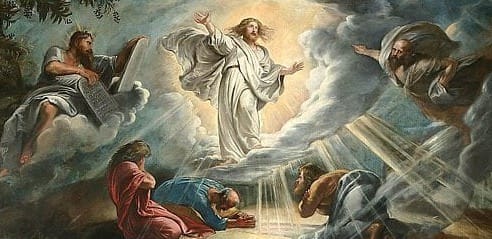
Finally, it is important to note that the details of what exactly transpired during those three days are not explicitly outlined in the Bible, and various Christian traditions hold different perspectives on the matter.
Yet we do have Jesus’s own words on the matter.
He said, “Today you will be with me in Paradise.”
This gives us the confidence to say that he went to Paradise after proclaiming his victory over death and completing his work of redemption.
News

Ella Mai’s Shocking Confession: The Hidden Truth Behind Her Secret Baby and R&B Royalty!
Ella Mai’s Shocking Confession: The Hidden Truth Behind Her Secret Baby and R&B Royalty! Ella Mai, the voice behind the…

Nicole Kidman Breaks Her Silence: The Shocking Truth Behind Her Divorce from Keith Urban!
Nicole Kidman Breaks Her Silence: The Shocking Truth Behind Her Divorce from Keith Urban! After nearly two decades of a…

The Heartbreaking Reality of Tom Selleck: From Fame to Fear of Losing It All!
The Heartbreaking Reality of Tom Selleck: From Fame to Fear of Losing It All! Tom Selleck, the iconic actor known…

King Arthur’s Tomb Found: The Shocking Truth Behind the Legend That Changes Everything!
King Arthur’s Tomb Found: The Shocking Truth Behind the Legend That Changes Everything! The legend of King Arthur has captivated…

Keanu Reeves’ Heartbreaking Farewell: The Real Reason He May Never Return to Action Films!
Keanu Reeves’ Heartbreaking Farewell: The Real Reason He May Never Return to Action Films! Keanu Reeves, the beloved action star…

Jeremy Wade Breaks His Silence: The Shocking Truth Behind the Cancellation of River Monsters!
Jeremy Wade Breaks His Silence: The Shocking Truth Behind the Cancellation of River Monsters! After nearly a decade of captivating…
End of content
No more pages to load






