
Rain drummed softly against the windows of the Pierce mansion, a sprawling estate perched on the edge of the Hudson River. Inside, beneath the flicker of a dying fire, Alexander Pierce sat in his mahogany study — silver hair neat, hands trembling slightly as he poured himself a cup of tea. He was eighty-one, a man who had built an empire out of concrete and glass, but who now found his walls closing in tighter than ever.

Before him stood four women, each summoned with little explanation.
Clara, his assistant, stood near the bookshelves — posture perfect, expression unreadable, the woman who had managed his affairs for fifteen years. Vanessa, his fiancée, barely thirty, lounged elegantly by the window in silk and diamonds. Margaret, his cousin, the only surviving relative with a stake in the family business, clutched her purse as though guarding her entitlement. And at the back, half-hidden in shadow, was Elsa — his maid. She wore her worn gray uniform and nervous humility like armor.
Alexander looked up at them, his voice low but firm. “Each of you has been part of my life in some way,” he said. “And before I retire — before I leave this world behind — I need to know what remains of loyalty.”
From his drawer, he withdrew four envelopes, each containing a black credit card embossed with his insignia.
“On each card is a credit limit of ten million dollars,” he continued. “Spend it as you wish. You have one week.”
A hush fell over the room. Vanessa’s eyes widened. Clara’s brow furrowed. Margaret scoffed. Elsa blinked in confusion.
“Sir,” Elsa murmured, “I’m just the maid.”
Alexander’s smile was faint but deliberate. “Especially you, Elsa. Take it.”
For years, Alexander Pierce had trusted the wrong people — business partners who stole from him, friends who flattered him, lovers who left when the headlines faded. Success had given him everything except certainty.
Vanessa had come into his life after his second heart attack — young, magnetic, offering the illusion of vitality. Clara had been indispensable at his side but had begun to think like a shareholder rather than a confidante. Margaret saw herself as the heir to the Pierce legacy, the last of a fading name.
And then there was Elsa. Quiet, careful Elsa, who had been there when no one else stayed — arranging his pills, warming his tea, closing his office blinds when his head fell heavy with exhaustion. She had never asked for a raise, never sought favor. He’d often wondered whether her loyalty was naïve — or pure.
So he decided to find out.
In the days that followed, New York carried on as usual — its skyline glittering, its people hungry for more.
Vanessa was photographed in Paris within hours of leaving the mansion. Champagne, couture, hotel penthouses — her days turned into a montage of indulgence. “I’m celebrating Alexander’s love,” she captioned on Instagram beneath a photo of her dripping in diamonds.
Clara, methodical as always, didn’t waste time. She transferred five million into an offshore account under her name and invested the rest in competitors’ stock. “I’ve built his empire for fifteen years,” she told herself. “It’s time I secure my own.”
Margaret called her lawyers. She began buying out smaller shareholders in Pierce Holdings, her voice sharp as glass over the phone. “Blood comes first,” she said. “I’m simply reclaiming what’s mine.”
And Elsa — she placed the card in a small wooden drawer beside a silver cross. She didn’t touch it.
Every morning, she went to work as she always had — dusting, polishing, bringing Alexander his tea. On the fifth evening, she found him coughing violently in his office, a handkerchief stained red at the edges.
“Sir, please,” she whispered, steadying his shaking hand. “You need rest.”
He looked up at her, eyes glassy. “You’re the only one who still says that to me.”
That night, Elsa used the card for the first time — buying medicine, soup ingredients, and a small bouquet of lilies. The total came to forty-eight dollars and seventy cents.
A week later, the four women returned to the mansion. The same room, the same firelight, but the air felt different — heavier, expectant. Alexander sat at the head of the table, pale yet composed.
“Well,” he said quietly. “Let’s see what a fortune reveals.”
He began with Vanessa. “Nine million in seven days. Paris, Milan, Dubai. Every headline screamed your name. You spent what you thought would buy you permanence.”
Vanessa tossed her hair. “You said we could spend it however we wanted.”
“I did,” he replied softly. “And you showed me what you wanted most.”
He turned to Clara. “You were efficient. Strategic. Ruthless. You built contingency plans for your future — one without me.”
Clara straightened, feigning professionalism. “You taught me that loyalty without leverage is foolish.”
His gaze lingered on her for a long moment. Then he turned to Margaret. “You used your time to seize control of my company.”
Margaret didn’t flinch. “It’s business. You should admire it.”
Finally, he looked at Elsa. “And you, my dear?”
Elsa shifted nervously. “I didn’t use it, sir. Only once. For your medicine.”
For a beat, the room was silent — no movement, no sound except the clock ticking in the corner.
Alexander stood. His voice trembled now, not from weakness, but from something like peace.
“I gave each of you the same chance,” he said. “Not to see who could make the most — but to see who would remember that I’m still human.”
He reached into his coat pocket and withdrew four envelopes. “These are my decisions.”
Vanessa opened hers first — a termination clause and a note revoking all inheritance rights. Clara’s and Margaret’s were the same.
Then Alexander handed Elsa hers — a small black box. Inside lay a key.
“This house,” he said quietly, “and everything in it — now belongs to you.”
Elsa froze. “Sir… I don’t understand.”
He smiled faintly. “You’re the only one who gave without taking.”
The three women sat in stunned silence. Alexander, frail but resolute, turned to the window. The sunset painted his reflection in gold and crimson. “You’ve all shown me what love costs. And what it’s worth.”
That night, as rain whispered against the glass, Alexander Pierce passed away in his sleep. His expression was calm — as though he’d finally settled an old question about the price of trust.
When the will was read, there were gasps across the room. The entire Pierce estate — every property, every share, every last dollar — had been transferred to Elsa Rivera. Beneath his signature, a single line in his handwriting:
“Loyalty is not proven by what one gives — but by what one refuses to take.”
Months later, Elsa stood by the mansion’s balcony overlooking the Hudson, the same view Alexander had loved. The house no longer felt like a monument to power. It was quiet now — filled with sunlight, not ambition.
She tended the gardens herself, sometimes humming softly as the river glimmered below. People called her “the billionaire maid,” but she never cared for the title.
Because to her, wealth had never been about the card or the house or the fortune left behind. It was about the kind of heart that stays kind when no one’s watching.
And in that mansion on the hill, the echo of one man’s final lesson lingered in the walls — a whisper for those who would listen:
Power fades. Gold tarnishes. But integrity — quietly, stubbornly — endures.
News

A Mafia Boss Threatened Dean Martin on Stage—Dean’s Reaction Was Pure Genius
A Mafia Boss Threatened Dean Martin on Stage—Dean’s Reaction Was Pure Genius Prologue: A Gun in the Spotlight Dean…

The Billionaire Had No Idea His Fiancée Was Poisoning His Son—Until the Maid Exposed Everything
The Billionaire Had No Idea His Fiancée Was Poisoning His Son—Until the Maid Exposed Everything Prologue: A Whisper That…

The Billionaire Catches Maid ‘Stealing’ Food… But When He Sees Who It’s For, He Breaks Down in Tears
The Billionaire Catches Maid ‘Stealing’ Food… But When He Sees Who It’s For, He Breaks Down in Tears Prologue:…

The Billionaire’s Fiancée Sets a Trap for the Maid — Until His Silent Daughter Exposed the Truth
The Billionaire’s Fiancée Sets a Trap for the Maid—Until His Silent Daughter Exposed the Truth Prologue: The Whisper That…

The Billionaire Went Undercover as a Gardener — Until the Maid Saved His Children from His Fiancée
Richard Whitmore’s hands trembled on the garden shears as he watched through the kitchen window. His new wife, Vanessa, stood…
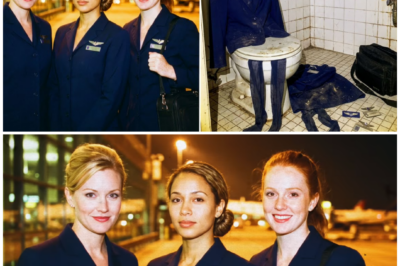
Three Flight Attendants Vanished From a Vegas Hotel in 1996 — 28 Years Later a Hidden Wall Is Opened
.Every hotel, every casino, every neon-lit alley has a story, most of them ending in forgetfulness or denial. But some…
End of content
No more pages to load






