
The air smelled like frosting and grief. Blue balloons sagged in the humid air of Cassandra’s backyard, their strings tangling around the birthday banner that read Happy First Birthday, Lucas!. I stood in the corner, clutching a wrapped present that suddenly felt ridiculous—tiny shoes for a boy I wasn’t sure I had the heart to celebrate. Just three weeks earlier, I’d buried my husband, Adam. His clothes still hung in the closet, his toothbrush still leaned against mine. I was still waking up in the night expecting his warmth.
And yet there I was, among streamers and paper cups, pretending to smile because my mother had insisted. “Adam would want you to go,” she’d said. “Family comes first.”
Cassandra’s laughter cut through the crowd—louder than usual, too bright. She was dressed as if for a party she wasn’t hosting: new dress, new hair, lipstick the shade of triumph. Then she tapped her glass with a spoon, commanding silence. I remember the wind quieting at the same time, as if it sensed the coming storm.
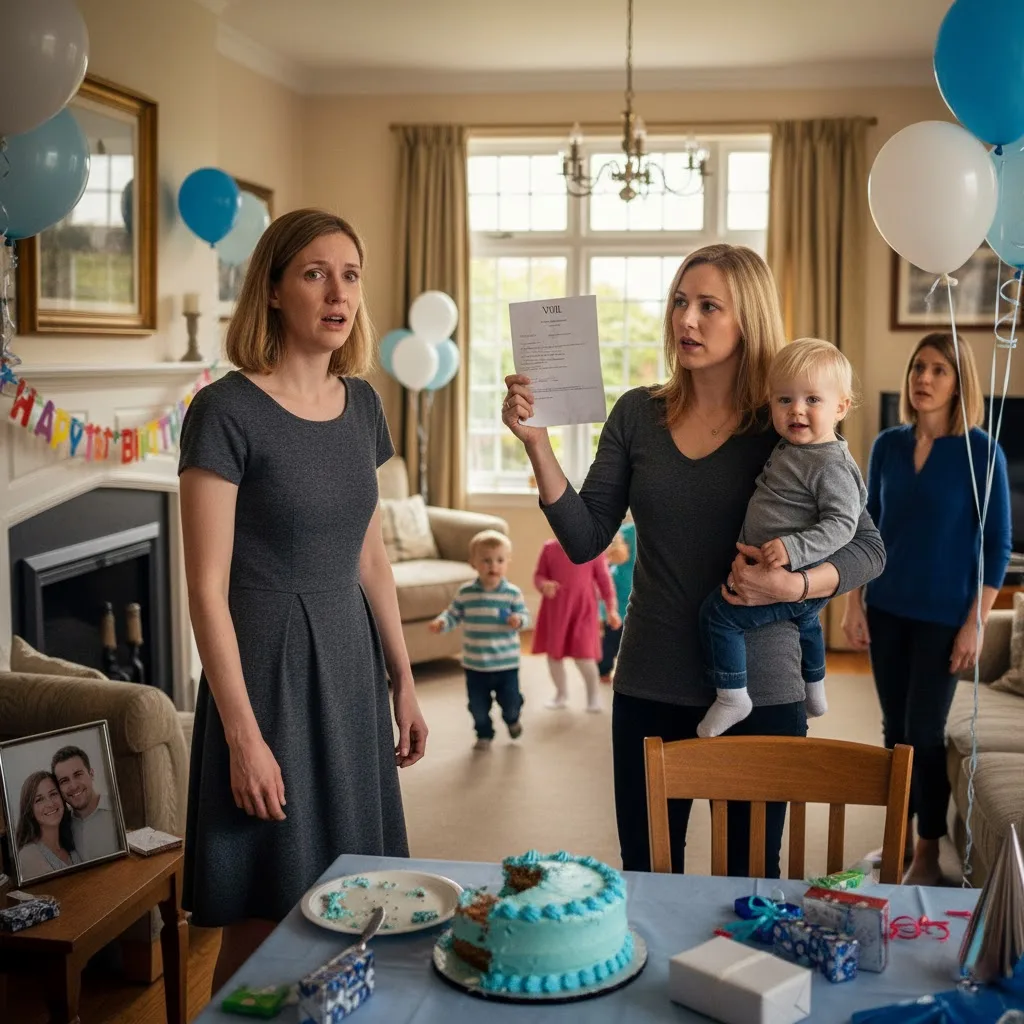
“Thank you all for coming,” she began, her voice rich with performance. “This year has been… full of surprises.”
People smiled politely. I braced myself for another one of her dramatics—until she said, “I have a secret. One I can’t keep any longer.”
Her eyes found mine. “Lucas isn’t Tyler’s son. He’s Adam’s.”
The world narrowed. The sunlight turned white. The laughter stopped midair. My mother’s cup slipped from her hand and hit the grass with a dull thud. I didn’t speak. I didn’t blink. I just stared at my sister—my own blood—announcing an affair with my dead husband like she was reciting poetry.
Adam and I had met twelve years ago at a charity auction in Boston. He’d outbid a room full of lawyers to buy a watercolor painting I’d been quietly admiring all night, then handed it to me with a half-smile. “I think it belongs with you,” he’d said. I fell right then—not just for the gesture, but for the gentleness behind it.
We built a life on that kind of care. Our Victorian home in Beacon Hill was our dream made tangible, creaking floors and all. We painted the walls ourselves, planned a nursery that never came to life. After four failed rounds of IVF, we stopped trying. Instead, we poured ourselves into the home, into work, into each other.
Cassandra was always somewhere at the edges, orbiting our happiness like it offended her. She’d been the family’s problem child—bright, reckless, a professional victim. When she announced her pregnancy, it was another drama in a long list. Still, I knitted the baby a blanket and promised to be the best aunt I could.
When Adam died suddenly—an aneurysm on an ordinary Tuesday—she sent condolences by text. “Lucas has a cold,” she wrote. “Can’t make it to the funeral.” I didn’t think twice. She was selfish, but she wasn’t cruel. Or so I believed.
Now, watching her cradle her son and call him Adam’s child, I realized how little I had ever known her.
The silence broke like glass. A few guests gasped. One woman laughed nervously, thinking it was a joke. Cassandra didn’t flinch. She reached into her purse and produced a folded document.
“This,” she said, lifting it like a trophy, “is Adam’s will. It names me and Lucas as beneficiaries. As his son’s mother, I’ll be claiming half the house.”
I stared at her—the audacity, the precision of her timing. Three weeks after the funeral, at a child’s birthday party, surrounded by cake and balloons, she had chosen to detonate my life again.
I heard myself laugh. Quietly at first, then uncontrollably. Heads turned. Cassandra’s smile wavered.
“Oh, I see,” I said, trying to steady my voice. “You’re serious.”
She looked triumphant. “I’m sure this is difficult for you. But I have proof, Bridget. Adam wrote this himself.”
The laughter rose again, uninvited. I wasn’t laughing at the betrayal anymore—it was at the absurdity. At how far she would go to spin her delusion.
“May I?” I asked, holding out my hand. She hesitated but handed over the paper. The moment I saw it, the laughter made sense.
The will was typed in Comic Sans. The notary’s signature was misspelled. The date was from the week Adam had been in Switzerland for work—verified by both his passport and my daily calls with him. My husband, the meticulous corporate lawyer who reviewed contracts for a living, would sooner have written his will in crayon.
“Cassandra,” I said, calm now, “where exactly did you get this?”
Her chin lifted. “Adam gave it to me himself. He wanted to make sure his son was provided for.”
I folded the paper neatly and handed it back. “Then I suppose we should have it authenticated.”
The tremor in her hand betrayed her. Around us, whispers began. My father’s face turned to stone; my mother started to cry. Cassandra’s confidence crumbled, her voice rising, brittle and defensive. “You think I’d make this up?”
“I think,” I said slowly, “that grief brings out the best in some people. And the worst in others.”
She turned red, stormed into the house, and slammed the door. The guests dispersed awkwardly. My parents lingered beside me, too stunned for words. I picked up my purse, thanked the guests still staring, and left.
Two weeks later, I met with Adam’s firm. His partners provided the official will—the one he had drawn up years before, witnessed and notarized properly. Everything, including the house, was left to me. Not a word about Cassandra or a child. The firm’s legal team filed a notice with the court preemptively, just in case my sister decided to act on her delusion.
I didn’t see her for months. When she finally called, her voice was small. “I’m sorry,” she said. “It wasn’t supposed to go that far.”
“Which part?” I asked. “The affair or the forgery?”
Silence. Then, “I don’t even know if Lucas is his. I just… I needed something.”
I closed my eyes. “You needed help. And you chose destruction instead.”
When the DNA test came back—requested by her, to clear her name—Lucas wasn’t Adam’s son. Tyler, the man she’d discarded, was confirmed the father.
Cassandra disappeared after that. Moved out of state, changed her number. I sent a small check for Lucas’s birthday every year through my parents. Not out of forgiveness—out of pity. Some ghosts deserve a softer haunting.
Grief strips people bare. Some find faith, others find madness. I found a strange kind of clarity. Adam wasn’t perfect; no one is. But I knew him—the rhythm of his honesty, the steady decency in how he moved through the world. My sister’s lie hadn’t exposed a secret in my marriage; it had exposed a void in her.
One evening months later, I sat in the garden Adam and I had built, the one with the high brick wall and the climbing ivy that never bloomed right. The house was quiet except for the wind in the eaves. The watercolor of the Boston skyline hung above the fireplace inside—his first gift to me, the beginning of everything.
I thought about Cassandra’s face when the lie unraveled, the panic beneath her bravado. I wondered if guilt ever truly ended, or if it simply changed its shape.
In the end, she didn’t take half the house. She took something smaller and more fragile—the version of sisterhood I’d tried to believe in. But she couldn’t touch what mattered.
The life Adam and I built wasn’t measured in property or signatures. It lived in the quiet corners—the porch swing creaking at night, the coffee mug still sitting by the sink, the feeling that love, even when interrupted, never truly stops echoing.
And maybe that’s why I laughed that day. Because grief and absurdity often share the same breath—and because even in betrayal, I could still recognize the truth when I saw it.
News
A Mafia Boss Threatened Dean Martin on Stage—Dean’s Reaction Was Pure Genius
A Mafia Boss Threatened Dean Martin on Stage—Dean’s Reaction Was Pure Genius Prologue: A Gun in the Spotlight Dean…
The Billionaire Had No Idea His Fiancée Was Poisoning His Son—Until the Maid Exposed Everything
The Billionaire Had No Idea His Fiancée Was Poisoning His Son—Until the Maid Exposed Everything Prologue: A Whisper That…
The Billionaire Catches Maid ‘Stealing’ Food… But When He Sees Who It’s For, He Breaks Down in Tears
The Billionaire Catches Maid ‘Stealing’ Food… But When He Sees Who It’s For, He Breaks Down in Tears Prologue:…
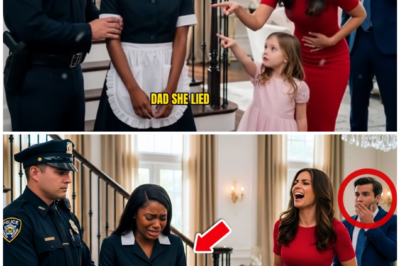
The Billionaire’s Fiancée Sets a Trap for the Maid — Until His Silent Daughter Exposed the Truth
The Billionaire’s Fiancée Sets a Trap for the Maid—Until His Silent Daughter Exposed the Truth Prologue: The Whisper That…
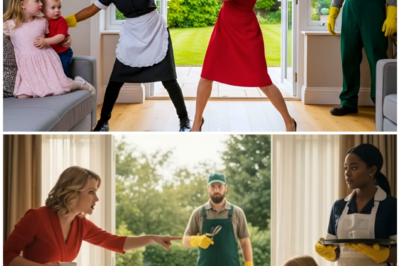
The Billionaire Went Undercover as a Gardener — Until the Maid Saved His Children from His Fiancée
Richard Whitmore’s hands trembled on the garden shears as he watched through the kitchen window. His new wife, Vanessa, stood…
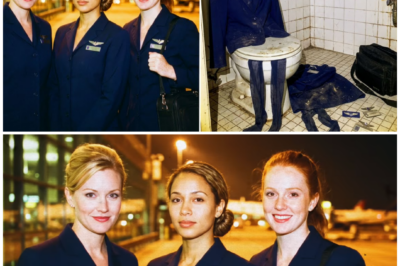
Three Flight Attendants Vanished From a Vegas Hotel in 1996 — 28 Years Later a Hidden Wall Is Opened
.Every hotel, every casino, every neon-lit alley has a story, most of them ending in forgetfulness or denial. But some…
End of content
No more pages to load






