
The first warning came not as a knock, but as a laugh — the kind of private, self-satisfied laugh people make when they think you’re not listening.
From the dining room, I heard her voice — Jennifer’s — light, chirpy, rehearsed.
“After the honeymoon, we’ll already be settled in,” she said. “It’ll be perfect timing. The master bedroom is incredible. I can’t wait to redecorate it.”
My fork froze midair.
The sound of my brother’s nervous chuckle followed. “You sure James won’t freak out?”
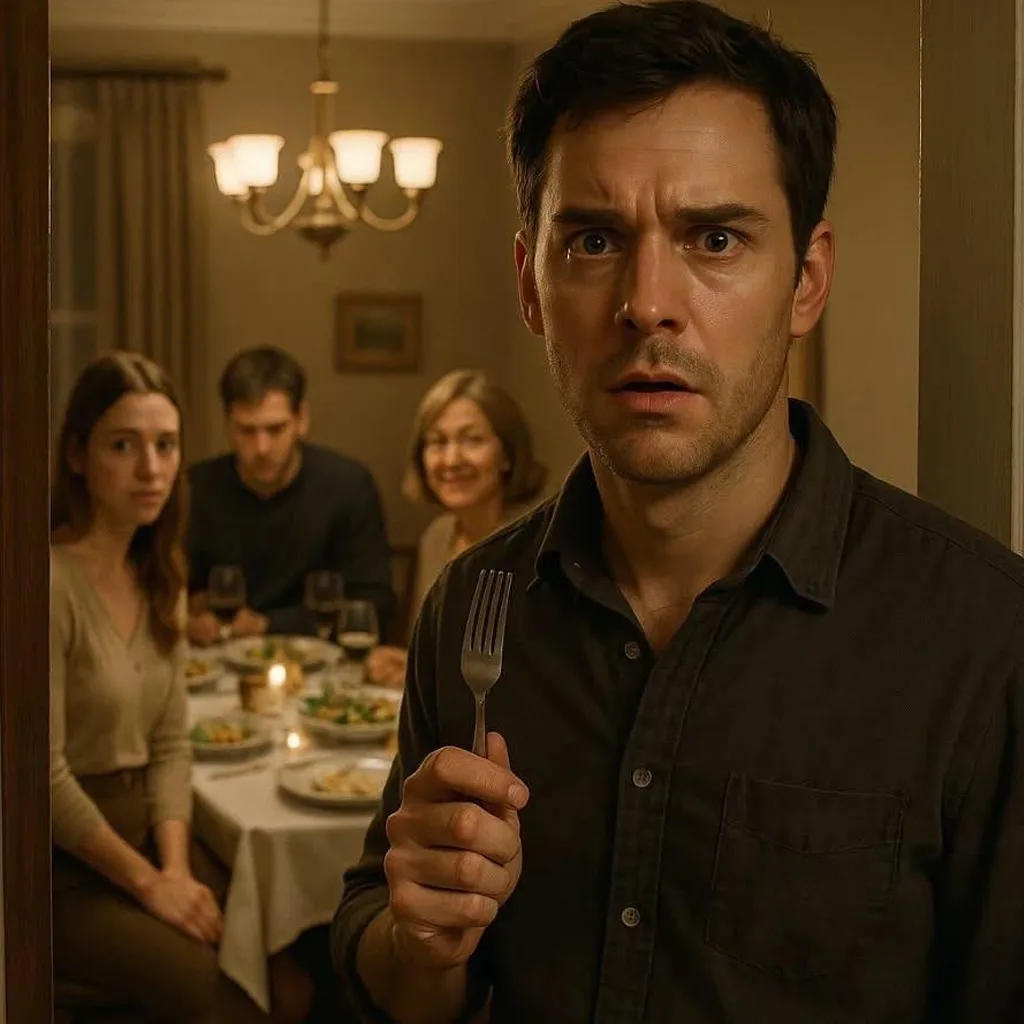
“Your parents will handle him,” she said, and laughed again — softer this time, conspiratorial. “It’s just temporary. Six months, maybe a year.”
The world tilted, then steadied. My house — my own quiet, carefully built refuge — had just become someone else’s future plan. I stood in the doorway, the low light spilling across the hardwood floors, and said the words before I’d even thought them:
“What did you just say?”
The room stopped breathing. Jennifer’s smile drained like color from old film. Michael — my brother — looked caught between guilt and the reflex to keep performing calm.
“Bro,” he started, “we were just—”
“You were just what?” I asked. “Planning to move into my house?”
From the corner of the room, my mother entered, smoothing her cardigan as if arriving for a photo op. “What a wonderful idea,” she said, her voice carrying that falsely bright tone that made my skin prickle. “You have four bedrooms, James, and you’re just one person.”
I stared at her. “You’re not serious.”
“You’ll barely notice them,” my father added without looking up from his phone.
In that moment, I saw it clearly — the unspoken assumption that I existed to accommodate them. That my boundaries were flexible, negotiable, less real than their needs.
Michael straightened his shoulders. “It’s family, man,” he said. “Family helps family.”
And I said quietly, the words sharp and steady, “Then maybe you should reconsider the venue.”
The silence that followed was clean and total. My mother gasped. My father looked up. Jennifer’s jaw set like a hinge locking into place.
“You wouldn’t dare,” my mother whispered.
I smiled, slow and calm. “Try me.”
I’d bought the house five years earlier — a two-story craftsman tucked behind a line of oaks, the kind of place you find by accident and never forget. It wasn’t large, but it was mine, every inch earned through late nights and second jobs, through the kind of small sacrifices no one else sees.
When Michael got engaged, I offered it up for his wedding because it felt right — family, connection, celebration. I told myself it would bring us closer, that maybe hosting the ceremony here could be a bridge between the way we’d grown apart.
But in my family, kindness always had a price tag. My parents saw generosity as an opening, a weakness to be filled with expectation. My brother had learned that rhythm young. And I — the eldest, the quiet one, the one who didn’t cause trouble — had learned to pay.
That night, I sat in the living room long after everyone left. The house was still strung with fairy lights, the faint scent of champagne on the carpet, and laughter lingering like smoke. On the mantel sat their wedding photo — taken in front of the very door they planned to claim.
It was a beautiful picture. And it made me sick.
They went through with it — the wedding, the speeches, the photo ops. I smiled when people congratulated me for hosting, nodded politely when distant relatives praised “what a perfect setting it was.” Jennifer twirled across my hardwood floors, her dress sweeping dust motes into gold. Michael danced beside her like the world had bent perfectly in his favor.
And I — I played the part of the supportive brother. I even raised a glass to them, to “family, and new beginnings.” They clinked their flutes against mine, believing they’d already inherited the future.
But upstairs, while the music swelled below, my lawyer sat in the study — the one with the bay window overlooking the garden — finalizing the sale papers I’d quietly initiated three days earlier.
By the time they left for their honeymoon, the house was no longer mine in spirit — only in signature. The new owners were kind, a retired couple who’d fallen in love with the porch and the light that hit the kitchen in the mornings. We closed fast.
Three days after the wedding, I moved into a small rental across town. The furniture felt smaller there, the walls barer. But for the first time in weeks, I could breathe.
When Michael and Jennifer’s moving truck pulled into the driveway a week later, it was early — bright sky, the world still soft from morning. Their grins were wide, the kind of naive joy that comes from not yet realizing the consequences of arrogance.
A man stood by the garage, holding a ring of keys. “Can I help you?” he asked.
Jennifer tilted her sunglasses down. “We’re moving in. My brother-in-law—”
“You mean the previous owner?” the man said, puzzled. “I just bought this place.”
At that moment, my lawyer’s car rolled up beside them. He stepped out, calm as ever, contract folder under his arm. “If you’d like to verify, here’s the transfer agreement. Closed yesterday.”
Michael’s mouth opened, then closed again. Jennifer blinked like someone waking up mid-dream.
My parents arrived minutes later, their expressions a blend of confusion and something close to outrage. When they saw me step from my car, the pieces fell together.
“James,” my mother hissed, her composure cracking, “what did you do?”
“What you asked,” I said quietly. “I made sure they’d have somewhere to stay together.”
Jennifer’s voice trembled. “You sold it?”
“Market’s hot,” I said, shrugging. “Figured it was time to upgrade.”
Her mouth opened, closed. My brother stared at the SOLD sign, still planted where their wedding arch had been — the same lawn where they’d promised each other forever.
I rolled down my window before driving off. “Good luck finding a new place,” I said softly. “Family helps family, right?”
Their faces — a tableau of disbelief, fury, and something like shame — shrank in the mirror as I turned the corner.
I didn’t sell the house out of cruelty. I sold it because I’d spent too many years mistaking sacrifice for love. In my family, “help” had always meant surrender — of space, time, comfort, peace. I used to think being kind meant being available, that saying yes was the same as being good.
But the truth is simpler: generosity without respect is exploitation. And silence, when mistaken for consent, becomes an invitation for people to take more than they should.
In the weeks after, the calls came — my mother’s guilt-laced pleas, my father’s rationalizations, Michael’s half-apologies wrapped in blame. I didn’t answer most of them. I was too busy unpacking boxes in a smaller place that finally felt mine.
Sometimes, on quiet evenings, I’d think about that wedding — about the lights strung through the trees, about the way Jennifer’s laughter had filled the rooms I built. I’d remember the moment the “SOLD” sign went up, how the weight in my chest shifted from rage to relief.
It wasn’t revenge that satisfied me. It was reclamation — the quiet, firm kind that doesn’t need to be announced.
Because family might mean forgiveness. But it never means forfeiture.
And some homes — the ones we fight to build alone — are worth more than any obligation dressed up as love.
News

A Mafia Boss Threatened Dean Martin on Stage—Dean’s Reaction Was Pure Genius
A Mafia Boss Threatened Dean Martin on Stage—Dean’s Reaction Was Pure Genius Prologue: A Gun in the Spotlight Dean…

The Billionaire Had No Idea His Fiancée Was Poisoning His Son—Until the Maid Exposed Everything
The Billionaire Had No Idea His Fiancée Was Poisoning His Son—Until the Maid Exposed Everything Prologue: A Whisper That…

The Billionaire Catches Maid ‘Stealing’ Food… But When He Sees Who It’s For, He Breaks Down in Tears
The Billionaire Catches Maid ‘Stealing’ Food… But When He Sees Who It’s For, He Breaks Down in Tears Prologue:…

The Billionaire’s Fiancée Sets a Trap for the Maid — Until His Silent Daughter Exposed the Truth
The Billionaire’s Fiancée Sets a Trap for the Maid—Until His Silent Daughter Exposed the Truth Prologue: The Whisper That…

The Billionaire Went Undercover as a Gardener — Until the Maid Saved His Children from His Fiancée
Richard Whitmore’s hands trembled on the garden shears as he watched through the kitchen window. His new wife, Vanessa, stood…

Three Flight Attendants Vanished From a Vegas Hotel in 1996 — 28 Years Later a Hidden Wall Is Opened
.Every hotel, every casino, every neon-lit alley has a story, most of them ending in forgetfulness or denial. But some…
End of content
No more pages to load






