
The late afternoon light slanted through the tall windows of the study, painting long gold bars across the marble floor. Dust floated in the air, soft and slow, like suspended breath. Ella stood frozen beside the desk, her hands trembling, her pulse quick and uneven.
Across from her, Armando set his cane aside. It landed against the chair with a dull, deliberate sound. He did not lean on it. He didn’t need to.
The revelation hit her in waves. The cane, the limp, the deliberate slowness — all of it had been a performance.
“Why would you pretend?” she asked quietly, her voice catching somewhere between disbelief and hurt.
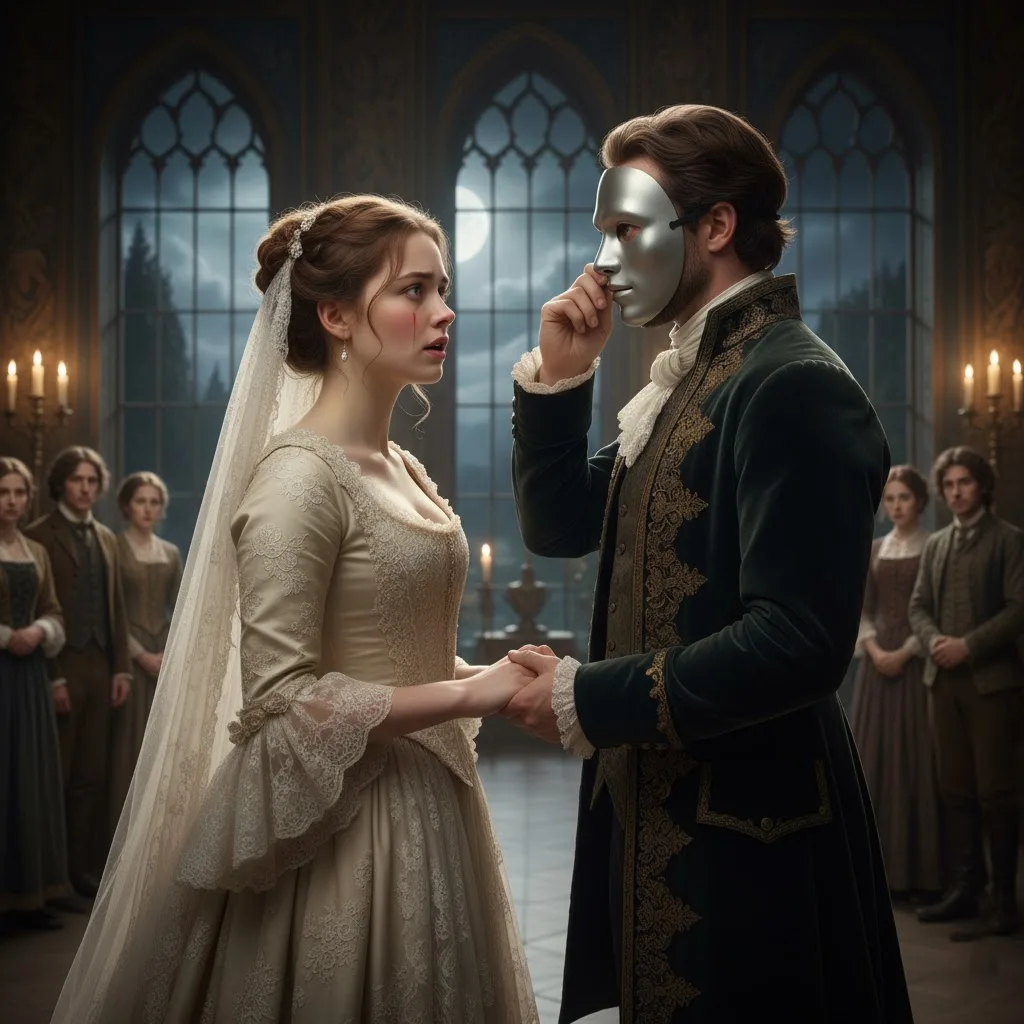
Armando exhaled and lowered himself into his chair, not like a weak man surrendering to exhaustion, but like someone preparing to face a truth long delayed. “Because, Ella,” he said softly, “I needed to see the world as it really is — stripped of pretense. When people think you’re strong, they want something from you. When they think you’re frail, they show what’s in their hearts.”
Ella’s throat tightened. She’d spent weeks thinking her husband was fragile — a quiet, aging man hidden behind his fortune and guarded by his silence. She had entered this marriage not out of love but necessity. Her mother’s illness. Her brother’s education. Debts that had swallowed her family whole.
Armando had offered salvation — through a contract, not a promise. In exchange for her hand, her family’s burdens would be lifted. She had told herself she could endure it. Duty, not affection, would guide her.
But now, standing before him, she realized she knew almost nothing about the man she’d married.
He looked up at her, his expression unreadable. “For years, I’ve been surrounded by people who measured my worth in numbers and influence. Every handshake was a negotiation. Every smile a calculation. I wanted to know if someone could look at me and see… a person. Not a prize.”
Ella’s voice was a whisper. “I didn’t choose you for love, Armando. I married you because I had no choice.”
A faint, almost wistful smile tugged at his lips. “And yet, when you could have asked for jewels or property, you asked for your mother’s treatment. Your brother’s future. Nothing for yourself. That told me more about you than love ever could.”
He opened a drawer and slid a folder toward her.
Inside were papers — neatly stacked medical statements, hospital receipts, bank transfers. At the top: “Paid in Full.” The dates made her head spin. Her mother’s bills had been cleared two days before the wedding.
Her voice broke. “You… you already paid for it?”
“I did,” he said. “Because I didn’t want gratitude. I wanted truth. I wanted to know if you’d still marry me even when you didn’t need me.”
Ella pressed a trembling hand to her mouth. For a long moment, neither of them spoke. The silence was heavy, but not cold.
When Armando spoke again, his tone was lower, almost vulnerable. “I am not as old as I appear. Forty-two, yes, but not the frail man society whispers about. I let the rumors live because they kept the greedy ones away.”
Ella stared at him — really stared. The calm precision in his movements, the quiet intelligence in his eyes, the way he never sought pity. How had she missed it?
He held her gaze. “I won’t ask for your affection. But I do hope, with time, you’ll find trust. Maybe even… peace.”
Her chest felt tight, her thoughts blurred. Everything she believed about her marriage, her future, was shifting beneath her. Yet instead of fear, something else took root — the faintest flicker of understanding.
“I need time,” she whispered.
“You’ll have it,” Armando said gently. “All the time you need.”
Days bled into weeks. The mansion, once vast and echoing, began to soften. The staff smiled more easily when they passed her in the hall. Sunlight pooled through the windows instead of reflecting off the marble like cold glass.
In the quiet of early mornings, she would find Armando reading by the fireplace. Sometimes he would look up and nod, an unspoken acknowledgment of her presence. Over dinners, their conversations deepened — about childhood, about dreams abandoned and rediscovered, about what it meant to lose faith and still keep walking.
She learned that he had grown up poor — that his first business deal wasn’t born from greed, but from hunger and survival. He learned that she had once dreamed of becoming a teacher before her family’s debts pulled her into despair.
One afternoon, they walked through the garden together. The roses were in bloom — soft pinks and deep reds glowing under the late sun.
“You could have chosen anyone,” she said quietly, running her fingers across a velvet petal.
Armando paused beside her. “I could have,” he admitted. “But I wanted someone who understood what sacrifice costs — and what it teaches.”
For the first time, Ella smiled. It wasn’t shy, or grateful, or polite. It was real.
Weeks turned into months. Her mother regained strength, her laughter returning like music to the house. Her brother’s letters from school spoke of hope, of possibility. And Ella — the woman who once walked into this marriage carrying shame and obligation — found herself standing taller, breathing deeper, speaking freely.
One evening, as the city lights shimmered below their hillside home, she and Armando sat side by side in the courtyard. The silence between them was no longer heavy. It was gentle, familiar.
“I don’t regret it anymore,” she said softly.
Armando turned, a quiet smile curving his lips. “Neither do I.”
Their hands met — tentative at first, then steady.
That was how their story began — not with fireworks or vows of passion, but with the slow mending of two lonely lives.
Ella had married him for survival; he had tested her for truth. What remained, after the deception and necessity had burned away, was something unadorned — the beginnings of trust.
In the years that followed, the house on the hill became a home. They built something fragile yet lasting — respect, companionship, and eventually, love.
And when strangers whispered about the young bride and her older husband, neither of them cared. Because both knew that love, the real kind, doesn’t always arrive dressed as romance. Sometimes it hides in small mercies, in the patience of time, in the courage to stay after the truth has been laid bare.
As the night deepened, the city lights below flickered like constellations, and Ella thought of how easily their story could have ended differently — in bitterness, in resentment, in silence.
Instead, it began here.
Two people, stripped of illusion, learning how to love not through grand gestures, but through quiet resilience.
Because sometimes, the strongest relationships are born not from choice — but from the grace of what comes after.
News

A Mafia Boss Threatened Dean Martin on Stage—Dean’s Reaction Was Pure Genius
A Mafia Boss Threatened Dean Martin on Stage—Dean’s Reaction Was Pure Genius Prologue: A Gun in the Spotlight Dean…

The Billionaire Had No Idea His Fiancée Was Poisoning His Son—Until the Maid Exposed Everything
The Billionaire Had No Idea His Fiancée Was Poisoning His Son—Until the Maid Exposed Everything Prologue: A Whisper That…

The Billionaire Catches Maid ‘Stealing’ Food… But When He Sees Who It’s For, He Breaks Down in Tears
The Billionaire Catches Maid ‘Stealing’ Food… But When He Sees Who It’s For, He Breaks Down in Tears Prologue:…

The Billionaire’s Fiancée Sets a Trap for the Maid — Until His Silent Daughter Exposed the Truth
The Billionaire’s Fiancée Sets a Trap for the Maid—Until His Silent Daughter Exposed the Truth Prologue: The Whisper That…

The Billionaire Went Undercover as a Gardener — Until the Maid Saved His Children from His Fiancée
Richard Whitmore’s hands trembled on the garden shears as he watched through the kitchen window. His new wife, Vanessa, stood…

Three Flight Attendants Vanished From a Vegas Hotel in 1996 — 28 Years Later a Hidden Wall Is Opened
.Every hotel, every casino, every neon-lit alley has a story, most of them ending in forgetfulness or denial. But some…
End of content
No more pages to load






