
For more than 300,000 years, Neanderthals were the dominant humans across Europe and western Asia. They thrived through bitter cold, hunted giant game with skill, cared for their injured and elderly, and left behind tools and shelters that show patience and planning. Then, around 40,000 years ago, their record fades. Fires go out. Camps fall silent. The species vanishes from the fossil timeline. For a century and a half, the obvious explanations never quite fit. Ice Age winters didn’t stop them before; battlefields and mass graves aren’t in the ground; “primitive brutes” isn’t what their tools and pigments reveal. The mystery survived every shovel.
What changed everything wasn’t a new cave or a better dig. It was a new way to read old bones. Ancient DNA—extracted from powder ground off fossil fragments, processed under hospital-grade clean-room protocols, and assembled by high-throughput sequencing—has finally given a clear, testable answer. Neanderthals didn’t simply “lose” to us. They were squeezed by biology and numbers. Their populations were small and isolated, their genetic diversity eroded, and their contact with our expanding species flowed one way—into us—while leaving them with too little variation to bounce back. The quietest extinction on Earth was written in code.
Below is a grounded look at the evidence: how scientists pulled readable DNA from 40,000-year-old bones, what genomes revealed about Neanderthal families and social structure, why their populations collapsed genetically, how disease and demography likely compounded the decline, and what parts of their legacy still live in our cells today.
The Myths That Fell Apart
Early theories were tidy but brittle:
– “They froze out.” Except Neanderthals had already weathered colder intervals and left ample evidence of fire use, winter hunting, and insulated shelters.
– “We wiped them out.” Excavations don’t show widespread violence or mass graves. In several regions, Neanderthals and early Homo sapiens overlapped for thousands of years.
– “They were too simple.” Pigments, ornaments, adhesives, complex tool chains, and possible burials point to symbolism, planning, and care—human capacities, not caricatures.
Pieces of these ideas describe part of the story. None alone explains a continent-wide fade that’s synchronized, clean, and prolonged. The answer had to come from something the dirt couldn’t show.
How the Bones Finally Spoke
Ancient DNA is fragile. Heat, humidity, bacteria, and time shred chromosomes into tiny fragments and lace them with microbial DNA. By the 1990s, most experts thought genomes older than 10,000 years were a lost cause. Then came a new lab culture.
– Clean rooms and protocols: Teams at the Max Planck Institute for Evolutionary Anthropology and partner labs built environments with filtered air, positive pressure, UV sterilization, and head-to-toe suits. The goal was simple: keep modern human DNA out.
– Smarter chemistry: Researchers powdered small bone chips, dissolved mineral matrices with enzymes, and recovered trace ancient molecules while stripping away bacteria and fungus.
– Short-read sequencing at massive scale: High-throughput sequencing read billions of short, damaged fragments. Bioinformatics tools aligned overlaps against reference genomes, reconstructed likely original sequences, and flagged contaminant patterns.
In 2010, the first full Neanderthal genome appeared on a screen—billions of base pairs stitched from fragments. It was a scientific milestone. It was also a mirror. When the genome was compared to modern populations, nearly all people outside Africa showed a small Neanderthal fraction—often 1–2%. The conclusion was unambiguous: our ancestors and Neanderthals met and had children. Some of their DNA persists in us.
Families Written in Stone—and Code
Genomes didn’t just tell “if,” they told “who” and “how.” From sites with multiple individuals, scientists could read kinship:
– Family clusters: In caves such as Chagyrskaya (Altai), DNA revealed a father, his teenage daughter, and close relatives. This is a direct window into a small, tight-knit group.
– Mobility patterns: Female lineages often came from elsewhere (indicating women moved between groups), while male lineages tended to be local (men stayed put). This helps avoid close-kin mating—up to a point.
– Group size: Demographic modeling suggests bands rarely exceeded a few dozen individuals. Communities were intimate and interdependent—the kind of society where everyone knew everyone.
This is a portrait of a capable, social species running lean. That leanness becomes critical when environments shift and neighbors arrive.
The Genetic Trap: Small Populations, Shrinking Variation
The most consequential finding is a signature called homozygosity—long, repeated stretches where both copies of DNA are identical. In healthy, large populations, those blocks are short and scattered; in small, isolated groups, they get longer and more common. Neanderthal genomes from late in their timeline show exactly that pattern.
– Inbreeding and drift: With bands as small as 20–50 people, even with women moving between groups, gene pools shrink. Harmful variants can stack up; beneficial variants can be lost. Over time, the ability to adapt drops.
– Fragmentation: As habitats shifted and populations thinned, distances between groups grew. Fewer exchanges meant fewer new alleles coming in. Many Neanderthal communities became evolutionary islands.
– Asymmetric gene flow: Contact with Homo sapiens was intimate—our DNA proves it. But the genetic exchange was lopsided. Larger, more connected human populations absorbed Neanderthal segments; Neanderthals, in smaller, scattered bands, received comparatively little influx from us. They didn’t get the diversity boost they needed.
This isn’t a “one bad winter” story. It’s a thousand small cuts—birth by birth, decade by decade—as diversity evaporated across a continent.
Disease as a Force Multiplier
Ancient genomes preserve viral fragments—molecular fossils of past infections. Both Neanderthals and early modern humans carry such traces, implying pathogens crossed species. In tiny populations, diseases hit harder:
– Epidemics in small bands: If a virus sweeps through a group of thirty, there may be no redundancy—no unaffected neighboring village to send help or mates.
– Immunity tradeoffs: Some immune variants passed from Neanderthals to modern humans seem helpful (pathogen sensing), while others correlate with higher risk of runaway inflammation. Either way, disease pressures were real, and small, inbred groups likely suffered more.
The Slow Fade, Not the Sudden Fall
Archaeology shows no continent-wide burn layer or kill horizon. Genomes show a chronic condition: too few people, too little variation, too many local bad breaks. Overlay that with climate whiplash at the end of the Ice Age and the arrival of a species—ours—with larger networks and faster expansion. That combination is enough to tilt an evolutionary race without a war.
What Still Lives in Us
For people with ancestry outside Africa, Neanderthal DNA remains a small but active part of our biology:
– Skin and immune function: Variants influence keratin, pathogen detection, and inflammatory responses. Some likely gave early Homo sapiens adaptive advantages in Eurasia.
– Medical correlations: Studies link certain Neanderthal segments to higher risks for blood clotting, allergies, and severe respiratory inflammation; others link them to protective effects. These are statistical patterns, not personal destinies, but they show a continuing legacy.
Inside Africa, where ancestors didn’t share those specific Eurasian encounters, Neanderthal contribution is typically absent or minimal—another clue that gene flow happened after our species left Africa and met Neanderthals along the way.
What the Science Can—and Cannot—Say
What we can say with confidence
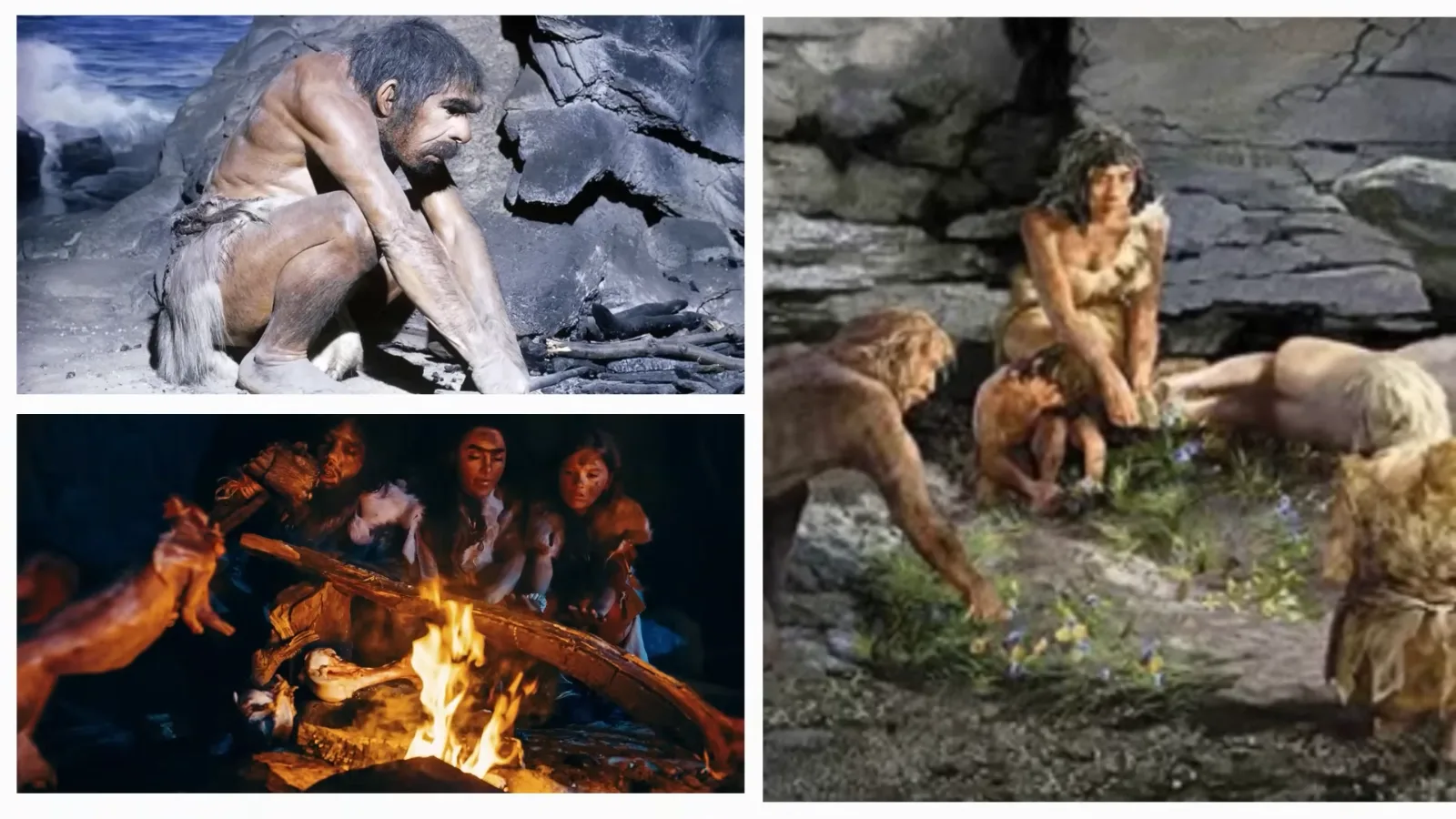
– Neanderthals were social, intelligent humans who made complex tools, used pigments and adhesives, cared for their own, and likely had symbolic behavior.
– Ancient DNA shows small, kin-based groups with limited diversity late in their history; genomes carry strong signatures of inbreeding and long homozygosity blocks.
– Homo sapiens and Neanderthals interbred. The genetic flow into our species is well-documented; reciprocal flow into late Neanderthals is limited in the data.
– Demography and genetics—small, isolated populations losing adaptive capacity—are sufficient to explain a long, quiet extinction without resorting to simple “kill-or-freeze” narratives.
What remains under study
– Exact timelines and regional differences in contact and replacement.
– The role specific pathogens played and how immunity variants spread.
– How much culture flowed both ways—techniques, symbols, language cues—beyond what archaeology and genetics can currently resolve.
The Humbling Lesson
Neanderthals didn’t vanish because they were simple or weak. They vanished because they were few. Their world—built for small, resilient bands—was extraordinarily durable for hundreds of thousands of years. But evolution punishes isolation. When environments shifted and our species, with wider networks and bigger gene pools, spread into their ranges, the math turned against them. Not a duel at the cave mouth—an actuarial table written in births, deaths, and genomes.
A Clear Timeline of the Breakthroughs
– Mid-1800s: First Neanderthal fossils challenge human history.
– 20th century: Competing climate/war/deficit theories rise and fall as new sites show sophistication.
– 2000s: Clean-room aDNA protocols mature; short-read sequencing and computational assembly become viable.
– 2010: First Neanderthal genome published; interbreeding with Homo sapiens confirmed.
– 2010s–2020s: More genomes across regions; family groups identified; strong inbreeding signals documented; refined models point to demographic-genetic collapse as key driver.
Why This Matters Now
This is not just a detective story about “them.” It’s a mirror for “us.”
– Fragility of small populations: Conservation biology sees the same pattern today—isolated groups lose genetic health. The lesson applies from island mammals to endangered human languages and cultures: connectivity and diversity buy resilience.
– Medical echoes: Some immune settings that helped in Ice Age Eurasia can overshoot in modern environments. Understanding ancient variants helps modern medicine parse risk and response.
– Human kinship: Neanderthals are not “others” in the monster-mask sense. They are part of our family history. Part of them is literally part of us.
A Straight Answer to the Headline
Ancient DNA has not produced a single smoking gun. It has produced something stronger: converging lines of evidence that explain a quiet extinction. Neanderthals dwindled because their populations were too small and too cut off to keep genetic diversity high. Interbreeding with us happened, but on terms that favored our expanding networks. Disease and climate swings likely amplified the pressure. Over thousands of years, the result was inevitable without modern-scale mobility: fewer births, more shared weaknesses, lines that blink out.
They are gone as a separate species. They are here as a biological legacy. Both truths can be held at once.
Key Takeaways You Can Trust
– Neanderthals lasted far longer than any civilization on record and left a record of care, craft, and culture.
– Their end was demographic, genetic, and slow—not a single catastrophe.
– Interbreeding ensured their DNA persists, shaping traits from skin to immunity.
– The same science that read their genomes also offers tools to protect diversity—genetic and cultural—today.
We didn’t “win” because they “lost.” We expanded while they thinned, and the intersection was intimate enough to leave a trace in nearly every Eurasian-descended person alive. That is the sober, human scale of the story: no drumroll, no final battle—just the arithmetic of life playing out over deep time, now legible in the letters of our shared code.
News

A Mafia Boss Threatened Dean Martin on Stage—Dean’s Reaction Was Pure Genius
A Mafia Boss Threatened Dean Martin on Stage—Dean’s Reaction Was Pure Genius Prologue: A Gun in the Spotlight Dean…

The Billionaire Had No Idea His Fiancée Was Poisoning His Son—Until the Maid Exposed Everything
The Billionaire Had No Idea His Fiancée Was Poisoning His Son—Until the Maid Exposed Everything Prologue: A Whisper That…

The Billionaire Catches Maid ‘Stealing’ Food… But When He Sees Who It’s For, He Breaks Down in Tears
The Billionaire Catches Maid ‘Stealing’ Food… But When He Sees Who It’s For, He Breaks Down in Tears Prologue:…

The Billionaire’s Fiancée Sets a Trap for the Maid — Until His Silent Daughter Exposed the Truth
The Billionaire’s Fiancée Sets a Trap for the Maid—Until His Silent Daughter Exposed the Truth Prologue: The Whisper That…

The Billionaire Went Undercover as a Gardener — Until the Maid Saved His Children from His Fiancée
Richard Whitmore’s hands trembled on the garden shears as he watched through the kitchen window. His new wife, Vanessa, stood…

Three Flight Attendants Vanished From a Vegas Hotel in 1996 — 28 Years Later a Hidden Wall Is Opened
.Every hotel, every casino, every neon-lit alley has a story, most of them ending in forgetfulness or denial. But some…
End of content
No more pages to load






