
A federal judge’s decision to revive a criminal contempt inquiry this autumn has opened one of the most consequential legal-and-political fights of the year. At issue: whether senior officials in the administration knowingly flouted a federal court’s order to halt deportation flights — and whether that defiance, if proven, crosses the line from reckless policy choice into criminal contempt. The short version is stark: Judge James Boasberg of the U.S. District Court for the District of Columbia has taken steps to force witnesses and documentary explanations into the light, and the Justice Department’s own internal documents and a whistleblower complaint now place multiple senior officials at the center of the dispute.
This is not a routine courtroom tiff. Criminal contempt is rare and serious: it is the judiciary’s blunt instrument for enforcing its commands, and when a judge signals probable cause that an order was willfully disobeyed, the stakes escalate quickly. The Boasberg inquiry grew out of events in March when two flights carrying Venezuelan nationals bound for El Salvador left U.S. custody in the face of an on-the-record judicial directive that those transports be returned. The administration contends the flights were already outside the court’s reach when they departed; the whistleblower and portions of the record say otherwise. The factual and legal tension between those accounts is the backbone of the contempt probe.

What happened: flights, an oral order, and a split-second decision
On March 15, federal judges in Washington and elsewhere were wrestling with a novel and sweeping use of the Alien Enemies Act as the administration attempted large-scale deportations. Judge Boasberg — responding to filings and emergency motions — issued an on-the-record directive aimed at stopping certain transfers. According to court records and subsequent reporting, the judge ordered that flights already in domestic airspace be returned to U.S. jurisdiction pending further legal process. Rather than comply, the government proceeded with the flights. That choice set off a chain of appeals and emergency stays that eventually wound up at the Supreme Court, which ruled the judge lacked jurisdiction to issue the relief he had granted — a ruling that resolved one set of legal questions but left another unresolved: did officials nonetheless willfully ignore a valid federal order at the time it was given?
The difference matters. Courts enforce orders issued by district judges as binding instructions to the parties before them; the rule is simple in principle: comply now and appeal later. If officials believed the order was invalid, the normal route is to seek appellate relief — not to flout the directive in real time. The Boasberg inquiry asks whether, regardless of the later appellate posture, the immediate failure to halt the transfers amounted to contemptuous conduct. That question is at the heart of the revived criminal proceedings.
A whistleblower’s claim changed the dynamics
Enter Erez (sometimes reported as Erez/Reuveni) Reuveni, a career Justice Department immigration litigator who filed a detailed whistleblower disclosure this summer and has since been publicly associated with Democracy Forward. Reuveni’s complaint alleges that senior DOJ and DHS lawyers instructed line attorneys and agency officials to proceed with the deportations “no matter what,” even if a judge ordered otherwise. He says internal communications, emails, and witness accounts show explicit directions to ignore judicial instructions — including reported remarks urging staff to tell judges to “go f— themselves.” Whether those colorful phrases are literally recorded in contemporary texts or discussed as paraphrase, the thrust of Reuveni’s disclosure is to place high-ranking officials at the center of a decision to prioritize the administration’s deportation plan over immediate compliance with a court directive. That allegation is not merely inflammatory; it is the factual catalyst for Boasberg’s decision to seek sworn declarations and to consider compelling testimony.
Reuveni’s files were supplied to congressional committees and to the court. Over time, reporting has indicated the whistleblower supplied emails and texts that appear to corroborate his account, drawing names into the orbit of the contempt inquiry. The arrival of contemporaneous documents dramatically changes the calculus from a he-said–she-said dispute into one in which judges can test claims under oath and with original records. That is precisely why Boasberg signaled he wanted witnesses under oath and why the DOJ’s internal handling of the matter has shifted from defensive litigation to a politically treacherous reputation-management problem.
Names in the spotlight: Noem, Emil Bove, and DOJ leadership
The whistleblower disclosure and subsequent DOJ filings identify several senior officials as decision-makers or advisers in the deportation operation. Among the most consequential names are Homeland Security Secretary Kristi Noem, and senior DOJ officials including (reported in coverage) Emil Bove and Deputy Attorney General Todd Blanche. The Justice Department has publicly argued that, as a legal matter, the court order was not enforceable against flights already outside U.S. territory — an argument that depends on careful parsing of status, timing, and jurisdiction. But the whistleblower materials and emails raise the separate claim that officials were told to carry out the operation even while judges were issuing directives. That is the sort of evidence that can support a willful-contempt finding if the judge finds it persuasive.
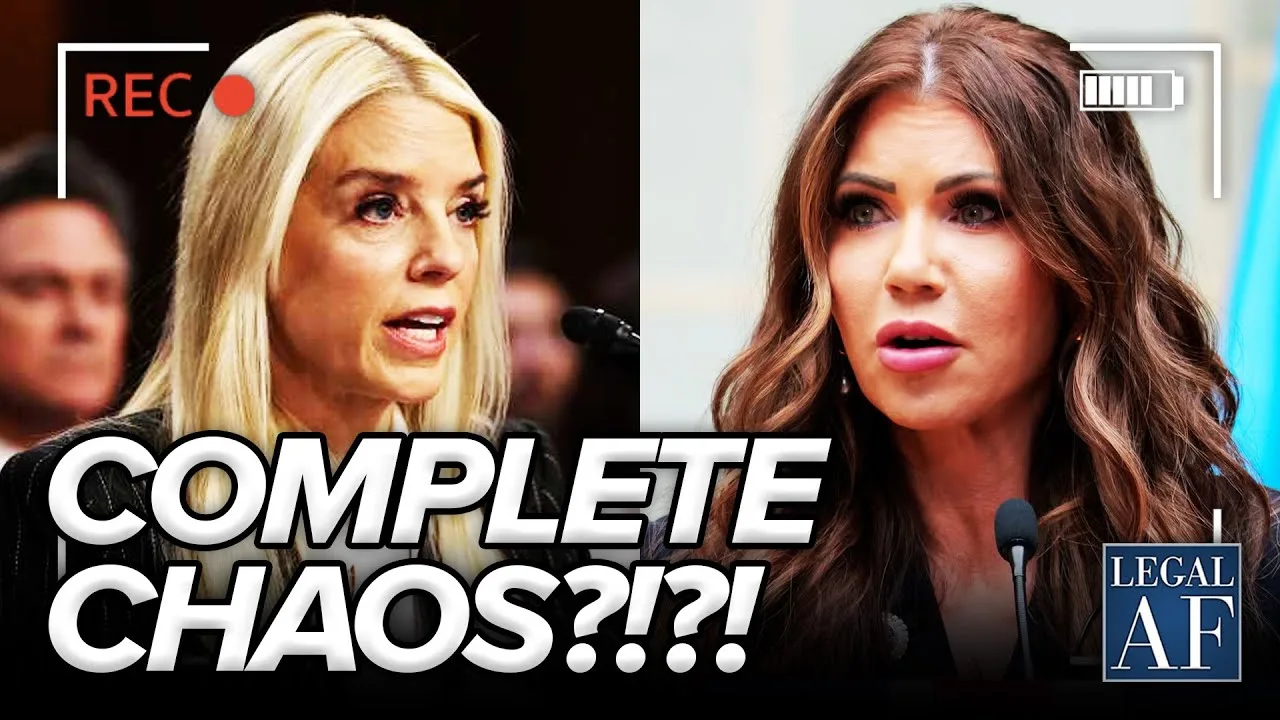
Emil Bove’s name has drawn particular attention. Bove, whose biography and recent nomination to a federal appeals post were widely reported, appears in documents and contemporaneous exchanges identified by the whistleblower as taking part in decisions and providing legal advice. The optics — a senior DOJ official advising a course of action and then being elevated into the federal judiciary — have intensified political scrutiny and made the matter an urgent issue in both courtrooms and Senate hearing rooms. Judicial ethics and the credibility of legal advice to agencies are at stake. The judge’s call for sworn explanations raises the possibility that Bove, Blanche, or other senior players could be asked for testimony, written declarations, or both.
The government’s defense: timing, jurisdiction, and legal advice
From the administration’s vantage, the core legal defense is twofold. First, officials argue the flights were beyond U.S. jurisdiction at the moment the judge’s order issued or were otherwise outside the scope of the court’s authority; if that is correct, then there was no disobedience of a binding judicial directive. Second, DHS and DOJ officials have pointed to the legal advice they received as justifying their actions: officials claim counsel concluded the operation could proceed without violating judicial commands. The “advice-of-counsel” defense is a legal staple — and in many contexts it can blunt or excuse willful misconduct if an official reasonably relies on counsel’s legal judgment. That is one of the central battlegrounds the judge will have to evaluate: did the lawyers’ advice provide a plausible legal basis, or did the official course amount to willful evasion of judicial authority?
But the whistleblower’s evidence complicates the advice-of-counsel theory. If contemporaneous communications show not reasoned legal analysis but orders to “proceed no matter what,” or rhetoric that suggests contempt for judicial process, then the defense looks transactional rather than genuinely legal. Judges have historically treated advice-of-counsel as a narrow shield: it protects reasonable reliance on counsel’s written, contemporaneous guidance — not an administrative decision to “do it now and litigate later.” The fact-sensitive inquiry is why Boasberg seeks sworn accounts and is contemplating testimony under oath.
What criminal contempt could mean — practically and politically
Criminal contempt in this context is rarely used; it is a tool to vindicate the court’s authority and to penalize knowing defiance. Convictions are uncommon, especially against high-ranking officials, but the process itself carries immediate consequences. Subpoenas, sworn testimony, and the potential for perjury exposure make criminal contempt proceedings uniquely risky for an administration already juggling political fallout. Even if criminal penalties are not ultimately imposed, the discovery process can unearth damaging evidence and create political crises in real time. That is already playing out: the DOJ has filed defensive pleadings, the administration has sought to characterize the judge as overreaching, and media narratives now portray the episode as a constitutional clash between branches.
Politically, the optics are harrowing. If a judge concludes that officials knowingly disobeyed a court, the reputational damage to both the agencies involved and to the administration’s claim of orderly governance would be severe. If witnesses include recently elevated figures or nominees — a detail repeatedly emphasized in reporting — the Senate’s advice-and-consent role and the judicial confirmation process could be contaminated by evidence that those nominees were involved in potentially unlawful seasoning of policy decisions. Lawmakers and litigators watching this case may treat it as a bellwether for how far agencies may push in operationalizing controversial immigration strategies.
The rule-of-law stakes are structural, not merely partisan
Beneath the personalities and the outraged headlines, the Boasberg inquiry places a structural question at the center of American governance: do federal courts’ emergency directives have practical bite when the executive branch decides national-security or immigration imperatives require rapid action? If the answer tilts toward deference to executive speed, courts lose an essential enforcement mechanism; if the answer favors judicial power to enforce orders even in chaotic moments, the executive branch faces operational constraints during emergencies. Both approaches have implications for separation-of-powers doctrine, humanitarian protections, and the rule of law. The case thus matters far beyond a single operation or a single administration.
What happens next — evidence, declarations, and potential witnesses
Judge Boasberg has demanded written declarations and signaled he may require live testimony. The court has asked for detailed timelines, contemporaneous communications, and an explanation of who authorized what and when — all the classic ingredients of an evidentiary probe. The likely witnesses include agency heads, political appointees who signed off on the transfers, and the senior lawyers who advised the operation. The presence of a whistleblower who has already provided emails and texts accelerates the schedule: judges can use those documents to test officials’ sworn statements for consistency and completeness. If judges find discrepancies between oral testimony and documentary records, the danger for those testifying increases substantially.
Why the public should care
Beyond partisan frames, the proceeding tests the practical enforceability of judicial orders during politically fraught policy drives. It is about process — whether the machinery of government will follow the rule-of-law norms that have bound administrations of both parties. It is about human consequences, too: the flights involved vulnerable migrants whose legal rights were at stake. And finally, it is about institutional accountability: when a government argues it can proceed and sort legal consequences later, it is asking the public to accept a novel reordering of constitutional checks. Boasberg’s inquiry asks whether that reordering was lawful, prudent, or — if the worst is true — criminal.
the courtroom’s quiet power
The Boasberg contempt inquiry is a reminder that the judiciary can’t be reduced to procedural hair-splitting when decisions have immediate human and constitutional effects. Will the court find a technical defense credible and let the matter close? Will it find evidence of willful disobedience and invite criminal consequences for top officials? Or will the truth fall somewhere between — malpractice in the fog of fast-moving national decisions but not intentional disregard for law? The answers will matter for the officials implicated, for the agencies involved, and for the broader architecture of American separation of powers. For now, the judge’s decision to press for sworn testimony and detailed records sets a timetable in which the rule of law, not politics, will be asked to speak loudest.
News

A Mafia Boss Threatened Dean Martin on Stage—Dean’s Reaction Was Pure Genius
A Mafia Boss Threatened Dean Martin on Stage—Dean’s Reaction Was Pure Genius Prologue: A Gun in the Spotlight Dean…

The Billionaire Had No Idea His Fiancée Was Poisoning His Son—Until the Maid Exposed Everything
The Billionaire Had No Idea His Fiancée Was Poisoning His Son—Until the Maid Exposed Everything Prologue: A Whisper That…

The Billionaire Catches Maid ‘Stealing’ Food… But When He Sees Who It’s For, He Breaks Down in Tears
The Billionaire Catches Maid ‘Stealing’ Food… But When He Sees Who It’s For, He Breaks Down in Tears Prologue:…

The Billionaire’s Fiancée Sets a Trap for the Maid — Until His Silent Daughter Exposed the Truth
The Billionaire’s Fiancée Sets a Trap for the Maid—Until His Silent Daughter Exposed the Truth Prologue: The Whisper That…

The Billionaire Went Undercover as a Gardener — Until the Maid Saved His Children from His Fiancée
Richard Whitmore’s hands trembled on the garden shears as he watched through the kitchen window. His new wife, Vanessa, stood…

Three Flight Attendants Vanished From a Vegas Hotel in 1996 — 28 Years Later a Hidden Wall Is Opened
.Every hotel, every casino, every neon-lit alley has a story, most of them ending in forgetfulness or denial. But some…
End of content
No more pages to load






