
For over a century, the golden death mask of King Tutankhamun has mesmerized the world. Crafted from 22 pounds of solid gold and inlaid with precious stones from across ancient trade routes, the mask is instantly recognizable—an icon of Egypt and a symbol of the mysteries that still surround the boy king. But as thousands of objects from Tutankhamun’s tomb are brought together in Cairo’s new $1 billion Grand Egyptian Museum, scientists and historians are using the latest forensic technology to answer questions that have lingered since Howard Carter’s legendary discovery in 1922: Was the mask truly made for Tutankhamun? Or was it a recycled treasure, meant for someone else?
A Discovery That Changed History
The Valley of the Kings has always been a place of intrigue, the sacred burial ground of Egypt’s pharaohs. For centuries, archaeologists uncovered tomb after tomb—each one stripped bare by grave robbers. Every tomb, except one. On November 26th, 1922, British archaeologist Howard Carter broke into a long-forgotten tomb and made what is still considered the greatest archaeological discovery of all time: the untouched treasures of Tutankhamun.
Among the 5,398 objects Carter cataloged, the golden death mask quickly became the most famous. Its craftsmanship, elegance, and haunting expression captured imaginations worldwide. Yet, almost from the moment of its discovery, speculation swirled around the mask. Was it really made for Tutankhamun, or was it a masterpiece repurposed for a young king who died unexpectedly?
Unraveling the Mysteries: Science Meets History
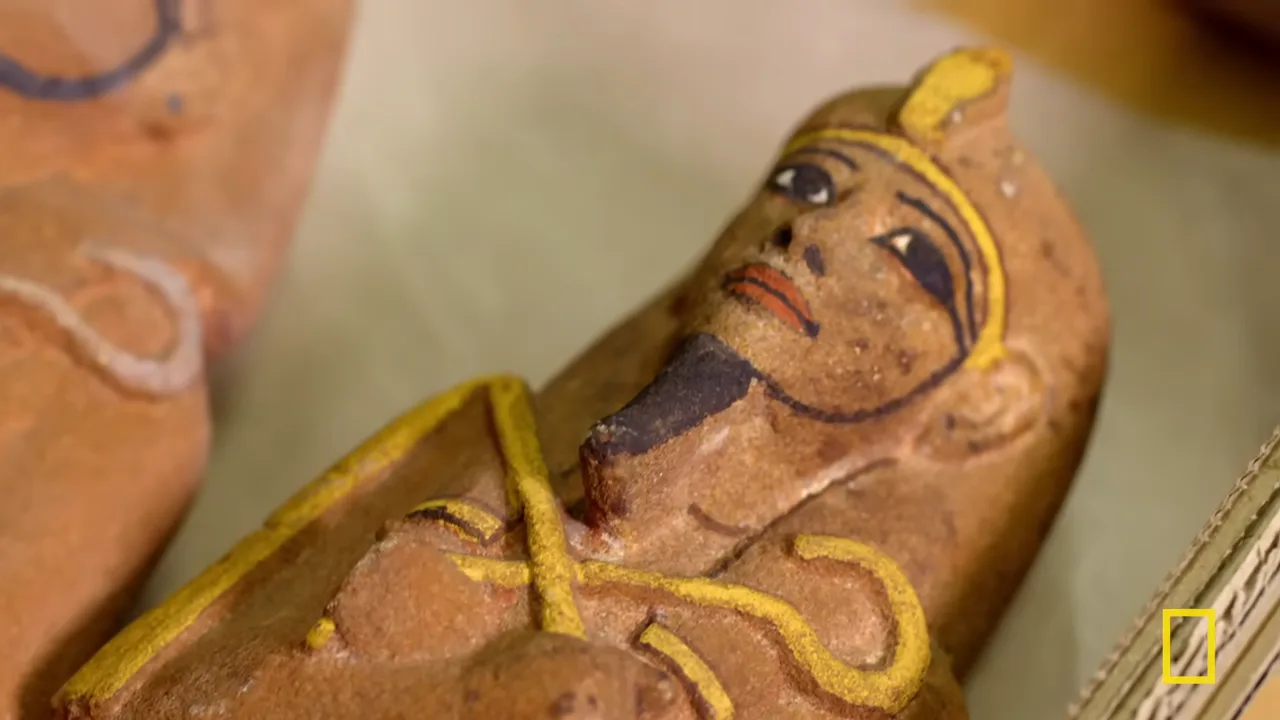
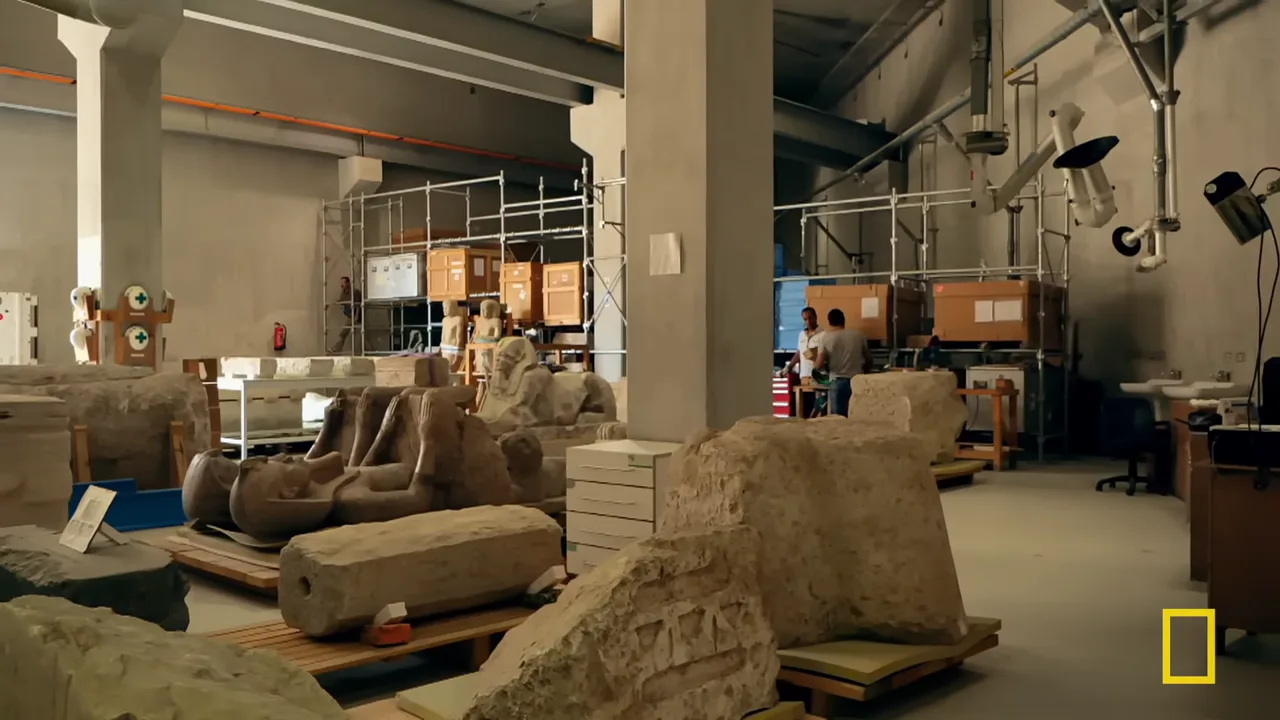
The opening of the Grand Egyptian Museum has given Egyptologists a once-in-a-lifetime opportunity to reassess everything from Tutankhamun’s tomb. For the first time in a century, all the treasures are being brought together, many on public display for the first time. The mask itself has undergone its most intensive forensic examination ever, using imaging, X-ray fluorescence, and microscopic analysis.
Chris Naunton, a leading Egyptologist, describes the process as “layers and layers of information coming out—not just because objects are being examined in detail, but also because new technologies can be applied to them.” The results have been surprising, and sometimes even unsettling.
Was the Mask Made for Tutankhamun?
One of the oldest debates centers on whether the mask was created for Tutankhamun or someone else. Ancient Egyptian burial law allowed only about 70 days between death and burial—the time needed to prepare the body and the tomb. Some experts have argued that 70 days was not enough to craft an object as fine as the death mask. This has fueled speculation that the mask was originally made for Tutankhamun’s stepmother, Nefertiti, and later altered.
Recent scientific analysis, however, is providing new answers. Christian Eckmann, a leading conservator, gained unprecedented access to the mask. Using powerful X-rays and material analysis, Eckmann and his team examined the gold’s composition across more than 100 points on the mask. The results were clear: every part of the mask, including the face, was made from the same gold. This strongly suggests that the mask was crafted as a single piece, not assembled from recycled parts.
Eckmann also investigated the controversial cartouche—the name plate bearing Tutankhamun’s hieroglyphic name. Some had suggested it was engraved over an earlier name, perhaps Nefertiti’s. But Eckmann found that what appeared to be reworking was actually a seam where two gold sheets were joined. The mask’s face and cartouche were part of a unified design.
Crucially, the glass inlays around the mask’s face would have been destroyed if the portrait had been replaced after the mask was finished. “I personally think this mask was for Tutankhamun,” Eckmann concludes. “It was designed for him and it was used for him.”
A Rushed Burial, Borrowed Treasures
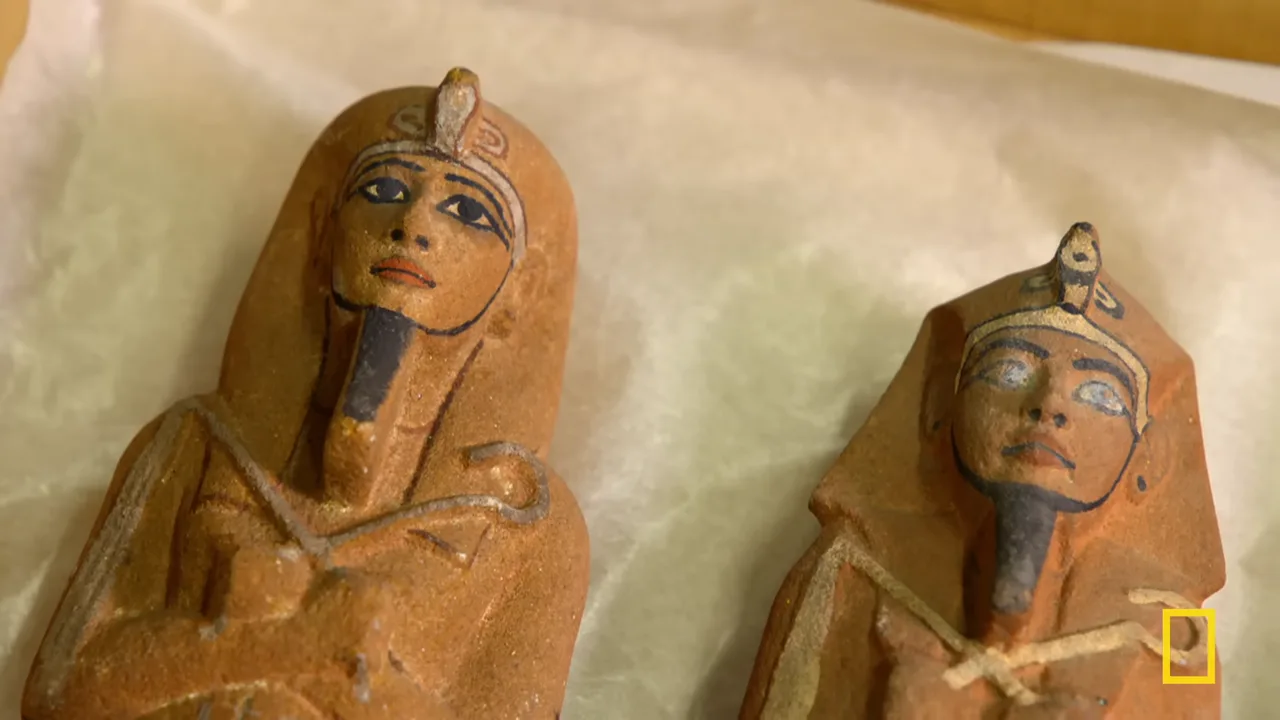
The mask may have been made for Tutankhamun, but much else about his burial was far from standard. The evidence points to a rushed funeral, with many objects in the tomb repurposed from earlier burials. The tomb itself is unusually small and simple for a pharaoh. Its cramped burial chamber and half-decorated walls suggest it was hastily adapted to receive the young king’s body.
Museum director Tarek Tawfik points to ceremonial beds whose inscriptions refer to gods not associated with Tutankhamun, suggesting parts from different beds were mixed up in the rush to assemble the tomb’s contents. Hundreds of objects—shabtis, sandals, arrows, even gold bands—show signs of having belonged to other royals. Existing estimates suggest that over a thousand items, a quarter of the tomb’s contents, are secondhand.
Chris Naunton’s study of Howard Carter’s original notes reveals further anomalies. Tutankhamun’s body was interred in three coffins, placed one inside the other like Russian dolls, and then encased in a stone sarcophagus. But the outer coffin was too big for the sarcophagus, forcing Carter to chip away at the lid to make it fit. The middle coffin raises even more questions. Its inscriptions appear to have been altered, with a cartouche sunk too deep—a sign that a new name was inserted over an old one. The face on the coffin is not Tutankhamun’s, but that of a different, more pugnacious individual.
The Botched Mummification
Perhaps the most telling evidence of a hurried burial comes from Tutankhamun’s mummy itself. When Howard Carter finally opened the inner coffin, he was shocked by what he found. The incision for removing internal organs was much larger and in the wrong place. Most unusually, the heart—essential for life after death in Egyptian belief—had been removed. No other mummy in the museum’s vast collection is missing a heart.
Egyptologist Salima Ikram compares Tutankhamun’s mummy to that of his great-grandfather, Yuya, whose body was perfectly preserved with a standard incision. Tutankhamun’s odd diagonal cut and the loss of his heart suggest his mummification was performed by inexperienced embalmers, possibly far from home, before his body was returned to the Valley of the Kings.
Why Was Tutankhamun’s Burial So Rushed?
Tutankhamun died young, at just 19, probably without heirs. Preparations for his burial would not have been made in advance, leaving little time to create thousands of burial goods and the iconic mask. His successor, the pharaoh Ay, likely seized power and usurped Tutankhamun’s planned tomb for himself, forcing the young king into an undersized, hastily prepared burial site.
Ay’s own tomb in the Valley of the Kings is grand and spacious, everything Tutankhamun’s is not. “It feels very much like the burial chamber that would be fit for a pharaoh,” says Naunton. The contrast is stark, and it supports the theory that Tutankhamun was buried in a tomb never meant for him, with many borrowed treasures.
The End of the Controversy
Despite the evidence of a rushed burial and recycled objects, the latest scientific tests on the mask itself are definitive. Christian Eckmann’s analysis proves that the mask was made for Tutankhamun, not cobbled together from older artifacts. The craftsmen of ancient Egypt achieved an astonishing feat: creating one of the world’s greatest masterpieces in just 70 days.
“It is one of the most beautiful portraits in the world,” Eckmann says. “From the point of view of a conservator studying technology, it’s really impressive to see what they were able to do. I would doubt that someone today could create such a masterpiece—and it’s really important to note, in such a short time.”
Tutankhamun’s Legacy
More than 3,000 years ago, a young pharaoh was hurriedly buried in a small tomb, surrounded by borrowed goods, in the hope that his memory would soon be forgotten. But in a final irony, it was Tutankhamun’s humble tomb that allowed his treasures, crowned by the golden death mask, to lie unnoticed until their discovery thousands of years later.
Today, the mask and the treasures of his tomb take center stage at the Grand Egyptian Museum. Tutankhamun’s face is the best known of any person from the ancient world, appearing on statues, T-shirts, and souvenirs across the globe. Every Egyptian wanted their name to live on; in the case of King Tut, his face is remembered everywhere.
The treasures of his tomb catapulted the young pharaoh into more fame than he could ever have imagined. Tutankhamun may have been buried to be forgotten, but instead his memory is destined to live forever—preserved in gold, glass, and legend for generations to come.
News

A Mafia Boss Threatened Dean Martin on Stage—Dean’s Reaction Was Pure Genius
A Mafia Boss Threatened Dean Martin on Stage—Dean’s Reaction Was Pure Genius Prologue: A Gun in the Spotlight Dean…

The Billionaire Had No Idea His Fiancée Was Poisoning His Son—Until the Maid Exposed Everything
The Billionaire Had No Idea His Fiancée Was Poisoning His Son—Until the Maid Exposed Everything Prologue: A Whisper That…

The Billionaire Catches Maid ‘Stealing’ Food… But When He Sees Who It’s For, He Breaks Down in Tears
The Billionaire Catches Maid ‘Stealing’ Food… But When He Sees Who It’s For, He Breaks Down in Tears Prologue:…

The Billionaire’s Fiancée Sets a Trap for the Maid — Until His Silent Daughter Exposed the Truth
The Billionaire’s Fiancée Sets a Trap for the Maid—Until His Silent Daughter Exposed the Truth Prologue: The Whisper That…

The Billionaire Went Undercover as a Gardener — Until the Maid Saved His Children from His Fiancée
Richard Whitmore’s hands trembled on the garden shears as he watched through the kitchen window. His new wife, Vanessa, stood…

Three Flight Attendants Vanished From a Vegas Hotel in 1996 — 28 Years Later a Hidden Wall Is Opened
.Every hotel, every casino, every neon-lit alley has a story, most of them ending in forgetfulness or denial. But some…
End of content
No more pages to load






