
The thing about blood is we like our stories clean and our science cleaner. Type O was always the practical hero of hospital corridors—the “universal donor,” the bag you pray is on the shelf when the clock and the blood loss are both moving too fast. Useful. Uncontroversial. A supporting character in a white coat drama. Then a cluster of researchers started following old genes into older graves, and a tidy footnote began to look like a headline. The story they’re sketching isn’t finished yet—good science rarely is—but it’s provocative, and it asks us to rethink what we thought we knew about how people got here, who survived, and why one blood type came to dominate whole continents.
Let’s start with the familiar basics. Blood types are a surface story: tiny antigens on red blood cells that make our immune systems either shrug or start a fight. A for A, B for B, AB for both, O for neither. Because O’s surface is a quiet one, it plays well with others in a pinch. That’s the clinical part. What got interesting is what happens when you stop treating ABO as a hospital tool and start treating it as a historical record—a fossil layer you can read with a pipette.
For decades, anthropologists noticed a pattern in the Americas that felt too neat for comfort: Indigenous communities from the Arctic to the Amazon showed astonishingly high frequencies of type O, often to the point of near exclusivity. Meanwhile, populations in Europe, Africa, and Asia looked like mosaics—A and B and O in lively mix. The easy explanation was a founder effect: a small set of migrants crossing Beringia, bringing a limited set of genes, then sitting behind geographic and cultural borders long enough for chance to cement the pattern. Clean. Respectable. Filed and taught.

But easy explanations age badly when technology improves. As ancient DNA moved from wishful thinking to working pipeline, teams started extracting and sequencing material from remains in Siberia, the North American Arctic, and a smattering of early sites farther south. The broad strokes? Those ancestral Siberian and East Asian groups weren’t one-note. They carried A, B, and O. No genetic monoculture waiting on an ice bridge. And in early Alaskan remains—close in time to the crossing—you can still see the faint peppering of A. Farther south and later in time, the signal collapses. A and B don’t just fade; they vanish. That’s the kind of pattern that makes population geneticists sit up straight.
There are sober reasons to be cautious here. Ancient DNA is finicky. Preservation is uneven, sampling can skew toward what survives rather than what existed, and models are only as good as the assumptions you pour into them. Still, when multiple labs working different sites start converging on the same silhouette—O everywhere, A and B evaporating as you move away from the bridge—you take notice.
The usual suspects get their lineup. Drift? It can do a lot in small populations, but “erase two alleles across huge geographies and hundreds of generations” is a big ask. Founder effect? Again, sure—but the ancestral pools don’t support a founder group made of pure O. Selection? That’s where things get both plausible and dangerous, because selection is a magnet for just-so stories.
If you spend enough time around immunologists, you learn two things. One: the immune system is a gossip. It never stops talking to itself about what it’s seen and what it suspects. Two: pathogens eavesdrop and adapt. The ABO antigens are not just transfusion headaches; they’re molecular name tags that some microbes exploit. There’s credible literature suggesting cholera severity tracks with blood type, that certain parasites and viruses have preferences, that O can be protective in one environment and costly in another. None of this is tabloid “blood type destiny.” It’s incremental advantage stacked over deep time.
So imagine—not as a movie pitch, but as a hypothesis-generating exercise—that the early Americas hosted or received a pathogen landscape that punished A and B hard. Not uniformly, not instantly, but enough times, across enough bottlenecks, that the lineages carrying those alleles kept losing the coin flip. Add in the realities of small, mobile groups, periodic crashes from famine, drought, or conflict, and you can see how selection, layered on drift, might steamroll diversity. The result wouldn’t be a conspiracy of nature, just the brutal accounting of survivorship.
Before anyone sharpens a headline into certainty, a reality check. We don’t have the smoking microbe. We don’t have time-stamped, continent-wide allele frequencies for every century. We have patterns, some persuasive mechanistic links, and a growing pile of ancient sequences that suggest a story more selective than simple chance. That’s not “scientists speechless”; it’s “scientists tentative, intrigued, and arguing in good faith,” which is less clickable but more honest.
There’s also a temptation here to treat O as primordial—blank slate as ancient essence. That’s tidy poetry, not settled biology. O is not the absence of history. It’s a specific set of mutations in the ABO gene that result in a nonfunctional enzyme. Some O lineages are old; others are younger. Different O variants arose independently. When people say “O is ancient,” what they often mean—without meaning to—is “O is everywhere.” Those are not the same claims.
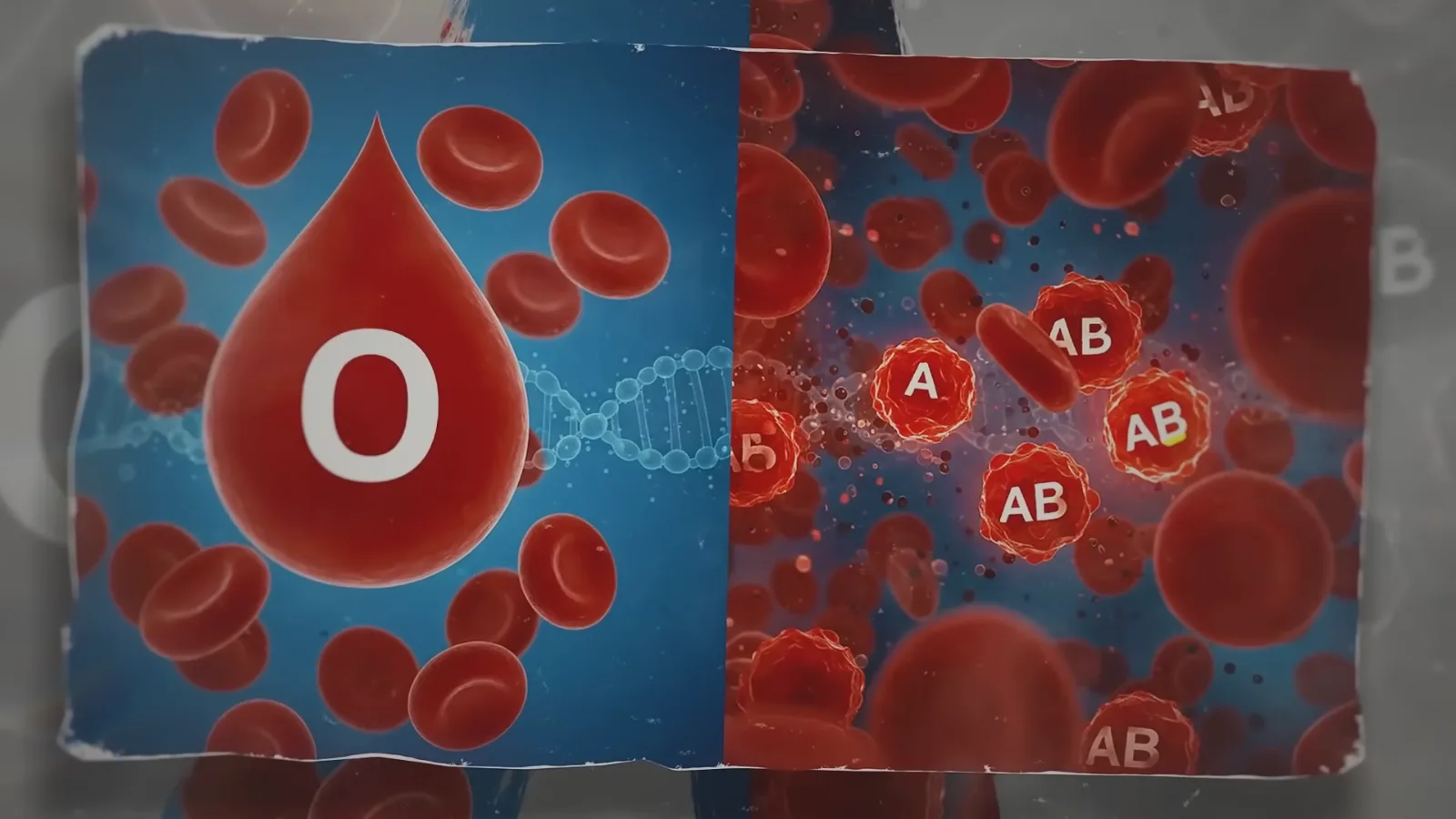
What is fair to say is that O has a kind of stubbornness. In many populations it holds its ground well. In the Americas it didn’t just hold; it crowded the room. If selection did the curation, then O wasn’t passive. It fit the moment. And fitting the moment, especially in small, stressed populations, is the difference between a lineage that persists and one that becomes an archaeological footnote.
There’s another uncomfortable layer. Post-contact epidemics devastated Indigenous peoples. Smallpox, measles, influenza—the list is a roll call of European diseases to which the Americas had little prior exposure. Some of those pathogens interact with ABO in ways we only half understand. When you stack pre-contact dynamics on top of post-contact catastrophe, the picture gets noisier and the inferences risk overreach. Good teams are trying to disentangle that noise by focusing on remains predating European arrival. The more samples they add, the more persuasive the pre-contact O dominance looks. But even a strong trend doesn’t give license to declare winners and losers in some genetic morality play. This is about survival under constraint, not superiority.
So where does that leave the universal donor? Oddly, back where we started, but with the volume turned up. O is still the workhorse of emergency rooms. It still saves lives because molecules on its surface don’t pick fights they can’t win. But it may also be a marker of a series of past fights—pandemics or micro-epidemics, environmental squeezes, migrations that didn’t go as planned—where the people who carried O had just enough edge to make it through the narrow places. That doesn’t make O noble. It makes it consequential.
If you want a takeaway you can hold without burning your fingers, try this: blood types aren’t just lab labels. They’re chapters in an old, complicated book written by pathogens, diets, climates, and accidents. In the Americas, that book appears to have a long O chapter. The reasons are likely plural—founder effects, yes; selection, almost certainly; catastrophe, probably—but the emerging synthesis respects the mess. We don’t need a single villain. We need better timelines, broader samples, and fewer romantic metaphors.
One last thing, because it’s easy to get lost in the genetics and forget the people. However this story settles, it should not be conscripted into pop anthropology about “pure” blood or tidy continental essences. That’s not just wrong; it’s dangerous, and history has receipts. What we’re learning, if we’re humble, is that human survival has always been an improvisation. Sometimes the improvisation is a tool, sometimes a migration, sometimes a variant in a gene that changes how a sugar chain is clipped on a red cell. None of that says anything useful about value or virtue. It says everything about contingency.
Scientists aren’t speechless. The good ones rarely are. They’re cautious, which is the grown-up version of awe. The map on the wall just got a new layer—thin, still drying, with plenty of blank space left to color in. Type O, the unassuming hero of the blood bank, turns out to be carrying a longer story than we gave it credit for. Not a secret code, not a conspiracy—just a record. And records, when you finally learn how to read them, don’t simplify the past. They complicate it. That’s not a disappointment. It’s a sign you’re getting closer to the truth.
Let’s start with the familiar basics. Blood types are a surface story: tiny antigens on red blood cells that make our immune systems either shrug or start a fight. A for A, B for B, AB for both, O for neither. Because O’s surface is a quiet one, it plays well with others in a pinch. That’s the clinical part. What got interesting is what happens when you stop treating ABO as a hospital tool and start treating it as a historical record—a fossil layer you can read with a pipette.
For decades, anthropologists noticed a pattern in the Americas that felt too neat for comfort: Indigenous communities from the Arctic to the Amazon showed astonishingly high frequencies of type O, often to the point of near exclusivity. Meanwhile, populations in Europe, Africa, and Asia looked like mosaics—A and B and O in lively mix. The easy explanation was a founder effect: a small set of migrants crossing Beringia, bringing a limited set of genes, then sitting behind geographic and cultural borders long enough for chance to cement the pattern. Clean. Respectable. Filed and taught.
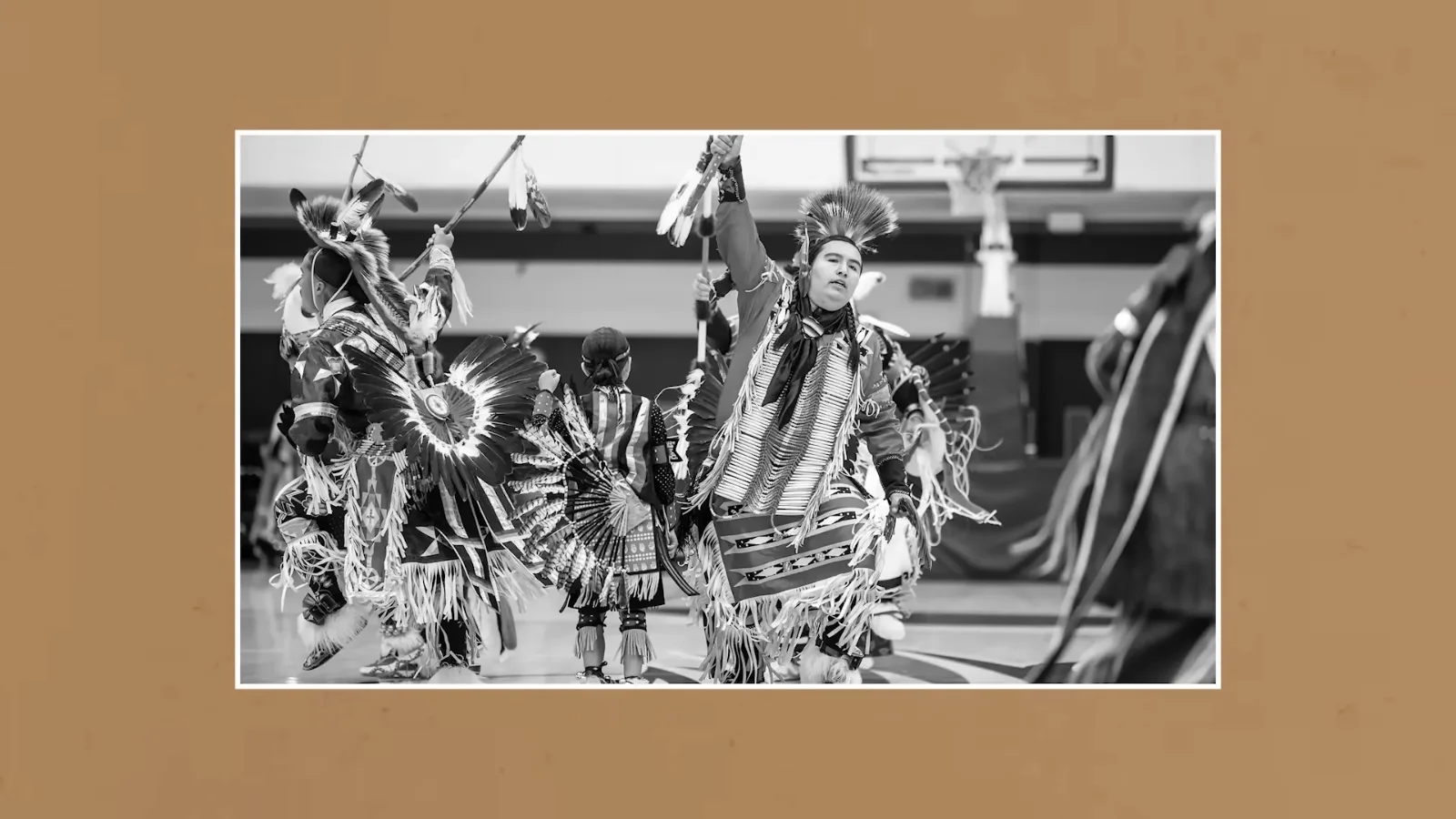
But easy explanations age badly when technology improves. As ancient DNA moved from wishful thinking to working pipeline, teams started extracting and sequencing material from remains in Siberia, the North American Arctic, and a smattering of early sites farther south. The broad strokes? Those ancestral Siberian and East Asian groups weren’t one-note. They carried A, B, and O. No genetic monoculture waiting on an ice bridge. And in early Alaskan remains—close in time to the crossing—you can still see the faint peppering of A. Farther south and later in time, the signal collapses. A and B don’t just fade; they vanish. That’s the kind of pattern that makes population geneticists sit up straight.
There are sober reasons to be cautious here. Ancient DNA is finicky. Preservation is uneven, sampling can skew toward what survives rather than what existed, and models are only as good as the assumptions you pour into them. Still, when multiple labs working different sites start converging on the same silhouette—O everywhere, A and B evaporating as you move away from the bridge—you take notice.
The usual suspects get their lineup. Drift? It can do a lot in small populations, but “erase two alleles across huge geographies and hundreds of generations” is a big ask. Founder effect? Again, sure—but the ancestral pools don’t support a founder group made of pure O. Selection? That’s where things get both plausible and dangerous, because selection is a magnet for just-so stories.
If you spend enough time around immunologists, you learn two things. One: the immune system is a gossip. It never stops talking to itself about what it’s seen and what it suspects. Two: pathogens eavesdrop and adapt. The ABO antigens are not just transfusion headaches; they’re molecular name tags that some microbes exploit. There’s credible literature suggesting cholera severity tracks with blood type, that certain parasites and viruses have preferences, that O can be protective in one environment and costly in another. None of this is tabloid “blood type destiny.” It’s incremental advantage stacked over deep time.
So imagine—not as a movie pitch, but as a hypothesis-generating exercise—that the early Americas hosted or received a pathogen landscape that punished A and B hard. Not uniformly, not instantly, but enough times, across enough bottlenecks, that the lineages carrying those alleles kept losing the coin flip. Add in the realities of small, mobile groups, periodic crashes from famine, drought, or conflict, and you can see how selection, layered on drift, might steamroll diversity. The result wouldn’t be a conspiracy of nature, just the brutal accounting of survivorship.
Before anyone sharpens a headline into certainty, a reality check. We don’t have the smoking microbe. We don’t have time-stamped, continent-wide allele frequencies for every century. We have patterns, some persuasive mechanistic links, and a growing pile of ancient sequences that suggest a story more selective than simple chance. That’s not “scientists speechless”; it’s “scientists tentative, intrigued, and arguing in good faith,” which is less clickable but more honest.
There’s also a temptation here to treat O as primordial—blank slate as ancient essence. That’s tidy poetry, not settled biology. O is not the absence of history. It’s a specific set of mutations in the ABO gene that result in a nonfunctional enzyme. Some O lineages are old; others are younger. Different O variants arose independently. When people say “O is ancient,” what they often mean—without meaning to—is “O is everywhere.” Those are not the same claims.
What is fair to say is that O has a kind of stubbornness. In many populations it holds its ground well. In the Americas it didn’t just hold; it crowded the room. If selection did the curation, then O wasn’t passive. It fit the moment. And fitting the moment, especially in small, stressed populations, is the difference between a lineage that persists and one that becomes an archaeological footnote.
There’s another uncomfortable layer. Post-contact epidemics devastated Indigenous peoples. Smallpox, measles, influenza—the list is a roll call of European diseases to which the Americas had little prior exposure. Some of those pathogens interact with ABO in ways we only half understand. When you stack pre-contact dynamics on top of post-contact catastrophe, the picture gets noisier and the inferences risk overreach. Good teams are trying to disentangle that noise by focusing on remains predating European arrival. The more samples they add, the more persuasive the pre-contact O dominance looks. But even a strong trend doesn’t give license to declare winners and losers in some genetic morality play. This is about survival under constraint, not superiority.
So where does that leave the universal donor? Oddly, back where we started, but with the volume turned up. O is still the workhorse of emergency rooms. It still saves lives because molecules on its surface don’t pick fights they can’t win. But it may also be a marker of a series of past fights—pandemics or micro-epidemics, environmental squeezes, migrations that didn’t go as planned—where the people who carried O had just enough edge to make it through the narrow places. That doesn’t make O noble. It makes it consequential.
If you want a takeaway you can hold without burning your fingers, try this: blood types aren’t just lab labels. They’re chapters in an old, complicated book written by pathogens, diets, climates, and accidents. In the Americas, that book appears to have a long O chapter. The reasons are likely plural—founder effects, yes; selection, almost certainly; catastrophe, probably—but the emerging synthesis respects the mess. We don’t need a single villain. We need better timelines, broader samples, and fewer romantic metaphors.
One last thing, because it’s easy to get lost in the genetics and forget the people. However this story settles, it should not be conscripted into pop anthropology about “pure” blood or tidy continental essences. That’s not just wrong; it’s dangerous, and history has receipts. What we’re learning, if we’re humble, is that human survival has always been an improvisation. Sometimes the improvisation is a tool, sometimes a migration, sometimes a variant in a gene that changes how a sugar chain is clipped on a red cell. None of that says anything useful about value or virtue. It says everything about contingency.
Scientists aren’t speechless. The good ones rarely are. They’re cautious, which is the grown-up version of awe. The map on the wall just got a new layer—thin, still drying, with plenty of blank space left to color in. Type O, the unassuming hero of the blood bank, turns out to be carrying a longer story than we gave it credit for. Not a secret code, not a conspiracy—just a record. And records, when you finally learn how to read them, don’t simplify the past. They complicate it. That’s not a disappointment. It’s a sign you’re getting closer to the truth.
News

A Mafia Boss Threatened Dean Martin on Stage—Dean’s Reaction Was Pure Genius
A Mafia Boss Threatened Dean Martin on Stage—Dean’s Reaction Was Pure Genius Prologue: A Gun in the Spotlight Dean…

The Billionaire Had No Idea His Fiancée Was Poisoning His Son—Until the Maid Exposed Everything
The Billionaire Had No Idea His Fiancée Was Poisoning His Son—Until the Maid Exposed Everything Prologue: A Whisper That…

The Billionaire Catches Maid ‘Stealing’ Food… But When He Sees Who It’s For, He Breaks Down in Tears
The Billionaire Catches Maid ‘Stealing’ Food… But When He Sees Who It’s For, He Breaks Down in Tears Prologue:…

The Billionaire’s Fiancée Sets a Trap for the Maid — Until His Silent Daughter Exposed the Truth
The Billionaire’s Fiancée Sets a Trap for the Maid—Until His Silent Daughter Exposed the Truth Prologue: The Whisper That…

The Billionaire Went Undercover as a Gardener — Until the Maid Saved His Children from His Fiancée
Richard Whitmore’s hands trembled on the garden shears as he watched through the kitchen window. His new wife, Vanessa, stood…

Three Flight Attendants Vanished From a Vegas Hotel in 1996 — 28 Years Later a Hidden Wall Is Opened
.Every hotel, every casino, every neon-lit alley has a story, most of them ending in forgetfulness or denial. But some…
End of content
No more pages to load






