
For generations, casual visitors to Windsor imagined that King Henry VIII lay undisturbed in a grand, orderly tomb. A king of outsized appetites must have had an outsized resting place, the logic went. What likely surprises most readers is that Henry does not lie in a monumental shrine at all, and the chamber beneath St. George’s Chapel has never been the pristine, sealed vault of popular imagination. When workers and officials have encountered that space over the centuries—sometimes by accident, sometimes by necessity—what they saw was a cramped vault, damaged coffins, and clues that read more like a forensic report than a royal epitaph.
This is the documented story of how England’s most famous Tudor king really rests: in a temporary vault that became permanent by neglect, alongside Jane Seymour and Charles I, within a chamber whose condition has repeatedly unsettled those allowed to look inside.
Henry VIII’s Final Months: A Body in Crisis
By the 1540s, the athletic prince had become a ruler who needed mechanical assistance just to stand. Contemporary descriptions are blunt: deep, foul-smelling leg ulcers; a massive frame that resisted motion; exhaustion that shadowed every public appearance. Physicians of later eras have offered metabolic or vascular hypotheses, but responsible historians stop at what the sources support: the king was in constant pain, prone to infection, and physically deteriorating.
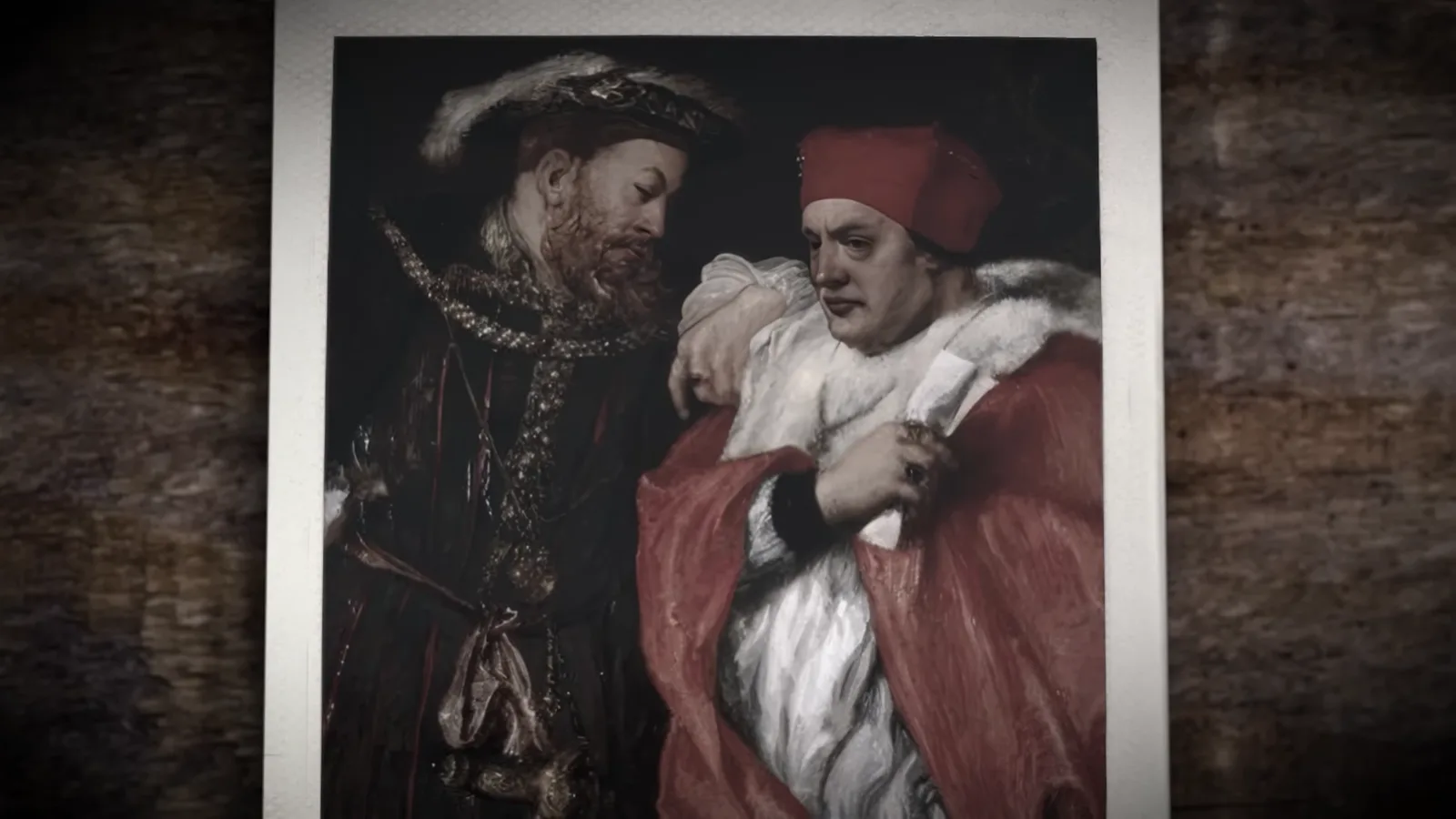
That decline mattered for more than court gossip. Tudor embalming practice—oils, spices, alcohol rinses, layered linens—could slow decay in typical circumstances. It could not reverse decomposition already in motion. Scale raised the stakes: a larger corpse in a tightly sealed, lead-lined coffin generates gas as tissue breaks down. Without relief, that pressure can deform metal from the inside.
The Procession and the First Warning
When Henry died in January 1547, his body moved from Whitehall toward Windsor for burial at St. George’s Chapel. Accounts from the era agree on a disturbing scene during an overnight pause at Syon Abbey: dark fluid was observed seeping from the coffin. Later writers embroidered the moment with moralizing anecdotes, but the physical fact—fluid escape from a pressurized, lead-lined casket—tracks with what embalmers and conservators understand today.
Even then, Henry’s internment was framed as provisional. He and his advisors had imagined a colossal tomb elsewhere, a purpose-built monument to eclipse anything in England. Under that assumption, the burial at St. George’s was “temporary”—a label that would have large consequences.
The Lost Mega-Tomb That Never Was
Henry’s tomb ambitions began by repurposing Cardinal Wolsey’s unfinished monument. He ordered it enlarged and darkened, wrapped in black marble, crowded with saints, angels, and full-length effigies of himself and Jane Seymour. Italian sculptors were engaged, massive candlesticks cast, reliefs carved, and a life-size effigy of the king modeled in his lifetime.
War costs, shifting priorities, and a dwindling treasury intervened. Payments slowed, then stopped. After Henry’s death, his heirs—Edward, Mary, Elizabeth—spent their political capital elsewhere. Components were sold, reused, scattered. Some elements ended up in other national monuments; others vanished into private chapels on the continent. The “greatest royal tomb in English history” dissolved into parts.
And the “temporary” vault at Windsor, unmarked and unmonumental, became the default forever.
How a Temporary Vault Disappears in Plain Sight
Henry was placed in a chamber under the choir of St. George’s Chapel, a location known to everyone present in 1547. But temporary burials don’t usually get carved markers or permanent floor plans. Over decades, the chapel’s floor was relaid, stalls reworked, stones lifted and reset. Political turmoil and religious reorganization displaced records. Clergy told visitors the king lay beneath the choir but could not point to an exact slab. The vault disappeared into daily routine.
Superstition did the rest. Many feared disturbing royal graves. Others felt an undefined dread about the ground under the choir. The absence of surface markers and the aura of taboo created the perfect conditions for forgetting. Henry’s “temporary” burial matured into a mystery.
A Civil War, a Beheading, and a Rediscovery
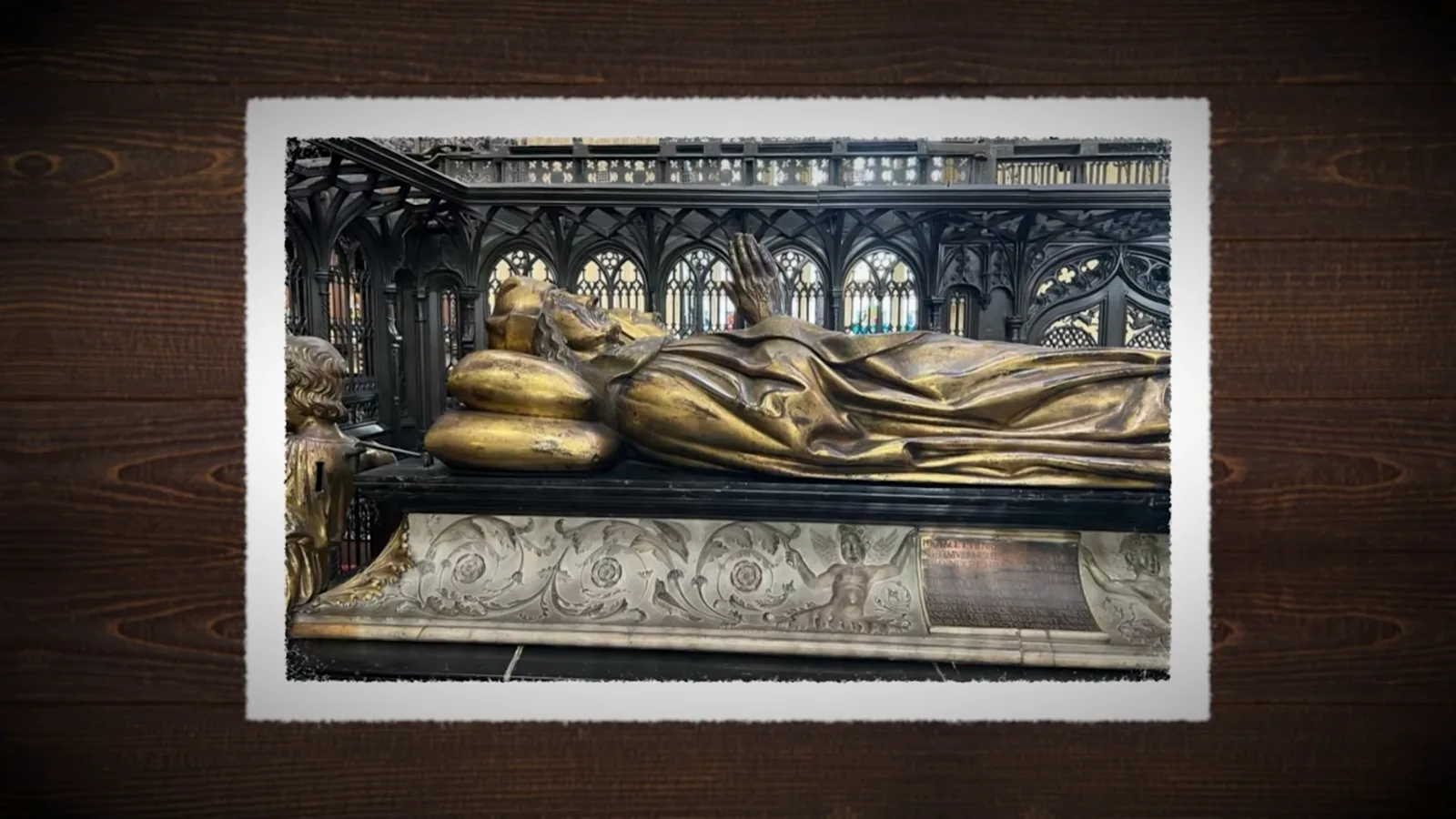
In 1649, Parliament executed Charles I and needed to bury him quickly, quietly, and securely—no public shrine for royalist pilgrimage. Windsor fit the bill. As officials hunted for a dignified but discreet spot, someone recalled a Tudor-era vault beneath St. George’s choir. Workers lifted the stones and found it: the long-closed chamber holding Henry VIII and Jane Seymour.
In the bitter winter cold, by lamplight, under time pressure, they maneuvered Charles’s heavy lead coffin into a space never designed for three. The work was rough. Later examinations strongly suggest the jostling strained or broke the supports under Henry’s coffin. In that tight space, inches mattered. The moment fixed a strange tableau: the king who broke with Rome, the queen who gave him a son, and the king who died defending royal prerogative, now neighbors in darkness.
Routine Repairs, a Dropped Slab, and a Shock
Decades later, during ordinary repairs, a floor slab near the choir shifted and dropped. The hole exhaled stale air. Lanterns lowered into the void lit a cramped vault with three large lead coffins. Jane Seymour’s lay straight and intact. Charles I’s looked aged but sound. Henry VIII’s did not.
Officials summoned to the scene described Henry’s coffin at a severe angle, supports collapsed, lead split in long cracks, metal surface buckled and warped. The sense inside the chapel was that the vault itself felt “tense,” a structure under stress. The decision then was conservative: record the condition and reseal the chamber. Whatever had happened inside, no one wanted to trigger worse.
The Formal Survey That Changed the Conversation
Roughly three-quarters of a century later, a sanctioned survey sent a small team back into the vault with measuring lines, lamps, and orders to document. The descriptions from that visit have shaped every subsequent debate.
– Jane Seymour: sealed, straight, and apparently undisturbed.
– Charles I: aged but intact, bearing the marks of a hurried, heavy placement decades earlier.
– Henry VIII: catastrophic failure. The lead casing buckled and torn, wood supports rotted or broken, the coffin tilted and pressing the vault wall. Near a jagged tear, the surveyor saw bone—thick, heavy, with bits of cloth and lead adhered. On the floor, among splinters and fragments, lay small bones consistent with fingers.
Then came two details that moved the finding from sad to unsettling:
– Unattributed remains: a cluster of bones in a position that did not align with any recorded burial. No casket. No marker. No entry in chapel registers. Not near Henry, not near Jane, not near Charles. Just there.
– A dark, hardened stain: a patch on the stone floor, near a crack in Henry’s coffin, described as thick and long-set. It recalled what attendants saw at Syon Abbey—dark fluid seeping from the king’s casket during the funeral journey.
Theories proliferated. Perhaps the extra bones belonged to someone interred beneath the choir in a different century, displaced and stowed in the vault during repairs. Perhaps the scramble to bury Charles dragged remains from a nearby spot. Perhaps, in a moment of political fear, someone hid an unrecorded burial where no one was expected to look. Without reopening, none of these could be verified.
What the Vault Tells Us About Henry’s Last Chapter
The visible leg bone described by the surveyor—thick, dense—fits with a man suffering chronic inflammation, edema, and repeated infection in the lower limbs. This doesn’t prove a modern diagnosis; it strengthens the match between physical remains and Tudor-era reports of pain and immobility. Cloth fragments adhering to bone and lead suggest embalming linens or garments compressed by collapsing metal—an explanation for why textile survived in a damp, oxygen-poor pocket longer than expected. Spices and oils used in Tudor preparations could also alter decay trajectories.
As for the sealed environment: lead coffins were meant to contain odor and fluids. They also trap gases. In a body already breaking down, in a coffin sealed tight, pressure has nowhere to go. Over years, metal can bulge, crease, and then split. The physics are grim, not sensational.
Why an “Unbelievable” Story Is Mostly About Paper, Stone, and Time
This isn’t a tale of hidden treasure or curses. It’s about:
– A monarch whose ambition for a mega-tomb outlived his ability to fund it—and then outlived his heirs’ willingness to finish it.
– A “temporary” burial treated as temporary for so long that no one marked it, until its location became folklore.
– A civil war that forced a secret royal burial into the nearest respectable void, compounding stress on an already compromised coffin.
– A series of rediscoveries—one accidental, one official—that documented a vault more like a failure analysis than a shrine.
It upends the Hollywood version, but it’s truer to how royal bodies and buildings behave over centuries: they follow physics, budgets, and records. When any one of those fails, so does the illusion of perfect repose.
The Ethics Question: Open It Again, or Let It Be?
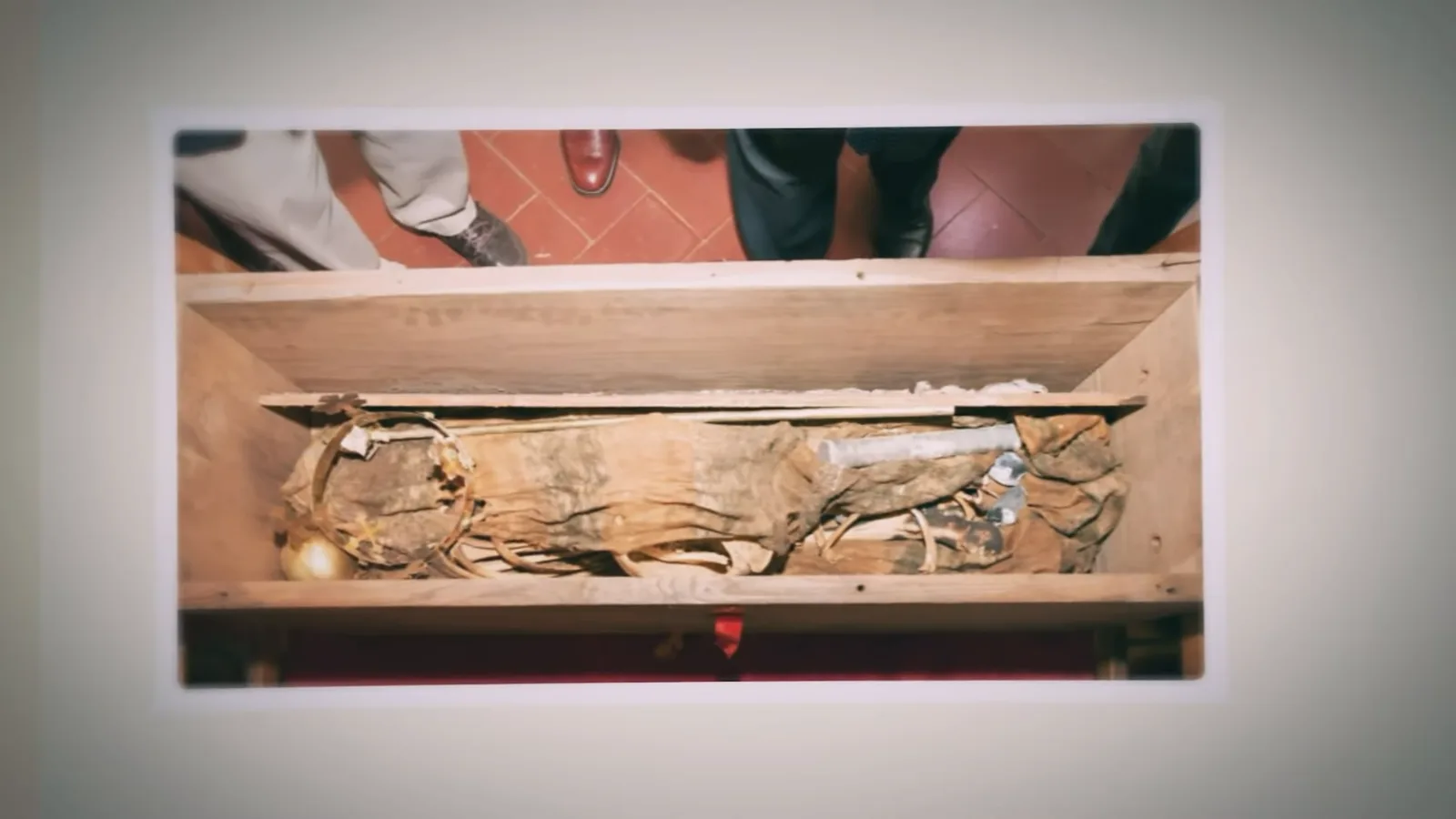
Calls to reopen the vault surface whenever a new generation encounters the survey notes. Proponents argue that modern non-invasive tools—endoscopic cameras, structured-light scanning, handheld XRF for metal analysis, environmental monitoring—could map the vault and answer basic questions without prying open coffins. They want clarity on the unidentified bones and a condition assessment that could inform long-term preservation.
Those urging restraint point to conservation ethics and precedent. These are graves. Minimal intervention is the norm, not the exception. Every opening risks destabilizing supports or introducing contaminants. The last formal survey yielded information at the cost of renewed public fixation. A more intrusive investigation—sampling cloth or bone, for instance—would require a level of justification that goes beyond curiosity.
A reasonable middle ground exists on paper: a phased, non-invasive documentation with airtight oversight and immediate resealing. Whether that happens is a policy and public-trust decision, not just a technical one.
The Other Tomb That Haunts This Story
Readers sometimes conflate Henry VIII’s vault with a separate royal mystery: Henry VII’s long-acknowledged burial at Westminster and the oft-repeated rumor of a king who “would not decay.” These are different threads. Henry VIII lies at Windsor, in the St. George’s Chapel vault described above. The idea that Tudor kings rested in pristine, inviolable shrines is a modern comfort, not a historical constant. Britain’s royal dead have moved, been moved, or been disturbed more often than most realize—by rebuildings, wars, fires, and politics as much as by archaeology.
What We Know, What We Don’t, and What Matters
What we know
– Henry VIII was buried in a vault beneath the choir of St. George’s Chapel at Windsor alongside Jane Seymour; Charles I was added later under parliamentary control.
– Multiple documented inspections found Henry’s coffin split and distorted, with bone and cloth visible and small bones on the vault floor.
– The vault contains a cluster of unidentified bones unlinked to the three named interments.
– A hardened dark stain near Henry’s coffin aligns with historical reports of fluid escape during the funeral journey.
What we don’t know
– The identity and provenance of the extra bones.
– The exact sequence of mechanical failures that produced the coffin’s current condition.
– Whether non-invasive 21st-century tools could answer more without risking further harm.
What matters
– The story complicates the myth of the serene royal tomb. Burial is logistics and material science, not just pageantry.
– Henry’s end, read through this vault, mirrors his reign’s contradictions: iron will and failing body, grand plans and budget realities, control asserted and control lost.
– The duty of care now sits with people who learned from previous openings that every intervention echoes for decades.
A Final, Unvarnished Picture
Set aside the legend and look at the room: a small, stone-walled chamber beneath a busy chapel’s choir. Three lead coffins crowd the space. One is straight and sealed. One is aged but whole. One—Henry’s—is torn and tilted, its supports failed, its metal split where gases pushed and time pried. A thick leg bone has forced the boundary between casket and world. On the floor, pale fragments once choreographed in life now lie among lead and wood. A dark patch marks a leak that began on the road to Windsor. In the shadows, on bare stone, sits a cluster of bones that belong to no entry in the registry.
“Unbelievable” doesn’t mean paranormal. It means a tableau so far from the imagined grandeur that it forces a reckoning with the past as it was, not as we’d prefer. Henry VIII did not get the monument he designed to dominate the ages. He got a vault that outlasted memory and a resting place that tells the truth in metal fatigue, textiles, and bone.
Whether the chamber is ever scanned again or left to its silence, the responsible lesson is the same: history is humbling. Even kings meet physics. And even the strongest wills are eventually measured by what stone, lead, and records can hold.
News
A Mafia Boss Threatened Dean Martin on Stage—Dean’s Reaction Was Pure Genius
A Mafia Boss Threatened Dean Martin on Stage—Dean’s Reaction Was Pure Genius Prologue: A Gun in the Spotlight Dean…

The Billionaire Had No Idea His Fiancée Was Poisoning His Son—Until the Maid Exposed Everything
The Billionaire Had No Idea His Fiancée Was Poisoning His Son—Until the Maid Exposed Everything Prologue: A Whisper That…

The Billionaire Catches Maid ‘Stealing’ Food… But When He Sees Who It’s For, He Breaks Down in Tears
The Billionaire Catches Maid ‘Stealing’ Food… But When He Sees Who It’s For, He Breaks Down in Tears Prologue:…

The Billionaire’s Fiancée Sets a Trap for the Maid — Until His Silent Daughter Exposed the Truth
The Billionaire’s Fiancée Sets a Trap for the Maid—Until His Silent Daughter Exposed the Truth Prologue: The Whisper That…

The Billionaire Went Undercover as a Gardener — Until the Maid Saved His Children from His Fiancée
Richard Whitmore’s hands trembled on the garden shears as he watched through the kitchen window. His new wife, Vanessa, stood…
Three Flight Attendants Vanished From a Vegas Hotel in 1996 — 28 Years Later a Hidden Wall Is Opened
.Every hotel, every casino, every neon-lit alley has a story, most of them ending in forgetfulness or denial. But some…
End of content
No more pages to load






