
When satire meets institutional controversy, the result is rarely tidy. Over the past several weeks, the nation’s debate over press freedom, Pentagon transparency, and who should set the rules for reporting from the Department of Defense has gone from internal grievance to national spectacle. At the center of the storm is Secretary of Defense Pete Hegseth — a polarizing figure whose changes to Pentagon press access have prompted a mass forfeiture of credentials by major news organizations, sharp criticism from networks and press associations, and even a public takedown from Jon Stewart that crystallized broader unease. The fallout is about more than one man’s style; it is a live test of how a democracy balances operational security with the public’s right to know.
In mid-October, dozens of journalists who historically worked inside the Pentagon chose to turn in their access badges rather than accept a new set of reporting rules issued by the Defense Department. For reporters who cover defense, intelligence, and military deployments, the decision to surrender longstanding credentials is not taken lightly. It was the culmination of weeks of tense negotiation, public warnings from news organizations, and internal debate inside the building that houses the nation’s military nerve center.
The policy at issue is both simple and sweeping in its implications: the Pentagon’s guidance places limits on a reporter’s ability to solicit information from government employees without prior authorization, and it lays out penalties, including the potential loss of press access, for noncompliance. The administration and the Department frame the move as a commonsense effort to stem damaging leaks. Reporters and press-freedom advocates describe the guidance very differently — as a tacit gag order that would criminalize ordinary newsgathering practices and chill the kind of adversarial reporting democracies rely on.
Major broadcast networks and national outlets signed a rare, public line in the sand. CNN, ABC, NBC, CBS and others announced they would not accept the new rules, arguing that the policy threatened fundamental journalistic protections and the public’s access to information about the military. That collective refusal is notable: in an era of fractured media markets, coordination among mainstream outlets to resist new restrictions is a signal of how seriously the press treats the stakes.
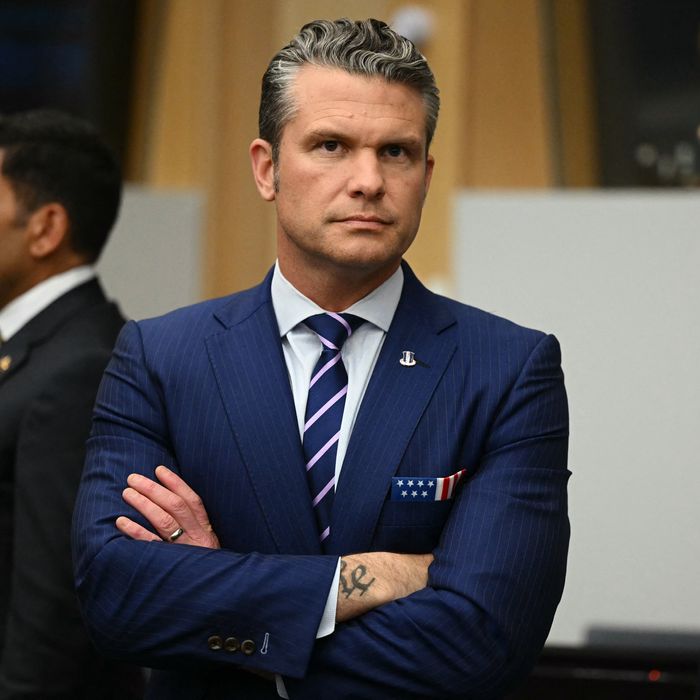
Hegseth’s critics contend the policy is not merely bureaucratic housekeeping. They see it as part of a pattern that includes fewer regular Pentagon press briefings, greater reliance on prepackaged video, and a communications strategy that privileges sympathetic outlets. In late November the Pentagon — under Hegseth’s leadership — invited a host of fringe and right-leaning outlets to a meet-and-greet and briefing, a move that fed the perception among mainstream journalists that the department is remaking its press corps to favor friendlier coverage. The optics are combustible: when a government institution narrows access and then opens doors to a narrower slice of the media ecosystem, critics say it risks producing an echo chamber rather than a marketplace of accountability.
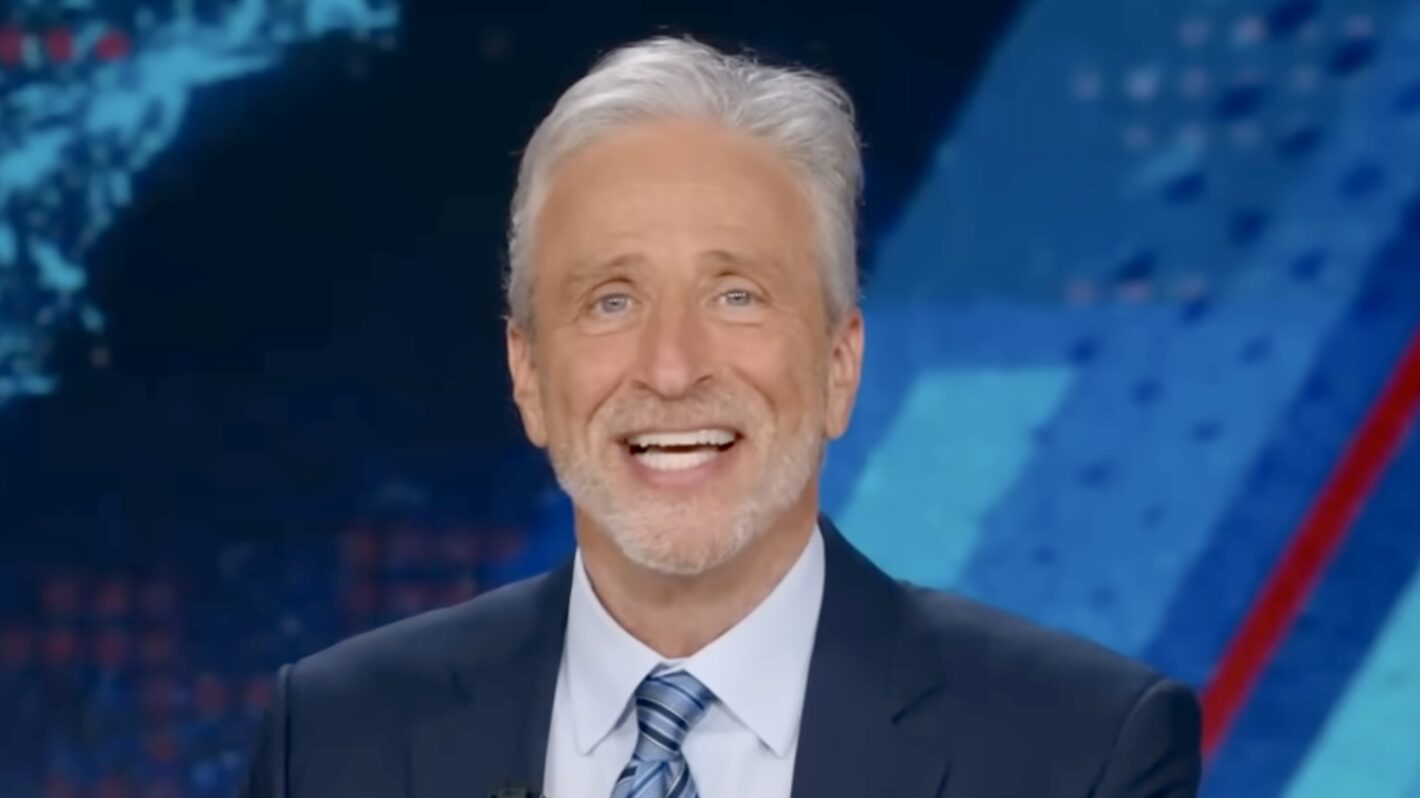
Those dynamics are what Jon Stewart — who has spent a career as a comedian, pundit, and occasional media watchdog — seized on in a blistering routine. On a recent episode, Stewart ridiculed both the substance and the theater of the Pentagon’s press changes, pointing to leaks, missteps, and sudden behavioral changes as evidence that the problem was not the press but the leadership. Stewart’s message was not only comedic ridicule; it was a rhetorical statement that the public needs independent reporting more than the Pentagon needs tighter message control. Variety and other outlets captured his critique as part of a broader cultural response that has now joined the legal and political dimensions of the dispute.
To understand why the reporter walkout touched a nerve, it helps to remember how the Pentagon press relationship evolved. For decades, a resident press corps worked inside the building; the physical proximity enabled quick briefings, a rapid exchange of information, and a kind of low-level institutional friction that many defense officials argued made both sides smarter. When access is narrowed, reporters say, that friction vanishes. Information flows more slowly, and the government is more able to shape narratives before independent scrutiny can occur. The department insists the rules are about national security; the press warns they are about control. The tug of war is political as much as it is procedural.
Some in Washington argue the pushback also reflects how the Department of Defense under Hegseth has been reorganized politically. Critics point to the sacking or sidelining of senior officers and to reports that candid, internal military assessments have produced friction with the civilian leadership. The result, they say, is a narrowed advisory environment where dissenting professional views are more likely to be punished than debated. That allegation, if true, would have consequences for policy: militaries work best when honest, technically grounded assessments make their way to leaders without fear of retribution. Whether those patterns are structural or episodic remains contested; the dispute itself illustrates the dangers of mixing partisan politics with the professional norms of a national security bureaucracy.
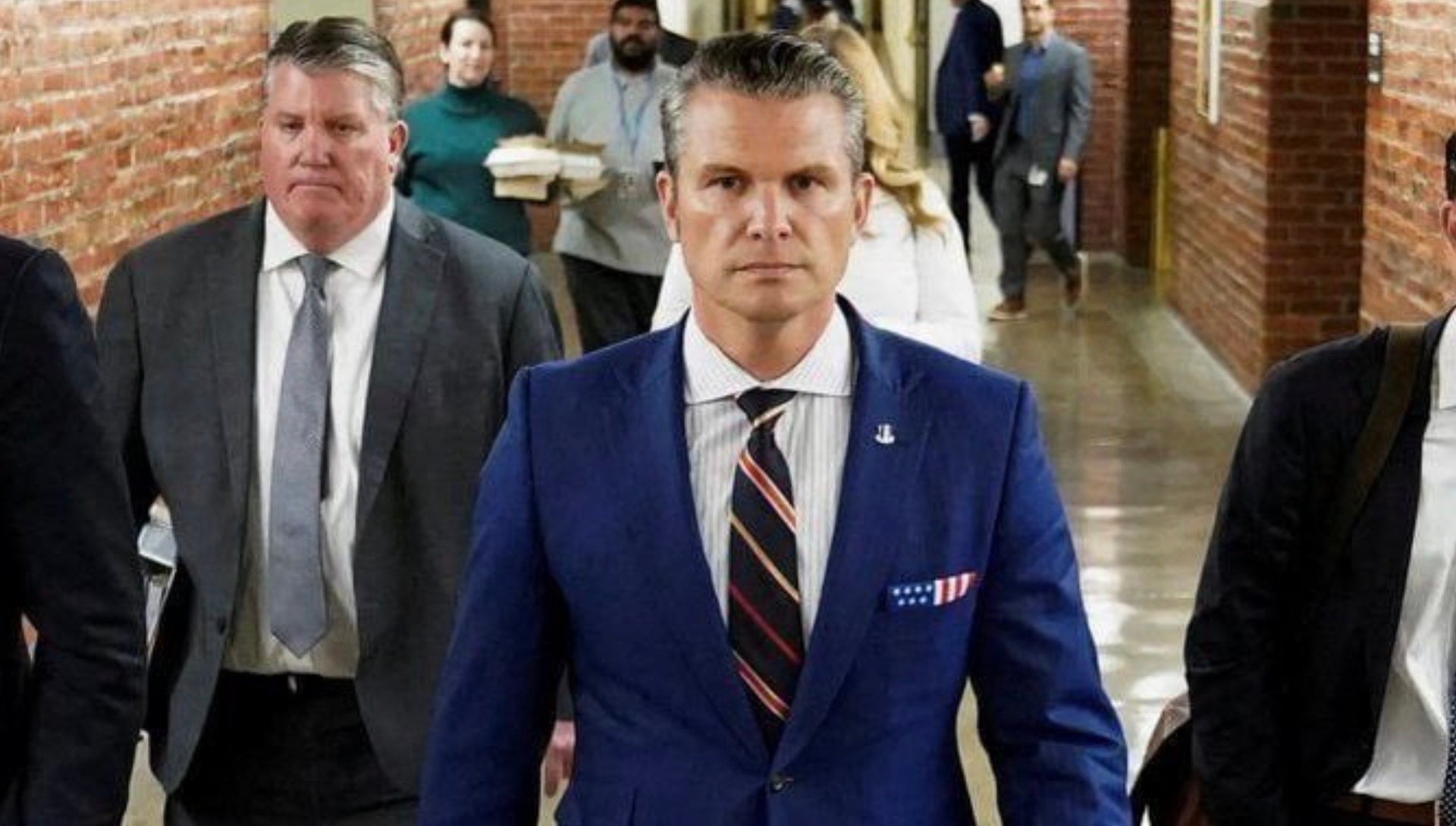
The immediate practical effect of the reporters’ exit was plain: the pentagon’s veteran correspondents moved their desks and servers out of the building, and the press room that had been a hub of daily newsmaking fell mostly silent. For a public used to quick, on-camera Pentagon updates amid crises, the gap was jarring. Officials said they could still reach reporters through other channels; reporters replied that the ritual of being there — the ability to ask follow-ups, to verify details, and to cultivate sources who could offer context — is crucial to responsible coverage. Both sides assert legitimacy. The difference is one of belief about whether ordinary newsgathering is itself a threat.
Legal scholars and press-freedom lawyers watching the policy worry that it skirts constitutional guarantees. The First Amendment protects journalists’ right to gather news, and courts have historically resisted administrative regimes that place undue conditions on that work. The Pentagon’s rubric raises thorny legal questions about administrative authority inside a federal facility and the line between reasonable security procedures and viewpoint-based censorship. Those are not only academic concerns; they determine whether the standoff becomes a courtroom fight with far-reaching implications for press access to institutions that shape national security.
For their part, Pentagon officials invoke episodic real harms: unauthorized disclosures of classified or operational information can endanger missions and personnel. The war on leaks has been a recurring theme across administrations; technology has lowered the bar for both whistleblowing and careless disclosure. From that perspective, one can understand an impulse to reassert tighter guardrails. The question, however, is proportionality: do the measures both protect security and allow the independent scrutiny necessary to hold power accountable? Critics say Hegseth’s approach fails that test. Supporters might counter that a tightened perimeter is a prudent, if temporary, remedy in a fraught environment. The policy debate turns on how one weighs those risks.
Beyond the legal and operational dispute lies an argument about the role of media in a democracy. The press’s defenders cast journalists as the last civic intermediaries who can hold institutions to account. That role requires asking uncomfortable questions, seeking inconvenient facts, and sometimes attracting the public’s attention to things officials would prefer remain muted. When that friction is removed, the argument goes, the public loses a layer of oversight that helps prevent errors, wrongdoing, or misjudgments from metastasizing into disaster.
Jon Stewart’s monologue, in that sense, functioned as a cultural nudge: it reframed the technical policy debate as a broader civic question and put a comedian’s stamp of moral urgency on the reporters’ grievance. When a popular satirist lambastes a defense secretary for muzzling the press, the outrage is both comical and consequential; it draws non-specialist attention to an issue that might otherwise live in policy memos and legal briefs. Stewart’s intervention, therefore, did more than entertain. It amplified the public’s stake in the procedural battle unfolding inside the Pentagon.
Political dynamics complicate how the story will progress. The administration can claim a mandate for tighter control over messaging and argue that the alternative is a freewheeling leak culture that harms operations. Meanwhile, the press can mobilize public opinion, file lawsuits, and turn routine exposures into larger political headwinds. For lawmakers, the tension is a test: will Congress weigh in to protect press access, or will national security rhetoric dominate the narrative? So far, bipartisan concern has surfaced about the implications for transparency, but the path from concern to concrete legislative action is rarely direct.
There are also practical workarounds. Reporters who left the Pentagon have vowed to keep covering defense — using offsite interviews, cultivating sources in other ways, and leveraging technology to maintain oversight. Some veterans of the beat suggest the disruption may produce creative reporting: decentralized networks of freelancers, trade reporters, and independent outlets could become more nimble and, paradoxically, better at catching certain stories that proximity once obscured. Yet proximity has a value that is hard to replace: sitting through the morning briefing, overhearing a hallway conversation, or noticing a subtle shift in the tone of an aide are the small signals that often lead to big stories. Losing that living laboratory of rumor and rebuttal is a real cost.
Meanwhile, the Pentagon’s outreach to a different set of media outlets reflects a strategic choice: if mainstream outlets won’t accept the terms, bring in new players who will. That move is legally permissible; the government has discretion over whom it accredits. But it is politically risky. Critics argue that elevating sympathetic outlets in the absence of adversarial scrutiny risks producing one-sided public narratives about complex matters of war, diplomacy, and military readiness. Supporters of the policy counter that a plurality of views, including those aligned with the administration, should have access — and that old institutions are not the only ones capable of informing the public. The tension is emblematic of how the media ecosystem has fragmented in recent years.
What happens next will depend on several variables. Will the Pentagon refine the policy to preserve basic reporting rights while still addressing security concerns? Will journalists who left press the courts for a legal judgment on whether credential conditions cross First Amendment lines? Will Congress intervene to codify rules of access? Or will the standoff calcify, producing a new, bifurcated press corps — one inside the building aligned with departmental messaging and another outside asking harder questions? Each outcome carries tradeoffs for civic oversight and for the practical functioning of national security institutions.
If there is a practical lesson here, it is smaller and perhaps more urgent than any partisan victory: democratic governance relies on institutions that can operate effectively while being subjected to independent scrutiny. The balance is fragile. Tighten the perimeter too much, and the public loses essential information. Leave it too loose, and operations may be endangered. Any durable solution must thread that needle — protecting personnel and missions while ensuring the press can continue doing what it does best: asking the questions those in power would sometimes prefer not to answer.
Jon Stewart’s takedown was sharp, personal, funny — and in the end, a reminder. Even in an era of polarization and media fragmentation, the civic work of criticism matters. The comedian’s mockery made a larger point: when an institution tries to reengineer the media environment to avoid uncomfortable scrutiny, it invites skepticism, satire, and resistance. That response is part of the democratic feedback loop.
The Pentagon’s policy experiment will probably be litigated, debated in Congress, and argued about in op-eds for months. In the meantime, readers and viewers should watch for a few concrete signs: whether the Defense Department softens the rules, whether independent outlets continue vigorous coverage from outside the building, and whether lawmakers demand a clear, durable framework that protects both security and the press. Those outcomes will tell us whether the country resolved this as a policy problem — or normalized a new, more limited form of access that observers fear could become permanent.
For now, the press corps outside the Pentagon’s gates is not quiet. Its members continue to file stories, interview sources, and parse the department’s public materials with an intensity that suggests the dispute is far from settled. And in living rooms and late-night shows, Jon Stewart’s punchlines keep reminding the public of a simple civic lesson: transparency may annoy officials, but it keeps power honest.
News

A Mafia Boss Threatened Dean Martin on Stage—Dean’s Reaction Was Pure Genius
A Mafia Boss Threatened Dean Martin on Stage—Dean’s Reaction Was Pure Genius Prologue: A Gun in the Spotlight Dean…

The Billionaire Had No Idea His Fiancée Was Poisoning His Son—Until the Maid Exposed Everything
The Billionaire Had No Idea His Fiancée Was Poisoning His Son—Until the Maid Exposed Everything Prologue: A Whisper That…

The Billionaire Catches Maid ‘Stealing’ Food… But When He Sees Who It’s For, He Breaks Down in Tears
The Billionaire Catches Maid ‘Stealing’ Food… But When He Sees Who It’s For, He Breaks Down in Tears Prologue:…

The Billionaire’s Fiancée Sets a Trap for the Maid — Until His Silent Daughter Exposed the Truth
The Billionaire’s Fiancée Sets a Trap for the Maid—Until His Silent Daughter Exposed the Truth Prologue: The Whisper That…

The Billionaire Went Undercover as a Gardener — Until the Maid Saved His Children from His Fiancée
Richard Whitmore’s hands trembled on the garden shears as he watched through the kitchen window. His new wife, Vanessa, stood…

Three Flight Attendants Vanished From a Vegas Hotel in 1996 — 28 Years Later a Hidden Wall Is Opened
.Every hotel, every casino, every neon-lit alley has a story, most of them ending in forgetfulness or denial. But some…
End of content
No more pages to load






