
Here’s the thing about Marilyn Monroe and the promise of a “final revelation”: every few years, someone swears they’ve cracked the code on her death, cleaned the fog off the mirror, and found—at last—the truth. What we usually get is a story shaped by fear, fame, and the American appetite for conspiracy. The latest revival hangs on Frank Sinatra’s orbit, filtered through a confidant’s memoir and decades of rumor. It’s dramatic, yes. It’s also a familiar loop: a woman who was never simply allowed to be mortal turned into a symbol whose end must be operatic.
Let’s start where the record holds. Monroe—born Norma Jeane, pieced together from foster homes, orphanages, and lives lived on loan—became the most recognizable face in Hollywood by the early ’50s. She was funny on screen in a way people forget: a precision comedian with timing that actors spend years trying to fake. The studio system loved her as a commodity and distrusted her as a person. She wanted craft; they wanted cheesecake. She fought for better roles, better pay, and basic respect. She won some. She lost more than you’d think.
The personal history is not rumor. She grew up navigating instability like it was weather—paranoid schizophrenia in the family, guardianships that shifted under her feet, a stutter born of stress, then the slow, stubborn march toward performance as a place to stand. Modeling helped her enter the machine; a series of films turned her into the product. She studied seriously with Lee Strasberg. She also dealt with depression, insomnia, and prescriptions that were handed out in mid-century Hollywood like aspirin. The set stories—late, anxious, difficult—feel different when you read the medical chart.

By the early ’60s, the pressure was compound interest. The studio battles intensified, the marriage to Arthur Miller frayed, the image stayed stunning while the health didn’t. She was fired from Something’s Got to Give after a string of absences tied to illness. Then came attempts at rehabilitation—photo shoots, promises, a reopened negotiation with Fox that would never reach daylight. On August 4, 1962, she died at home in Brentwood. The toxicology was unambiguous: acute barbiturate poisoning, with blood and liver levels beyond any “accidental” range. The coroner, Thomas Noguchi, ruled probable suicide. No evidence of foul play was found. That’s the official story, and it has held through multiple re-examinations, including a district attorney’s review in 1982 that again failed to support a homicide theory.
So why does the Sinatra angle keep breathing? Because he was one of the few famous men whose shadow overlapped hers in the right places—late nights, shared circles, the Cal Neva Lodge on the Tahoe border, and a cultural moment where gossip, politics, and the mob shook hands more often than people like to admit. Sinatra’s former road manager, Tony Oppedisano, writes that Sinatra suspected Monroe didn’t simply overdose—that the cocktail of politics and organized crime might have intervened. He names names. He suggests motives. He paints a picture of a press conference on the horizon, a reconciliation with Joe DiMaggio, and worry that Monroe might divulge affairs with John and Robert Kennedy. He even repeats the oldest of the dark conjectures: a barbiturate suppository delivered while she was unconscious, a compromised medical examiner, a tidy cover-up to save Camelot and serve the mob.
Do these claims change the record? No. Do they deserve dismissal? Also no. They belong in the rubric of what high-profile deaths accumulate—speculation born of proximity and power. Sinatra had reason to mistrust politics; he had reason to believe people protect presidents. It’s also true that speculation has a way of filling silence when the facts are too blunt to feel satisfying. “Self-inflicted” is a bureaucratic phrase; grief does not accept paperwork.

Here’s the uncomfortable middle: the conditions that made Monroe vulnerable were created by the same system that minted her. Studios managed talent with pills. Doctors—some well-intentioned, some reckless—stacked sedatives on sedatives. Privacy didn’t exist. A woman navigating depression and anxiety in that world was, by any modern measure, badly served. You don’t need to import a clandestine assassin to find negligence. The conspiracy is partly the culture: money over medicine, image over health, the timeline always more urgent than the person.
Sinatra’s conviction that Monroe was murdered says as much about him as it does about the case. He was loyal, suspicious, and deeply attuned to the way powerful men protect themselves. He was also a man who knew how stories get written after the fact and who understood that truth can be inconvenient to prestige. Believing she was silenced is a way of honoring her as more than a victim of chemistry—it imagines agency, danger, stakes. It also keeps her in a drama where men move the pieces and the woman becomes the message. You don’t have to like that framing to see why it persists.
What we can say, without turning this into a thriller, is that Monroe lived a life where tenderness and exploitation were neighbors. She worked relentlessly to be taken seriously. She built a body of performance that still holds up under bright light. She was funny, sometimes sly, sometimes aching right under the scene. And yes, she struggled—with sleep, with sadness, with being the person everyone thought they knew. The last months were fragile. The medicine cabinet wasn’t a footnote. If you’re looking for the true cause of death, you can write “barbiturates” and still understand the path that led to them is the more honest answer.
As for Frank Sinatra “confirming” anything, it’s worth separating the verb from the headline. He believed. He suspected. He gathered whispers, connected dots, and never shook the feeling that Marilyn’s end was engineered. Belief is not confirmation. The investigations—public, medical, legal—did not support murder. They did, however, reveal a woman in crisis, surrounded by people and institutions that weren’t equal to the task of protecting her.
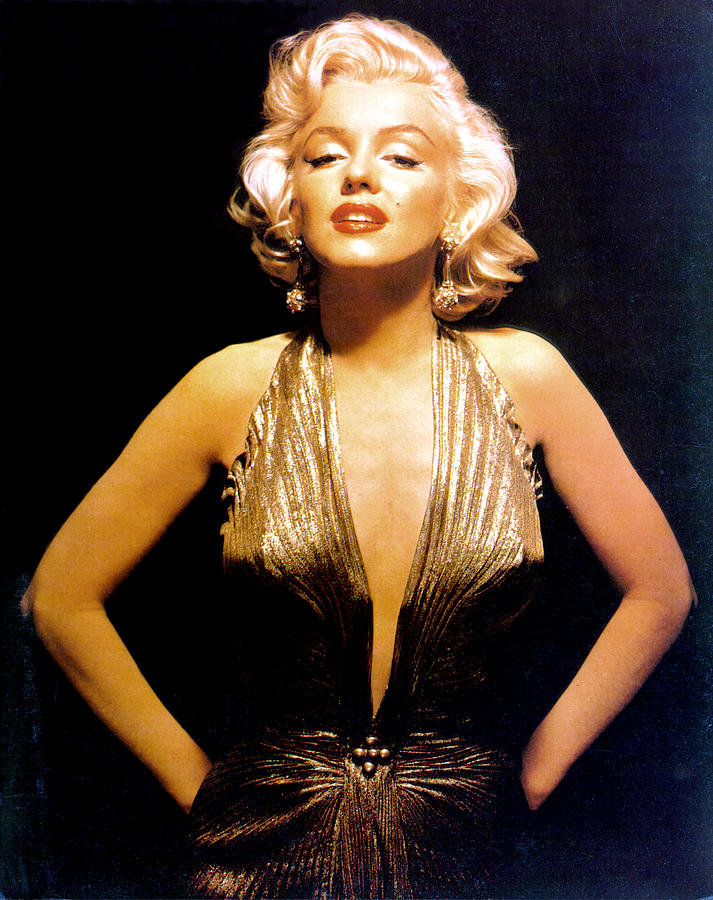
If you want the clean resolution, you won’t get one. Monroe’s death is settled by the file and unsettled by the culture that made her. The conspiracies make noise; the records make a case. Between them is a simple, quieter fact: she was human, in a system that rewards myth and chews up humans. The question isn’t whether Sinatra’s theory is true; it’s whether the industry learns anything when a star burns out on our watch. History suggests it learns just enough to issue a memo and not enough to change the room.
Sixty years later, she’s still used as a mirror. We see what we want—glamour, damage, a cautionary tale, a scandal that flatters our skepticism. The better tribute is less dramatic: watch the performances, admit the complexity, retire the lazy jokes, and stop mistaking fame for insulation. Marilyn Monroe didn’t die because she was a symbol. She died because she was a person—exhausted, medicated, and alone in a house that should have been safer than it was. The rest—the mob, the Kennedys, the suppository—is theater. And if we’re being honest, she was always much better on camera than the men who keep rewriting the script after the credits.
News

A Mafia Boss Threatened Dean Martin on Stage—Dean’s Reaction Was Pure Genius
A Mafia Boss Threatened Dean Martin on Stage—Dean’s Reaction Was Pure Genius Prologue: A Gun in the Spotlight Dean…

The Billionaire Had No Idea His Fiancée Was Poisoning His Son—Until the Maid Exposed Everything
The Billionaire Had No Idea His Fiancée Was Poisoning His Son—Until the Maid Exposed Everything Prologue: A Whisper That…

The Billionaire Catches Maid ‘Stealing’ Food… But When He Sees Who It’s For, He Breaks Down in Tears
The Billionaire Catches Maid ‘Stealing’ Food… But When He Sees Who It’s For, He Breaks Down in Tears Prologue:…

The Billionaire’s Fiancée Sets a Trap for the Maid — Until His Silent Daughter Exposed the Truth
The Billionaire’s Fiancée Sets a Trap for the Maid—Until His Silent Daughter Exposed the Truth Prologue: The Whisper That…

The Billionaire Went Undercover as a Gardener — Until the Maid Saved His Children from His Fiancée
Richard Whitmore’s hands trembled on the garden shears as he watched through the kitchen window. His new wife, Vanessa, stood…

Three Flight Attendants Vanished From a Vegas Hotel in 1996 — 28 Years Later a Hidden Wall Is Opened
.Every hotel, every casino, every neon-lit alley has a story, most of them ending in forgetfulness or denial. But some…
End of content
No more pages to load






