
Meghan Markle’s “False Narrative” Is Starting to Crack — How a Media Roast Reveals More About Culture Than the Duchess
Something deliciously performative is happening in American media: powerful women get audited for sincerity. The latest example lives at the intersection of celebrity, monarchy envy, and late-night pundit theater — a segment in which Maureen Callahan (and a companion host) skewer Meghan Markle’s public persona, treating her life story like a script full of suspicious stage directions. The viral clip is equal parts mockery and analysis: they lampoon origin stories, tut at affect, and parade a set of little details — a glass elevator, a family anecdote about boiling jam, the ritualized phrase “no one in the world loves me more than Harry” — as proof that the narrative Meghan has presented isn’t authentic but manufactured.
This piece isn’t an attempt to confirm or deny every zinger lobbed at the duchess. Instead, it’s an effort to read the roast as cultural text. What does this line-by-line dismantling tell us about how we consume stories about women, race, and power? Why does a professional woman who turned herself into a global public figure become so easily readable as “performed”? And what does the appetite for exposing the “script” say about the state of media taste, envy, and politics?
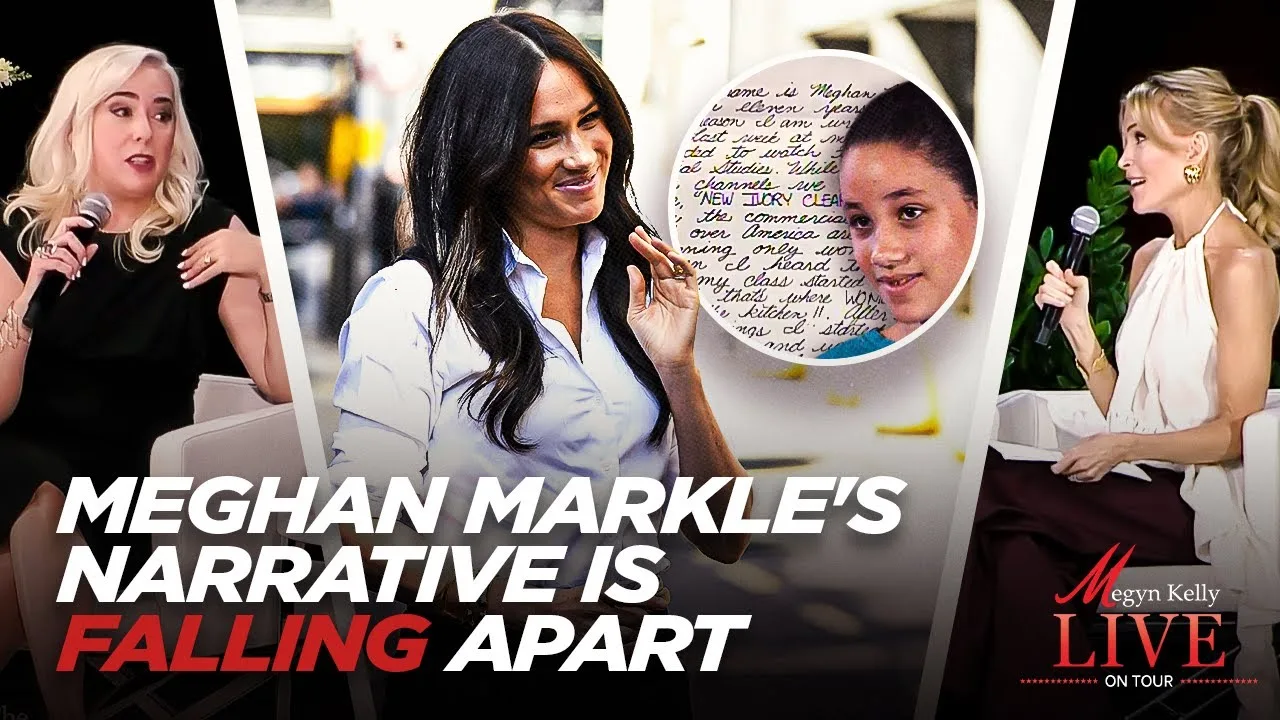
The Roast: What Was Said (and How It Functions)
The clip opens with a kind of bullying delight. Callahan (with the amused disdain of a person who thinks she’s unmasking a theater trick) mocks the Hemingesque scene: a journalist arrives at an Upper East Side townhouse, a house manager announces “Meghan, Duchess of Sussex,” and the Duchess, apparently, is hiding somewhere inside. The scene is read as melodrama — “Norma Desmond on steroids” — implying performance rather than authenticity.
Other elements singled out include:
Repeated origin-story tropes — the 11-year-old who wrote a letter to a corporation, presented as evidence of early moral seriousness; here, the hosts assert the story’s ordinariness (it was a class project), but treat it as packaged into a sentimental narrative that’s been exploited by Meghan’s PR.
Petite affectations — putting a hand to the heart when talking about Harry, or describing him as loving her “so boldly, fully.” The hosts read this as either theatrical or narcissistic.
The “jam on the stove” moment — used as a shorthand for how media turns small domestic acts into cinematic metaphors for courage.
Social climbing notes — casual references to glass elevators, Upper East Side townhouses, and celebrity social circuits that are waved like costume jewelry proving inauthenticity.
The hosts’ final flourish predicting the children’s future exile — an odd mixture of snark and geopolitical fantasy about castles and escape routes.
Taken together, the segment is less an argument than an aesthetic verdict: Meghan’s public narrative is theatrical, overcooked, and therefore suspect.
Why the Roast Lands (and Why It Matters)
There are three reasons this kind of media take resonates so easily.
First: we live in a performative moment. Social media trains us to see everything as staged. Public gestures are read for intent. A hand over a heart becomes evidence, not affect. The hosts are exploiting a cultural habit: we now treat every felicitous phrase as a prop.
Second: the duchess embodies a compendium of anxieties. Meghan is a Black woman who married into one of the most exclusive institutions in the world. She’s also a celebrity who skillfully manages narrative and brand. That combination threatens several audiences simultaneously — traditionalists who resent deviation from royal script, progressives who distrust celebrity solutions to systemic problems, and those who simply dislike the perceived tone of entitlement. The roast is a pressure valve for those anxieties.
Third: gendered standards of sincerity are brutal. Men who perform ambition are often read as assertive; women who do the same are read as rehearsed. The segment exploits this double standard. Marked behaviors that would be “confident” in a man become “calculated” in a woman.
Calling out performativity is a valid cultural act. It reveals the mechanics of image-making and encourages skepticism. The problem begins when performativity aligns too neatly with moral judgment — when theatricality becomes proof of deception rather than of skill in public communication.
The Irony: Authenticity Is Itself a Performance
There’s an irony here that media critics rarely face: authenticity has rules, and those rules are policed publicly. If you are authentically human in modern celebrity, you will still follow patterns that look suspiciously “crafted.” People rehearse their stories; they choose metaphors; they pick memorable details. That’s how narrative works. The fact that Meghan — like any media-savvy figure — packages moments does not automatically transform every choice into fraud.
When pundits insist on a binary — performed = fake, unperformed = true — they ignore the messy reality that almost all public storytelling is mediated. The corrective to that binary is nuance: not “authentic or fake,” but “strategic, understandable, and maybe exaggerated.”
Class, Race, and the Pleasure of the Takedown
This clip’s enjoyment also has a class component. Laughing at grand gestures and upper-class props is pleasurable in a democratic, anti-elitist sense. But here it’s complicated by race and gender. When a Black woman’s gestures or origin myths are mocked, it risks morphing into an attack that draws on stereotypes about emotionality and ambition. The hosts’ glee in reducing the Duchess’s life to tableau — glass elevators, townhouses — flirts with insinuation: that she’s performing whiteness, or performing entitlement, or playing at a class she didn’t “earn.”
That insinuation is dangerous because it’s easy to weaponize. If an aristocratic woman flashed a similar set of gestures, the commentary would often be framed as “eccentric” rather than “phony.” When those same gestures belong to someone like Meghan, the criticism is amplified into an indictment of character.
Why Origins Stories Stick
The piece also targets origin myths — the 11-year-old letter to a company, the boiling jam anecdote — because origin stories are potent. They’re a short-hand to explain present identity: “Look, she was always that way.” But origin stories are also the easiest thing to manipulate in a profile: they’re pithy, emotionally resonant, and hard to verify decades later.
Criticizing the overuse of quaint origin myths is fair; the problem is when the critique implies the story is a lie because it is familiar or sentimental. Sentimentality is a form of storytelling that works. It does not necessarily equal fabrication.
The Role of the Media Insider
Maureen Callahan is not simply making fun; she is doing what columnists do: offering a perspective grounded in media literacy. The question is whether that perspective is disciplined by a sense of proportionality. Good media criticism identifies pattern and motive without mistaking theatricality for malice. The clip occasionally lapses into character assassination, which is where the critique becomes less about the public good and more about spectacle.
What This Roast Misses
The segment’s mockery works as a quick catharsis, but it misses several key things that deserve attention:
Context of public storytelling: Meghan’s public life is negotiated through PR teams, legal constraints, and security concerns. Some choices that look theatrical are logistical.
Power asymmetry: The hosts often treat Meghan as if she is playing on an even field with critics and tabloids. In reality, she’s operating against institutions with far more narrative power, resources, and historical precedent. This balancing act — between self-presentation and institutional pressure — shapes how she must present herself.
The cost of policing affect: Calling someone a “narcissist” because of rhetorical flourishes is a serious claim. It shifts conversation from public image to personality pathology without evidence.
Race and gender dynamics: The critique ignores how patterns of policing Black women’s authenticity have a long track record. Public bodies — and audiences — often read Black women’s affect through a distorted lens of suspicion.
What the Public Appetite Reveals
The popularity of takedown clips reveals two things about contemporary media consumers. First, we love decoding. We want to identify the prop and find the puppet master. Second, we love moral astrology: we’re eager to declare who’s sincere and who’s performative. That hunger fuels punditry and creates a market for cynical readings that sell outrage as insight.
But there’s also a civic cost. When media consumption becomes a game of exposure — who’s fake, who’s real — nuance is the casualty. Complex people become straw dolls for easy narratives. Public debate slides into personality purges, which crowd out substantive policy or institutional critique.
How to Read a Roast Responsibly
A better approach to this kind of media takedown would be three-pronged:
Assess rhetorical moves, not moral character
- : Flag theatricality, but don’t leap from rhetorical device to moral indictment.
Demand evidence
- : If the charge is that a narrative is “false,” ask for proof. Otherwise, treat the critique as interpretive, not conclusive.
Apply intersectional sensitivity
- : Acknowledge how race and gender shape both the targets of criticism and the audience’s reaction.
The Bigger Picture: Celebrity, Narrative, and Power
The Meghan roast is fun for a moment, but the patterns it exposes are durable. We live in a world where celebrity narrative has become a kind of currency, where origin myths are packaged, and where audiences are primed to read gestures as signs of authenticity or deceit. That environment rewards those who can craft an appealing story and punishes those who miss a beat.
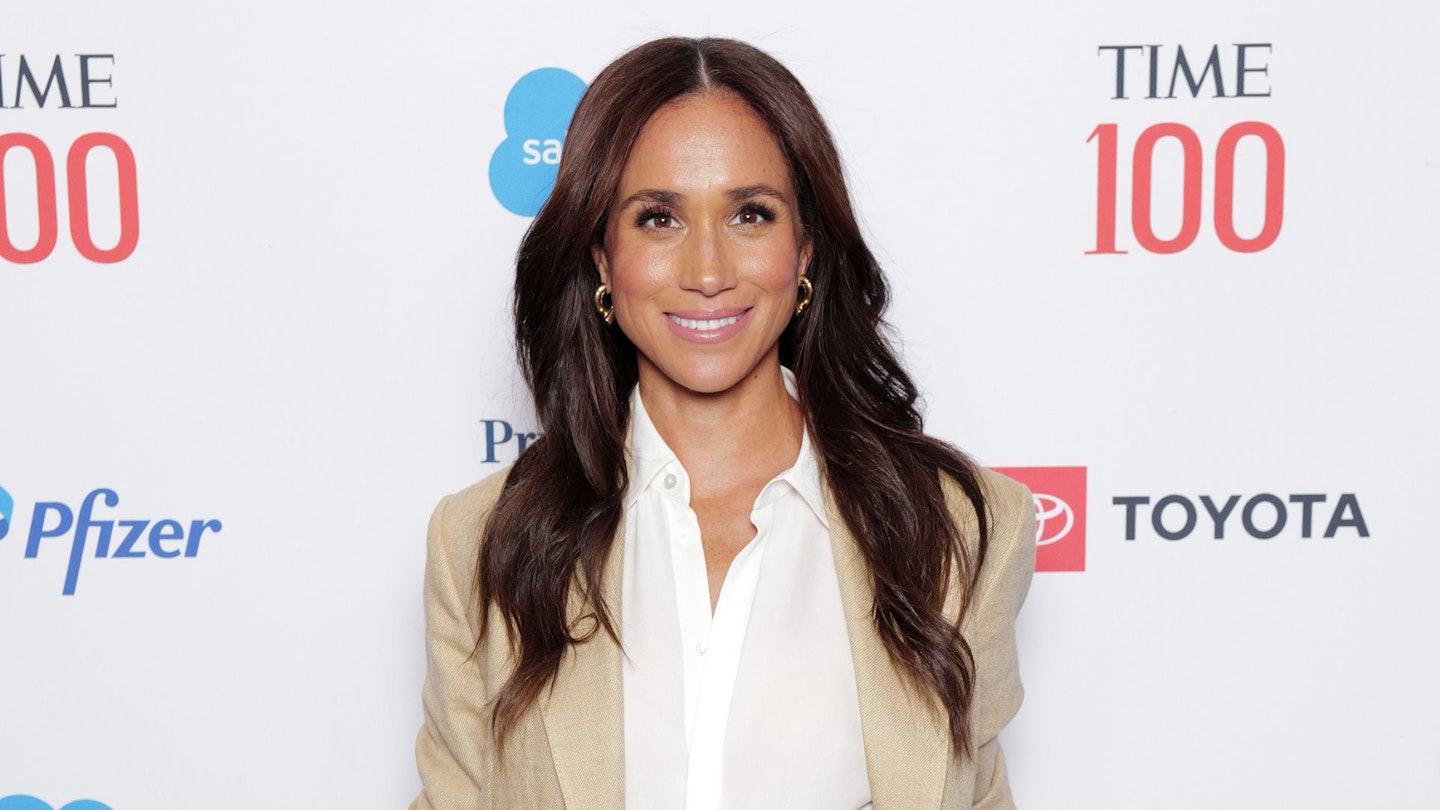
At the same time, the roast culture masks a deeper question: how do institutions adapt when individuals from nontraditional backgrounds enter the halls of power? Meghan challenged royal norms simply by existing as a biracial American woman within a centuries-old British institution. The reaction — fascination, hostility, mockery — tells us as much about the institution and its watchers as it does about the person at the center of the spectacle.
Final Note: Why We Should Care Beyond the Guffaws
It’s easy to enjoy a clip where pundits behave like theater critics at a bad play. But the cultural machinery that makes that clip possible matters. Public roasting corrodes conversation when it becomes the default mode of scrutiny. There’s room for media criticism that is incisive without collapsing into mean-spirited mockery. We need critics who can call out spectacle while also attending to the structural power imbalances that make spectacle necessary.
Meghan’s public story will continue to generate glances, guffaws, and think pieces. The healthier response is not to demand total authenticity (a performance impossible under public pressure) or to assume foul play when an image feels calibrated. It’s to treat public narratives as precisely that — narratives — and to interrogate what they hide and what they reveal about the culture that consumes them.
If you want a follow-up, I can produce: (a) a short op-ed arguing that media should stop treating affect as evidence of moral failure; (b) a deep-dive into origin myths in celebrity profiles and how often they are simplified; or (c) a forensic reading of other viral takedowns to see what they share structurally with this one. Which lane appeals more?
News
A Mafia Boss Threatened Dean Martin on Stage—Dean’s Reaction Was Pure Genius
A Mafia Boss Threatened Dean Martin on Stage—Dean’s Reaction Was Pure Genius Prologue: A Gun in the Spotlight Dean…
The Billionaire Had No Idea His Fiancée Was Poisoning His Son—Until the Maid Exposed Everything
The Billionaire Had No Idea His Fiancée Was Poisoning His Son—Until the Maid Exposed Everything Prologue: A Whisper That…

The Billionaire Catches Maid ‘Stealing’ Food… But When He Sees Who It’s For, He Breaks Down in Tears
The Billionaire Catches Maid ‘Stealing’ Food… But When He Sees Who It’s For, He Breaks Down in Tears Prologue:…

The Billionaire’s Fiancée Sets a Trap for the Maid — Until His Silent Daughter Exposed the Truth
The Billionaire’s Fiancée Sets a Trap for the Maid—Until His Silent Daughter Exposed the Truth Prologue: The Whisper That…

The Billionaire Went Undercover as a Gardener — Until the Maid Saved His Children from His Fiancée
Richard Whitmore’s hands trembled on the garden shears as he watched through the kitchen window. His new wife, Vanessa, stood…
Three Flight Attendants Vanished From a Vegas Hotel in 1996 — 28 Years Later a Hidden Wall Is Opened
.Every hotel, every casino, every neon-lit alley has a story, most of them ending in forgetfulness or denial. But some…
End of content
No more pages to load






