
You don’t last eight decades in American show business without learning how to hold a room—and how to keep parts of yourself out of it. Dale Evans knew both arts better than most. To millions, she was the rhinestoned half of a myth: the Queen of the West riding alongside Roy Rogers, singing Happy Trails and making wholesomeness look easy. But the truer story—the human one with the seams showing—took longer to surface. By the time she let it out, the applause had quieted, the lights had cooled, and she finally seemed unbothered by whether America could handle it.
Start at the end. February 7, 2001. Dale is 88, at home, surrounded by children who sing the hymns she used to lead as if they were campfire songs. Her voice is thin. Her mind is steady. She’s not performing anymore. Friends say she was at peace. I believe them. But peace didn’t come cheaply. It was the last purchase in a life ledger that balances fame on one side and private wreckage on the other.
Before the hat, before the smile that could power a Saturday matinee, Dale Evans was Frances Octavia Smith, born in Uvalde, Texas, in 1912, and handed adulthood like a bill. Her parents split. An uncle in Arkansas stepped in. She married at fourteen, became a mother at fifteen, was divorced and broke at sixteen in Memphis with a baby on her hip and no safety net to catch her. We like to pretend that grit always feels inspiring. Mostly it just feels like hunger. She found work where she could, then found music, then discovered that a radio mic could forgive almost anything—except the wrong name. A Louisville station manager told her Frances Octavia Smith would never sell. He christened her “Dale Evans,” and the transformation stuck so well that the original woman was all but erased.

The studios came next, with their contracts and their compulsory myths. By the mid-1930s, Fox had Dale on payroll at $400 a week and a condition attached to every dollar: deny the existence of the son she’d had as a teenager. Tommy would be presented as her kid brother in press shots and public appearances. This wasn’t a request. It was the price of a career predicated on purity. Dale paid it for a decade. Imagine posing with your child and reciting a lie you don’t believe until your tongue goes numb. Years later she’d admit that this was the thing that haunted her most—not the failed marriages, not the Hollywood compromises, but the sanctioned erasure of a relationship that should have been unerasable.
Then came the movies with Roy Rogers, starting with The Cowboy and the Senorita in 1944. You know the rest in outline: the instant audience chemistry; Roy’s sudden widowhood in 1946 after Arlene’s death; the slow bend from colleagues to companions; the proposal on horseback; the wedding at the end of 1947, the cameras rolling because in their world life and set life overlapped like weather fronts. The marriage—her fourth, his third—finally let her claim Tommy as her son in public. The studio grip loosened. It never apologized.
The postwar years made them royalty. Their faces were as common as soda ads. The Roy Rogers Show turned their brand into a ritual: heroic hijinks, clean living, a song to tuck America in. And yet the most instructive parts of their fame were the parts that cut against the era’s reflex to hide anything broken. Their daughter, Robin Elizabeth, was born in 1950 with Down syndrome and serious health issues. Doctors told them to institutionalize her—a grimly standard recommendation at the time. Studio handlers begged for discretion. Roy and Dale did the unfashionable thing: they loved her loudly. They took her to events. They put her in photos. When Robin died before turning two, Dale was knocked to her knees. But she got up with a purpose that turned grief outward. Angel Unaware, the book she wrote in 1953 as a kind of letter from Robin’s perspective, moved quietly across the country like a permission slip. Parents who’d been shamed into secrecy saw a public couple refuse to be ashamed. Dale donated the royalties. Sometimes that’s not a PR line. Sometimes it’s just what people do when the only currency that matters is meaning.
Grief, of course, wasn’t done with them. They adopted more children, built a home with noise and need and the creative exhaustion that comes with trying to make love feel big enough for everyone. Then tragedy circled back. In 1964, twelve-year-old Debbie was killed in a church bus crash. The next year, their son Sandy died in an Army accident in Germany. Dale wrote through the losses—Dearest Debbie, Salute to Sandy—because writing was how she metabolized pain and how she made it useful to strangers. If you’re sensing a pattern, you’re right: when life blew a hole in her, she tried to build a door for other people.
The marriage itself deserves adult treatment—the kind not available in 1950s profiles. It lasted fifty-one years, which in Hollywood time is geologic. But longevity isn’t the same as ease. Roy could be hard, particularly with the kids. Work took him away often. Dale had the loneliness that settles in even when you’re famous, maybe especially then. In later interviews, she let some of that tenderness and friction leak through. Not to indict him, not to absolve herself, but to tell the truth the brand had no use for. The most honest marriages aren’t fairytales. They’re negotiated truces with the better angels winning enough of the skirmishes to keep everyone in the room.
There was politics, too—plain and public. In 1964, at a Project Prayer rally in Los Angeles, Dale called for mandatory school prayer to return. She backed Barry Goldwater. She appeared at Billy Graham crusades. You didn’t have to like her prescriptions to respect the fact that she didn’t smuggle them in as coded anecdotes. The convictions were upfront. So were the criticisms. She kept going anyway, writing twenty-eight inspirational books and more than two hundred songs, folding faith into her work so tightly that you couldn’t talk about one without the other.
By the 1990s, nostalgia found them, as it always does with people who helped build a slice of American self-image. They introduced old films. They told the stories fans wanted to hear. They also aged. Roy died in 1998 at eighty-six. Dale, without the other half of the billboard, faced the most radical edit of her life. The late works of many public figures are cautionary tales of denial. Dale’s final years had more clarity than bravado. She spoke openly about the lie that turned her son into her “brother” and about the way that deceit corroded her sense of self. She admitted to stretches of isolation that applause never fixed. She didn’t burn the myth down so much as unzip it and let the weather in.
The day she died, her family said she was ready to go—ready to rejoin the people she’d buried and the man who had been both partner and puzzle. She was eighty-eight. The obituaries were respectful and, in many cases, too neat. Neatness helps readers. It rarely honors the subject.
So what do we do with Dale Evans now, at a distance cozy enough to breed sentimentality? We remember the contradictions and let them sit unvarnished. She was a studio creation who used her manufactured fame to tell difficult truths. She was a mother who made an unforgivable bargain in a time that gave her precious few alternatives—and spent the rest of her life trying to be worthy of the forgiveness she didn’t demand. She was a Christian who put her beliefs in the window and a show-business pro who understood that the show is only as good as the reality it refuses to fake.
If you need a tidy moral, you won’t find it here. The closest I can get is this: Dale Evans kept turning pain into work that made other people’s pain lighter. Not abstractly—in book royalties handed away, in parents who stopped hiding their children, in a cultural chord change that took decades to resolve but finally did. In 2025, the Library of Congress added Happy Trails to the National Recording Registry. It’s a nice bow. But the registry entry isn’t the legacy. The legacy is every family photo that didn’t crop someone out, every mother who read Angel Unaware in the dark and felt less alone.
Could she have told the truth sooner? Maybe. Would it have cost her the platform she later used so well? Probably. That’s the knot of American celebrity: the machine that distorts you is sometimes the same machine that amplifies the best thing you’ll ever give. Dale understood that paradox because she lived it in her bones. When she finally spoke plainly, it didn’t shrink her. It made her real. And real, in the end, outlasts the costume.
News
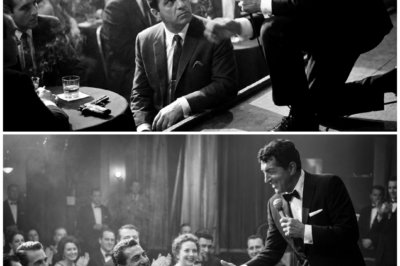
A Mafia Boss Threatened Dean Martin on Stage—Dean’s Reaction Was Pure Genius
A Mafia Boss Threatened Dean Martin on Stage—Dean’s Reaction Was Pure Genius Prologue: A Gun in the Spotlight Dean…
The Billionaire Had No Idea His Fiancée Was Poisoning His Son—Until the Maid Exposed Everything
The Billionaire Had No Idea His Fiancée Was Poisoning His Son—Until the Maid Exposed Everything Prologue: A Whisper That…

The Billionaire Catches Maid ‘Stealing’ Food… But When He Sees Who It’s For, He Breaks Down in Tears
The Billionaire Catches Maid ‘Stealing’ Food… But When He Sees Who It’s For, He Breaks Down in Tears Prologue:…

The Billionaire’s Fiancée Sets a Trap for the Maid — Until His Silent Daughter Exposed the Truth
The Billionaire’s Fiancée Sets a Trap for the Maid—Until His Silent Daughter Exposed the Truth Prologue: The Whisper That…

The Billionaire Went Undercover as a Gardener — Until the Maid Saved His Children from His Fiancée
Richard Whitmore’s hands trembled on the garden shears as he watched through the kitchen window. His new wife, Vanessa, stood…
Three Flight Attendants Vanished From a Vegas Hotel in 1996 — 28 Years Later a Hidden Wall Is Opened
.Every hotel, every casino, every neon-lit alley has a story, most of them ending in forgetfulness or denial. But some…
End of content
No more pages to load






