
For more than two thousand years, Cleopatra VII—the last pharaoh of Egypt—has stood at the crossroads of myth and history. She spoke multiple languages, navigated the brutal politics of Rome, and ruled a multicultural kingdom from Alexandria, one of the intellectual capitals of the ancient world. Yet one question has outlived empires and filled libraries with speculation: where is her tomb? Every few years, headlines promise the answer. A “sealed chamber,” an “impossible tunnel,” a “royal mechanism”—the phrases catch fire online. Then archaeologists publish, facts settle in, and the story returns to its steady pulse: a careful, ongoing search that has not, to date, located Cleopatra’s burial.
This article lays out what we actually know: what ancient texts say about Cleopatra’s death and burial; how Alexandria’s shifting land and sea have complicated the search; what excavations at sites like Taposiris Magna have revealed; and what would count as real proof if her tomb were found. Along the way, it addresses why dramatic claims—mysterious vibrations, engineered corridors, secret shutdowns—don’t match the published record, and why the real archaeology is compelling without the theatrics.
Cleopatra’s Final Days: What the Sources Say, and What They Don’t
After the defeat at Actium in 31 BCE and the Roman invasion of Egypt in 30 BCE, Mark Antony died by suicide. Cleopatra followed, unwilling to be paraded in a Roman triumph. Our best ancient accounts—Plutarch, Cassius Dio, and a handful of others—were written decades later under Roman influence. They agree on a few crucial points: Octavian (the future Augustus) permitted Antony and Cleopatra to be buried together with honors appropriate to their status; the burial took place in or near Alexandria; and the details were not widely circulated. No ancient source provides a street address, a temple name attached to a burial, or a description of a specific tomb architecture. The literary trail ends with “together” and “near Alexandria.”
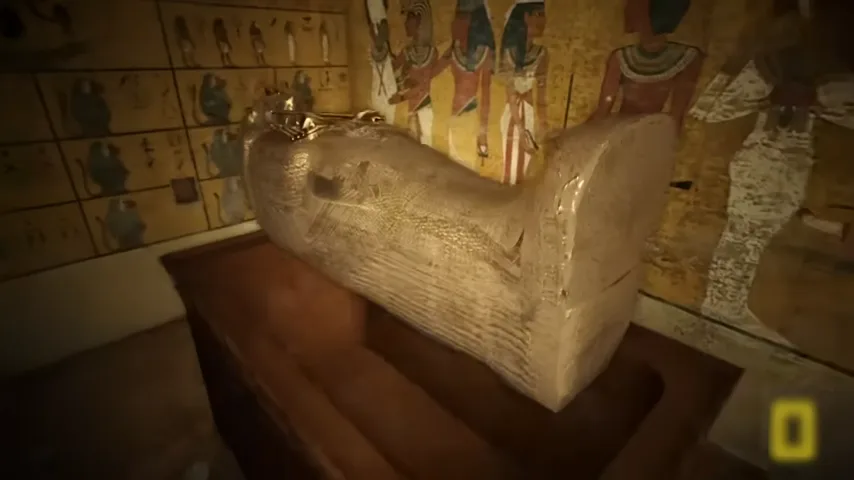
This silence matters. It means any modern claim to have “opened Cleopatra’s tomb” must rise or fall on archaeological evidence alone: inscriptions, secure context, and scientific analysis that go beyond coincidence or visual resemblance.
Alexandria’s Shifting Map: Why the Tomb Is Hard to Find
Cleopatra’s palace complex and the royal quarter stood along Alexandria’s ancient shoreline and harbor islands. Over two millennia, earthquakes, tsunamis, subsidence, and coastal change drowned portions of that district. Underwater archaeologists have documented massive blocks, sculpted sphinxes, columns, and harbor features that once formed part of the royal precinct. On land, Alexandria is a modern city layered over ancient strata, limiting large-scale excavation to controlled projects and rescue digs. The combined effect is straightforward: much of the area where a royal burial might have stood is either underwater or beneath dense urban fabric.
Undersea, visibility, sediment, and currents complicate work; on land, permits and construction windows confine investigations to small footprints. The absence of a find is not evidence of absence. It is evidence of a difficult search environment.
Taposiris Magna: A Real Site, Real Finds, and Real Limits
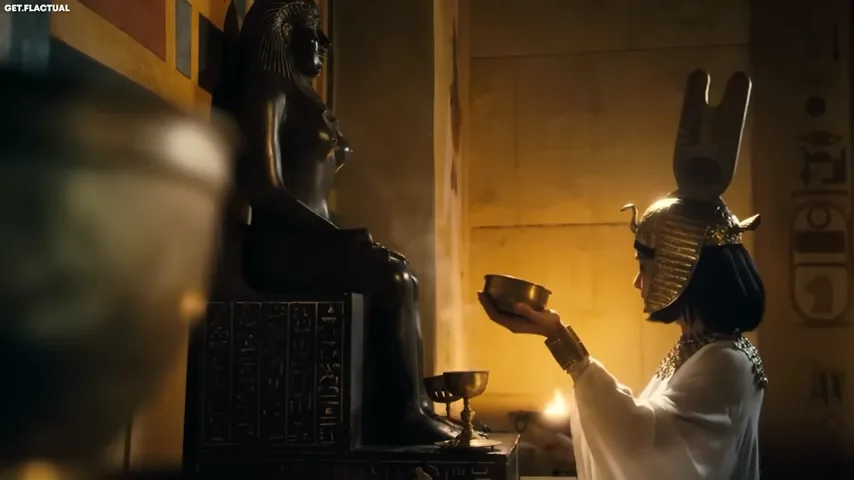
About 45 kilometers southwest of Alexandria, the temple complex at Taposiris Magna has been a focus of recent interest. The site is authentic, significant, and deeply connected to Isis-Osiris cult worship that shaped Ptolemaic royal ideology. Excavations at and around the temple have produced:
– Coins bearing Cleopatra’s image, consistent with late first century BCE circulation.
– Statuary and ritual objects tied to Isis and Osiris veneration.
– Burials from the late Ptolemaic and early Roman periods within the broader necropolis.
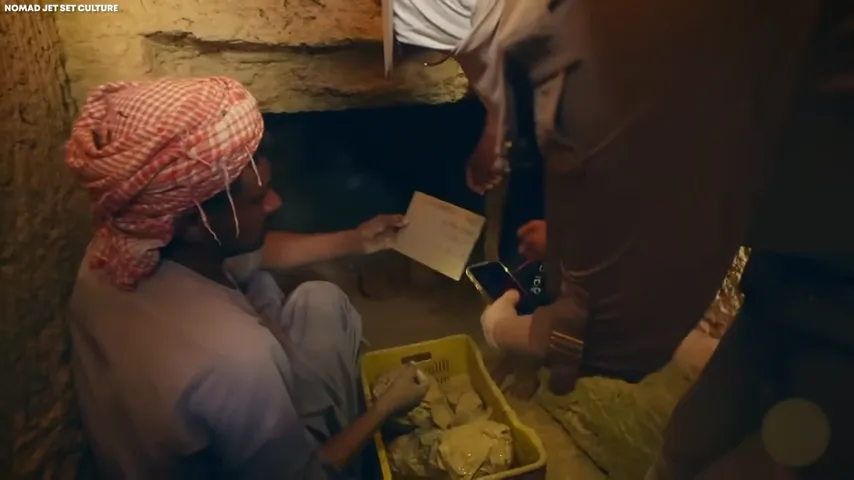
These finds establish that Taposiris Magna was active during Cleopatra’s lifetime and symbolically appropriate to royal theology. They do not, so far, deliver the crucial elements that would confirm a royal burial: inscriptions naming Cleopatra or Antony, a funerary chapel with titles and epithets specific to the queen, an inscribed sarcophagus, or a sealed context with datable organic material directly linked to named individuals.
Ground-penetrating radar has identified substructures—tunnels, voids, and corridors—that intrigue researchers and justify further work. But radar images are exploratory tools, not proof. Archaeologists move from survey to test trenches to careful excavation and only then draw conclusions. The published record to date does not authenticate any underground “mechanism,” extraordinary alloys, or engineered barriers beyond the capabilities of ancient builders.
Separating Sensation from Science
Sensational scripts often describe:
– Rhythmic ground “pulses” timed to sacred numerology.
– Perfectly smooth, kilometer-long tunnels “beyond ancient engineering.”
– Vitrified black walls, mixed metal-and-resin seals, or heat-trapping sarcophagi.
– Government “lockdowns” and seized artifacts with no publication trail.
– DNA announcements tying remains to named royals without transparent sampling and lab methods.
These elements do not appear in peer-reviewed publications, official field reports, or museum catalogs related to Cleopatra-era excavations. When major finds occur in Egypt—the discovery of a cache of mummies, a sealed shaft, a new burial chamber—the process is predictable: an official announcement by the Ministry of Tourism and Antiquities; conservation on site; preliminary data; and, over time, formal publication. Artifacts enter registered storerooms with accession logs. Specialists across disciplines review and debate. Claims worthy of “shocking the world” survive precisely because every step is documented.
What Real Proof Would Look Like
If Cleopatra’s tomb were found tomorrow, confirmation would rest on multiple converging lines of evidence:
– Secure Context: A sealed or controlled archaeological context tying the burial to the late Ptolemaic or early Roman period in Alexandria’s orbit, with clear stratigraphy and recorded provenience.
– Inscriptions: Hieroglyphic, Demotic, or Greek texts naming Cleopatra (with royal titulary) and, if present, Antony. Dedicatory inscriptions or stelae linking the tomb to royal rites would be decisive.
– Funerary Assemblage: High-status objects consistent with Ptolemaic royal burials—fine stonework, gilded cartonnage, resins and oils matching known recipes, iconography matching court workshops.
– Scientific Dating and Analysis: Radiocarbon dates on organic materials; residue analysis on balms; petrographic and isotopic studies on stone; and, only if human remains exist and legal permissions allow, DNA testing conducted and reported under published protocols.
– Publication and Peer Review: A chain from press conference to preliminary report to full monographs and articles, with data accessible to scholars.
Anything short of this will remain an unverified claim.
What Archaeology Has Taught Us—Even Without “The Tomb”
The search for Cleopatra’s burial has enriched our understanding of her world in several concrete ways:
– The Royal Quarter’s Footprint: Underwater mapping has clarified harbor engineering, monumental landscaping, and how the Ptolemies embedded Greek forms into Egyptian sacred geography.
– Religious Syncretism: Finds across sites show the blending of Greek and Egyptian religious language—Greek inscriptions alongside hieroglyphs, Isis imaged with Hellenistic stylistic cues, and cult installations that reflect a bilingual elite.
– Political Messaging: Coins, statuary fragments, and temple reliefs trace how Cleopatra positioned herself as both Macedonian-Greek monarch and Egyptian pharaoh, a dual identity that appears in texts and iconography.
– Funeral Practice in Transition: Late Ptolemaic and early Roman burials in the region show mixtures of Egyptian and Greco-Roman elements—mummy portraits, Greek epitaphs, Egyptian deities—documenting a multicultural funerary landscape.
Why the Tomb Remains Unfound—Plausible Scenarios
– Destruction or Reuse: Natural disasters or later construction could have destroyed or reworked a burial; stones and decorative elements might have been quarried in antiquity.
– Submergence: A coastal site could lie underwater, fragmented by seismic activity and silted over beyond easy detection.
– Concealment Within a Temple: A modestly marked crypt within a large sacred precinct could be effectively invisible without inscriptions to guide excavators; such contexts demand cautious, small-footprint work that takes years.
– Loss of Markers: If identifying texts were on perishable materials or removable stelae, the “name” of a tomb could be lost even if the structure remains.
Why Sensational Claims Persist
Cleopatra is an unusually resonant figure: a polyglot ruler, a strategist who confronted Rome, and an icon refracted through centuries of art and politics. A definitive tomb promises narrative closure: a single room where centuries of debate yield to stone and text. That promise fuels appetite for dramatic storytelling. But archaeology is cumulative, not cinematic. It advances through mapped squares, context sheets, and lab reports—work that rarely goes viral but holds up over decades.
A Clear Timeline of the Modern Search
– Late 19th–20th centuries: Foundational excavations and underwater surveys in Alexandria identify elements of the royal quarter beneath the harbor.
– Late 20th century: Systematic underwater archaeology expands, mapping submerged structures; on land, urban digs recover late Ptolemaic domestic and sacred material.
– 21st century: Renewed focus on temple complexes like Taposiris Magna yields period artifacts and substructures. Survey technologies (satellite imagery, GPR, magnetometry) guide targeted trenches. Public interest spikes with each announcement, but no authenticated royal burial is published.
What to Watch for Next
– Underwater Conservation and Survey: Continued high-resolution mapping of Alexandria’s submerged precincts could pinpoint areas for cautious testing where a royal mausoleum once stood.
– Epigraphic Discoveries: A dedicatory inscription, foundation deposit, or fragmentary stela that ties a structure to Cleopatra’s reign would recalibrate search priorities.
– Context-Rich Burials: Elite burials with inscriptions and imported materials linked to the court could illuminate funerary norms at the end of the dynasty, even if not royal.
– Integrated Publishing: Open data from surveys and excavations—plans, sections, compositional analyses—will allow independent scholars to refine or challenge interpretations.
If the Tomb Is Never Found
History does not owe us a perfect ending. If Cleopatra’s burial is lost to the sea or erased by time, the absence will remain a historical fact. That outcome still teaches: about the vulnerability of coastal cities; about how political transitions rewrite landscapes; and about the limits and strengths of archaeology. The queen’s life is documented; her death is recorded; her burial together with Antony is attested in Roman literature. A missing tomb is not a missing life.
The Ethical Line: Tombs as Graves, Not Stages
One reason serious teams move slowly is ethical as well as scientific. A royal tomb is a grave. Even when conservation allows public display of select artifacts, the controlling principles are respect, documentation, and minimal disturbance. Sensational narratives that treat a burial as a puzzle box to be “solved” distort the responsibilities archaeologists carry to the dead, to descendant communities, and to the public trust.
What an Authentic “World-Shocking” Discovery Would Look Like
– A cautious initial announcement from Egyptian authorities noting a promising, sealed context.
– Weeks or months of conservation before wider access.
– Preliminary photographs of inscriptions or assemblages with clear scales and context notes.
– Named specialists and institutions attached to the work.
– A timeline for publication, with peer-reviewed articles following.
– A measured tone: excitement paired with caveats, not breathless certainty.
The Bottom Line
– Cleopatra’s tomb has not been found. There is no verified discovery of a sealed chamber naming Cleopatra VII or Mark Antony, and no credible publication of such a find exists.
– Taposiris Magna is an authentic, important site with late Ptolemaic activity and objects tied to Cleopatra’s era. It has not produced the inscriptions or context needed to confirm a royal burial.
– Sensational details—precision-timed vibrations, vitrified black halls, engineered mechanisms—do not align with the published archaeological record.
– The real story is already compelling: a drowned royal quarter, a bilingual religious world, and a patient scientific search constrained by geology, urban life, and ethics.
– If the tomb is ever found, the proof will be transparent, replicable, and soberly presented. That is how discoveries endure.
What endures today is not a tunnel that hums every forty-two seconds but a city that once anchored a kingdom, a queen whose political and cultural presence outlasted her dynasty, and a discipline that trusts stone, text, and method more than spectacle. The search continues—not because of whispers beneath the sand, but because history still has questions, and archaeology has the best tools to answer them.
News

A Mafia Boss Threatened Dean Martin on Stage—Dean’s Reaction Was Pure Genius
A Mafia Boss Threatened Dean Martin on Stage—Dean’s Reaction Was Pure Genius Prologue: A Gun in the Spotlight Dean…

The Billionaire Had No Idea His Fiancée Was Poisoning His Son—Until the Maid Exposed Everything
The Billionaire Had No Idea His Fiancée Was Poisoning His Son—Until the Maid Exposed Everything Prologue: A Whisper That…

The Billionaire Catches Maid ‘Stealing’ Food… But When He Sees Who It’s For, He Breaks Down in Tears
The Billionaire Catches Maid ‘Stealing’ Food… But When He Sees Who It’s For, He Breaks Down in Tears Prologue:…

The Billionaire’s Fiancée Sets a Trap for the Maid — Until His Silent Daughter Exposed the Truth
The Billionaire’s Fiancée Sets a Trap for the Maid—Until His Silent Daughter Exposed the Truth Prologue: The Whisper That…

The Billionaire Went Undercover as a Gardener — Until the Maid Saved His Children from His Fiancée
Richard Whitmore’s hands trembled on the garden shears as he watched through the kitchen window. His new wife, Vanessa, stood…

Three Flight Attendants Vanished From a Vegas Hotel in 1996 — 28 Years Later a Hidden Wall Is Opened
.Every hotel, every casino, every neon-lit alley has a story, most of them ending in forgetfulness or denial. But some…
End of content
No more pages to load






