
For more than two millennia, the fate of Cleopatra VII—last ruler of the Ptolemaic dynasty of Egypt—has been wrapped in legend, politics, and the power of storytelling. The image is familiar: a brilliant monarch who matched wits with Roman strongmen, died on her own terms, and was buried alongside Mark Antony in a richly appointed mausoleum near Alexandria. That narrative, preserved by Greco-Roman writers and revisited by generations of artists and filmmakers, leaves one enormous question: where is Cleopatra’s tomb? Every few years, headlines claim a breakthrough. Tunnels are scanned, inscriptions re-read, and a new “sealed chamber” appears to inch the world closer to a discovery “that will rewrite history.” Then the dust clears—and the hard, careful work of archaeology continues. The truth, as always, lives between the spectacular and the slow grind of evidence.
What follows is a measured account of what we know about Cleopatra’s final days, what the ancient sources actually say about her burial, what archaeologists have found around Alexandria and at Taposiris Magna, and why the rumor mill erupts whenever a promising shaft turns up in the Nile Delta. The short version: Cleopatra’s tomb has not been found. Several well-publicized expeditions have uncovered compelling clues about her era and religious landscape, but no verified burial of Cleopatra or Antony has been located. The reasons are historical, geological, and methodological, and they say as much about how we investigate the past as they do about the queen herself.
Cleopatra’s Last Days and the Ancient Sources
The final act of Cleopatra’s life unfolded in the aftermath of Actium (31 BCE) and the Roman invasion of Egypt (30 BCE). As Octavian (the future Augustus) closed in on Alexandria, Antony committed suicide. Cleopatra, unwilling to be displayed in a Roman triumph, took her own life soon afterward. Roman writers—Plutarch, Cassius Dio, and others—present versions of the story that emphasize her political acumen, the drama of their deaths, and the spectacle Rome wished to project. These sources also report that Octavian permitted Antony and Cleopatra to be buried together.
That last point matters. It suggests that a joint burial took place, somewhere in or near Alexandria, and likely in a tomb of high status. It does not, however, give a precise location. Nor does it prove that the tomb survived the upheavals that followed: earthquakes, tsunamis, floods, urban redevelopment, and centuries of building over building in a city that has changed repeatedly since antiquity. Much of Cleopatra’s royal quarter—palaces, temples, and ceremonial spaces—sank under the Mediterranean along the city’s shoreline. What remains on land is overlain by a modern metropolis. This makes archaeology exceptionally challenging.
The Search in and Around Alexandria
Serious archaeology thrives on patient documentation: mapping, stratigraphy, conservation, and context. In Alexandria, teams over decades have surveyed underwater ruins near the ancient Royal Quarter and the harbor islands, identified colossi and architectural fragments, and traced civic spaces that help reconstruct the city of Cleopatra’s time. These finds are important because they provide the setting for where a royal tomb might have stood. They also demonstrate why a straightforward “open the door and find the sarcophagus” scenario is unlikely. The strata are complicated. The coastline shifted. Ancient districts partially collapsed underwater.
On land, excavations across the Nile Delta and in Alexandria’s suburbs have examined cemeteries, temple precincts, and Greco-Egyptian sites that flourished in the late Ptolemaic and early Roman periods. Many burials have been found—commoners, elites, officials—but none that can be verified as Cleopatra’s or Antony’s. Individual grave goods, coins, and inscriptions help date contexts and enrich our understanding of the period’s religious and political life. They do not amount to a royal mausoleum of the last queen.
Why Taposiris Magna Matters—and What It Doesn’t Prove
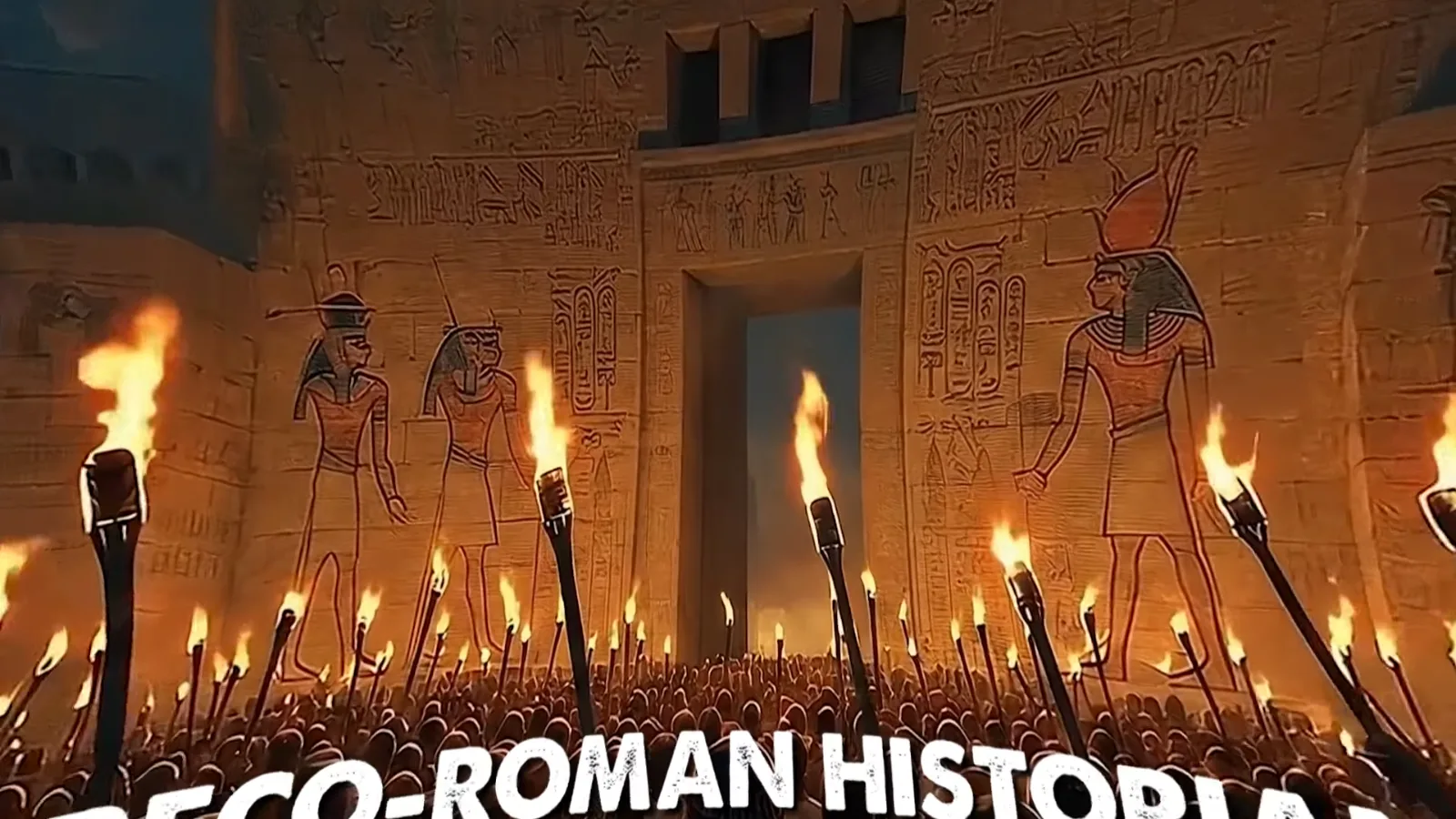
About 28 miles (roughly 45 kilometers) southwest of Alexandria, the temple complex of Taposiris Magna has drawn particular attention. It’s a significant site with longstanding ties to the cults of Osiris and Isis, deities central to Ptolemaic royal ideology. Excavations there—by Egyptian authorities in collaboration with international researchers—have uncovered coins with Cleopatra’s image, statues, temple features, and burials from the late Ptolemaic to Roman periods. The finds confirm that this was an active, symbolically rich center during Cleopatra’s lifetime.
Those discoveries led some researchers to hypothesize that Cleopatra and Antony might have been interred at or near this temple, aligning with the queen’s religious identity and the era’s blending of Greek and Egyptian symbolism. It’s a reasonable research question. The evidence so far, however, remains circumstantial. Coins bearing Cleopatra’s profile are historically valuable but were widely circulated; their presence situates the site in time but does not identify a specific royal tomb. Burials at the site speak to status and ritual but are not royal in any verified sense. Ground-penetrating radar and exploration of substructures have highlighted tunnels, niches, and cavities of interest; none, to date, has produced an authenticated royal sarcophagus, inscriptions naming Cleopatra or Antony, or material that meets the threshold of proof archaeologists require.
In short, Taposiris Magna is an important lens on the religious landscape of Cleopatra’s Egypt. It is not—on the present evidence—the proven resting place of the last Ptolemaic queen.
Separating Sensation from Science
Stories circulate of “impossible” tunnels, “melted” stone barriers, exotic alloys, magnetic sarcophagi, and sealed chambers suppressed by authorities. These elements make for gripping entertainment, but they do not reflect published archaeological findings. Several red flags recur in such accounts:
– Vague Provenance: Claims often lack precise trench logs, grid coordinates, stratigraphic descriptions, or peer-reviewed publication—basic requirements for serious verification.
– Anachronistic Materials: References to modern or rare industrial alloys in an ancient context require extraordinary proof. Absent rigorous compositional analysis published in a scientific venue, they remain implausible.
– Physics-Defying Features: Assertions about heat-sealed granite-and-lead walls, unusual radiation, or high-temperature vitrification in an ancient tomb must be supported by reproducible lab data and clear context. They rarely are.
– Suppression Narratives: “Government sealed the site and confiscated artifacts” stories tend to appear where documentation is thin. Real excavations operate under permits; sensitive finds are cataloged and curated by national authorities as a matter of course. That is regulation, not a cover-up.
Archaeology is cautious for a reason. Extraordinary claims need replicable evidence, multidisciplinary analysis, and transparent reporting. The most transformative finds—royal burials, inscribed sarcophagi, unique archives—usually move from field discovery to conservation to preliminary reports and, eventually, to full publication. Press conferences happen, but the record settles in journals, monographs, and museum catalogs.
What We Can Say with Confidence
– Cleopatra and Antony likely were buried together, according to multiple ancient Roman sources, with Octavian’s permission after the conquest of Egypt. This is a literary-historical claim, not a precise map.
– The likely burial zone is in or near Alexandria, though centuries of seismic activity and shoreline change have altered or submerged parts of the relevant districts.
– Taposiris Magna and other temple complexes in the region were active in Cleopatra’s era and have yielded period-appropriate finds, including coins with Cleopatra’s image and ritual objects tied to Isis and Osiris.
– No verified funerary inscription, sarcophagus, or mummified remains of Cleopatra or Antony has been found or authenticated. No scholarly consensus recognizes any specific chamber as their tomb.
– Underwater archaeology in Alexandria’s harbor continues to document monumental remains associated with the Ptolemaic royal quarter, improving maps and aiding hypotheses about where royal burials could have stood.
– Responsible research continues under the oversight of Egyptian antiquities authorities and collaborating academic teams. Announcements that withstand scrutiny are those accompanied by context, conservation plans, and publication.
Why the Tomb Is So Hard to Find
Several factors complicate the search:
– Urban Overbuild: Alexandria is a living city with dense modern infrastructure. Large-scale excavation is limited to targeted windows—construction rescue digs, planned research operations, or accessible plots.
– Geological Change: Earthquakes and tsunamis in antiquity altered the coastline. Submerged structures complicate mapping, and sediment movement can bury or displace remains.
– Reuse and Spoliation: Stone and architectural elements were reused across centuries. Tombs may be dismantled, repurposed, or stripped by ancient or early modern activity.
– Tomb Architecture and Secrecy: Royal burials, especially in politically fraught transitions, could be concealed, modestly marked, or placed within temple precincts in ways that obscure identification without inscriptions.
What Counts as Proof
If Cleopatra’s tomb (and Antony’s) were found tomorrow, what evidence would substantiate the claim?
– Secure Context: A sealed or controlled context with clear stratigraphy tying the burial to the late Ptolemaic/early Roman period within Alexandria’s sphere.
– Identifying Inscriptions: Hieroglyphic, Demotic, or Greek texts naming Cleopatra (and/or Antony), their titles, or a dedicatory formula linking the burial to their reigns.
– Royal Markers: High-status funerary assemblage consistent with late Ptolemaic royal burials—distinctive iconography, fine materials, and ritual architecture aligned with court practices of the period.
– Bioarchaeological Data: If human remains are present, ancient DNA and osteological analysis could be compared to known lineages where possible (bearing in mind the limits of reference populations). Even without DNA, age-at-death, pathology, and embalming signatures can support identification.
– Corroboration: Multiple lines of evidence converging—epigraphy, radiocarbon dating of organic remains, material analysis of pigments and resins, and congruent historical placement.
Even then, scholars would debate. That’s not a defect; it’s how the discipline refines claims until the evidence persuades across specialties.
The Pull of the Cleopatra Story
Why do sensational claims keep returning? Cleopatra sits at a crossroads of identities: Macedonian Greek royal, Egyptian pharaoh, Roman adversary, intellectual, strategist, and symbol of sovereignty against imperial power. She has been romanticized and castigated in turn. The idea that her tomb remains “out there,” intact and waiting, offers a narrative closure the historical record denies. It promises a definitive artifact—the queen’s own burial—that could cut through centuries of bias in the sources. That allure ensures that every radar anomaly becomes news and every carved fragment is read as a clue.
But archaeology rarely gives us cinematic revelations. It offers incremental truths. A coin places an economy in motion; a temple wall realigns a city’s sacred geography; a burial practices study redraws social hierarchies. If Cleopatra’s tomb is ever found, it will likely be because those small increments accumulated into a coherent map that pointed to one specific place—excavated carefully, documented thoroughly, and shared transparently.
What Recent Work Adds
In the last two decades, teams working around Alexandria and at Taposiris Magna have:
– Expanded Site Plans: Detailed mapping of temple precincts, enclosure walls, and secondary structures clarifies how religious complexes functioned in Cleopatra’s time.
– Recovered Period Objects: Coins bearing Cleopatra’s image help calibrate activity in the late first century BCE. Statues and ritual artifacts demonstrate ongoing Isis-Osiris worship crucial to Ptolemaic royal ideology.
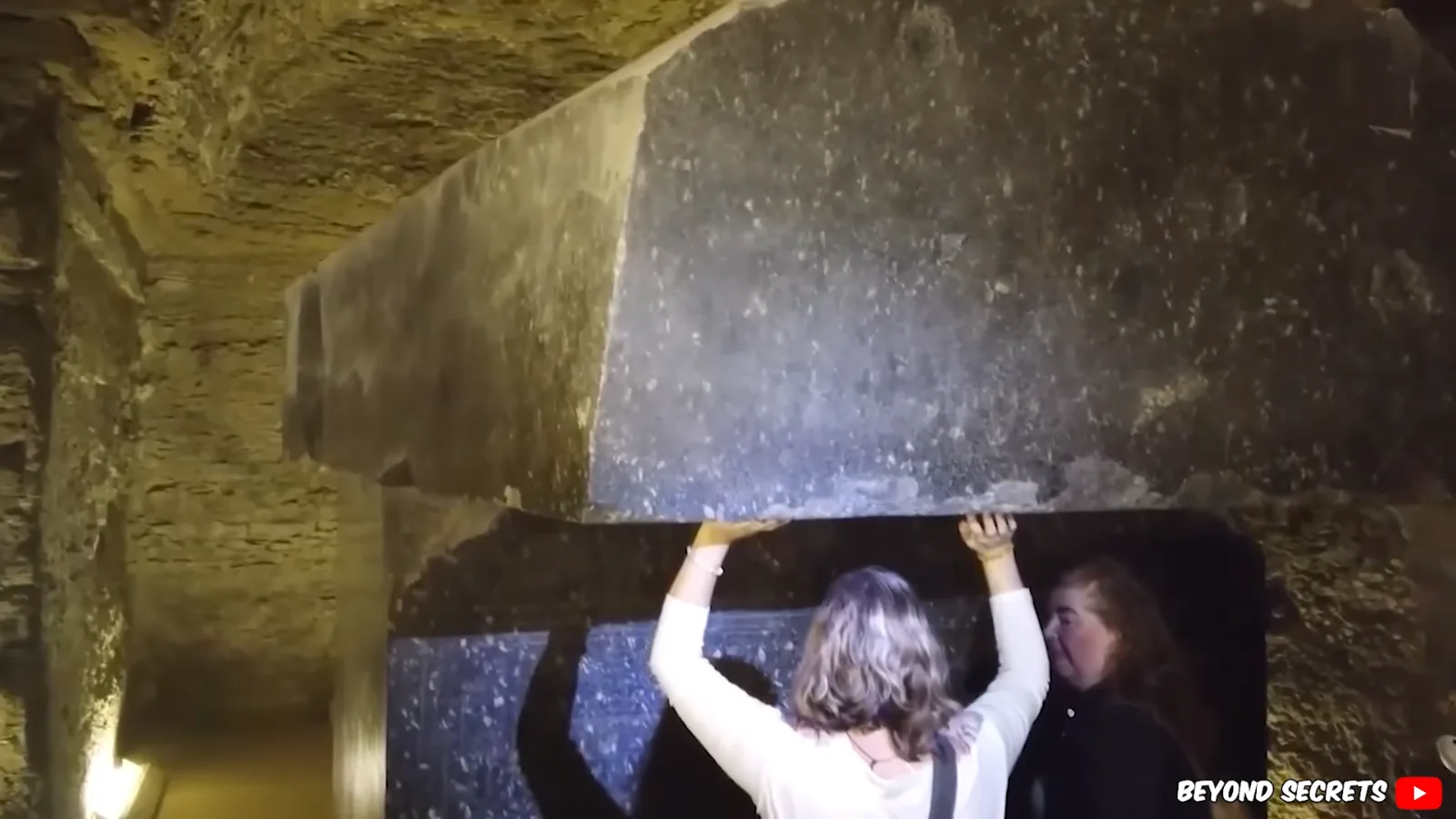
– Identified Substructures: Surveys and targeted excavation revealed shafts and corridors consistent with ritual and funerary uses, but none conclusively royal.
– Strengthened Conservation: Finds are stabilized and curated under national authority, providing a baseline for future comparative analysis.
These are not disappointments; they are the groundwork for any future discovery that might rise to the level of a royal burial.
If the Tomb Remains Lost
It is possible that Cleopatra’s and Antony’s burial site was destroyed by natural disasters, built over by later construction, looted, or lost to the sea. If so, the absence is still a historical fact to be reckoned with. It emphasizes how fragile ancient urban landscapes are and how much of Mediterranean antiquity is now sediment, shards, and re-used stone in later walls. It also redirects attention from singular artifacts to broader cultural history: Cleopatra’s reign as a hinge between pharaonic traditions and Roman rule, the multilingual world of Alexandria, and a power struggle that redefined the Mediterranean.
What Would “Shock the World” Actually Look Like?
A legitimate, world-shaking discovery would look cautious at first. A field director would announce a promising find with limited photographs and an emphasis on conservation. An international team would be named, with specialists in Ptolemaic epigraphy, Greco-Egyptian religion, bioarchaeology, and materials science. Preliminary reports would appear through official antiquities channels. Months or years later, peer-reviewed articles would detail inscriptions, artifact assemblages, and laboratory analyses. Museums would plan tightly curated exhibitions with a conservation-first philosophy. That is how the Tutankhamun discoveries were ultimately canonized—and how modern archaeology handles claims with global significance.
https://www.youtube.com/watch?v=iM0VZgJJKFU
The Bottom Line
– Cleopatra’s tomb has not been found. No credible excavation has produced an inscribed, contextually secure burial of Cleopatra VII or Mark Antony.
– Taposiris Magna is an important temple site with late Ptolemaic activity, including finds tied to Cleopatra’s era, but it has not yielded a verified royal tomb.
– Sensational elements—mysterious alloys, melted barriers, magnetic sarcophagi—do not align with published archaeological evidence. Without transparent data, such claims should be treated as fiction.
– The search is legitimate and ongoing, constrained by urban realities and shaped by steady advances in survey technology, underwater mapping, and conservation.
– If a discovery worthy of the headlines occurs, it will be documented conservatively, not theatrically, and will withstand scrutiny because the evidence will be public, contextual, and replicable.
There’s an enduring hope that somewhere beneath Alexandrian soil or silt, a chamber still holds a queen who reshaped the politics of her age. Whether that chamber exists or not, the work already done—mapping temples, conserving artifacts, and refining the historical record—brings us closer to Cleopatra’s real world: multilingual, cosmopolitan, politically perilous, and intellectually alive. That is more than enough to take seriously. And if the day comes when a stone doorway opens onto a room with names carved into it—names not of legend but of historical fact—archaeology will be ready, and so will we.
News
A Mafia Boss Threatened Dean Martin on Stage—Dean’s Reaction Was Pure Genius
A Mafia Boss Threatened Dean Martin on Stage—Dean’s Reaction Was Pure Genius Prologue: A Gun in the Spotlight Dean…

The Billionaire Had No Idea His Fiancée Was Poisoning His Son—Until the Maid Exposed Everything
The Billionaire Had No Idea His Fiancée Was Poisoning His Son—Until the Maid Exposed Everything Prologue: A Whisper That…

The Billionaire Catches Maid ‘Stealing’ Food… But When He Sees Who It’s For, He Breaks Down in Tears
The Billionaire Catches Maid ‘Stealing’ Food… But When He Sees Who It’s For, He Breaks Down in Tears Prologue:…

The Billionaire’s Fiancée Sets a Trap for the Maid — Until His Silent Daughter Exposed the Truth
The Billionaire’s Fiancée Sets a Trap for the Maid—Until His Silent Daughter Exposed the Truth Prologue: The Whisper That…

The Billionaire Went Undercover as a Gardener — Until the Maid Saved His Children from His Fiancée
Richard Whitmore’s hands trembled on the garden shears as he watched through the kitchen window. His new wife, Vanessa, stood…
Three Flight Attendants Vanished From a Vegas Hotel in 1996 — 28 Years Later a Hidden Wall Is Opened
.Every hotel, every casino, every neon-lit alley has a story, most of them ending in forgetfulness or denial. But some…
End of content
No more pages to load






