
The Romanov story has always attracted myth the way snow attracts footprints. A cellar in Yekaterinburg, gunfire in July 1918, bodies gone, a new regime that preferred fog to facts—and suddenly the world was left to fill blanks with fairy tales. For decades, people clung to the notion that at least one child slipped past history’s teeth. It made the horror less absolute. It made loss feel negotiable.
Then science caught up.
Starting in 1991, when nine skeletons surfaced in a forest near Yekaterinburg, the work began—not with certainty, but with scraps. Bones in poor condition, DNA degraded by time and weather. Early STR testing gave the first shape: a father, a mother, three daughters among the remains. It sounded like Nicholas II, Alexandra, and three of the girls. But sounding like isn’t proof.
Mitochondrial DNA—passed along the maternal line—pushed past “sounds like.” Alexandra’s mtDNA was compared with that of a living relative, Prince Philip. The match didn’t need drama; it had numbers. Nicholas offered a rarer signature: mitochondrial heteroplasmy, an anomaly that invites skepticism until you test his brother and the anomaly repeats. Doubt tends to quiet down when it meets replication.

The puzzle still had holes—Alexei and one daughter believed to be Maria. That gap kept legends on a ventilator. It also kept the case honest.
Years later, additional bone fragments were found nearby. The testing matured. AI-assisted bioinformatics—tools designed to pull signals from noise, align sequences precisely, weight uncertainties—turned faint genetic traces into usable profiles. STRs, mtDNA, Y-chromosome analysis, cross-validated and modeled. The results were blunt: Alexei and Maria were there. The family was complete. Not in life, but in evidence.
If you grew up on Anastasia folklore, this reads like a cold ending. But endings aren’t obligated to be comforting.
Let’s cut through the hype. AI didn’t “solve” the Romanov mystery by itself. It solved the parts that human eyes and traditional software strain to resolve: low-quantity, low-quality DNA in damaged remains. Think of AI here as a disciplined analyst—denoising signals, aligning short fragments, scoring matches, modeling kinship probabilities. No poetry, just math.
– Signal recovery: Machine learning models clean out contamination and background, rescuing fragments that would otherwise be discarded.
– Alignment and variant calling: Algorithms stitch tiny sequences back into recognizable patterns and flag rare variants—like Nicholas’s heteroplasmy—with more confidence.
– Relationship modeling: Probabilistic frameworks assess kinship across multiple markers, combining autosomal, mitochondrial, and Y-chromosome data into a single, coherent answer.
Strip away the Romanov name and you’re left with a toolkit now used in war crimes investigations, mass disaster victim identification, and cold cases where the remains are more memory than matter. AI makes marginal evidence actionable. That’s the quiet revolution.
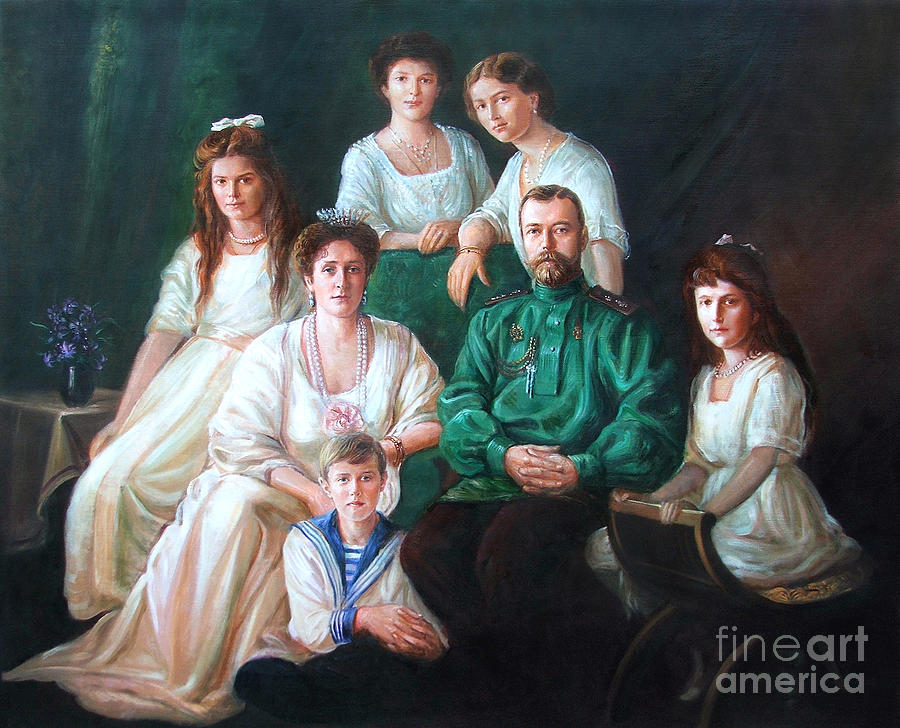
The Anna Anderson saga is the cautionary tale that still lingers. She claimed to be Anastasia, and a culture hungry for survival stories obliged. Courts, memoirs, films—decades of oxygen. When preserved tissue finally met modern sequencing, AI-enhanced mtDNA analysis made the verdict simple: no match to the Romanov line.
There’s a human cost to closure. Science doesn’t calculate the grief embedded in a legend. It just answers the question. The answers in this case erase the soft focus many preferred: no miraculous escapes, no hidden heirs. Just a cellar, bullets, bayonets, and the industry of concealment that followed.
If that sounds cruel, it’s because truth can be. It doesn’t offer narrative relief; it offers finality.
It’s worth remembering why the myths found purchase. For three centuries, the Romanovs were Russia’s brand—gilt surfaces, political gravity, and a widening crack beneath it all. By the early twentieth century, hunger, war, and misrule converged. Nicholas II was devout and devoted, but ill-suited to crisis. Industrialization brought factories and discontent. The front devoured soldiers; the home front endured empty winters.
Abdication in March 1917 wasn’t a twist. It was an inevitability. The family’s descent from palaces to painted-over windows—Tobolsk, then the Ipatiev House—was long and mean. The July night was brief and brutal. Diamonds sewn into corsets, meant as future leverage, turned into accidental armor that forced rage into bayonet work. Eleven people died in a room that felt like a tomb even before it became one.
The regime tried to bury the bodies and the story. History is stubborn. It prefers evidence.
Here’s the uncomfortable balance: the Romanovs’ end is both a lesson in political consequence and a landmark in forensic progress. It shows how authority collapses when it forgets who bears the weight of its decisions. It also shows how modern science, tuned by AI, can restore names and relationships denied by violence.
– The historical takeaway: Thrones fall when reality outpaces ritual. Splendor doesn’t insulate you from hunger statistics.
– The forensic takeaway: With AI, even damaged remains can speak. The field now expects clarity where we once settled for speculation.
– The cultural takeaway: Myths comfort. Truth resolves. They rarely coexist peacefully.
People ask whether the mystery can ever be “forgotten.” It won’t be. It’s too layered—power, failure, erasure, recovery. What will fade are the softer fictions that survived on uncertainty. AI and DNA have left less room for romantic escape hatches.
As for whether AI will solve more mysteries: yes, and it already is. The same methods used here are identifying victims in mass graves, linking missing persons to families decades later, and reassigning blame in cases that were misfiled by history. Expect fewer unsolved headlines and more precise endings. Expect less drama and more documentation.
You don’t have to like the ending to respect its clarity. A family erased in a basement. Remains scattered, then found. Evidence assembled, then accepted. AI didn’t rewrite the Romanov story; it took the whisper out of it. The result is stark, and maybe that’s healthy. Some histories should stay heavy.
The truth we have now doesn’t redeem what happened. It does something plainer: it returns identity to the dead and puts speculation back in its proper place—on the shelf. In a century crowded with noise, that kind of order is its own kind of mercy.
News

A Mafia Boss Threatened Dean Martin on Stage—Dean’s Reaction Was Pure Genius
A Mafia Boss Threatened Dean Martin on Stage—Dean’s Reaction Was Pure Genius Prologue: A Gun in the Spotlight Dean…

The Billionaire Had No Idea His Fiancée Was Poisoning His Son—Until the Maid Exposed Everything
The Billionaire Had No Idea His Fiancée Was Poisoning His Son—Until the Maid Exposed Everything Prologue: A Whisper That…

The Billionaire Catches Maid ‘Stealing’ Food… But When He Sees Who It’s For, He Breaks Down in Tears
The Billionaire Catches Maid ‘Stealing’ Food… But When He Sees Who It’s For, He Breaks Down in Tears Prologue:…

The Billionaire’s Fiancée Sets a Trap for the Maid — Until His Silent Daughter Exposed the Truth
The Billionaire’s Fiancée Sets a Trap for the Maid—Until His Silent Daughter Exposed the Truth Prologue: The Whisper That…

The Billionaire Went Undercover as a Gardener — Until the Maid Saved His Children from His Fiancée
Richard Whitmore’s hands trembled on the garden shears as he watched through the kitchen window. His new wife, Vanessa, stood…

Three Flight Attendants Vanished From a Vegas Hotel in 1996 — 28 Years Later a Hidden Wall Is Opened
.Every hotel, every casino, every neon-lit alley has a story, most of them ending in forgetfulness or denial. But some…
End of content
No more pages to load






