
Lavender and champagne hung in the air like a thin fog, a soft gloss over a night designed to glitter. Under a mirrored glass ceiling, gold lights twisted through the vines, throwing off flecks like metal shavings. Cameras snapped as Valora raised her glass, her name embossed on every banner, clean and final: VALORA BROOKS — VISIONARY INVENTURE TECH. I stood at the room’s edge, my back almost touching cold glass, a navy dress pressed flat from two careful passes of the iron. In the center, curated laughter rose like a soundtrack. At the margins, my heartbeat counted the silence between applause.
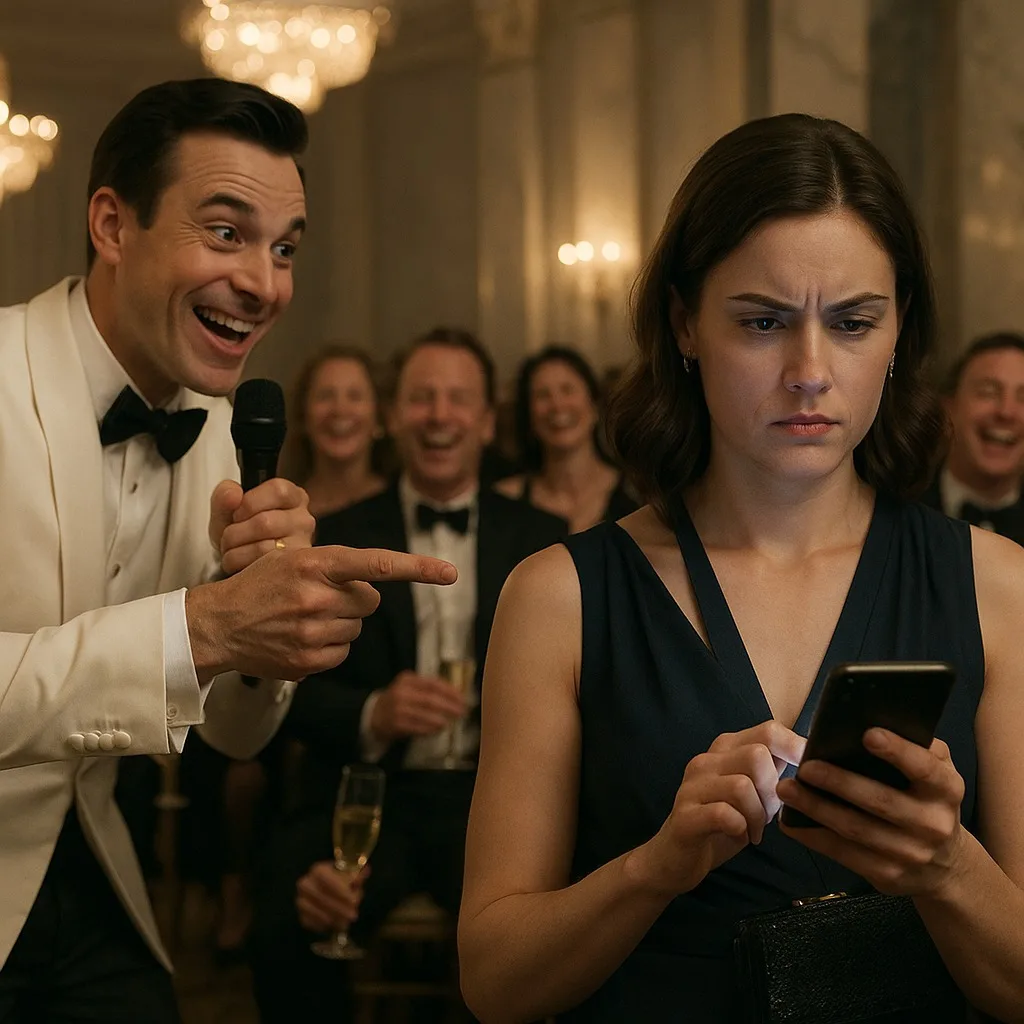
Then the mic changed hands. Hayden smiled the way people do when they’re born to the spotlight, dispensing praise like party favors. “Not everyone in the family has what it takes,” he said, half-joke, half-cut, eyes grazing mine. A thin slice, the kind that whistles. “Rowena, could you help with the hors d’oeuvres?” Laughter. “Kidding.” This time the relief-laughter showed its teeth. I don’t remember deciding to move, only the dry, certain sound of heels on marble. I pulled out my phone, dialed a number I knew by muscle memory. “Cancel the contract,” I said. The room hushed the way curtains fall. The lights stayed bright. The story changed.
Twelve years earlier, my lab was a hot garage in San Diego, the air thick with solder and stale coffee. I believed in math and stubbornness: give information enough structure and it learns to arrange itself. Valora started dropping by after midnight, carrying ring lights and the promise of “brand story.” I said Pari-tech; she wrote Paritech, curling the letters in black ink. The night the prototype ran clean, we hugged and knocked a screwdriver off my pocket. “We did it,” she said. Back then, “we” still meant home.
Then came that first slide in Palo Alto: VALORA MARIN — FOUNDER & VISIONARY. My name vanished like a font error. I stood beside her rhetoric for the rest of those rooms, answering “the technical bits” in short, precise English, because those rooms were full of money. My family said the smart one didn’t need the spotlight. The company grew; glass walls replaced cinder block; the smell of money replaced metal. One morning, the elevator beeped red. My badge was dead. An email arrived: “Privileges suspended.” A magazine ran “The Power Duo Behind Valoratech,” a photo of three people—my parents and Valora. I, the person who wrote the core, became a silhouette behind frosted glass.
Rumors seeped like rain through loose shingles: clipped chat logs turned private frustration into “emotional instability.” Consulting offers vanished. I unlocked old drives: the first commit—Rowena M, 2011-09-02 23:44:07—blinked like a heart restarting. Then a 2017 patent filing: Inventor: Valora. Co-signer: Charles—my father’s signature, from when I was on IV drips after a panic attack. “For administrative convenience.” Twelve lines of legalese had replaced a person.
Ezra—the one who once soldered with me in the garage—read the metadata and said, “Their fingerprints are everywhere. If you want to fight.” I named files like I was calling my life back: Source Logs, Media, Testimony. A former assistant sent audio: Valora’s voice, smooth and cold. “Keep Rowena’s name until Series A. She’s not scalable after that.” Then my voice, dry, from another night: “Skip neural load matching and it won’t learn—it’ll pretend.” We dropped the dossier into Stratwin’s glass boardroom. When the speakers played “I build narratives,” the only sound left was pens scratching. One word followed: “Pause.” Money froze. PR fired back: a livestream with white orchids, “I hope my sister finds peace.” Then another file hit my inbox—Malik, her fiancé: “She’ll wipe Rowena’s name after Series B.” The word “footnote” became a hashtag. Board members resigned. Funding died. The current shifted.
My parents’ calls came next—“We didn’t know…” I hung up. Apologies are small change after a story cashes out on your name. Valora’s lawyer offered seven million and “co-founder recognition.” I almost laughed. My silence was worth more than that.
Two weeks later, the sky was polished metal—steady, waiting. My new office floated fifteen floors up, glass on three sides, quiet all around. The door bore a brass plate that caught the light: ROWENA HAIL — FOUNDER. Inside, a simple table set for four. They arrived on time: my parents, thinner, like guilt had sanded them down; Valora in gray, her eyes blunt with no sleep; the lawyer behind her carrying his briefcase like a shield. The offer slid across the table, paper whispering. I didn’t touch it. I asked for three things: a public apology in her own voice, no edits; full rights to my original codebase and all derivatives; withdrawal from all Stratwin contracts. “Impossible,” she said. “You’ll bankrupt us.” “You already did,” I said. “You just used my name for collateral.”
In the end, the pen moved. Ink dried. Twelve years of silence closed its ledger. I pulled out a small velvet pouch: my dented old nameplate, scratched and dull. I set it beside the new brass one. “I’m keeping both,” I said. “To remember the difference between being erased and being reborn.” They left. The elevator closed like punctuation. Ezra called: “Stratwin posted.” He read it out: “Rowena Hail is—and always was—co-founder and lead architect of the Valor Tech platform.” No adjectives, no flowers. Just truth in plain font.
That night, messages poured in from strangers—coders, researchers, assistants—each writing a version of the same line: Thank you for proving we weren’t crazy. A week later, I founded a scholarship with my mother’s maiden name: the Marin Grant. For those written out of the patent list. For the quiet architects. At my desk, I pinned the donation confirmation beside a faded 2011 napkin: “Let’s change the world.” Maybe we did—just not the magazine-cover way.
This isn’t a story about toppling; it’s a story about correction. Silence isn’t neutral. It can dress cruelty in silk, or it can be a blade—thin, patient, choosing its moment. Missing your name on one slide is not harmless; it’s subtraction, small cuts that add up to a negative number. The law can restore the record, but what steadies your breath is evidence—your first commit, a scuffed audio file, a page smudged by late-night hands. And boundaries: knowing when to hang up on someone who says “peace” like a gag.
I learned my own language again: where to put the period, stopping apologizing for existing. An empire built on noise can be dismantled by proof. A family that defines “protection” as saving each other’s seats can be made to say the right names aloud. Between two nameplates—the bent one and the gleaming one—lies the difference called dignity. Not victory. Alignment. And when the city lights switch on, silence returns, this time hiding nothing. It sits in the glass-walled room like clean-compiled code: no errors, no exceptions, ready to run.
News
A Mafia Boss Threatened Dean Martin on Stage—Dean’s Reaction Was Pure Genius
A Mafia Boss Threatened Dean Martin on Stage—Dean’s Reaction Was Pure Genius Prologue: A Gun in the Spotlight Dean…
The Billionaire Had No Idea His Fiancée Was Poisoning His Son—Until the Maid Exposed Everything
The Billionaire Had No Idea His Fiancée Was Poisoning His Son—Until the Maid Exposed Everything Prologue: A Whisper That…

The Billionaire Catches Maid ‘Stealing’ Food… But When He Sees Who It’s For, He Breaks Down in Tears
The Billionaire Catches Maid ‘Stealing’ Food… But When He Sees Who It’s For, He Breaks Down in Tears Prologue:…
The Billionaire’s Fiancée Sets a Trap for the Maid — Until His Silent Daughter Exposed the Truth
The Billionaire’s Fiancée Sets a Trap for the Maid—Until His Silent Daughter Exposed the Truth Prologue: The Whisper That…
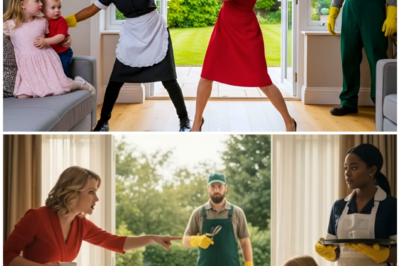
The Billionaire Went Undercover as a Gardener — Until the Maid Saved His Children from His Fiancée
Richard Whitmore’s hands trembled on the garden shears as he watched through the kitchen window. His new wife, Vanessa, stood…
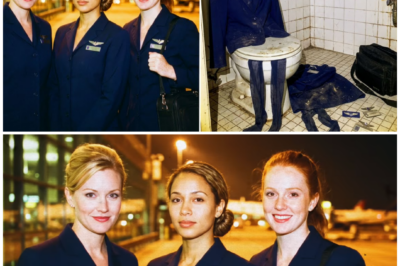
Three Flight Attendants Vanished From a Vegas Hotel in 1996 — 28 Years Later a Hidden Wall Is Opened
.Every hotel, every casino, every neon-lit alley has a story, most of them ending in forgetfulness or denial. But some…
End of content
No more pages to load






