
The tape starts with a man trying on remorse like a borrowed suit. He’s in an electronics store in Mobile, Alabama, talking soft into a camcorder as if confession is a performance art. “Hello, Lori,” he says, to the wife he’s already turned into a footnote. He speaks about consequences as though they’re an abstract concept, not a body cooling in a kitchen. This is August 13, 1996, and Gary Simmons thinks he’s staging the end of his story. He’s wrong. Thirty-five miles away, on a quiet Mississippi street hemmed by bayou and kudzu, an 18-year-old named Brook Weber is pounding on a stranger’s front door, clutching a butcher knife and the thin edge of her sanity. She keeps repeating one sentence: “They shot him.”
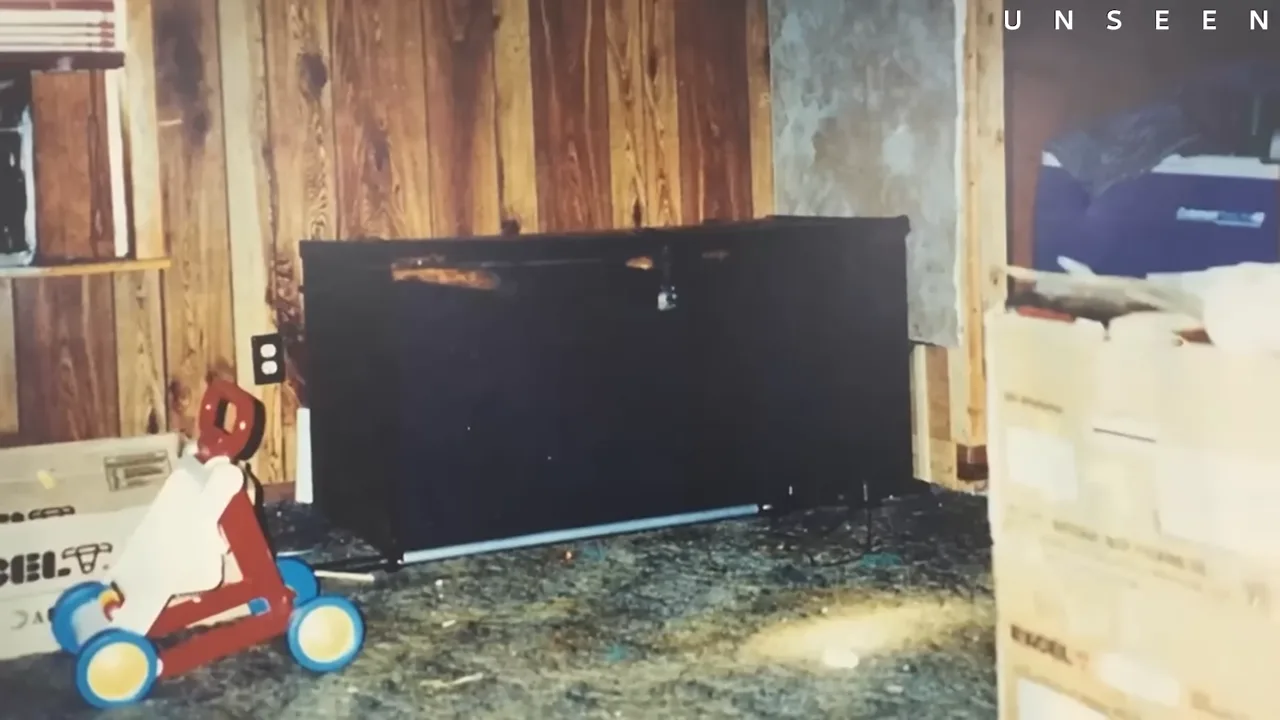
Police walk into the house she points to and find nothing that looks like a murder scene. No blood. No mess. The place is scrubbed like a conscience. But there’s a box. Human-sized. The kind of object you understand instantly and only fully later. Detectives fan out toward the water and start collecting what the bayou won’t keep. An axe stained with blood. A boat with drops in its well. On the surface, human remains—88 pieces—riding the current like receipts.
Every true crime story has a moment when the narrative tries to swerve toward myth. Don’t let this one. The truth is simpler and uglier: a man who rehearsed control for years finally tried to stage it for real. And he underestimated the one variable he’d never bothered to account for—survival.
Two days earlier, in Houston, a 21-year-old named Jeffrey Wolfe hugged his dad and headed east with his new girlfriend, Brook. It was supposed to be a quick run to Mississippi to “collect money” from a guy Jeff knew. There’s a common miscalculation in stories like these: people assume that danger announces itself. In reality, it’s often the lack of signal that should make your stomach tighten. Brook and Jeff pulled up to Simmons’s house after dark. No porch light, even though he knew they were coming. A man sitting on the steps, not welcoming them so much as waiting them out. Inside, a friendly conversation over nothing. Then the gunshots.

Brook looked up and saw Jeff go down, saw the blinds catch his blood in neat slats. Another young man with a gun. Simmons moving fast, arms like a vise, dragging her into another room. The mechanics are familiar to anyone who’s studied men like him: restraint, gag, containment. The box—something he’d imagined long before—wasn’t a prop. It was the point. He raped her. He told her the performance would determine whether she lived or died. Then he put her back in the dark to listen to her own breathing and the sound of men getting away with it.
If you’re feeling the urge to turn the page here, I don’t blame you. But this is where the story cracks open. Because Brook doesn’t stay in the box.
Let’s pause and talk about the man who thought he’d planned everything. Gary Simmons didn’t invent his depravity at 40. He apprenticed himself to it. Six years earlier, when he married a woman named Lori, he pitched himself as a creative type, a day-care groundskeeper who “wrote short stories.” His office shelves were lined with binders—more than fifty. She opened one. Every story was a fantasy about capturing women, violating them, controlling every breath. He called them fantasies the way arsonists call fires “a wake of light.” Some men write their darkness out to get rid of it. Gary was writing blueprints.
After the birth of their daughter, when Lori said no to sex, he made it an argument between authority and reality. He raped her that night and kept the claim on her body as if marriage were a deed. He built a box “for a person,” lugging it across their house with the weird calm of someone who believes he’s entitled to his own escalations. When she pushed back, he didn’t shout. He choked her until she went limp, tied her to the bed, blindfolded her, and traced a knife along her face. He wanted the flinch. He wanted the fear. And he wanted to practice.
When Lori finally went to the police, it was the early ‘90s, and the system still treated marital rape like a contradiction in terms. She didn’t have “enough evidence.” Legal aid told her a version of the same story in bureaucratic tense. She survived by getting away, not by being believed. Years later, when a VHS showed up at her workplace—Gary talking to the camera like a man trying to stage his own absolution—she didn’t see romance. She saw a sequel.
Back in Moss Point, the scene the cops walked into that August morning read wrong because it was meant to. The immaculate house. The box to intimidate and contain. The bayou out back like a gutter. Men like Simmons understand two things: how to clean up and how to terrify. What they miss—again and again—is how quickly the plan unravels when someone refuses the role they’ve been assigned.
Brook’s escape isn’t a tidy Hollywood beat. It’s messy, panicked, feral. She bolts. She finds a knife not to stab anyone but to survive the run between rooms and the open air. She slams her hands against a stranger’s door because that’s what you do when the world is narrowing to a two-inch windpipe and the knowledge that you’re running out of time. And when she can finally form words, they come out as a loop—“They shot him”—because the brain will replay the most recent horror until someone stops it with questions.
The investigation woke up fast once she had a voice. The remains in the bayou weren’t a riddle; they were a message. The axe. The boat. The box. You don’t improvise those. You assemble them over years of practice, in notebooks and basements, with a patient hatred for anyone who tells you no.
Here’s the part that sticks with me, after years of reading transcripts and walking through the quiet rooms crimes leave behind: predators often narrate their own undoing. Simmons did it into a camera in a shopping mall, performing the practiced sorrow of a man who has already cast himself as the tragic lead. He was trying to convince one particular woman he’d once owned, and the wider audience he presumed would forgive a tidy arc. But the tape is just a mirror, and he doesn’t realize the camera is catching the one thing he can’t script—how small he looks when he’s not in control.
What follows is the uncinematic slog we like to call justice. Evidence logged. Interviews taken. A prosecutor who knows the difference between spectacle and proof. A jury that has to sit with words like box and rape and dismemberment without flinching into disbelief. It’s tempting to call Brook “The Girl in the Butcher’s Box” because it sounds like a headline that will get you to click. It’s also wrong in a way that matters. She’s the girl who got out. She’s the witness who turned a bayou full of horror into a map. She’s the one who said what she saw until a court could say it back to her.
If there’s a lesson here beyond the obvious moral outrage, it’s this: the system is still too slow to recognize the early drafts of a crime. Lori read the binders and heard the threats and walked into a police station years before the bayou filled up. She was told to come back with evidence that could survive a courtroom. Brook found her way to a porch and a patrol car and a detective, and that evidence arrived the ugly, incontrovertible way. We can do better than treat women’s warnings as prequels.
I keep thinking about two rooms. In the first, Simmons speaks into a camera about “crossing the line,” like the line is painted on the world for men like him to trip over. In the second, a teenager breathes in the dark and finds a way to push air around fear long enough to run. One of those is a performance. The other is courage.
The cameras love a villain who monologues and a survivor with a nickname. The reality looks plainer: a reckless man rehearsed harm until he graduated to murder, and two women—one who escaped his house, one who escaped his life—gave the truth shape. The rest of us decided whether to look away. Don’t. Keep looking. Not because the horror is irresistible, but because accountability is. The box didn’t hold. The story did.
News

A Mafia Boss Threatened Dean Martin on Stage—Dean’s Reaction Was Pure Genius
A Mafia Boss Threatened Dean Martin on Stage—Dean’s Reaction Was Pure Genius Prologue: A Gun in the Spotlight Dean…

The Billionaire Had No Idea His Fiancée Was Poisoning His Son—Until the Maid Exposed Everything
The Billionaire Had No Idea His Fiancée Was Poisoning His Son—Until the Maid Exposed Everything Prologue: A Whisper That…

The Billionaire Catches Maid ‘Stealing’ Food… But When He Sees Who It’s For, He Breaks Down in Tears
The Billionaire Catches Maid ‘Stealing’ Food… But When He Sees Who It’s For, He Breaks Down in Tears Prologue:…

The Billionaire’s Fiancée Sets a Trap for the Maid — Until His Silent Daughter Exposed the Truth
The Billionaire’s Fiancée Sets a Trap for the Maid—Until His Silent Daughter Exposed the Truth Prologue: The Whisper That…

The Billionaire Went Undercover as a Gardener — Until the Maid Saved His Children from His Fiancée
Richard Whitmore’s hands trembled on the garden shears as he watched through the kitchen window. His new wife, Vanessa, stood…

Three Flight Attendants Vanished From a Vegas Hotel in 1996 — 28 Years Later a Hidden Wall Is Opened
.Every hotel, every casino, every neon-lit alley has a story, most of them ending in forgetfulness or denial. But some…
End of content
No more pages to load






