
The bell above the restaurant door sang like a small accusation. Sunlight through the front windows slashed across oak tables, catching crumbs and fingerprints and the faint steam rising from cappuccinos. I was mid-turn, balancing a tray of eggs Benedict, when the room shifted—the air folding in around a new presence. Martha arrived like an emblem: red lipstick, a coat too loud for our pared-back decor, a knot of old classmates trailing behind her like a practiced audience. She swept to the center table and announced, theatrical and certain, “Clear this place! I’m buying out the entire restaurant tonight!” Laughter rose, polite and a little greedy. Phones came out. Heads tilted. I forced a smile and stepped closer. Up close, her hand closed on my arm with the familiarity of ownership. Leaning in, she breathed: “Make sure it’s free, dear. I’m supporting family, after all.” Her voice was syrup and teeth. Then, louder, to the room: “This is my daughter-in-law’s restaurant—eat as much as you like!” The room applauded. I swallowed the shock and felt something inside me click into place.
Chloé’s Table had been mine long before the uniform. I’d taken a derelict space and filled it with light and a menu that respected seasons. I’d learned to build a reputation on consistent plates and the small courtesies that keep strangers returning. But the restaurant doubled as my front line against a family story I’d been living privately: my mother-in-law’s performance of patronage, her public smallness disguised as generosity. Martha had spent years reducing me with a smile—introducing me as “the girl who works here,” slipping charity in the form of a tossed bill, a comment designed to position her son as benefactor and me as beneficiary.
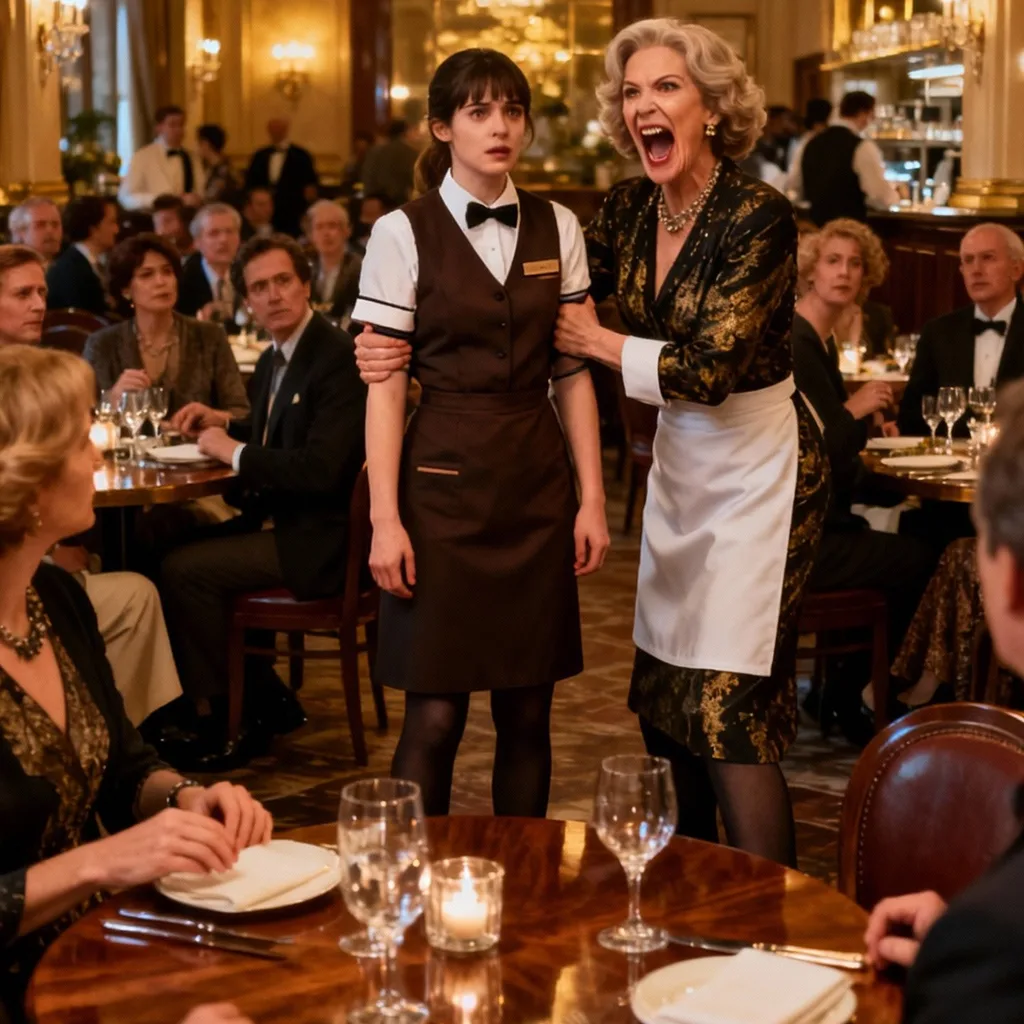
I’d tolerated it for Mark—because he loves her and because family theater is hard to stop once the script is written. I dutifully fielded her micro-insults during holidays, the way you fix a squeaky hinge rather than replace the whole door. But being introduced as someone’s charity in my own dining room, in front of my cooks and my regulars, landed differently. Pride isn’t loud; it’s a slow accumulation of small choices. This time the ledger was balanced and the line had been crossed.
I could have let it be a scene. I could have retreated to the kitchen and let Marco handle the din. Instead, I did the thing Martha did not expect: I treated her claim as business, not theater. I walked to the register like someone reading a contract. The POS screen glowed under my palm; my digits moved with the calm precision of someone who had written the prices, hired the staff, and paid the bills. I printed an invoice: full-venue rental; special prix fixe for fifty guests; mandatory service charge; full prepayment required. The sum at the bottom was an argument: fifteen thousand dollars in bold, unblinking type.
When I set the invoice on her table, that applause turned into a silence so dense you could have cut it with a spoon. Her smile failed. The table of classmates froze between the desire to be seen and the sudden calculation of expense. “Are you insane?” Martha spat, which was the old script: disbelief as entitlement’s defense. I didn’t plead or explain. I said only what the world would understand—business terms, plain and exact. “You said you’d booked the venue. I’ve processed that request. You can enjoy your party after you settle this invoice.”
It was a pivot: she had weaponized my humility; I weaponized reality. Her lie had become a contract witnessed by fifty guests; my ownership became a ledger. The room watched as she realized she had no currency to buy the scene she’d purchased for herself. The friends who’d admired her presence began shifting toward the exits, uncomfortable that their applause might be bankrolled with someone else’s lie.
Martha’s face changed from color to a kind of raw, flustered pallor. She threatened my husband, threatened to “tell Mark,” the reflexive attempt at familial retaliation. I told her to call him then; he’d confirm what she already should have known. In the hedge of that exchange her audience slipped away—one by one, the people eager to bask in her performance chose comfort over complicity. They stood, murmured, and left. The exit was a parade of shame, not triumph.
When the crowd finally thinned and the door clicked closed, the restaurant exhaled. My staff—young, loyal, and privately furious at years of Martha’s small cruelties—broke into applause that felt like relief rather than triumph. Marco appeared, cheeks flushed, and muttered, “Brava, capo.” I walked back to the register, tore the invoice into quarters and let the pieces drift to the floor; the theater of it was over. I told Mark the truth that night and he was silent for a long time—then simply said, “You did the right thing.” That was enough; his quiet made room for the respect that had been missing.
This was not vengeance dressed up as performance; it was a recalibration. I didn’t humiliate Martha to prove a point for spectacle. I pressed an invoice into her hands to insist on the one currency she always valued—money and social standing—and to show my staff and my customers that I am the steward of this room. There’s a particular moral in owning the ledger of your own life: you do not have to accept someone else’s narrative about you.
Humiliation is often handed as a gift—wrapped in faux generosity and expectant gratitude. But dignity is quieter. It is the decision to answer with terms rather than temper, with facts rather than fury. The lesson Martha learned that afternoon was small and exact: respect cannot be bought with performative acts, and pretending to buy it back in public is a poor substitute for having earned it.
After the doors closed and the kitchen resumed its rhythm—pots clinking, a line of servers moving like a slow poem—I felt something settle that had nothing to do with money. It was the sense that I belonged to the place I built, and that belonging is not a status granted by others but a responsibility you claim through daily work and refusal to be diminished.
That night, alone in the warm quiet of my office, I left the torn invoice on my desk like a paper relic—proof that the story hadn’t been a humiliation at all but a turning. Martha’s gesture had been an attempt to stage my gratitude; my reply turned the stage into a ledger, and in the ledger the truth sat, unarguable and final.
News

A Mafia Boss Threatened Dean Martin on Stage—Dean’s Reaction Was Pure Genius
A Mafia Boss Threatened Dean Martin on Stage—Dean’s Reaction Was Pure Genius Prologue: A Gun in the Spotlight Dean…

The Billionaire Had No Idea His Fiancée Was Poisoning His Son—Until the Maid Exposed Everything
The Billionaire Had No Idea His Fiancée Was Poisoning His Son—Until the Maid Exposed Everything Prologue: A Whisper That…

The Billionaire Catches Maid ‘Stealing’ Food… But When He Sees Who It’s For, He Breaks Down in Tears
The Billionaire Catches Maid ‘Stealing’ Food… But When He Sees Who It’s For, He Breaks Down in Tears Prologue:…

The Billionaire’s Fiancée Sets a Trap for the Maid — Until His Silent Daughter Exposed the Truth
The Billionaire’s Fiancée Sets a Trap for the Maid—Until His Silent Daughter Exposed the Truth Prologue: The Whisper That…

The Billionaire Went Undercover as a Gardener — Until the Maid Saved His Children from His Fiancée
Richard Whitmore’s hands trembled on the garden shears as he watched through the kitchen window. His new wife, Vanessa, stood…

Three Flight Attendants Vanished From a Vegas Hotel in 1996 — 28 Years Later a Hidden Wall Is Opened
.Every hotel, every casino, every neon-lit alley has a story, most of them ending in forgetfulness or denial. But some…
End of content
No more pages to load






