
Bill Maher, Karoline Leavitt, and the Theater of Humiliation: What Happens When Spin Meets a Camera That Won’t Blink
There’s a particular kind of political media moment that only exists because TV rewards nerve over nuance. A press secretary defends the indefensible. A comedian with a taste for blunt instruments flattens the defense. Cable nods along, clips the exchange for social, and calls it culture. The temptation is to treat the moment as a skirmish and move on. But the skirmish matters. It’s how we learn where the lines are—what power expects to get away with, and whether anyone in the room has the appetite to say “no.”
That’s the backdrop for Bill Maher’s takedown of Karoline Leavitt, Donald Trump’s press secretary, after she tried to recast an insult on Air Force One as “admirable.” The facts, unembellished: a female reporter asked about the Epstein tangle. Trump snapped “Quiet, piggy.” The next day, Leavitt told cameras this was “frank and open and honest,” a kind of truth-telling that deserves praise. Maher, a veteran of mean jokes and moral calculus, returned serve: if that’s “honesty,” then “shut up, piggy” is honesty too.
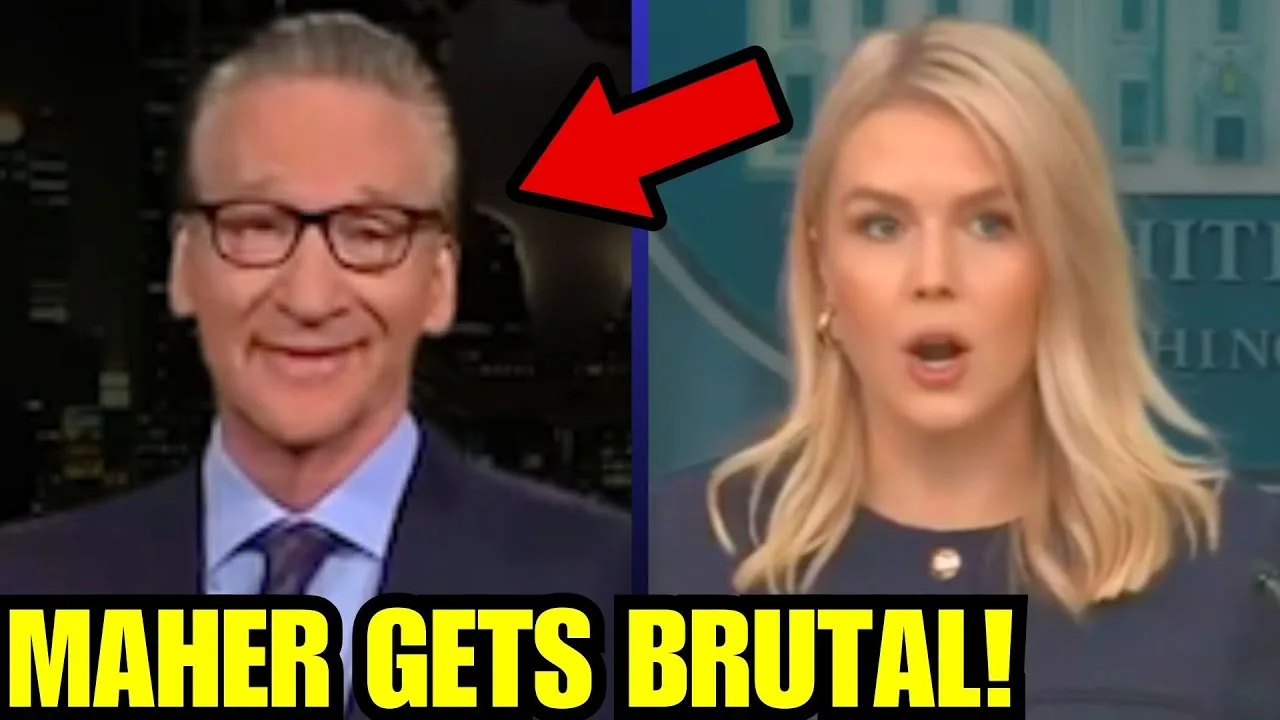
For once, the exchange wasn’t just a blood sport. It was a mirror held up to the rhetorical strategy this White House relies on: rebrand cruelty as candor, contempt as strength, and then dare the press to pretend the bar hasn’t been lowered. Leavitt’s impulse—normalize the shock, shame the question—has explained more of the Trump era’s daily rhythms than any poll ever will.
Why this moment matters beyond Maher’s applause lines
– It clarifies the playbook. When the boss crosses a line, make the line seem illegitimate. If that fails, declare the crossing a virtue and accuse critics of fragility.
– It tests the press’s elasticity. Journalists can absorb only so many insults before their questions become performative—asked for clips, not answers.
– It shows how “candor” gets weaponized. Truth isn’t license to be cruel. But in the theater of politics, cruelty masquerading as truth travels faster than policy.
On Fox News, the spin never sleeps
A day or two after the Air Force One flare-up, Leavitt appeared on Fox to salvage a different mess: a federal judge tossing an indictment tied to James Comey, not on the merits of the case but because the interim U.S. attorney had been improperly installed. Leavitt called it “unprecedented” and a “technical ruling,” scolded the court for “shielding” Comey and Letitia James, and promised an appeal “in very short order.”
Here’s the thing. Technical rulings are how legal systems remind governments to follow their own rules. If you appoint a prosecutor illegally, you don’t get to pretend the crime survives the error as if the Constitution were an inconvenience. The line Leavitt walked—“okay, technically we did it wrong, but spiritually we were right”—is not a line the law recognizes. Judges don’t adjudicate vibes. They adjudicate process. That’s the part “law and order” devotees often skip when they talk about order.
The military, unlawful orders, and the art of recasting the obvious as treason
Leavitt went back on Fox to scold Democratic lawmakers—veterans, notably—who released a video stating the military’s most basic ethical framework: obey lawful orders; refuse unlawful ones. Her pivot was familiar: accuse them of encouraging disobedience, claim all presidential orders are lawful, and call the message “deranged.”

Two problems, neither tricky:
– The Uniform Code of Military Justice requires obedience to lawful commands. It also requires refusal of unlawful ones. That’s been the rule longer than any cable host has had a show.
– Orders are presumed lawful; presumption is not proof. The safeguard exists precisely because Presidents sometimes test the boundary—see Mark Esper’s account of Trump musing about shooting protesters in the leg.
Leavitt’s insistence—“not a single order this president has given has ever been illegal”—is a category error. You don’t establish legality by declaration. You establish it by review. If the administration wants the benefit of the doubt, it should stop trying to criminalize doubt.
The deeper pattern: redefine normal, punish reminders of the rules
– Call basic civic hygiene sabotage. If lawmakers cite the Constitution, accuse them of “seeding chaos.”
– Investigate critics. Float the idea of returning a sitting Senator to active duty to court-martial him for stating the law. Even the rumor chills the room.
– Relentlessly invert the premise. “Obey lawful orders” becomes “defy your Commander-in-Chief,” and the press dutifully treats the inversion as a debate instead of a distortion.
Humiliation isn’t reform, but it can be useful
Maher’s public shaming works as a moment, not a mechanism. It doesn’t tighten appointment rules or restore oversight. It does something subtler: it strips away the polite fiction that this is normal political messaging. When a press secretary defends calling a reporter “piggy” and a comic tells her to shut up with the same word, we see the exchange for what it is: an argument about standards, not a joust about tone.
In a better ecosystem, Leavitt’s job would involve informing, not laundering. But the job in this ecosystem is different: absorb what power says, sand the edges, and hand it back to audiences in a shape they can cheer.
The Fox news habit: when process gets in the way, mock process
Leavitt’s line on the Comey case—“they got us on a technicality”—sounds like frustration at paperwork. It’s not paperwork. It’s the structure of legitimacy. If the government can cheat on appointments, it can cheat on prosecutions. If it can cheat on prosecutions, it can cheat on anything. Calling a judge’s fidelity to statute “shielding” is like calling a seatbelt prudish.
The unlawful order debate: a few adult reminders
– The chain of command depends on the distinction between lawful and unlawful, not on blind loyalty. That’s the difference between a military and a militia.
– The presumption of lawfulness keeps armies moving. The duty to refuse keeps democracies from becoming dictatorships.
– Politicians who act offended at this distinction are either performing for a base that likes power more than law or revealing a preference for unchecked authority.
What Leavitt’s Fox performances tell us about the White House’s strategy
– Lean into grievance. Judges are biased, critics are deranged, and anyone who brings up law is “seeding chaos.”
– Declare certainty. “There are no illegal orders.” “We respect and abide by the law.” Simple sentences, strong verbs, no evidence.
– Recast accountability as persecution. If oversight knocks, accuse the knockers of treason. If a court rules against you, accuse the court of politics.
And the press? Split between theater and ethics
Fox, reliable as ever, asked questions that invite the monologue they want. Maher, neither a journalist nor a friend to pieties, did what comedians do when institutions dissolve: he made it ugly enough to see.
In a world that treats politics like sport, this is the sport we get—one side moves the goalposts and calls it virtue; the other side points and laughs. It’s not governance, but it does swerve the narrative away from the lazy middle that calls everything “controversial” because controversy drives clicks.
What’s at stake beneath the clips
– Standards, not vibes. If a president insults a reporter’s appearance, the answer isn’t “he’s honest.” It’s “he’s wrong.”
– Law, not loyalty. If lawmakers cite the military code, the answer isn’t “deranged.” It’s “correct.”
– Process, not payback. If a judge tosses a case because the prosecutor was improperly appointed, the answer isn’t “shielding.” It’s “fix your appointments.”
None of this should be partisan. It becomes partisan because power needs it to be. If you admit the standard, you admit the breach.
A quick inventory of the era’s bad habits exposed in one week
– Contempt as policy. Insult a reporter; call it strength.
– Projection as defense. Accuse opponents of the thing your side is doing: “seeding chaos,” “undermining the chain of command.”
– Denial as doctrine. Declare there are no illegal orders and treat skepticism as sedition.
The line from here to authoritarian kitsch isn’t hard to trace. The leader demands obedience beyond law. The spokesperson insists law supports obedience beyond law. The friendly press reframes the question to favor obedience. The unfriendly comedian ridicules the entire choreography. Somewhere in the middle, citizens who still like rules watch the performance and wonder if governance ended and we didn’t notice.
Some plain recommendations, said without theater
– Media: stop laundering inversions. “Obey lawful orders” is not “defy your president.” Say so, on air, in a sentence.
– Courts: keep doing the boring thing. If appointments are illegal, cases fall. The point of law is not “catch criminals at any cost.” It’s “catch criminals without abandoning the rules.”
– Military leadership: reiterate the difference between lawful and unlawful orders publicly and without apology. A democracy shouldn’t be shy about the basics.
– Voters: judge spokespeople by their respect for standards, not their willingness to defend the boss. If contempt is sold as candor, don’t buy.
A note on humiliation as a tool
Shaming a press secretary on HBO doesn’t fix a statute. But humiliation has always been part of the civic toolkit. You don’t humiliate to feel superior. You humiliate to puncture the narrative bubble that protects abuse. When levers of power insist the indecent is admirable, laughter—sharp, mean, accurate—reminds people which way is up. It’s not policy. It’s a signal.
What this week really revealed about the White House’s communications ethics
– They treat cruelty as a communicative asset. If it makes their base feel powerful, it’s “honest.”
– They treat law as optional until law bites back. Then they call it bias.
– They treat oversight as treason. If Congress or courts ask questions, the questions are the problem.
Karoline Leavitt is not unique. She’s the voice a certain style of administration needs—a person who can recode standards into slogans without flinching. Watching her stumble on Fox then stand firm in defense of an insult tells you less about her and more about the structural incentives around her. The job isn’t to inform. The job is to make violation look like virtue.
A closing image worth keeping
A reporter on Air Force One asks a question the President doesn’t like. He answers with an insult. Cameras roll. The next day, a press secretary tells the country this was “good.” On Friday night, a comedian says “no” in the only language the medium permits and gets a cheer. If you want to understand the moral physics of the moment we’re living through, that’s the diagram: power tries to distort gravity; the culture—occasionally, imperfectly—puts a weight on the other side of the scale.
No one in this chain is a hero. The job isn’t to worship. It’s to insist—on standards that hold even when a base wants exceptions, on processes that survive even when politics wants shortcuts, on laws that endure even when loyalty becomes the louder word.
And if a press secretary calls cruelty “honesty,” the minimum public service is to say out loud, without drama: that’s not honesty. It’s contempt. We can tell the difference. We should demand our leaders do, too.
News

A Mafia Boss Threatened Dean Martin on Stage—Dean’s Reaction Was Pure Genius
A Mafia Boss Threatened Dean Martin on Stage—Dean’s Reaction Was Pure Genius Prologue: A Gun in the Spotlight Dean…

The Billionaire Had No Idea His Fiancée Was Poisoning His Son—Until the Maid Exposed Everything
The Billionaire Had No Idea His Fiancée Was Poisoning His Son—Until the Maid Exposed Everything Prologue: A Whisper That…

The Billionaire Catches Maid ‘Stealing’ Food… But When He Sees Who It’s For, He Breaks Down in Tears
The Billionaire Catches Maid ‘Stealing’ Food… But When He Sees Who It’s For, He Breaks Down in Tears Prologue:…

The Billionaire’s Fiancée Sets a Trap for the Maid — Until His Silent Daughter Exposed the Truth
The Billionaire’s Fiancée Sets a Trap for the Maid—Until His Silent Daughter Exposed the Truth Prologue: The Whisper That…

The Billionaire Went Undercover as a Gardener — Until the Maid Saved His Children from His Fiancée
Richard Whitmore’s hands trembled on the garden shears as he watched through the kitchen window. His new wife, Vanessa, stood…

Three Flight Attendants Vanished From a Vegas Hotel in 1996 — 28 Years Later a Hidden Wall Is Opened
.Every hotel, every casino, every neon-lit alley has a story, most of them ending in forgetfulness or denial. But some…
End of content
No more pages to load






