
Jean‑Claude Van Damme at 64: The Fighter After the Final Bell
You don’t earn a nickname like “the Muscles from Brussels” because you make good small talk. You earn it because, for a stretch of time in the late ’80s and early ’90s, your legs were metronomes and your stare could bend steel. Jean‑Claude Van Damme didn’t just do splits on camera; he turned them into punctuation. Bloodsport, Kickboxer, Double Impact—these weren’t just movies, they were rites of passage for anyone who liked their heroes shirtless, bruised, and noble in exactly the way posters promised.
But here’s the part Hollywood never really scripts: the film ends, the lights come up, and a human being—tired, complicated, frequently lonely—walks back to a small room to figure out what’s left. At 64, Van Damme has more left than people think, and less of the theater than some of his fans want. What remains is something sturdier: discipline, gratitude, and a jagged autobiography that doesn’t sanitize the rough edges.

He wasn’t born a marble statue. Jean‑Claude Camille François Van Varenberg grew up a skinny kid in Sint‑Agatha‑Berchem, outside Brussels, glasses thick enough to earn playground nicknames that stick longer than bruises. His father kept books; his mother arranged flowers. He found karate first, then ballet—yes, ballet—and later bodybuilding. That trifecta is the origin story most profiles tidy up, but it matters. Ballet taught him balance and humility, a truth he likes to repeat because it confounds the macho narrative. “If you can survive ballet, you can survive anything,” he said, and he meant the hours at the barre where pain isn’t proof of toughness, it’s tuition.
The American chapter began with three thousand dollars, a bad car, and an accent that got him laughed out of rooms. He was a driver, a pizza guy, a bouncer—the taxonomy of immigrant hustle. He learned the city by the edge of its sidewalks. A hundred no’s, then one yes. A stunt, then a line, then a name on a poster. Bloodsport didn’t immediately make him a god, but it did make him impossible to ignore. The tears he admits to shedding when the film hit are not vanity; they’re a form of closure for a kid who completely re‑wrote his body to match his dream.
Success came like a thunderclap. Kickboxer, Lionheart, Double Impact—Van Damme against Van Damme, because why settle for one? Universal Soldier, Timecop, a flirtation with mega‑stardom that felt, for a minute, inevitable. Pop culture took notes. Mortal Kombat’s Johnny Cage owed him more than a wink. Studios loved the math: modest budgets, outsized returns, an audience that wanted a fighter with enough elegance to take a punch and enough charm to deliver a wink afterward.
And then the line flattened. Not all at once. Careers don’t fall off cliffs; they slide down loose gravel. There were misfires, overwork, tabloid storms, and the familiar late‑career malady: fatigue masquerading as attitude. Five marriages—each a chapter, each its own bruise. He’s been open about the damage: the addiction battles, the arrogance that often rides shotgun with fame, the ways ambition can turn from rocket fuel to corrosive acid. This is not gossip; it’s the cost sheet.
So what happened to Van Damme at 64? The answer is less tragic than clickbait wants and more human than nostalgia allows. He aged. He downsized the chaos. He admitted what broke him and learned to live without needing to break the room first.
There’s a version of the story that fetishizes the fall: the frozen career, the scandals, the shadowed nights. It’s tidy. It’s false. The truth sits somewhere between the poster and the rehab exit interview. What he kept was the habit—the training, the meditation, the quiet rituals that make him feel like he’s still building something. The stage got smaller. The audience, strangely, got more loyal. People who once watched him for the kicks now listen for the candor.

The old mythology—grease, sweat, and one last impossible split—is nice for TikTok. The present mythology is maintenance. He knows that fame is a harsh master and a terrible roommate. He’s learned how to say no to the projects that will steal his sleep and yes to the ones that let him have a life. He’s leaned into European shoots, smaller budgets, a kind of artisanal action cinema where you can still feel the choreography and the camera isn’t just eating explosions for breakfast.
He talks about animals, nature, love—the things that show up in interviews as soft focus but feel, in conversation, like ballast. The church wishes he made as a boy—to save the world, protect nature, become a movie star—read differently now. The third one happened. The first two feed the part of him that wants to fix things he can’t punch. An older man’s humility: you don’t beat time; you companion it.
Let’s skip the melodrama. His body didn’t betray him; it told the truth. Joints whisper. Tendons complain. The split is still there, earned by repetition, not memory. He eats better. He rests more. He moves like someone who is not trying to prove he’s twenty, but rather, demonstrate that sixty‑four can be lithe if it’s respected. That’s a form of courage ninety‑minute movies rarely teach.
What about legacy? It’s unsexy and accurate to say: durability. He opened a lane for European action leads who could be balletic and brutal. He proved a hero didn’t have to be a wall; he could be a blade. And he carried a specific flavor of sincerity that made even the silliest plots feel like a good‑faith effort to entertain. Critics were often unkind; audiences, less so. They could see the work.
The marriages, the public stumbles—those are not footnotes. They’re part of the ledger. He’s tried to make amends. Sometimes he’s succeeded. Sometimes he hasn’t. Ask his kids, and you’ll get the only verdict that matters. The pattern is familiar: men built on work learn late that presence outranks applause. He is no longer sprinting between sets in a panic to stay visible. He is visible enough.
Here’s the soft confession from a reporter who’s watched too many comeback reels: I don’t want Van Damme’s comeback. I want his peace. The industry will offer him a late‑career caricature—self‑parody, meta‑action, the winking grandpa with a kick. Some of that is fine. But the best version is the one where he chooses projects that fit his current center of gravity, and keeps showing us the craft without pretending the clock doesn’t exist.
Try not to cry? I get the sentiment, but tears feel like the wrong instrument. If you still admire the legend, admire the maintenance. Admire the discipline that survived the party. Admire the man who can admit he broke things and then spends the back half of his life fixing what he can. For a kid who once stared at a mirror and vowed to become someone else, the final trick isn’t transformation. It’s acceptance.
In the end, the muscles are an origin story. The real finish line is quieter: a morning routine, a well‑timed rest day, a phone call returned, a dog walked, a set wrapped without needing to be the loudest person there. Jean‑Claude Van Damme at 64 doesn’t need our pity. He needs what every fighter needs when the bell rings and the crowd goes home: a life that holds.
News
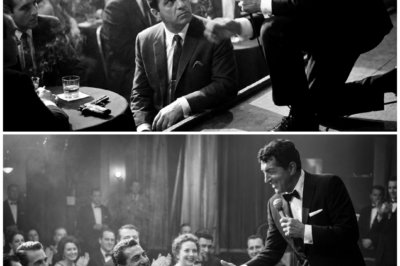
A Mafia Boss Threatened Dean Martin on Stage—Dean’s Reaction Was Pure Genius
A Mafia Boss Threatened Dean Martin on Stage—Dean’s Reaction Was Pure Genius Prologue: A Gun in the Spotlight Dean…

The Billionaire Had No Idea His Fiancée Was Poisoning His Son—Until the Maid Exposed Everything
The Billionaire Had No Idea His Fiancée Was Poisoning His Son—Until the Maid Exposed Everything Prologue: A Whisper That…

The Billionaire Catches Maid ‘Stealing’ Food… But When He Sees Who It’s For, He Breaks Down in Tears
The Billionaire Catches Maid ‘Stealing’ Food… But When He Sees Who It’s For, He Breaks Down in Tears Prologue:…

The Billionaire’s Fiancée Sets a Trap for the Maid — Until His Silent Daughter Exposed the Truth
The Billionaire’s Fiancée Sets a Trap for the Maid—Until His Silent Daughter Exposed the Truth Prologue: The Whisper That…

The Billionaire Went Undercover as a Gardener — Until the Maid Saved His Children from His Fiancée
Richard Whitmore’s hands trembled on the garden shears as he watched through the kitchen window. His new wife, Vanessa, stood…

Three Flight Attendants Vanished From a Vegas Hotel in 1996 — 28 Years Later a Hidden Wall Is Opened
.Every hotel, every casino, every neon-lit alley has a story, most of them ending in forgetfulness or denial. But some…
End of content
No more pages to load






