
How unreleased videos, fresh subpoenas and a new law have turned a long-buried scandal into an immediate political crisis
There are stories that smolder for years and then explode into flame all at once. The Jeffrey Epstein saga has lived in that slow-burn zone for half a decade — fragments of scandal, angry court filings, leaked names, and a thousand rumors. Now, in an extraordinary rush of legal moves, committee subpoenas and newly revealed tapes, those fragments are snapping together into a picture that could be uniquely perilous for Donald Trump and a network of powerful friends and allies.
This is not just another round of tabloid fury. In the last month the political and legal landscape shifted: Congress passed a law that pushes a large swath of Epstein-related government files toward public release; prosecutors and judges are arguing over whether grand-jury materials can be unsealed; and, most explosively, previously unseen video footage tied to Epstein — reportedly filmed by people inside his orbit and never made public — has surfaced as lawmakers threaten subpoenas. For a president whose defenders once treated Epstein outrage as a distraction, the terrain now looks markedly different. The lawyers are moving. The tapes exist. And, as one recent series of reporting makes plain, the footage could be damning — which helps explain why the story feels, to those close to it, like a ticking clock.
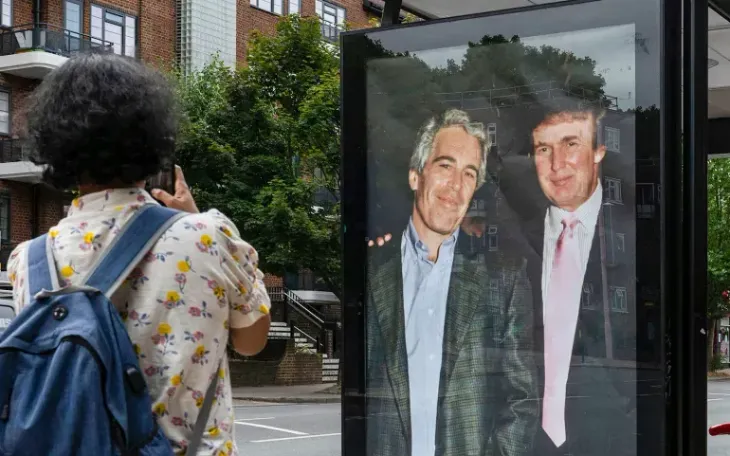
Why this rush matters: the legal scaffolding that just changed
To understand the intensity of the moment, start with a new legislative reality. Congress this year enacted what’s being called an “Epstein Files” transparency law, a statute designed to compel release of unclassified investigative material tied to Jeffrey Epstein and his associates by a set calendar. The Justice Department has already filed renewed motions urging judges to unseal grand-jury materials in light of that new law — even as defense lawyers and victims’ advocates ask the courts to proceed carefully to protect privacy and ongoing inquiries. The result is procedural drama: officials arguing in court about what must be revealed, when, and with what redactions. For anyone named or implicated in those records, the net is tightening.
At the same time, the House Oversight Committee has been methodically releasing tens of thousands of Justice Department pages that it obtained from prior subpoenas. Those documents are not all blockbuster revelations: initial committee reviews suggested only a small percentage contained brand-new, game-changing information. But the existence of the documents matters politically — and legally — because once materials are in public hands, legislative investigators can mine them, highlight inconsistencies, and use them as the basis for subpoenas and public pressure. That kind of process produces headlines and, importantly, gives prosecutors and civil claimants lines of inquiry they can’t ignore.
And then there are the tapes: Bannon, footage and the effort to bury a narrative
The most combustible element in this new confluence of forces involves unreleased video footage connected to Jeffrey Epstein. Reporting in recent months has revealed that political operatives — notably Steve Bannon among others — shot hours of material with Epstein that was never released publicly. That footage, described in some accounts as running into many hours, was reportedly intended at one point to form part of a public-relations effort to rehabilitate Epstein’s image or to counter critical narratives. Whether the creators’ motives were proof-of-concept, money, or something else, the existence of the raw tapes is consequential in two ways: first, tape archives can contain images and admissions that tie subjects to one another in ways ordinary documents do not; second, tapes are harder to mischaracterize than an email or an edited clip, so their release forces a direct public reckoning. News that significant unreleased Epstein footage exists — and could be in the possession of private individuals who may or may not share it with investigators — has set off urgent calls in Congress for access.
That is precisely why the House Oversight chair and ranking members have openly discussed subpoenas targeting people who filmed Epstein, who coordinated his public messaging, or who sat with him on camera. The public conversation has accelerated from hypotheticals — who knew what and when — to legal process: “produce the footage or explain why you cannot,” lawmakers say in effect. Those words are not merely rhetorical; they are the prelude to enforcement tools. If footage exists and it contains substantive evidence of wrongdoing or even compromising interactions, the legal consequences could follow.
A fired adviser, a sting video, and the spiral into lawsuits
The leak-and-lawsuit subplot adds another layer of immediacy. A former Justice Department lawyer whose recorded private remarks about the handling and redaction of Epstein-related files surfaced publicly has sued after being fired. That episode underscores something important: the war over the Epstein archive is not confined to grand-jury motions and committee subpoenas. It is playing out in personnel fights, sting operations, celebrity-driven releases and litigation. Every recorded conversation that crosses from private to public broadens the scope of what investigators and journalists can use to piece together networks and decisions. The political stakes are obvious: the footage and the files do not simply embarrass; they build narratives that can translate into congressional pressure, civil suits, and electoral pain.
Politics, optics and motive: why some in GOP are suddenly quiet
If this were purely a legal contest it would be consequential enough. But the politics changes the calculus. For years many on the right dismissed Epstein inquiries as conspiracy-friendly noise or partisan theater. Some pro-Trump figures insisted that the files were a hoax or that prosecutors were merely engaging in virtue-signaling. Now, with a law requiring release and tapes reportedly in private hands, the conversation has shifted from denial to damage control. Voices that once insisted the files would be harmless are suddenly talking about process, victim privacy, and the need for a “responsible release.” That rhetorical pivot reads as a hedging strategy — a way to prepare a defense if and when concrete documents or videos reveal compromising ties. The defense is a political strategy: delay, narrow the frame, emphasize redaction and privacy — in short, manage optics until the legal heat fades. But legislation and subpoenas make that harder.
The networks of proximity: what the documents and tapes might show
What could the still-to-be-released records and footage reveal? Investigators and journalists are looking for three types of information: evidence of criminal conduct (conversations or arrangements linked to trafficking crimes), evidence of efforts to cover up or obstruct (payments, favors, influence campaigns), and evidence of corrupt tacit alliances (financial ties, gift exchanges, or repeated private encounters that help explain preferential treatment). Documents already public contain emails, banking records, and travel notes that placed many public figures inside Epstein’s orbit; the question now is whether the tapes will provide moments of corroboration — a voice, a behavior, a comment that connects a public figure to a private action in a way an email cannot. If that happens, narratives move fast from plausible deniability into hard credibility problems.
How prosecutors, victims and civil claimants fit into this puzzle
Even before tapes are released, multiple actors are positioning themselves legally. Victims’ advocates and civil lawyers see the public release statute as a tool to pry open previously sealed material that could be useful evidence for civil suits. Federal prosecutors, meanwhile, face a decision loop: do they rush to move criminal cases forward using new documentary leads, or do they take a conservative approach to protect ongoing investigative equities and the safety of witnesses? The Department of Justice’s filings in recent days indicate it is trying to square those circles — arguing the law requires disclosure while proposing redactions to protect privacy. That balancing act will be litigated in public, in hearings and filings that themselves become fodder for political storytelling.
The role of private custodians: footage in dark corners
A crucial technicality: not all footage is government property. Some of the tapes were reportedly shot by private figures or media teams who may not have handed them to investigators in 2019. Private custody complicates enforcement: Congress can subpoena, but so can prosecutors — and private holders may resist, litigate, or selectively leak. That is one reason lawmakers are pushing subpoenas; it’s also why the specter of a private release — an edited trailer, a selective leak — frightens many in Washington. Curated releases can shape public opinion before courts reach a conclusion, and politics often moves faster than law.
The political calculus for the president: defend, deflect, or litigate?
For the president, the immediate choices are limited and painful. Defend vigorously and risk the appearance of obstruction; deflect to privacy and process and invite accusations of stonewalling; litigate and fight in court while headlines pile up. None are comforting. Why? Even if tapes do not show criminal acts, they may still show social intimacy, travel overlaps, or further examples of Epstein’s proximity to powerful figures — all of which feed political narratives of moral reckoning. Those narratives matter in an electorate already primed with suspicion about elite privilege and hidden influence. The optics alone — a grafted, decades-long social web revealed in black-and-white video — would be harmful.
What Congress can do — and likely will
Expect three immediate moves from Capitol Hill. First, aggressive document demands and subpoenas targeted at private custodians of footage and at former aides who coordinated Epstein-facing messaging. Lawmakers have made clear they are prepared to issue them. Second, hearings that combine public testimony with classified briefings; those hearings are designed to produce a record that can be used in litigation and in public persuasion. Finally, referrals: if congressional investigators find potential criminal conduct in the released materials, they can refer matters to the Justice Department or to state prosecutors — which would add another layer of legal jeopardy for anyone implicated. These tools do not guarantee prosecution, but they guarantee sustained scrutiny.
What the public should watch for next
A short list of red flags to watch in the coming weeks:
• Formal subpoenas served to private custodians of video or to high-profile aides and strategists.
• New DOJ filings seeking unsealing of grand-jury or investigative files under the new statute.
• Public testimony from people who once worked with Epstein or with those around him.
• The release — voluntary or compelled — of video clips that make specific, contemporaneous claims or show interactions now at the heart of civil suits.
• Litigation by private figures seeking to block release on privacy or national-security grounds.
If any of those boxes are checked, expect the story to move from the margins to the center of political coverage, and for legal teams to shift from posture to combat mode.
The human costs: victims, witnesses and reputations
One final caveat: these documents and tapes live alongside real victims whose lives were destroyed by trafficking networks. Legal battles over unsealing, redaction, and release are not only political theater; they carry human costs. Judges and legislators will have to weigh public interest against privacy and the safety of survivors who may still be alive and vulnerable. That moral dimension is part of why the legal debate is heated and why public officials must tread carefully even as politics pushes for maximum disclosure. The right to know and the duty to protect are both part of the same difficult equation.
We are in a moment when archival material — previously unremarkable emails, a private tape, a courtroom filing — can reshape public life. For the president and for numerous figures who exist at the intersection of fame, power and private vice, that reshaping is not hypothetical: it is happening now. The legal machinery is grinding, the cameras are circling, and the tapes that were meant to be quiet are suddenly not quiet at all.
If the footage and documents come into the light, the consequences will be legal, political and reputational — and they may be irreversible. For a political class that long treated Epstein as the story that would never land, the hard lesson is now visible: archives, once opened, have a momentum of their own. The question on everyone’s mind is simple and urgent: who will be caught on camera — and what will the recording show?
Load-bearing reporting and filings that informed this article: the Justice Department’s recent renewed motion to unseal grand-jury materials and the new statutory timeline for release; House Oversight Committee releases of tens of thousands of pages of DOJ documents; reporting on the existence of many hours of private video footage related to Jeffrey Epstein filmed by figures in his orbit; and reporting about recent personnel controversies and litigation involving a DOJ attorney whose recorded remarks went public.
If you want, I can: (A) tighten this into a 700-word cover story for a magazine, (B) produce a one-minute script that highlights the single most viral claim for video, or (C) create a chronological timeline of the public reporting and legal filings so far (with dates and links). Which do you want next?
News

A Mafia Boss Threatened Dean Martin on Stage—Dean’s Reaction Was Pure Genius
A Mafia Boss Threatened Dean Martin on Stage—Dean’s Reaction Was Pure Genius Prologue: A Gun in the Spotlight Dean…

The Billionaire Had No Idea His Fiancée Was Poisoning His Son—Until the Maid Exposed Everything
The Billionaire Had No Idea His Fiancée Was Poisoning His Son—Until the Maid Exposed Everything Prologue: A Whisper That…

The Billionaire Catches Maid ‘Stealing’ Food… But When He Sees Who It’s For, He Breaks Down in Tears
The Billionaire Catches Maid ‘Stealing’ Food… But When He Sees Who It’s For, He Breaks Down in Tears Prologue:…

The Billionaire’s Fiancée Sets a Trap for the Maid — Until His Silent Daughter Exposed the Truth
The Billionaire’s Fiancée Sets a Trap for the Maid—Until His Silent Daughter Exposed the Truth Prologue: The Whisper That…

The Billionaire Went Undercover as a Gardener — Until the Maid Saved His Children from His Fiancée
Richard Whitmore’s hands trembled on the garden shears as he watched through the kitchen window. His new wife, Vanessa, stood…

Three Flight Attendants Vanished From a Vegas Hotel in 1996 — 28 Years Later a Hidden Wall Is Opened
.Every hotel, every casino, every neon-lit alley has a story, most of them ending in forgetfulness or denial. But some…
End of content
No more pages to load






