
Jacob’s Well in the Texas Hill Country is the kind of place that looks like a postcard come to life. A perfect blue eye opens in the limestone, trees lean in for shade, and on clear days you can see straight down into the mouth of a vertical cave that seems to sip sunlight. But like many places where beauty and danger share the same coordinates, the well’s calm surface hides a complex, risky world beneath. For decades, cave divers chased its depths and narrow chambers, mapping tight passages and warning others away from the traps that have taken lives. When an underwater drone recently navigated spaces too treacherous for people, its footage didn’t reveal monsters or secret machinery. It showed something sobering: a system shaped by geology and pressure, littered with the evidence of human ambition, and unforgiving of small mistakes.
Below is a grounded account of what Jacob’s Well is, why it’s so dangerous, what has and hasn’t been found there, and how local officials, scientists, and divers have tried—sometimes against long odds—to balance public fascination with public safety.
The Spring You Can See—and the Cave You Can’t
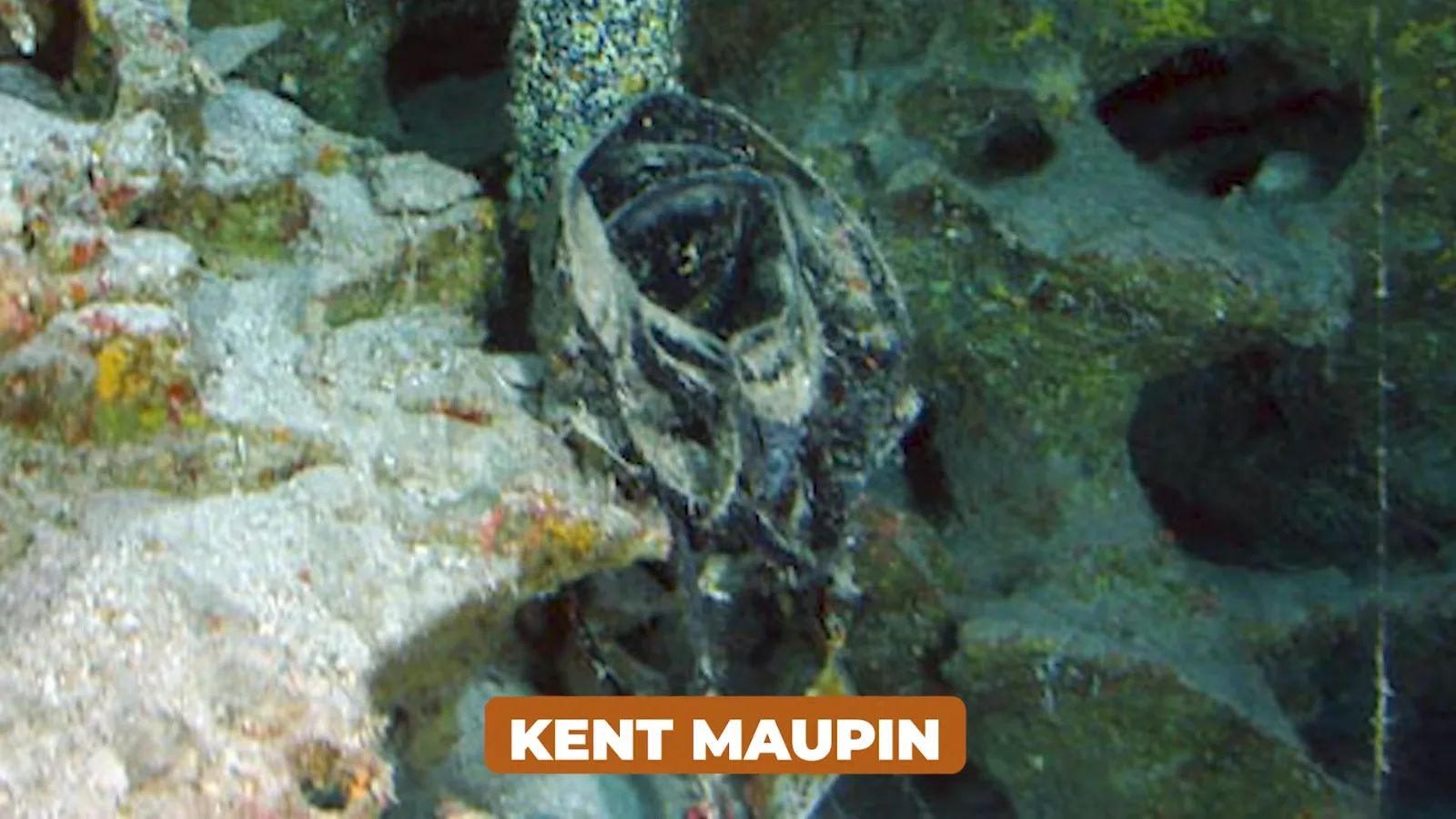
Jacob’s Well is a natural spring near Wimberley, Texas, where water from the Trinity Aquifer rises through a vertical shaft carved into Cretaceous limestone. At the surface, the opening is roughly a dozen feet across, but the well immediately drops, with ledges and rooms that form the upper levels of a cave system. The known passages extend for thousands of feet, pinching into tight restrictions, tilting down slopes, and branching into chambers that can look deceptively open until the silt lifts and visibility vanishes. In periods when the aquifer is high, the spring flows strongly upward; when groundwater levels fall, the visible boil can weaken or stop altogether.
That variability matters for risk. When the spring is flowing, divers descending against the upward current expend more energy and air and can be pushed into walls or restrictions. When the spring is still, silt and fine gravel can settle in a way that narrows passageways and makes slopes unstable. In both scenarios, the cave’s configuration—steep, tight, and lined with unconsolidated material—creates hazards that are unusual even for experienced cave divers.
Why Jacob’s Well Has a Deadly Reputation
Cave diving is inherently high risk and governed by strict protocols: gas management rules, redundant gear, continuous guideline, training specific to overhead environments, and conservative decision-making. Jacob’s Well adds three factors that turn mistakes into emergencies quickly:
– The upward current during high-flow periods: Fighting flow on the way in or out increases air consumption and physical strain, reducing margins for error.
– Tight, slanted restrictions: Passages that require removing cylinders or pushing gear through first demand skill and planning; any entanglement or equipment snag becomes time-critical.
– Loose gravel and silt: Unstable slopes can shift under fin kicks or minor contact, collapsing into restrictions and trapping divers, while suspended silt can reduce visibility to inches.
A notorious squeeze called the “Birth Canal,” around 70–75 feet down, exemplifies the problem. Depending on conditions, its effective width can shrink dramatically as gravel moves. Divers have reported digging by hand and pushing tanks ahead to get through—techniques that increase stress, stir silt, and set the stage for slides. Below the Birth Canal, deeper chambers entice with wider rooms but often funnel through additional constrictions to reach them. The result is a layout that punishes haste and rewards meticulous preparation, yet still offers no guarantees.
What Drones and Survey Teams Have Actually Found
Robotic platforms and survey efforts at Jacob’s Well have produced images and maps that confirm what experienced divers have long said: the cave is beautiful, complex, and fragile. The drone footage shows scalloped limestone, pockets of darker sediment, and tool marks from earlier exploration. It also shows abandoned equipment—dive lights, reels, and, in rare, tragic cases, evidence of past fatalities.
When human remains have been documented, they have corresponded to known missing divers, not to mysterious or unknown occupants. In one instance, geologists mapping the system encountered remains connected to a decades-old case, allowing authorities and families to close a painful chapter. These recoveries have underscored the site’s difficulty: even well-equipped teams can face hours of delicate work to move a few feet safely in a restriction without triggering a slide.
There are no credible records of “creatures” or engineered installations in the cave. What the cameras reveal most clearly is the geology: a limestone artery carrying the memory of Texas rainfall, shaped by pressure differences and time.
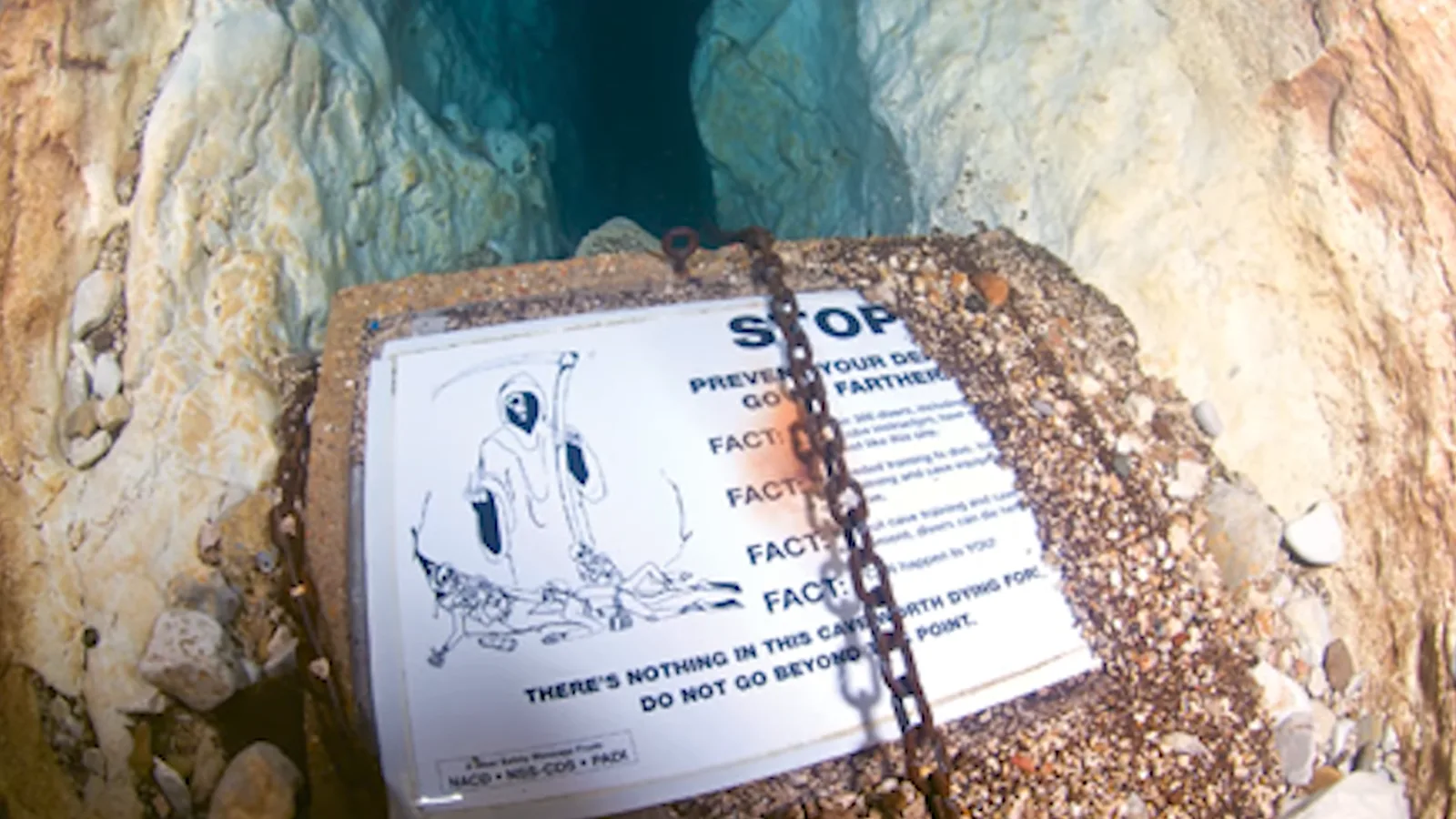
A Record Written in Cautionary Tales
The best-known incidents at Jacob’s Well are painful precisely because they are specific and human. In the late 1970s and early 1980s, divers pushed into the lower chambers with equipment and techniques that would be considered minimal by today’s standards—steel cylinders without modern redundancy, limited lighting, and sometimes without continuous guidelines laid carefully from the entrance. The combination of ambition and the cave’s shifting floor created situations that even highly experienced divers could not overcome once the silt rose and the gravel moved.
The “false chimney” hazard—an upward-leading passage ending abruptly—illustrates how quickly disorientation can become fatal. In low visibility, a diver swimming “up” toward apparent safety can find solid rock where they expected open water, burning air while searching for an exit. Others have become trapped when gravel slumped behind them in narrow squeezes, sealing pathways that had been marginally passable minutes before.
Near misses, like a freediver losing a fin and battling current to the surface, highlight why open-water skills don’t translate to overhead environments. In caves, there is no direct ascent, no daylight beacon, and often no useful reference for up or down once silt is in motion. Panic, even for a few seconds, uses precious air and turns simple problems into cascading failures.
What Officials Have Tried—and Why Enforcement Is Hard
Because Jacob’s Well sits at the intersection of a public natural area and a specialized technical environment, the policy response has had to cover both recreation and restriction. Over the years, local authorities have:
– Required permits for cave diving, limiting access to trained divers with appropriate certifications and equipment.
– Implemented seasonal closures to protect the aquifer and manage safety.
– Worked with volunteer divers to install guidelines and warning signage in upper chambers.
– Experimented with physical barriers to block access to the most dangerous zones below the Birth Canal.
Every approach faces trade-offs. Restricting access improves safety but invites workarounds by those determined to go deeper. Barriers that can’t be anchored in shifting gravel get dislodged; barriers that can be anchored may create their own entanglement risks if not designed correctly. Fee systems to fund oversight can reduce incidents but sometimes draw criticism from local groups. The common denominator in safer periods has been clear communication about risks, strong gatekeeping tied to training levels, and accepting that some parts of the cave should be treated as out-of-bounds regardless of skill.
Hydrology: The Breathing of the Well
To understand Jacob’s Well, you have to understand the Trinity Aquifer and how central Texas breathes water. In wet years, recharge from rainfall and stream infiltration raises groundwater levels, pressurizing the conduits that feed the spring. Historically, flow rates were robust enough to create a visible boil at the surface. In recent decades, drought cycles and increased pumping for municipal and private use have dropped aquifer levels at times, and the spring has ceased flowing on multiple occasions.
When the well stops flowing, the surface looks calm—sometimes more inviting for swimmers and casual snorkelers. Underground, though, still water allows fine material to settle into voids, narrowing pathways. It also means less advective transport of suspended silt, so once visibility is lost, it can take longer to clear. From a safety perspective, a non-flowing well is not a safer well; it’s a differently dangerous well.
Mapping in a Moving Medium
Cave maps are snapshots. In a system with mobile sediment, today’s “passable” can be tomorrow’s dead-end and next season’s open door again. Survey teams document passage dimensions, gradients, and hazards, often returning to resurvey after major storms or droughts. Drones contribute where human bodies don’t fit—or shouldn’t go—providing low-disturbance video of restrictions, sediment slopes, and ceiling features. But even the best maps include cautionary notes: highly unstable floor; zero-vis likely after first diver; do not proceed without continuous guideline and redundancy; no-go beyond this point due to collapse risk.
These annotations aren’t legal fine print; they are the collective memory of near misses and the respect owed to a cave that does not negotiate.
Rumor vs. Record
Places like Jacob’s Well naturally accumulate myths: sounds that seem to come from nowhere, currents that feel like a hand, glints of metal that invite a story. In practice, the “mystery” items recovered or sighted are almost always artifacts of human passage—old reels, mask frames, broken lights—or natural concretions that catch a beam just right. Reports of unexplained shapes tend to dissolve when visibility improves. Claims about unknown tunnels “pulling” people in ignore how pressure, buoyancy, and flow interact in tight spaces where a diver’s own movement stirs the medium they’re moving through.
What deserves the spotlight are the documented realities: at least nine recorded fatalities over the decades, with the likely true number higher when underreported incidents from earlier years are considered; repeated rescues and recoveries that put additional lives at risk; and a long record of hard-earned best practices that have saved people who might otherwise have joined the list.
Conservation and the Bigger Picture
Jacob’s Well is not just a dive site. It’s a hydrologic and ecological asset—part of a spring complex that once flowed with enough force to supply local creeks and sustain wildlife through long summers. As pumping increases and droughts bite, the well’s intermittent flow has become a visible index of groundwater health. Local conservation organizations and county officials have worked to acquire land around the spring, establish buffer zones, and limit activities that degrade water quality or increase erosion. Education programs now frame the spring not as a thrill ride but as a resource that requires care: pack out what you pack in, respect closures, and understand that sometimes the most responsible choice is to admire from the bank.
Why People Still Go
With all the warnings, why does Jacob’s Well continue to draw divers? Partly because it is beautiful. Partly because exploration is a human instinct. And partly because, for trained cave divers operating within strict limits, the upper chambers offer a legitimate training environment close to home. The key is that “within strict limits” clause. The divers with the lowest incident rates are the ones who:
– Refuse to exceed their training level.
– Plan gas using conservative rules and carry redundancy for everything critical.
– Lay and secure their own guideline from open water.
– Maintain body position and propulsion techniques that minimize silt disturbance.
– Turn the dive at the first sign of instability rather than “just another five feet.”
A drone can show you what’s around the next bend. It can’t make the decision to stop you from going there.
The Right Lessons from the Drone
Modern ROV footage from Jacob’s Well does something more valuable than feeding sensational headlines. It shows, in high resolution, the dust that a fin kick lifts, the way gravel sags across the lip of a restriction, and how quickly a clear room becomes a brown cloud once a slope shifts. It also documents how old gear becomes part of the cave’s story—a reel wedged in a crack, a cylinder fitting corroded into place—reminders that the cave remembers every choice made inside it.
Perhaps most importantly, the footage has helped calibrate public messaging. When people can see how narrow the Birth Canal really is, or how a “wide” room is reachable only through a pinch that barely accommodates a single cylinder, they grasp why the rules exist. The camera’s view becomes part of prevention.
A Plain-English Safety Primer
If you’re a recreational diver who has never trained for caves, Jacob’s Well is not for you beyond the daylight zone—and even then, only when swimming is permitted and conditions are favorable. If you are cave-trained and permitted:
– Treat the system as unstable by default. Plan for zero visibility and a silt fall on exit.
– Use continuous guideline from open water and protect it at every change in direction.
– Carry redundant lights, gas, and life support. Assume any one component can fail at the worst moment.
– Manage buoyancy and trim to avoid contact. Every touch can move material.
– Set a hard turn point before the first restriction. Do not push beyond previous footprints without explicit justification and extra margin.
If any part of that reads like overkill, that’s the cue to stay out.
What Makes Jacob’s Well Worth Protecting
Even stripped of myth, Jacob’s Well is extraordinary. It’s a window into the Hill Country’s geology and hydrology, a bellwether for the Trinity Aquifer, and a living classroom where Texans learn—sometimes the hard way—how finite water can be. The spring’s clear eye connects a ranching past to a suburban present. Its pools show schoolkids how limestone filters water and how drought changes a landscape. And its cave, whether visited via drone or not at all, reminds us that the most compelling stories underground are written by time and pressure, not by the sensational.
The Bottom Line
An underwater drone entered Jacob’s Well and sent back images that mattered—not because they shocked the world, but because they clarified what experienced divers and local officials have said for years. The cave is tight, unstable, and absolutely unforgiving. It contains artifacts and, in rare cases, remains tied to documented tragedies, not mysteries. It rewards caution and punishes impatience. And above it, the spring breathes with the aquifer, carrying the signature of rain, drought, and human use.
If there is a revelation here, it is this: the real power of Jacob’s Well isn’t in rumors of the unknown. It’s in the reality you can see—the water that rises when the land is healthy, the limestone that records ancient seas, the quiet blue circle that asks visitors to respect a place that looks simple and is anything but.
News

A Mafia Boss Threatened Dean Martin on Stage—Dean’s Reaction Was Pure Genius
A Mafia Boss Threatened Dean Martin on Stage—Dean’s Reaction Was Pure Genius Prologue: A Gun in the Spotlight Dean…

The Billionaire Had No Idea His Fiancée Was Poisoning His Son—Until the Maid Exposed Everything
The Billionaire Had No Idea His Fiancée Was Poisoning His Son—Until the Maid Exposed Everything Prologue: A Whisper That…

The Billionaire Catches Maid ‘Stealing’ Food… But When He Sees Who It’s For, He Breaks Down in Tears
The Billionaire Catches Maid ‘Stealing’ Food… But When He Sees Who It’s For, He Breaks Down in Tears Prologue:…

The Billionaire’s Fiancée Sets a Trap for the Maid — Until His Silent Daughter Exposed the Truth
The Billionaire’s Fiancée Sets a Trap for the Maid—Until His Silent Daughter Exposed the Truth Prologue: The Whisper That…

The Billionaire Went Undercover as a Gardener — Until the Maid Saved His Children from His Fiancée
Richard Whitmore’s hands trembled on the garden shears as he watched through the kitchen window. His new wife, Vanessa, stood…

Three Flight Attendants Vanished From a Vegas Hotel in 1996 — 28 Years Later a Hidden Wall Is Opened
.Every hotel, every casino, every neon-lit alley has a story, most of them ending in forgetfulness or denial. But some…
End of content
No more pages to load






