
The sinking of the RMS Titanic on April 15, 1912, has long stood as a defining maritime catastrophe. Much has been written about the collision with the iceberg, the lifeboats that left partially filled, and the class disparities carved into the ship’s very design. What’s recounted less often—in classrooms, in films, or in popular retellings—is the stark, unadorned reality of what happened to the victims after the ship slipped below the surface. The story is sobering. It involves freezing water that killed in minutes, recovery ships pressed into gruesome duty, burials at sea carried out with heavy hearts, and the long shadow of grief families carried when remains never returned home. The facts are difficult, but they matter. They ground the Titanic’s legacy not just in spectacle, but in human loss—and in the quiet work of those who tried to bring dignity to the dead.
The Cold Reality in the North Atlantic
When the Titanic foundered in the early hours of April 15, the air was clear and the stars were sharp. The water, however, hovered near freezing. Immersion in such temperatures robs the body of warmth at a rate most people underestimate. In those conditions, cold shock can disrupt breathing immediately; within minutes, hands become useless, muscles fail, and hypothermia sets in. Many who entered the water could not swim effectively or hold onto wreckage for long. Some wore layers that became waterlogged, dragging them down. Others clung to drifting deck chairs, collapsible rafts, or splintered debris until exhaustion overtook them. The sounds survivors later described—cries thinning into the darkness as strength faded—left permanent psychic scars.
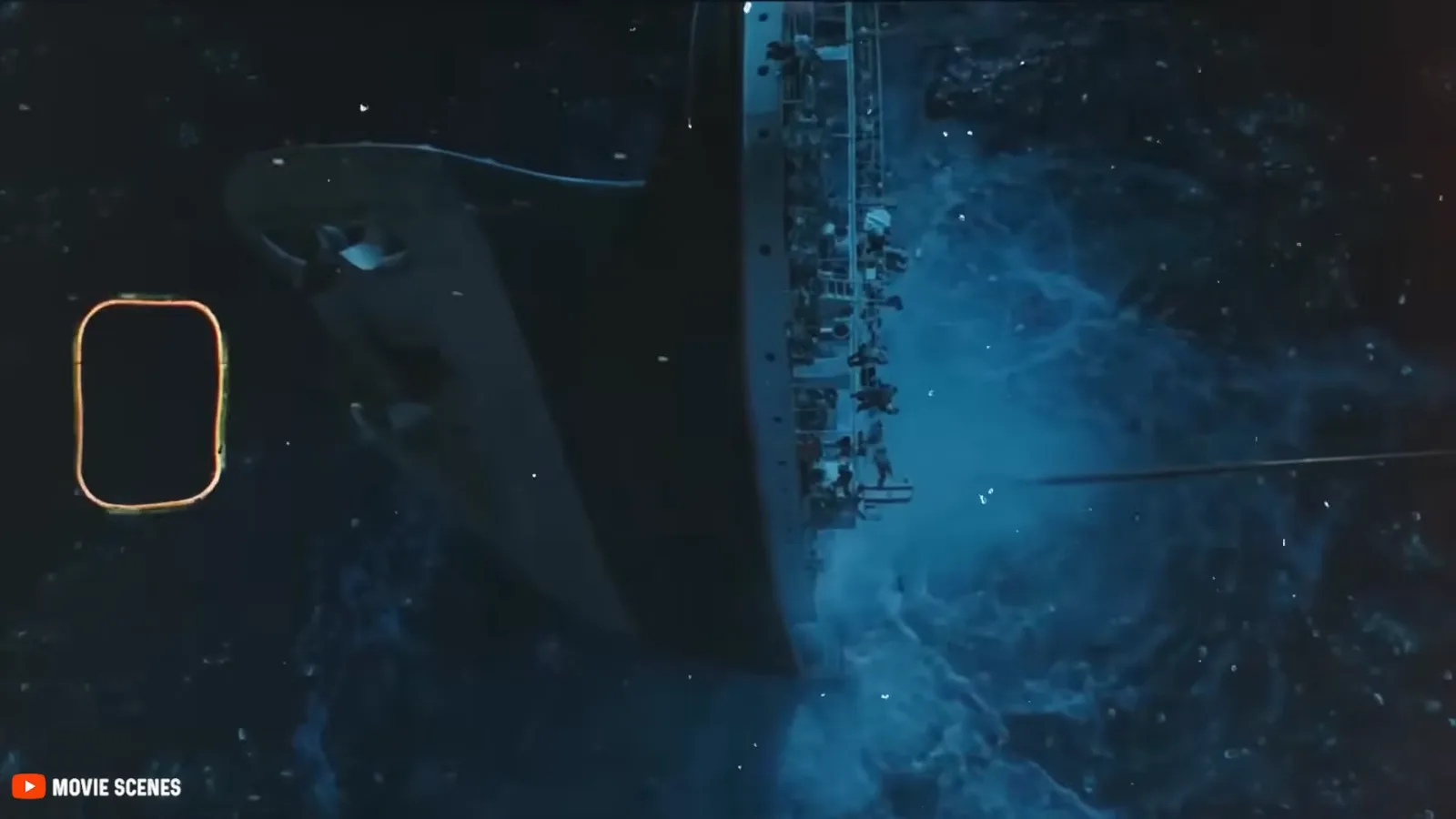
Lifeboats lingered nearby in some cases, but capacity had already been overtaken by the scale of the disaster. Several boats launched underfilled, a fact that would haunt inquiries and reforms. In the first hour after the ship sank, the ocean became a scene of chaos and then, very quickly, of silence. Some bodies sank outright, pulled below by clothing or by involuntary movements in cold water. Others floated, carried off by currents and wind. The site turned into a graveyard strewn with cork lifejackets, splintered planking, luggage, and the still forms of those who could not be saved.
For the survivors huddled in lifeboats, the experience did not end upon rescue by RMS Carpathia. Many had last glimpses they would spend a lifetime trying to reconcile: a familiar face disappearing from view, a hand slipping from the edge of a plank, a voice that went quiet. These details matter because they explain what came next. By sunrise, it was clear that a large number of victims would never be recovered. The sea had taken more than a ship. It had taken names, identities, and the chance for many families to have a grave to visit.
The First Recovery Efforts
Within days, recovery ships were dispatched to the area, primarily from Halifax, Nova Scotia, then a key cable and maritime hub. The best-known among them, the cable ship Mackay-Bennett, sailed equipped with embalming supplies, undertakers, and materials for coffins. Its mission was grim but clear: find bodies, identify them if possible, and return them to shore.
The crew found a vast debris field. Bodies were discovered alone or in small groups, some still lashed to wreckage or life preservers. The condition of the remains varied. The cold had slowed decomposition for many, but not uniformly. Clothing had stiffened; some bodies were frozen in positions of struggle. The work required both physical labor and emotional resilience. Each body had to be handled, examined, tagged, and documented. Whenever possible, personal effects—watches, jewelry, ticket stubs, monogrammed handkerchiefs—were logged and kept with the deceased to aid in identification.
The Mackay-Bennett recovered roughly 190 bodies. Other ships—Minia, Montmagny, and Algerine—followed, retrieving dozens more. In total, the recovery effort retrieved just over 300. This meant that the majority of those lost, more than a thousand souls, would remain at sea. The limits of early twentieth-century recovery work were stark: distances were vast, weather could turn, and refrigeration and embalming capacity on ships were finite. Difficult choices had to be made about which bodies could be preserved for transport.
Burial at Sea: A Practical, Painful Necessity
On recovery vessels, space was constrained. Embalming supplies and coffins were limited. Crews had to decide, case by case, who could be preserved and brought to shore. In general—and this point is both sensitive and historically important—bodies identified as first-class passengers were prioritized for coffins and embalming, reflecting the era’s class norms and the instructions given to crews. This practice has been criticized by historians, but it is part of the historical record.
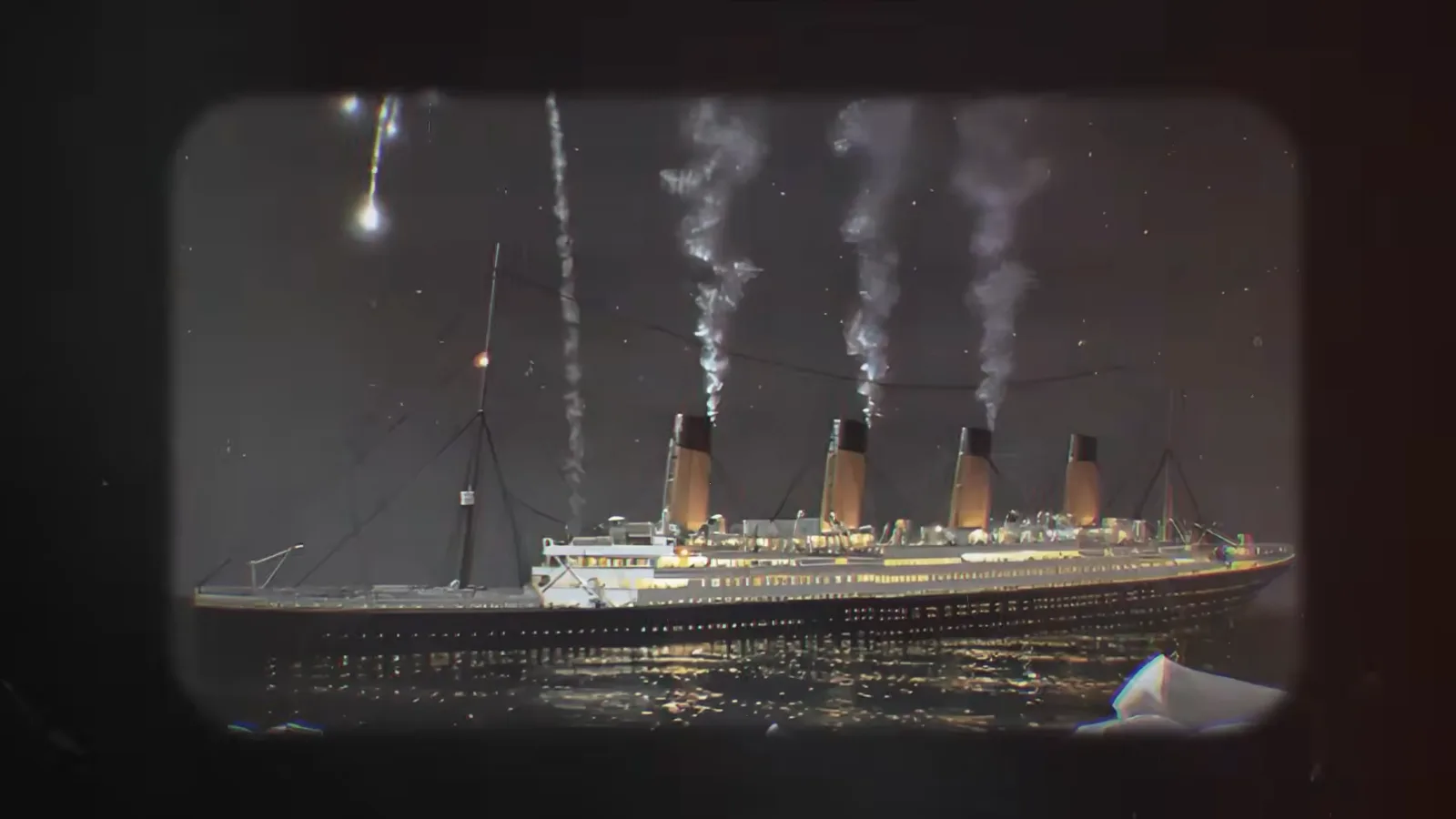
Those too decomposed to preserve, or whose identities could not be confirmed and for whom storage was impossible, were buried at sea. The ritual was spare and humane: bodies were sewn into canvas, weighted, and committed to the water with prayers or brief words. For the men performing these burials, the repetition left deep emotional marks. Day after day, line after line of shrouded bodies were lowered into the Atlantic, disappearing swiftly into the dark. The ocean that killed them became their grave.
Transport to Halifax and Identification on Shore
The bodies that could be transported were brought to Halifax, the nearest major port with the infrastructure to handle mass casualties. There, makeshift morgues were established. Photographers, undertakers, and officials created a careful record: photographs, measurements, descriptions of clothing and distinguishing features, and catalogues of items found on the deceased. Families came or sent inquiries. Some victims were identified quickly through documents or jewelry; others were matched by dental records or markings noted in correspondence. A significant number remained unknown.
Three Halifax cemeteries—Fairview Lawn, Mount Olivet, and Baron de Hirsch—became final resting places for over 150 Titanic victims. Fairview Lawn’s curved rows of markers, many bearing only dates and numbers at first, still testify to the scale of the tragedy. Over time, some unknowns were named as research and, later, forensic techniques advanced. But there are graves that will likely never be linked to a specific person.
The Contrast Between Sea and Land
The distinction between those buried at sea and those interred on land underscores the uneven paths of grief after the disaster. Some families received remains, held funerals, and had a site to visit. Others received telegrams and, in time, a death certificate without a body. For immigrant families who had sold belongings to fund passage, or for working-class families for whom travel to Halifax or New York was impossible, closure was hard-won or never fully realized. The catastrophe cut across class and nationality, but the aftermath reflected social realities of the time—who had means, who had connections, and who received posthumous attention.
What the Sea Kept
Most of the Titanic’s victims remained in the Atlantic. In the cold depths, decomposition proceeds differently than on land. The near-freezing temperatures at the surface slowed immediate breakdown; deeper, in the aphotic zones thousands of feet down, pressure, temperature, and scavenging organisms shape a different course of remains. Over weeks and months, many bodies sank or were carried off by currents and storms. Some likely settled within or near the debris field; others were dispersed across the North Atlantic. With each passing day in 1912, the likelihood of further recovery dwindled.
This is difficult to read, but it is the truth that underpins the story’s power. The Titanic’s dead were not just numbers on a ledger. They were parents, children, newlyweds, students, crew members, and migrants chasing opportunity. For most, the ocean itself became the only grave.
Individual Stories, Shared Loss
In considering the aftermath, individual stories give shape to the numbers. Isidor and Ida Straus, a couple known for their philanthropy and public service, reportedly declined separation in the final hours; his body was recovered, hers was not. Joseph Philippe Lemercier Laroche, a young engineer traveling with his pregnant wife and their daughters, saw his family to safety but did not survive; his death reminds us that the disaster touched people across races and nationalities. The “Unknown Child” buried in Halifax became a symbol of the youngest victims; decades later, he was identified as Sidney Leslie Goodwin, an infant who perished with his entire family. These names are not accessories to the Titanic’s legend; they are its center.
The Work of Memory and the Weight of Artifacts
In the years since 1912, artifacts recovered from the wreck site and from the ocean’s surface—shoes, clothing, dishes, personal effects—have been cataloged and conserved. Each object is a fragment of a life interrupted. A monogrammed case may confirm an identity; a child’s shoe may be all that is left to represent a family’s passage. When displayed in museums or studied by researchers, these items are not trophies. They are evidence. They teach us about daily life aboard the ship, about the impact of cold water on materials, and about the people themselves—sizes, styles, and initials that humanize a calamity that can otherwise feel abstract.
Modern Exploration and What It Revealed
For decades, the exact location of the Titanic’s final resting place eluded explorers. In 1985, the wreck was located roughly 12,500 feet below the surface. The discovery allowed high-resolution mapping of the site and its debris field. What it did not reveal were human remains. Given the time elapsed, the conditions at depth, and natural processes, this was expected. The images of the bow and stern sections, the fields of coal, the scattered crockery, and the collapsed interiors were sobering nonetheless. They reminded the world that the Titanic is not merely an engineering artifact; it is a mass grave. Responsible expeditions proceed with that understanding, balancing scientific study and conservation with respect for the dead.
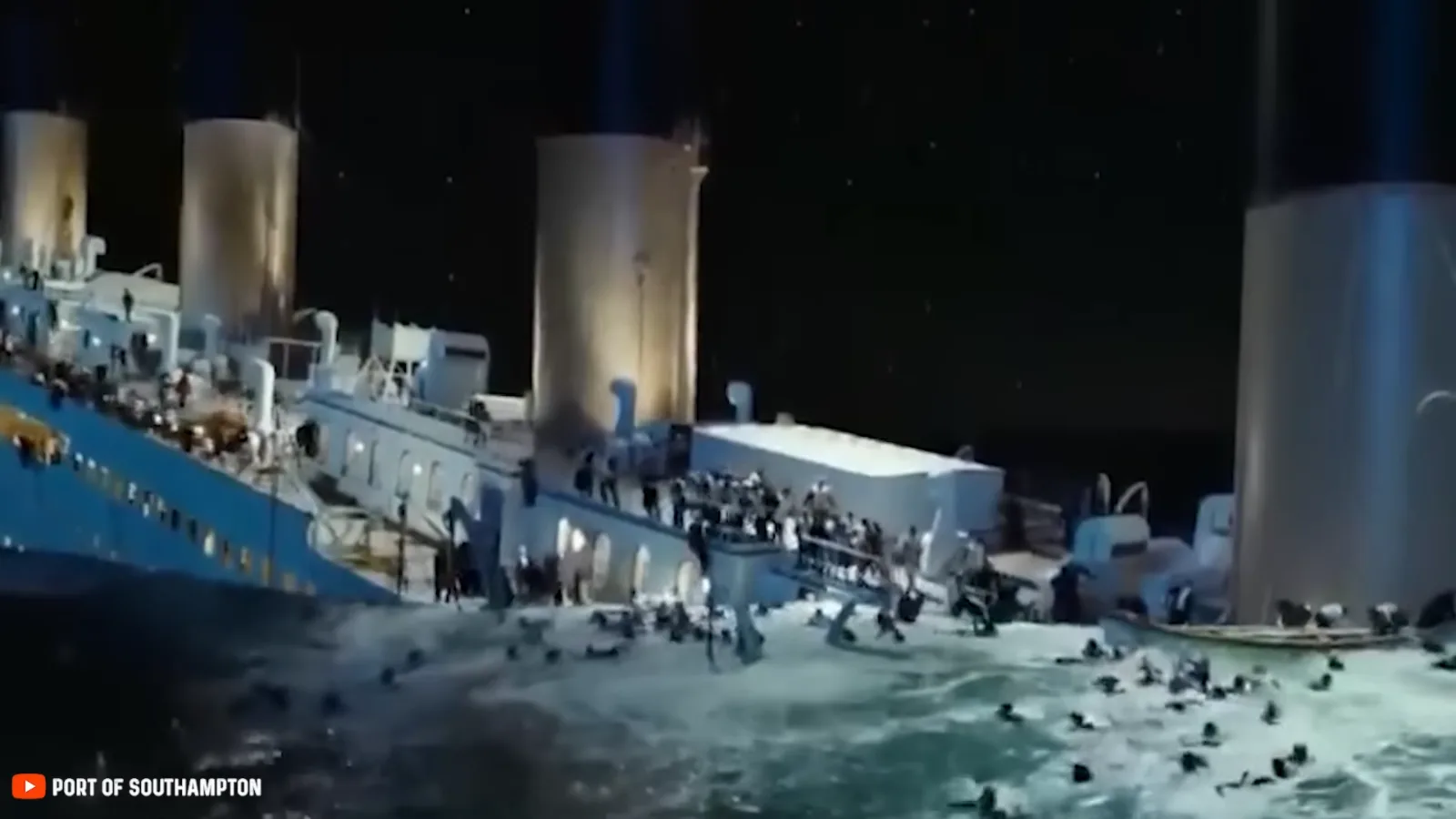
Ships returned to the wreck site in subsequent years for documentation and conservation. Some expeditions focused on non-intrusive survey work, while others recovered artifacts for conservation and public interpretation. Debates continue around the ethics of salvage, ownership, and the line between education and exploitation. What is not debated among serious researchers is the need for decency: the recognition that the wreck site deserves the same respectful treatment as any war grave or burial ground.
Systemic Change: The Legacy Beyond the Wreck
The Titanic’s aftermath was not only personal tragedy. It catalyzed systemic change. Inquiries in both the United States and the United Kingdom examined lifeboat capacity, wireless watch standards, iceberg patrols, and safety drills. The International Convention for the Safety of Life at Sea (SOLAS), first convened in 1914, arose from the recognition that maritime safety needed international coordination. Requirements for sufficient lifeboat space for all aboard, continuous radio watches, and other protocols date to this reckoning. These changes saved countless lives in subsequent decades.
Why the Aftermath Still Matters
Talking about bodies—about recovery and burials at sea, about unknown graves and artifacts—is uncomfortable. But it honors what really happened. It strips away any temptation to treat the Titanic as a story of doomed luxury alone. It was a migrant ship carrying families seeking work, children bound for new schools, and crew members whose livelihoods depended on seamanship and service. Remembering how the dead were treated, and how the living tried to do right by them under impossible circumstances, preserves an essential truth: dignity is possible even in disaster, but it is not automatic. It depends on choices—by officers, by rescue ships, by officials ashore, and by the public in how we tell the story.
In Halifax, rows of granite markers curve gently across the grass, many engraved later as identities were confirmed. Not far away, other markers remain for the unknown. At sea, there are no stones, only coordinates and the knowledge that beneath the surface lies a field of twisted steel and silt that once was a microcosm of the early twentieth century. The sea keeps its secrets, but it does not erase the obligations of memory.
A Clearer Picture of What Happened
– Immediately after the sinking, most victims succumbed to cold shock and hypothermia within minutes in water near freezing, with many sinking quickly and others floating among debris.
– Recovery operations began within days, led by Halifax-based vessels such as the Mackay-Bennett, which retrieved bodies, documented effects, and, when possible, embalmed remains for transport.
– Limited capacity forced difficult decisions. Many bodies were buried at sea, wrapped and weighted, in respectful but hurried rites performed repeatedly over long, exhausting days.
– In Halifax, careful identification procedures matched names to faces where possible, and cemeteries became the resting place for over 150 victims, while others were sent home to families for burial.
– More than a thousand remained lost, their final resting place the North Atlantic. Decades later, expeditions mapped the wreck but found no remains, consistent with environmental realities at depth.
– The disaster spurred lasting reforms in maritime safety, transforming tragedy into future safeguards.
Closing the Distance Between Then and Now
A century later, the Titanic continues to compel. Perhaps that is because its narrative is layered: engineering ambition, human error, class and migration, endurance and panic, luck and sacrifice. But beneath those layers, what holds the story together is the weight of absence—the people who never came home, and the work done by strangers to give them as much dignity as circumstances allowed. The facts of the aftermath are not sensational; they are solemn. They ask us to look directly at what mass casualty at sea entails and to remember that every artifact, every marker in Halifax, and every name on a list belonged to a person who had a life before April 1912.
To understand what happened to the bodies of the Titanic’s victims is to accept a harder, truer version of the story. It is less cinematic and more human. It acknowledges the men who stitched canvas shrouds in cold wind, the undertakers who cataloged wedding bands and lockets, and the families who waited for word that never came. It respects the sea’s finality without surrendering to myth. And it leaves us with a simple obligation: to remember carefully, to tell the story honestly, and to let the lost be more than a statistic.
News

A Mafia Boss Threatened Dean Martin on Stage—Dean’s Reaction Was Pure Genius
A Mafia Boss Threatened Dean Martin on Stage—Dean’s Reaction Was Pure Genius Prologue: A Gun in the Spotlight Dean…

The Billionaire Had No Idea His Fiancée Was Poisoning His Son—Until the Maid Exposed Everything
The Billionaire Had No Idea His Fiancée Was Poisoning His Son—Until the Maid Exposed Everything Prologue: A Whisper That…

The Billionaire Catches Maid ‘Stealing’ Food… But When He Sees Who It’s For, He Breaks Down in Tears
The Billionaire Catches Maid ‘Stealing’ Food… But When He Sees Who It’s For, He Breaks Down in Tears Prologue:…

The Billionaire’s Fiancée Sets a Trap for the Maid — Until His Silent Daughter Exposed the Truth
The Billionaire’s Fiancée Sets a Trap for the Maid—Until His Silent Daughter Exposed the Truth Prologue: The Whisper That…

The Billionaire Went Undercover as a Gardener — Until the Maid Saved His Children from His Fiancée
Richard Whitmore’s hands trembled on the garden shears as he watched through the kitchen window. His new wife, Vanessa, stood…

Three Flight Attendants Vanished From a Vegas Hotel in 1996 — 28 Years Later a Hidden Wall Is Opened
.Every hotel, every casino, every neon-lit alley has a story, most of them ending in forgetfulness or denial. But some…
End of content
No more pages to load






