
🌪️ From the Battlefield to the Backyard: The Heartbreaking Journey of Sergeant Jake Reilly as He Struggles to Find Himself After War!
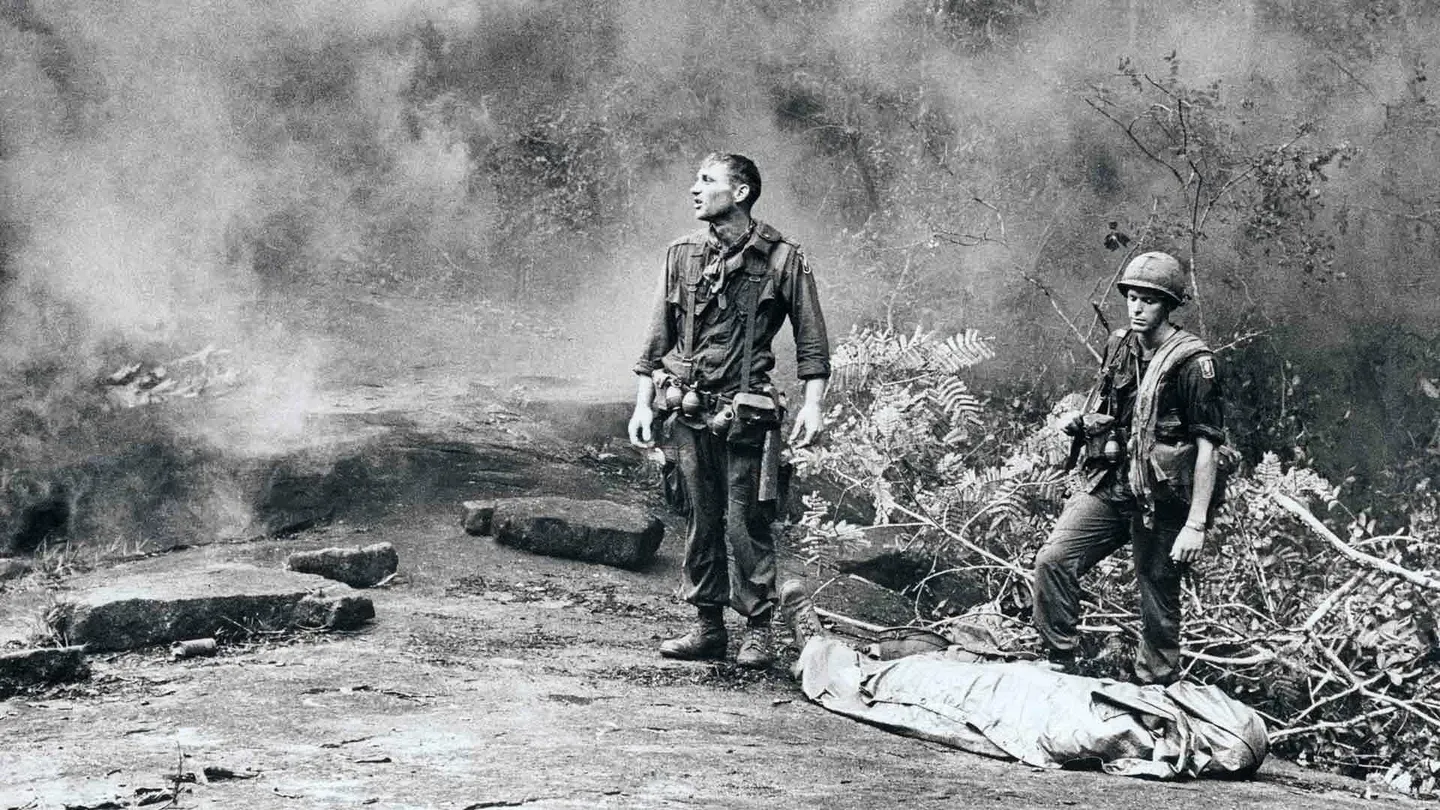
The first thing that hit Sergeant Jake Reilly wasn’t the smell of pine and damp earth, or the soft, humid kiss of Ohio air. It was the silence.
It wasn’t true silence, of course. There was the distant hum of the C-17’s engines winding down on the tarmac at Wright-Patterson, the metallic clack of weapons being cleared one last time, the murmur of 150 soldiers shifting in their seats, ready to bolt. But to Jake, it was a vacuum.
For thirteen months, “quiet” had been a predator. Quiet was the breath held before the firefight. Quiet was the endless, agonizing pause between a planted foot and the click that never came… or the one that did. Quiet was the high-desert wind whistling over the sandbags at COP-Kilo, a sound so constant it had become a part of his blood, a high-pitched whine he could still hear in the pressurized cabin.
Now, this new quiet—this civilian quiet—was deafening. It was a thick, heavy blanket smothering him.
“Alright, First Platoon, listen up!” Lieutenant Graves, looking about fifteen years old and impossibly clean-shaven, stood at the front of the cabin. “Bags, then formation in the hangar. Your families are waiting. Be professional. Be proud. You earned this.”
Jake didn’t feel proud. He felt hollowed out, scraped clean. He felt like a walking ghost. He moved on autopilot, his body executing the muscle memory of a hundred drills. Unbuckle. Stand. Grab rifle. Grab duffel. Check the man in front. Check the man behind.
The man behind him was gone.
Jake flinched, his hand instinctively dropping to the handle of the pistol that wasn’t on his hip. Of course. The man behind him was always Corporal Manny Diaz. For thirteen months, Manny had been his shadow, his-two, his comic relief. Manny, who could quote The Princess Bride from start to finish. Manny, who was saving his combat pay to buy a cherry-red Ford F-150.
Manny, who was now just a name stenciled on a memorial tag back in Kandahar, and a screaming, fire-filled memory that lived in the part of Jake’s brain that never slept.
Jake snapped his eyes forward. Don’t. Not here. Not now.
They marched into the cavernous hangar. The air was thick with a different kind of tension. It smelled of popcorn, perfume, and baby powder. A massive “WELCOME HOME, 101ST!” banner hung crookedly.
And then, the sound hit him.
Not the roar of a V-BIED. Not the thump-thump-thump of a Black Hawk coming in hot.
It was applause. Cheers. Crying.
The formation broke. A dam of camouflage and humanity burst, and soldiers were swallowed by a tide of loved ones. Men—boys, really—who had held ground against insurgents with grim resolve were suddenly weeping in the arms of their mothers.
Jake stood for a moment, an island in the stream. His eyes scanned the crowd, frantic, his heart a cold knot. He was terrified. What if they hadn’t come? What if they had, and he was so broken they wouldn’t recognize him?
“Daddy?”
The voice was small. Unsure.
He turned. And there she was. Sarah. His Sarah. She looked… the same. Exactly the same as the pixelated image he’d stared at on his phone every night, but in three vibrant dimensions that stole his breath. Her brown hair was longer. There were tired lines around her eyes that he didn’t remember.
And hiding behind her leg, clutching a fistful of her jeans, was a small boy with Jake’s own dark, curly hair.
Leo.
When Jake had left, Leo was barely three. He was a creature of babble and soft, doughy hugs. This… this was a person. He was tall. He was thin. He was staring at Jake with a terrifying, analytical curiosity.
Sarah moved first. She closed the distance in three steps and collided with him. The impact was jarring. He wrapped his arms around her, burying his face in her hair. She smelled of apples and shampoo. She smelled clean. She smelled like home.
“You’re here,” she whispered, her voice cracking. “You’re real. You’re home, Jake.”
He couldn’t speak. He just held on, his knuckles white on the fabric of her blouse. He was shaking. He, who had held a dying Manny in his arms and hadn’t shed a tear, was vibrating like a tuning fork.
He felt a small, hesitant pat on his thigh. He opened his eyes.
Leo was looking up at him, his face a mask of confusion. “Mommy, is that the man from the computer?”
Sarah let out a sound that was half-laugh, half-sob. She pulled back, wiping her eyes. “Yes, baby. This is your Daddy. He’s home.”
Jake knelt. It was the hardest movement he’d ever made. His knees cracked. He was still in his armor—no, he wasn’t. He was just in his uniform. But it felt like he was wearing a hundred pounds of ceramic plate.
“Hey, Leo,” he rasped. His voice sounded alien. Too rough.
Leo just stared. Then, very seriously, he reached out and touched the “REILLY” patch on Jake’s chest. “You’re dirty,” he observed.
The drive home was a watercolor painting of a life Jake used to know, smeared by the rain on the windshield. Maple Creek, Ohio. The “All-American Town.” It was all so… green. Afghanistan had been fifty shades of brown: dust, dirt, rock, sand. This green was violent. It was an assault on the senses. The trees were too lush, the lawns too perfect.
Sarah drove, one hand on the wheel, the other gripping his. She kept looking over at him, her eyes drinking him in, as if he might fade. She chattered, filling the silence he was creating.
“…and Mrs. Henderson finally sold her house, the one with the god-awful blue shutters. And you won’t believe it, they put a smoothie shop where the old hardware store was. A smoothie shop, Jake! Can you imagine?”
He’d been imagining IEDs hidden in potholes and snipers in the windows of the local high school.
“A smoothie shop,” he repeated. It sounded like a word from a different language.
“And Leo, oh, he’s so smart. He can almost read. Can’t you, baby?”
From the back seat, Leo said nothing. He was busy running a small, red toy car along the window.
Jake turned to look at him. “What’s that you got there, bud?”
“It’s a truck,” Leo said, not looking up.
A cold fist squeezed Jake’s heart. “What kind?”
“A red one.”
Jake faced forward, breathing carefully through his nose. It’s just a truck, Sarge. Get a grip.
The house was the same. White siding, black shutters. The oak tree in the front yard was bigger. Someone—Sarah, probably—had planted new hydrangeas.
Inside, it was a museum of his former life. His boots weren’t by the door. His favorite mug wasn’t in the sink. His recliner was covered in a neat pile of children’s books. The house hadn’t waited for him. It had moved on, reorganized itself around the black hole of his absence.
“It’s… great,” he said, dropping his duffel bags by the stairs. The sound was too loud.
“Are you hungry?” Sarah asked, bustling. “I can make… anything. Lasagna? Sandwiches? I bought those terrible chili-dogs you like.” She was trying so hard. Her brightness was painful.
“I’m just tired, Sarah. I think I need a shower.”
“Of course. Of course. Go. I’ll… I’ll get Leo a snack.”
The bathroom was his first true sanctuary. He locked the door, turned on the shower, and just stood on the mat, fully clothed. The small, white-tiled room was a box. It was defensible. One entrance. He could breathe.
He finally shed his uniform, the grit and sweat of 48 hours of travel on it. He stepped into the scalding water and scrubbed his skin until it was raw, trying to wash off the smell of jet fuel and sand and… and copper. He scrubbed until the soap was gone, but the smell was still there. It was in his head.
The first 24 hours were a minefield.
He slept for three hours, a dead, dreamless void, and woke up at 02:47, his heart pounding, convinced the house was under attack. The “threat” was the refrigerator compressor kicking on. He lay in the dark, next to the warm, sleeping body of his wife, and felt a loneliness so profound it ached in his bones. The bed was too soft. The silence was too loud.
He got up and went downstairs, checking the locks on the doors and windows. Twice. He sat in the recliner in the dark, watching the shadows, until the sun came up.
The next day, Sarah suggested a trip to the grocery store. “Just to get out,” she said. “Just to feel normal.”
“Normal” was a disaster.
The supermarket was a cathedral of sensory overload. The fluorescent lights were too bright. The music—some tinny pop song—was too loud. The choices. He stood in the cereal aisle, a simple request from Sarah, and just… froze.
Fruity-O’s. Honey-Bits. Choco-Blasters. Sugar-Bombs. An entire wall, twenty feet long and eight feet high, of cereal. He thought of the single, flavorless MRE oatmeal he’d eaten every morning for 400 days. He thought of Afghan kids fighting over a single, foil-wrapped protein bar.
“Sir? Can I help you?”
A kid in a red vest was looking at him, concerned.
Jake looked down at his hands. They were shaking. He was clenching his fists so hard his nails were digging into his palms.
“I… no. I’m fine.” He turned and walked out of the store, leaving the cart, leaving Sarah at the deli counter. He sat in the car, his head on the steering wheel, just breathing. In through the nose, out through the mouth. Like they taught you.
When Sarah came out, she didn’t say anything. She just got in, put the groceries in the back, and started the car. The silence in the car was different. It was brittle.
“They had too many kinds,” he said finally, as they pulled into their driveway.
Sarah looked at him, her eyes full of a pained understanding he couldn’t process. “I know,” she said softly. “It’s okay.”
But it wasn’t okay.
The breaking point came in the backyard.
It was late afternoon. Sarah was trying to get a head start on dinner. Jake was “on duty” with Leo. He was trying. God, he was trying. He was throwing a baseball against the garage wall, the rhythmic thud-catch, thud-catch a poor substitute for the clack-clack of a bolt sliding home.
Leo was sitting in the sandbox, meticulously burying his red truck.
“You like trucks, huh?” Jake called over, trying to sound casual. “Like that red one?”
“It’s not a truck,” Leo said, his voice muffled. “It’s a fire truck.”
“Ah. Right. Big difference.”
“It has a ladder,” Leo said, as if this should be obvious.
Jake smiled, a real, small smile. “Yeah. It does.” He tossed the ball. Thud-catch.
The mail truck backfired as it turned the corner at the end of the street.
The sound—a sharp, flat POP—was wrong. It was too close. Too sudden.
Jake didn’t think. He didn’t see. He reacted.
His brain flashed white-hot. CONTACT! The world compressed. The green backyard dissolved into a dusty, sun-bleached alley. The smell of grilled chicken from a neighbor’s barbecue became the smell of burning diesel and cordite.
“MANNY! GET DOWN!” he roared, his voice breaking.
He dove. Not for cover, but for Leo. He grabbed the boy, pulling him from the sandbox in a spray of sand, and hooked him under his arm, his body twisting to cover the child’s as he slammed into the grass. He crab-crawled, dragging Leo, toward the “cover” of the back porch.
“STAY DOWN! STAY DOWN! WHERE IS IT? WHERE’S THE TRIGGER?”
He was screaming. He was looking for the sniper, for the wire, for the man in the window.
He only stopped when Leo started screaming. It wasn’t a child’s cry. It was a sound of pure, animal terror.
“NO! NO! LET ME GO! MOMMY!”
The screen door slammed open. “Jake! WHAT THE HELL ARE YOU DOING?!”
Jake looked up. Sarah was standing on the porch, a wooden spoon in her hand, her face pale with shock.
He looked down. He was on his hands and knees in his own backyard. The grass was green. The smell was just… charcoal. He was crushing his son.
He let go of Leo as if the boy were on fire. Leo scrambled away, sobbing, and ran to his mother, burying his face in her legs.
“You… you hurt me…” Leo cried.
Jake pushed himself into a sitting position. The world was swimming. He was covered in sand. “Jake?” Sarah’s voice was a whisper now. All the anger was gone, replaced by a terrible, bottomless fear.
“I… I thought…” he stammered, looking at his hands. “The… the truck. It backfired.”
“It’s the mailman, Jake. It’s just… it’s Gary. He backfires every Tuesday.”
“It sounded…”
“I know,” she said. But she didn’t. She couldn’t.
She stood there, one hand protecting her terrified son, the other holding a weapon—a spoon—against him. Her husband. The monster in the backyard.
Jake looked at the scene. The wife he loved, shielding his son from him.
He had survived thirteen months of war. He had made it home. And he had just become the enemy.
The quiet that followed was the worst one yet. It was the quiet of a pulled grenade pin.
He put his head in his hands. And for the first time since Manny died, Sergeant Jake Reilly began to cry.
They didn’t talk about it. Not that night. Sarah cleaned Leo up. She gave him ice cream. She put on a cartoon. She put him to bed, reading him an extra story.
Jake sat at the kitchen table, in the same spot, for three hours. He didn’t move. He just stared at the wood grain, tracing the patterns, trying to remember who he was before.
He heard her footsteps on the stairs. She didn’t turn on the main light, just the small one above the sink. She made two cups of tea, the way she always had. She put one in front of him.
She sat down opposite him. She didn’t touch him.
“He’s asleep,” she said.
Jake nodded.
“He’s scared,” she said.
He nodded again. His throat was a knot of shame. “Sarah… I…”
“Don’t,” she said, holding up a hand. “Don’t you dare say you’re sorry. You have nothing to apologize for.”
“I scared him. I scared you. I… I’m not… I’m not right, Sarah.”
“No,” she agreed. “You’re not. You’re not the man who left. And I’m not the woman you left behind.” She took a sip of her tea. “You left a husband. You came back a soldier. I’m just… I’m trying to find my husband again. But I think he’s as lost as you are.”
He looked up at her, really looked at her, for the first time. The tired lines around her eyes. The strength in her jaw. She hadn’t just been waiting. She’d been fighting, too. Fighting to keep a home. Fighting to raise a son alone. Fighting to keep from falling apart every time the phone rang at an odd hour.
“Manny’s dead,” he said. The words came out coated in dust.
“I know, honey. I’m… I’m so sorry.”
“No,” he said, shaking his head. “You don’t. He… he wanted a red truck. A Ford. F-150. He had a picture of it. We were… we were clearing a compound. I was on point. I… I stepped over it. I stepped right over it.”
He was looking through her, back to that dusty alley. “Manny was my two. He was right behind me. Always. He didn’t. He didn’t step over it.”
“Oh, Jake…”
“I should be dead. Not him. He was a kid. He… he was… He’s supposed to be here. He’s supposed to get his truck.”
He was crying again, but silently this time, hot tears carving clean paths through the grime on his face.
Sarah finally moved. She reached across the table and put her hand over his. Her skin was warm. Solid. Real.
“You’re here, Jake,” she whispered. “You are here. And I am so, so angry at him for not being here. And I am so, so grateful that you are.”
“I don’t know how to be here,” he choked out. “I don’t know how to turn it off. The… the noise. In my head. And the… the quiet. It’s too quiet. I keep waiting for something to happen.”
“Something is happening,” she said, her grip tightening on his hand. “You’re home. This is happening. We’re happening. It’s not… it’s not an IED. It’s just… it’s just a smoothie shop.”
He looked at her, and a small, broken sound escaped his chest. It might have been a laugh.
“A smoothie shop,” he repeated.
“And it’s okay if you’re not okay. It’s okay to be broken. We have time. We have… we have all the time he didn’t get.” She squeezed his hand. “But Jake. You can’t… you can’t be a ghost. You can’t stand in the hangar forever. You have to come home. Even if it’s… even if it’s just one inch at a time.”
He looked at her hand on his. He turned his own, lacing his fingers with hers. His, calloused and scarred. Hers, soft and strong.
“One inch,” he said.
“One inch,” she confirmed. “Tomorrow, maybe we’ll try for two.”
He sat there, in the quiet of his kitchen, in the middle of his green, peaceful, terrifying town. He was a thousand miles from being okay. He was a universe away from the man he’d been.
But he held his wife’s hand. He listened to the sound of the refrigerator compressor kicking on, and this time, he knew what it was. He took a breath.
It was a start.
News
🔍✨ Unlocking the Secrets of the Herculaneum Scrolls: How AI Decoded Ancient Texts Buried for 2,000 Years—And What It Means for History!
🔍✨ Unlocking the Secrets of the Herculaneum Scrolls: How AI Decoded Ancient Texts Buried for 2,000 Years—And What It Means…

🚨 Is Earth in Danger? NASA & Harvard Reveal 4,000 New Meteors Escorting 3I/ATLAS—The Truth Behind This Cosmic Threat! 🌍
🚨 Is Earth in Danger? NASA & Harvard Reveal 4,000 New Meteors Escorting 3I/ATLAS—The Truth Behind This Cosmic Threat! 🌍 On June…

🎬 Ron Howard SHOCKS Hollywood by Revealing the Dark Secrets of Its Most Notorious Stars—You Won’t Believe Who Made the List! 😱
🎬 Ron Howard SHOCKS Hollywood by Revealing the Dark Secrets of Its Most Notorious Stars—You Won’t Believe Who Made the…

😱 The Shocking Truth Behind Audie Murphy’s Mysterious Death—Was It Really an Accident or Something More Sinister? 🔍
😱 The Shocking Truth Behind Audie Murphy’s Mysterious Death—Was It Really an Accident or Something More Sinister? 🔍 The tale…

💔 Tom Cruise’s Daughter Suri Null FINALLY SPEAKS OUT—The SHOCKING Truth Behind Their Distance Will Leave You Speechless! 😱
💔 Tom Cruise’s Daughter Suri Null FINALLY SPEAKS OUT—The SHOCKING Truth Behind Their Distance Will Leave You Speechless! 😱 The…

🎭 Russell Crowe SPILLS the TRUTH About Tom Cruise—Fans Are SHOCKED by Their Complicated History! 😲
🎭 Russell Crowe SPILLS the TRUTH About Tom Cruise—Fans Are SHOCKED by Their Complicated History! 😲 Russell Crowe and Tom…
End of content
No more pages to load






