The Kalahari UFO Crash: What South Africa Tried to Bury and Why This Shocking Incident Remains a Mystery—Prepare to Be Astounded! 👽🌌
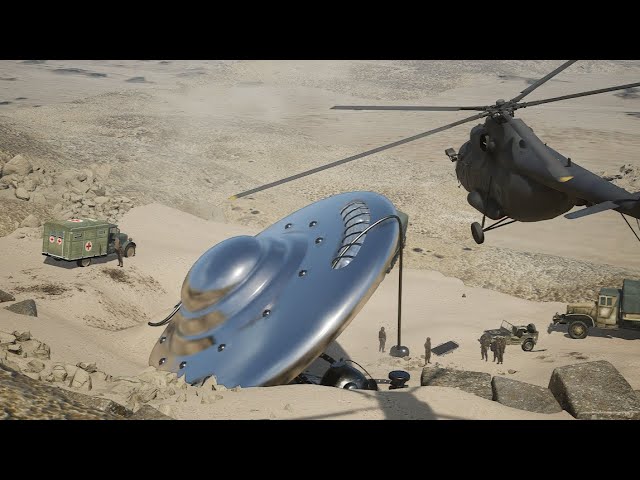
The Kalahari UFO crash is not just another footnote in the annals of unexplained phenomena; it is a narrative woven with intrigue, secrecy, and the relentless pursuit of truth.
The story begins on May 7, 1989, when radar operators in southern Africa recorded an unusual return—an anomaly that would set off a chain of events leading to a military response.
As aircraft were scrambled to investigate the contact, a strange sound echoed across the desert, hinting at something far more significant than mere radar interference.
At the heart of this unfolding drama is James van Greunen, a pivotal figure who emerged with a packet of documents that would ignite a firestorm of speculation and investigation.
These pages, which he passed to British investigator Tony Dodd, contained tantalizing details: times, coordinates, unit names, medical information, and logs of a recovery team moving into the Kalahari Desert.
The contents of the packet suggested that Dassault Mirage fighters of the South African Air Force had intercepted the unidentified object, lending an air of credibility to the claims.
However, as investigators pored over the documents, a troubling picture began to emerge.
While the packet presented itself as a legitimate military report, inconsistencies quickly became apparent.
The forms and letterheads did not align with known military templates from the era, and critical details typically included in official logs—such as fuel loads, weapon types, and crew names—were conspicuously absent or misplaced.
This raised alarm bells among forensic readers, who noted repeated phrasing and typographic errors throughout the pages, suggesting that much of the material may have been produced by a single hand rather than multiple clerks.
The narrative surrounding the Kalahari event only grew more complex as journalists attempted to trace the origins of the packet and locate the individuals named within it.
Many former personnel denied any knowledge of the recovery, while others remained unresponsive or could not be located.
The lack of independent testimony and corroborating evidence left the packet as the primary source for the sensational claims it contained.

Despite its compelling details, the absence of flight logs, base registers, and medical records tied to named personnel cast a long shadow over the document’s legitimacy.
Yet, the allure of the Kalahari crash persisted.
As the story spread through specialist magazines, radio programs, and South African newspapers, the narrative began to take on a life of its own.
Each reprint introduced minor discrepancies—dates shifted, coordinates altered—leading to a proliferation of versions that grew increasingly detached from their original source.
The combination of military terminology and striking claims made the packet feel like an insider leak, capturing the imagination of those who yearned for the truth behind the veil of secrecy.
But what if the truth did not end with the missing files? What if there were individuals determined to unveil what lay beneath the Kalahari sands, regardless of the risks? The motivations behind the dissemination of the Kalahari story are multifaceted.
On one hand, the South African government had a vested interest in maintaining secrecy.
In 1989, the country faced internal unrest and international scrutiny, making it imperative to control the narrative surrounding any incidents that could expose vulnerabilities or provoke public concern.
A mysterious crash involving unidentified material could easily become a source of panic, leading officials to adopt a policy of silence.
Conversely, the motives of those who pushed the Kalahari narrative into the public domain cannot be overlooked.
The allure of fame, financial gain, and the thrill of being at the center of a sensational story can drive individuals to create or embellish narratives.
The Kalahari packet, with its tantalizing details and military anchors, provided fertile ground for speculation and intrigue.
Those who shared the documents could garner media attention, speaking engagements, and a dedicated following among enthusiasts eager to explore the unknown.
As the Kalahari story unfolded, the question of authenticity loomed large.

Investigators scrutinized the pages for signs of fabrication, noting that the medical entries were alarmingly brief and lacked the detail expected from legitimate records.
The absence of comprehensive clinical information raised doubts about the veracity of claims regarding recovered living beings.
Radiation readings, when listed, were vague and lacked the necessary context to be verified, further complicating the narrative.
The narrow chain of custody from van Greunen to Dodd and beyond left the Kalahari packet vulnerable to scrutiny.
Unlike documents that emerge from multiple independent sources, the Kalahari pages relied heavily on a singular route of transmission.
This lack of corroborating evidence diminished the weight of the claims, leaving researchers and journalists grappling with the uncertainty of what truly transpired that night in the Kalahari Desert.
As the investigation progressed, it became clear that the Kalahari event was not merely a story of a crashed UFO; it was a reflection of the broader dynamics of secrecy, power, and the human desire to uncover the truth.
The motivations for concealment and fabrication intertwined, creating a narrative that straddled the line between fact and fiction.
The Kalahari crash remains a captivating enigma, a testament to the lengths individuals will go to either protect or expose the truth.

In the end, the Kalahari UFO crash serves as a reminder of the complexities inherent in the search for truth.
As we sift through the layers of missing files, dubious documents, and conflicting testimonies, we are left with more questions than answers.
What really happened beneath the Kalahari sands? Why has the truth remained hidden for so long? The answers may be buried in the desert, waiting for someone brave enough to unearth them.
Perhaps the most profound lesson from this story is not merely to accept or reject every claim but to embrace the spirit of inquiry, to ask the questions that challenge the status quo, and to seek the truth that lies just beyond our reach.
If you found this exploration of the Kalahari event intriguing, don’t forget to like, comment, and subscribe for more deep dives into history’s greatest mysteries.
The truth is out there, and it’s waiting for us to discover it.
News
🔍✨ Unlocking the Secrets of the Herculaneum Scrolls: How AI Decoded Ancient Texts Buried for 2,000 Years—And What It Means for History!
🔍✨ Unlocking the Secrets of the Herculaneum Scrolls: How AI Decoded Ancient Texts Buried for 2,000 Years—And What It Means…
🚨 Is Earth in Danger? NASA & Harvard Reveal 4,000 New Meteors Escorting 3I/ATLAS—The Truth Behind This Cosmic Threat! 🌍
🚨 Is Earth in Danger? NASA & Harvard Reveal 4,000 New Meteors Escorting 3I/ATLAS—The Truth Behind This Cosmic Threat! 🌍 On June…

🎬 Ron Howard SHOCKS Hollywood by Revealing the Dark Secrets of Its Most Notorious Stars—You Won’t Believe Who Made the List! 😱
🎬 Ron Howard SHOCKS Hollywood by Revealing the Dark Secrets of Its Most Notorious Stars—You Won’t Believe Who Made the…

😱 The Shocking Truth Behind Audie Murphy’s Mysterious Death—Was It Really an Accident or Something More Sinister? 🔍
😱 The Shocking Truth Behind Audie Murphy’s Mysterious Death—Was It Really an Accident or Something More Sinister? 🔍 The tale…

💔 Tom Cruise’s Daughter Suri Null FINALLY SPEAKS OUT—The SHOCKING Truth Behind Their Distance Will Leave You Speechless! 😱
💔 Tom Cruise’s Daughter Suri Null FINALLY SPEAKS OUT—The SHOCKING Truth Behind Their Distance Will Leave You Speechless! 😱 The…

🎭 Russell Crowe SPILLS the TRUTH About Tom Cruise—Fans Are SHOCKED by Their Complicated History! 😲
🎭 Russell Crowe SPILLS the TRUTH About Tom Cruise—Fans Are SHOCKED by Their Complicated History! 😲 Russell Crowe and Tom…
End of content
No more pages to load