
You Won’t Believe What Scientists Discovered About Whale Language Using AI: The Shocking Truth That Will Change Everything! 🐋🤖

The ocean has always been a source of fascination and mystery.
For centuries, sailors have shared tales of mythical sea creatures and the haunting songs of whales echoing through the deep blue.
Yet, despite their grandeur and the beauty of their vocalizations, our understanding of these marine giants has remained superficial.
It wasn’t until the 1970s that scientists began to take a serious interest in whale communication, particularly focusing on humpback whales.
They recorded their songs, which were complex and varied, leading to the release of the groundbreaking album “Songs of the Humpback Whale.
” This marked the beginning of a newfound awareness and appreciation for these creatures, ultimately contributing to conservation efforts that saved them from the brink of extinction.
As research in bioacoustics progressed, scientists found themselves grappling with more questions than answers.
The sounds produced by whales were unlike any other animal communication, and early researchers struggled to decipher their meanings.
Some speculated that these vocalizations served as mating calls or alerts to danger, but the truth remained elusive.
Enter Dr. David Gruber, a visionary marine biologist and National Geographic researcher, who believed that understanding whale communication required an innovative approach.
Inspired by the Search for Extraterrestrial Intelligence (SETI), which aims to detect signals from outer space, Gruber proposed a radical idea: what if the intelligence we sought was right here on Earth, in the form of whales?
This ambitious concept led to the birth of Project CETI (Cetacean Translation Initiative), a collaboration of marine biologists, computer scientists, linguists, and roboticists, all united by the goal of decoding whale language.
Their mission was not merely to document sounds but to establish a two-way dialogue with these intelligent beings.

To achieve this, they needed to create an advanced underwater recording studio capable of capturing the nuances of whale communication.
The island of Dominica, with its deep waters and stable whale population, became the focal point for their groundbreaking work.
In 2020, Project CETI officially launched, fueled by a significant investment from the TED Audacious Project.
This funding enabled the team to construct a vast underwater listening and recording studio, covering an area of twenty kilometers by twenty kilometers.
This technological marvel would allow them to not only hear the whales but also identify which individuals were vocalizing and in what social context.
The collaboration between field scientists and tech experts became the cornerstone of Project CETI, combining deep biological knowledge with cutting-edge technology to tackle the complexities of whale communication.
The primary tools of this endeavor were hydrophones—underwater microphones arrayed across the ocean floor.
These sensors continuously recorded sounds, capturing the clicks, whistles, and songs of whales around the clock.
The team also deployed autonomous drones equipped with non-invasive suction-cup tags to gather additional data, including the whales’ movements, heart rates, and social interactions.
This comprehensive approach allowed researchers to build an unprecedented library of whale sounds, vastly surpassing the limited data collected in previous studies.
However, collecting this wealth of data was just the beginning.
The real challenge lay in interpreting the sounds.
To make sense of the cacophony, the team utilized advanced AI technologies, transforming audio recordings into spectrograms—visual representations of sound.
This process enabled the AI to identify specific sequences of clicks, known as “codas,” which sperm whales use to communicate.
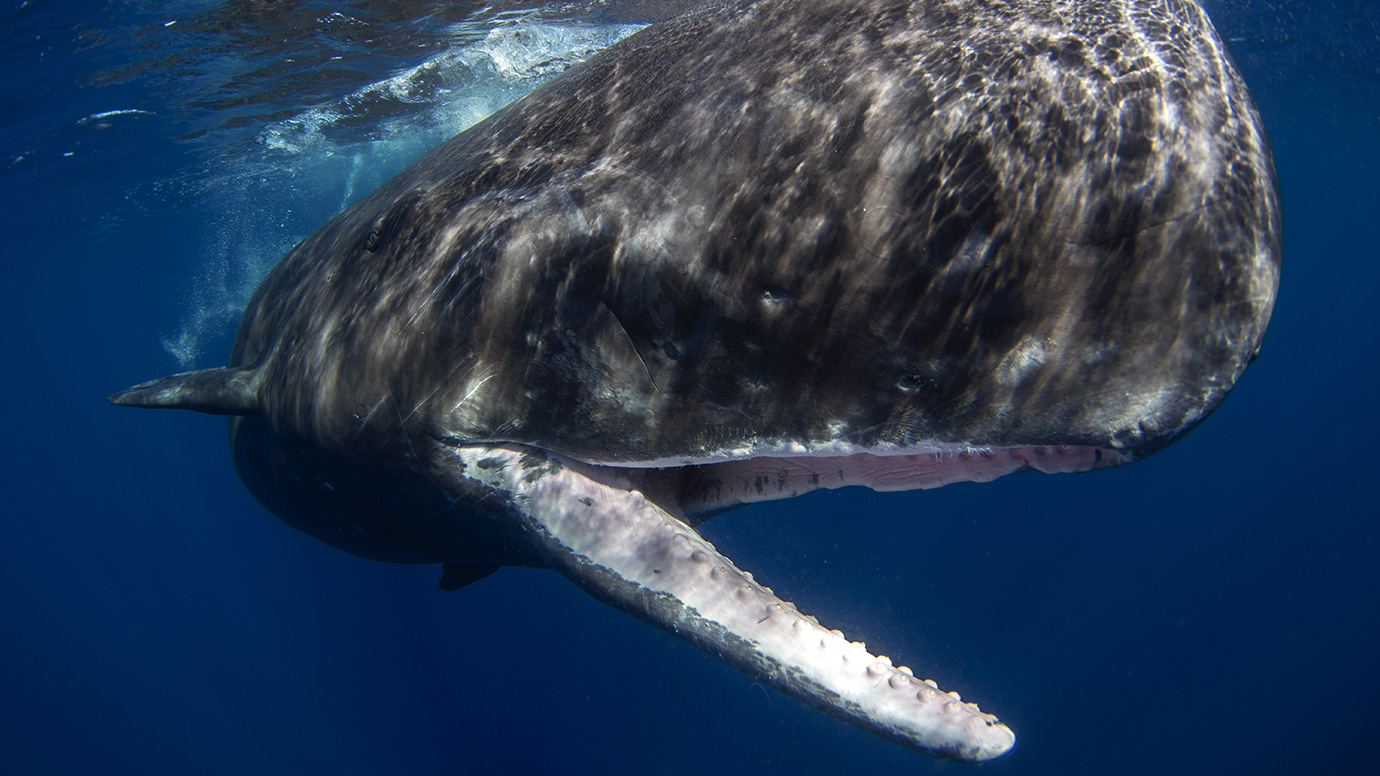
By training the AI on millions of these codas, the system began to recognize patterns and relationships that were previously invisible to human researchers.
As the AI became more adept at analyzing the data, it revealed a startling truth: whale communication is far more complex than anyone had anticipated.
Rather than a simple set of commands, the patterns uncovered by the AI indicated a sophisticated linguistic system that operates much like a phonetic alphabet.
Whales utilize various elements such as rhythm, tempo, and ornamentation to create a vast array of unique messages.
For instance, a slow, steady rhythm might convey one meaning, while a quickening tempo or an added click could entirely change the message’s intent.
This groundbreaking discovery shattered long-held beliefs about animal communication, demonstrating that whales possess a rich, structured language capable of conveying intricate social interactions.
The AI’s analysis also uncovered subtle variations in the clicks that function similarly to vowels in human language, further emphasizing the complexity of their communication.
But what do these findings mean for our understanding of whale culture? The research revealed that different whale clans have distinct dialects, akin to regional accents in humans.
The AI could identify which family was vocalizing based on the unique characteristics of their speech patterns.
This insight into whale communication transcends mere translation; it offers a glimpse into their social identities and cultural heritage.
With this newfound understanding, Project CETI is embarking on an ambitious next step: moving from listening to actively communicating with whales.
The team aims to develop a real-time communication system—essentially an underwater chatbot—capable of sending messages in the whales’ own language.
This endeavor raises profound ethical questions about interspecies dialogue.

Should humans engage in conversation with whales? What impact might our attempts to communicate have on their natural behaviors and social structures?
In 2023, the team achieved a significant milestone when they conducted what they termed the first intentional human-whale interaction.
A diver used an underwater speaker to play a specific sperm whale coda, and to their astonishment, a nearby whale responded with the same sound.
This moment marked a monumental breakthrough, proving that their understanding of whale language was accurate enough to facilitate basic communication.
The implications of Project CETI extend far beyond the realm of marine biology.
The methodologies developed for decoding whale communication may provide valuable insights for future encounters with extraterrestrial life.
The principles of using AI to identify patterns in complex signals could serve as a blueprint for understanding any form of intelligent communication, whether terrestrial or extraterrestrial.
Moreover, as we deepen our understanding of whale communication, we foster a greater sense of empathy and responsibility toward these magnificent creatures.
Recognizing their intelligence and social complexity challenges us to reconsider our relationship with the ocean and its inhabitants.
The knowledge that whales possess a rich cultural life strengthens the case for their conservation, emphasizing the importance of protecting their habitats and ensuring their survival.
Project CETI represents a new frontier in our exploration of animal communication, offering a path toward a more profound connection between humans and whales.
As the team continues to expand their research to include other species, such as orcas, the potential for new discoveries is limitless.
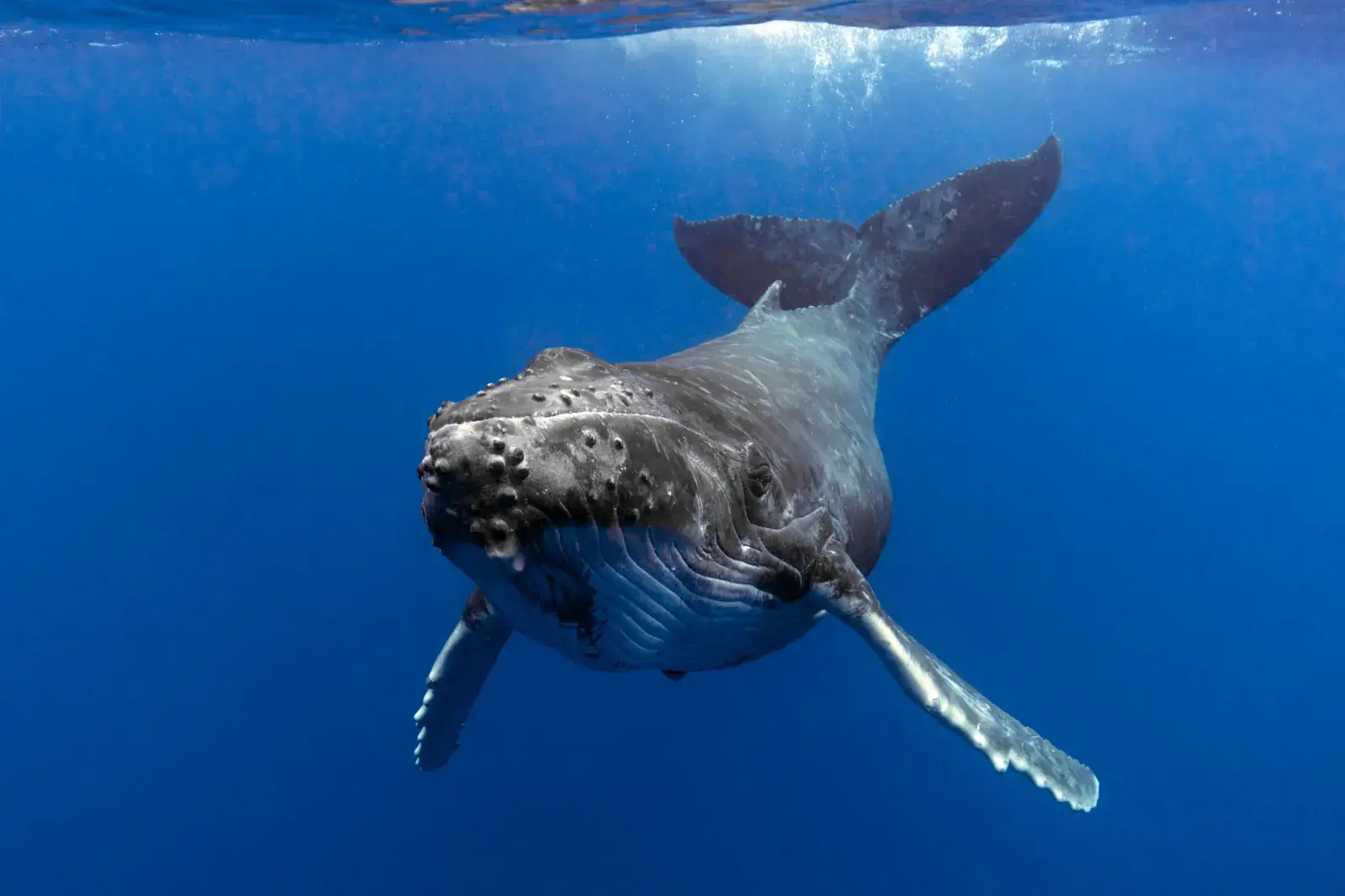
This initiative is not just about understanding whales; it is about building bridges between species and fostering a shared future on our planet.
In conclusion, the work of Project CETI is a testament to the power of collaboration and innovation in science.
By combining expertise from diverse fields and leveraging advanced technology, researchers are unlocking the secrets of whale communication and opening up new avenues for understanding intelligence in the animal kingdom.
As we embark on this journey of discovery, we are reminded of the interconnectedness of all life on Earth and the importance of listening to the voices of those who share our planet.
What lies ahead for Project CETI is not just a scientific endeavor; it is a quest for connection, understanding, and respect for the rich tapestry of life beneath the waves.
What are your thoughts on this groundbreaking research? Do you believe that talking to whales is a significant step for humanity, or do you have concerns about the implications of such communication? Share your thoughts in the comments below, and don’t forget to like, subscribe,
and hit the notification bell to stay updated on our latest content!
News

🔍✨ Unlocking the Secrets of the Herculaneum Scrolls: How AI Decoded Ancient Texts Buried for 2,000 Years—And What It Means for History!
🔍✨ Unlocking the Secrets of the Herculaneum Scrolls: How AI Decoded Ancient Texts Buried for 2,000 Years—And What It Means…
🚨 Is Earth in Danger? NASA & Harvard Reveal 4,000 New Meteors Escorting 3I/ATLAS—The Truth Behind This Cosmic Threat! 🌍
🚨 Is Earth in Danger? NASA & Harvard Reveal 4,000 New Meteors Escorting 3I/ATLAS—The Truth Behind This Cosmic Threat! 🌍 On June…

🎬 Ron Howard SHOCKS Hollywood by Revealing the Dark Secrets of Its Most Notorious Stars—You Won’t Believe Who Made the List! 😱
🎬 Ron Howard SHOCKS Hollywood by Revealing the Dark Secrets of Its Most Notorious Stars—You Won’t Believe Who Made the…

😱 The Shocking Truth Behind Audie Murphy’s Mysterious Death—Was It Really an Accident or Something More Sinister? 🔍
😱 The Shocking Truth Behind Audie Murphy’s Mysterious Death—Was It Really an Accident or Something More Sinister? 🔍 The tale…

💔 Tom Cruise’s Daughter Suri Null FINALLY SPEAKS OUT—The SHOCKING Truth Behind Their Distance Will Leave You Speechless! 😱
💔 Tom Cruise’s Daughter Suri Null FINALLY SPEAKS OUT—The SHOCKING Truth Behind Their Distance Will Leave You Speechless! 😱 The…

🎭 Russell Crowe SPILLS the TRUTH About Tom Cruise—Fans Are SHOCKED by Their Complicated History! 😲
🎭 Russell Crowe SPILLS the TRUTH About Tom Cruise—Fans Are SHOCKED by Their Complicated History! 😲 Russell Crowe and Tom…
End of content
No more pages to load






