
😱 3I/ATLAS: A Comet or a Captive? The Unfolding Mystery Behind the Sun! 😱
On October 29, 2025, the interstellar comet 3I/ATLAS will vanish behind the sun, marking a critical moment in its journey through our solar system.
Avi Loeb, a prominent astrophysicist, claims that this massive, fast-moving object may execute a hidden maneuver that could trap it in our solar system indefinitely.
The official narrative suggests that 3I/ATLAS is merely a fleeting comet, yet the early data challenges this notion.
With a nucleus potentially 20 kilometers wide and weighing over 33 billion tons, 3I/ATLAS exhibits almost zero non-gravitational acceleration despite its significant outgassing activity.
If Loeb’s hypothesis holds true, we could be witnessing the first interstellar visitor that remains with us, yet we will have no means to observe what transpires during the defining moment of its perihelion.
As October 29 approaches, a hard line is drawn across the calendar.
On that day, 3I/ATLAS will slip into the blinding region behind the sun, cutting off all Earth-based telescopes from observing its movements.
The geometry of the situation is unforgiving: Earth, the sun, and the comet will be aligned in a straight line, with our planet positioned on the wrong side of the solar glare.
For nearly six weeks, the most massive interstellar object ever detected will move unseen, its path and any changes obscured from direct observation.

This blackout is not merely a scheduling inconvenience; it means that critical moments—such as perihelion, the closest approach to the sun, and any potential orbital maneuvers—will unfold beyond our ability to monitor.
At conjunction, 3I/ATLAS will pass just beyond Earth’s distance from the sun at approximately 1.36 astronomical units.
No ground-based observatory can separate its faint glow from the overwhelming brightness of the solar furnace.
Even space telescopes like Hubble and JWST will be unable to observe it, as their safety protocols prevent them from pointing near the sun.
The practical result is a data gap extending from late October through early December, during which astrometric tracking, spectral analysis, and even basic brightness measurements will go dark.
The only hope for glimpsing 3I/ATLAS during this period rests with a few solar probes and coronagraphs, tools designed for studying solar storms rather than distant comets.
These instruments lack the sensitivity and imaging cadence necessary to detect objects as faint as 3I/ATLAS.
For most astronomers, the window of opportunity will slam shut just as the most critical chapter of this celestial story begins.
Every question regarding whether 3I/ATLAS will escape or be captured—whether it is a comet or an artifact—hangs suspended in this enforced silence.
As the clock ticks, the moment of truth will play out where no one can observe.
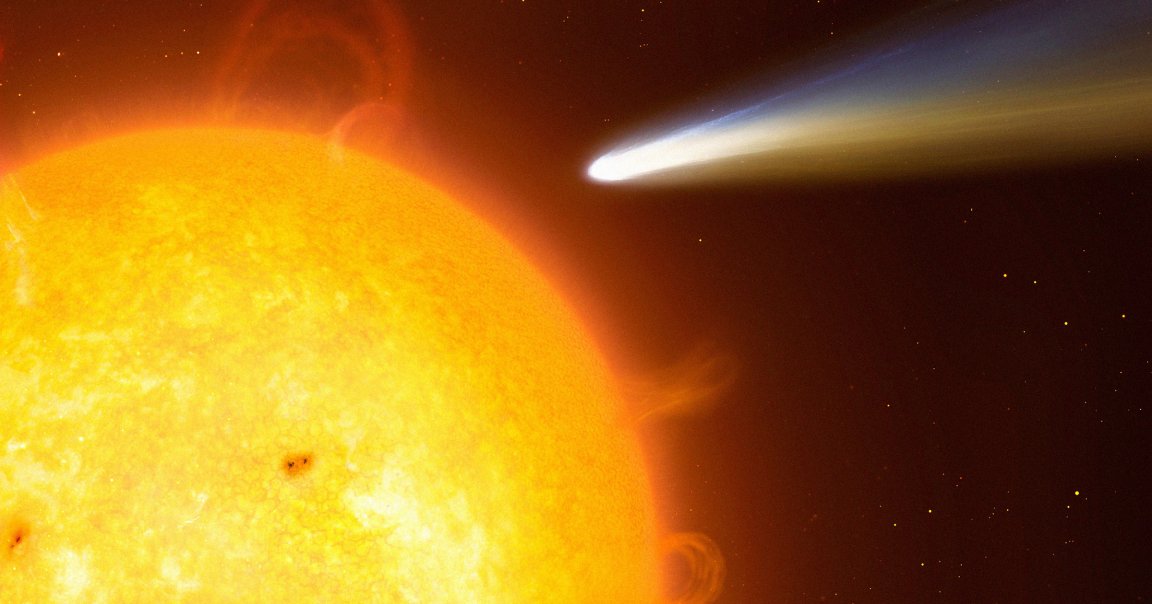
Loeb’s interest in 3I/ATLAS intensified when early photometry data arrived.
The initial size estimate of 20 kilometers across was astonishing.
For context, Oumuamua measured less than a quarter of a kilometer, while Boris, the previous interstellar comet, was about a single kilometer wide.
By comparison, 3I/ATLAS is an order of magnitude larger than any interstellar object that surveys anticipated finding.
This size estimate was not arbitrary; it was derived from the object’s brightness, corrected for distance and solar angle, and modeled against known cometary reflectivity.
With a magnitude well above 12 and no indication of a dense, optically thick coma to artificially enhance the reading, the conclusion was unavoidable: the nucleus had to be massive.
Loeb’s skepticism grew from the mathematical implications of this data.
Survey statistics predict that for every large interstellar visitor, thousands of smaller, fainter ones should have already been detected.
The Atlas survey, along with Pan-STARRS and Vera Rubin Observatory, scans the sky every clear night, specifically tuned to catch these fast-moving solar objects.
Yet, the first two interstellar discoveries were small, and suddenly, a giant appears.
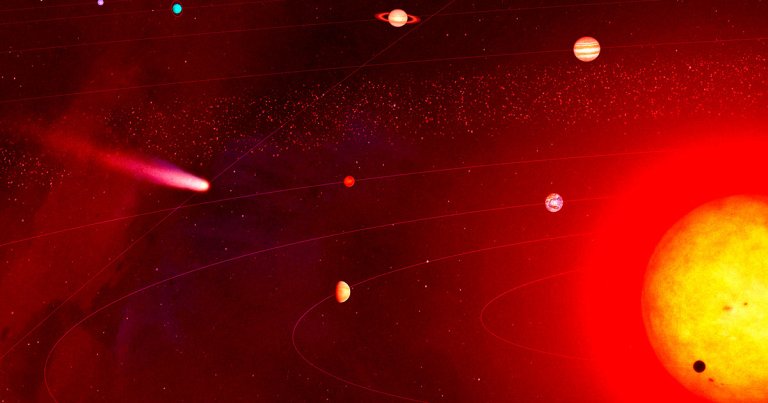
The odds, according to any population model, strain credulity.
If the size estimate holds, it either means that the surveys have overlooked a vast population of smaller bodies or that something rare and unexplained is occurring.
This is where Loeb’s argument takes shape.
A 20-kilometer interstellar object appearing so soon after the first two defies the power law expectations that underpin modern survey science.
The statistical alarm bells rang not solely because 3I/ATLAS was bright, but because its sheer scale contradicted everything astronomers believed they knew about the expected population of interstellar objects.
For Loeb, that single number—20 kilometers—became the most glaring anomaly in a growing list of peculiarities.
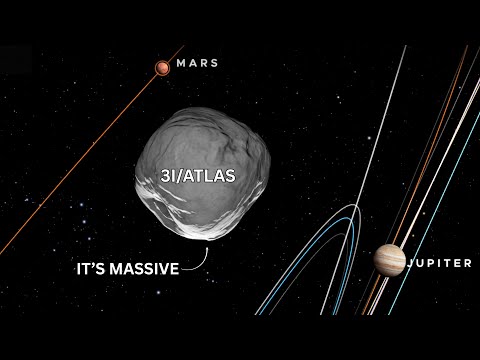
With a mass of at least 33 billion tons, 3I/ATLAS now holds a record in the annals of astronomy.
This figure, derived from dynamical modeling and the comet’s persistent brightness, dwarfs every confirmed interstellar visitor before it.
Yet, the paradox begins here.
Despite a vigorous outgassing rate of 100 to 150 kilograms per second, predominantly composed of carbon dioxide, there is no measurable non-gravitational acceleration.

In comet science, this presents a classic rocket problem.
Outgassing acts like thrusters, gently nudging the nucleus off its predicted path.
For typical comets, even modest activity leaves a detectable fingerprint in the astrometric record— a slow drift or subtle curve away from pure gravitational influence.
However, the Minor Planet Center’s global dataset, encompassing over 4,000 positional measurements, shows no such deviation for 3I/ATLAS.
The upper limit on its non-gravitational acceleration is less than 15 meters per day squared, so low that only a truly massive object could remain so unaffected.
The numbers sharpen the contradiction.
If you take the measured gas production, multiply it by the outflow velocity, and divide by the estimated mass, the expected reactive acceleration should be visible in the data.
Unless the nucleus is not only large but also remarkably dense, or the outgassing is perfectly balanced in all directions, the calculations break down.
Monte Carlo simulations explore every plausible combination of nucleus size and density.
For anything smaller than about 5 kilometers across or less dense than 1,000 kilograms per cubic meter, the math fails.
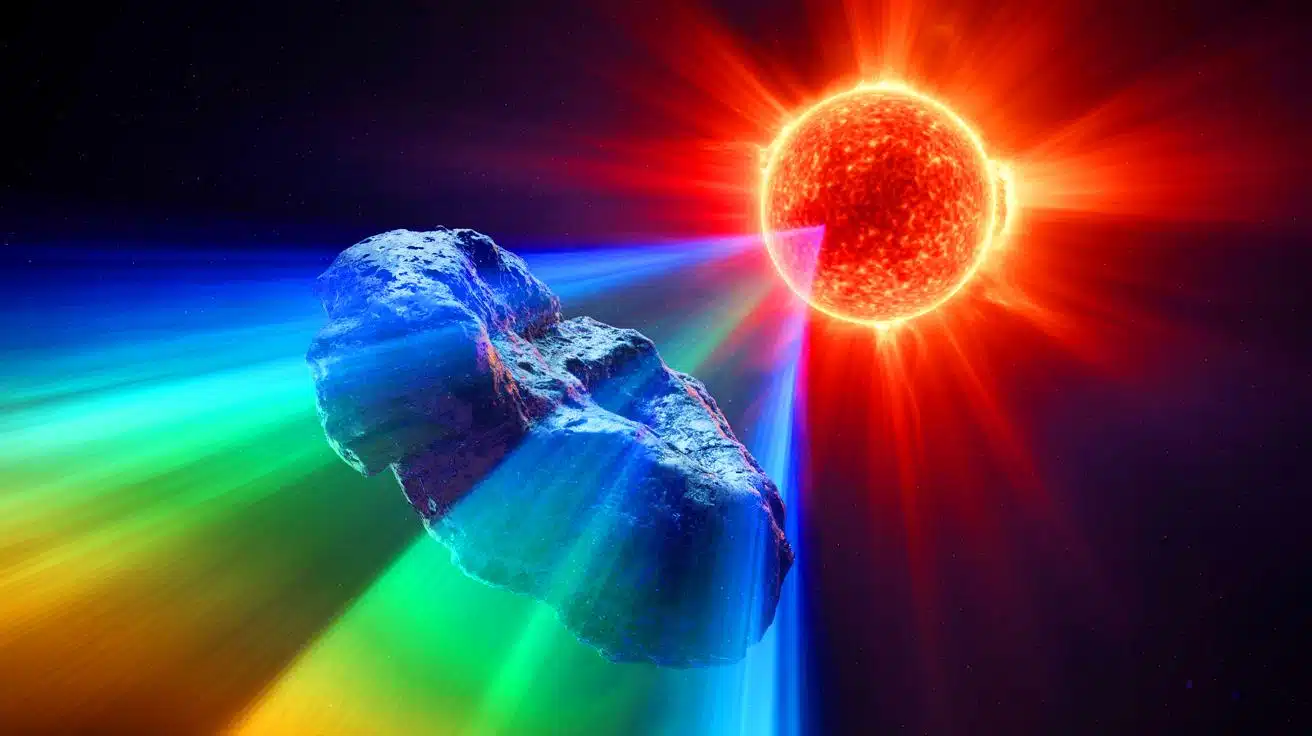
Outgassing would have propelled 3I/ATLAS off its predicted track long ago.
Only a massive solid body fits both the photometric and dynamical evidence.
Alternative explanations, such as jets firing in perfect opposition or a swarm of loosely bound fragments, require finely-tuned physics and improbable geometry.
The mainstream model struggles to reconcile the numbers without invoking statistical anomalies or special pleading.
For Loeb and his colleagues, this is not just a curiosity; it is an open invitation to explore further.
If the mass is real and the acceleration is absent, the possibility of non-natural scenarios remains open.
Survey science relies on numbers—lots of them.
For every giant object like 3I/ATLAS, population models predict that the sky should be filled with thousands of smaller, fainter interstellar wanderers.
The logic is simple: smaller bodies are far more common in every known asteroid and comet belt.
If the discovery pipeline is functioning correctly, the first interstellar objects found should be the tiniest, those that outnumber giants by orders of magnitude.
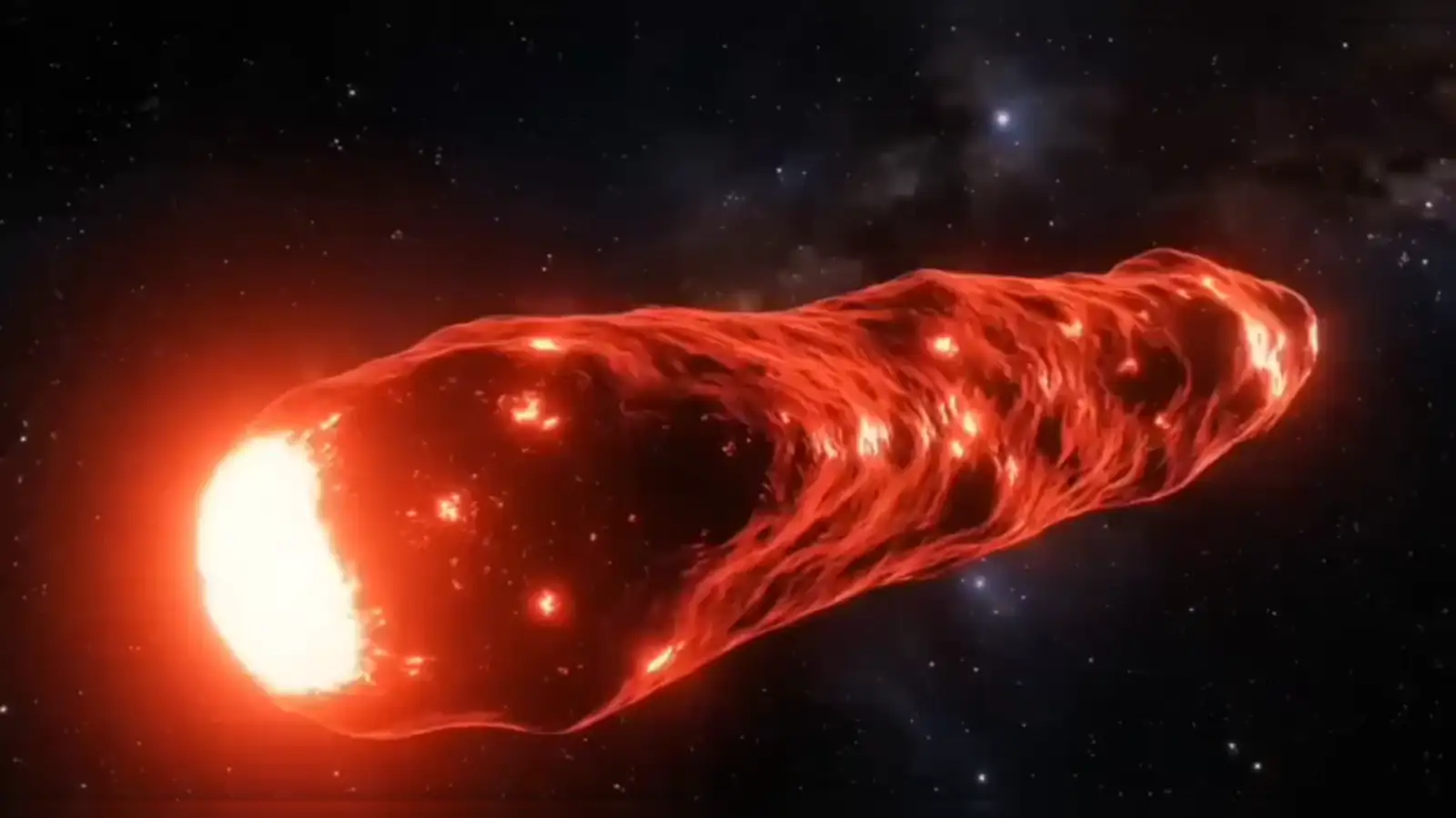
However, the record tells a different story.
The Pan-STARRS Survey, the Atlas Network, and now the Vera Rubin Observatory have scanned the sky for years, logging millions of detections.
Their sensitivity has improved to the point where objects just a few dozen meters across, if moving fast enough, would leave a trace.
The first two interstellar discoveries, Oumuamua and Boris, fit the expected trend.
Both were small, faint, and right at the detection edge.
Then, without warning, 3I/ATLAS appears—20 kilometers wide, at least 33 billion tons, blazing far above the detection threshold.
There is no swarm of smaller cousins, no gradual ramp-up in size—just a statistical leap.
Population modelers ran the numbers, and if 3I/ATLAS is typical, surveys should have found hundreds, even thousands, of smaller objects by now.
Instead, the count stands at three.
Analysts at Pan-STARRS and Vera Rubin flagged the gap in internal memos, warning that the odds of finding a giant before its smaller kin are astronomically low—less than 1 in 10,000 by some estimates.
The power law, the backbone of size distribution, appears broken.
Either the universe is concealing a vast population of faint, elusive bodies, or 3I/ATLAS is an outlier that defies every expectation.
For those tracking anomalies, this is not merely a curiosity; it signals that something fundamental in the numbers is amiss, and the story of 3I/ATLAS is already rewriting the rules.
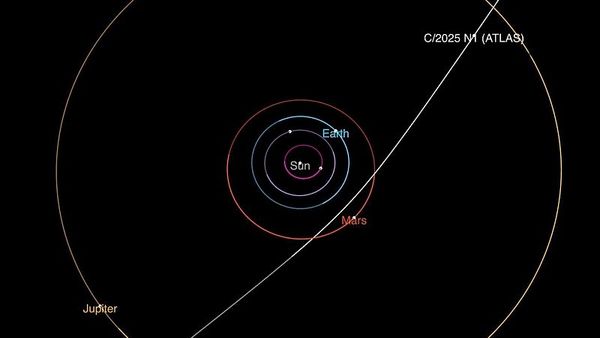
Trajectory maps for 3I/ATLAS reveal a path that closely follows the solar system’s ecliptic plane, tilted by only about 5 degrees.
For an object arriving from interstellar space, this alignment is far from ordinary.
Most known comets and asteroids, even those formed in our own solar system, follow orbits that twist and tilt through the solar neighborhood.
A random visitor from beyond should slice through at a sharp angle, its course shaped by the gravitational chaos of distant stars.
Instead, 3I/ATLAS glides almost parallel to the planetary disc, threading a corridor typically reserved for homegrown bodies.
The geometry becomes even stranger upon closer inspection.
In the weeks leading up to perihelion, 3I/ATLAS strings together a series of close encounters with major planets.
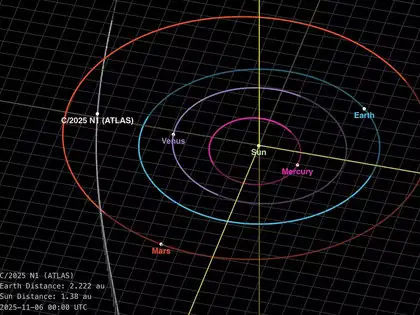
On October 3rd, it sweeps within 29 million kilometers of Mars—a distance that, by interplanetary standards, counts as a near miss.
This sequence continues, with its trajectory bringing it within striking distance of both Venus and Jupiter, stacking up a series of planetary flybys rarely seen outside of carefully planned space missions.
Orbital dynamicists crunch the numbers and find that the compounded odds of such a massive, fast-moving object threading this precise path are vanishingly small.
For each planet, the chance of a close pass is low; for three in succession, the probability drops below 1 in 1,000.
This alignment is not just a curiosity; the ecliptic-skimming orbit places 3I/ATLAS in an optimal position for gravitational nudges.
Each planetary flyby could theoretically tweak its speed or alter its trajectory.
But the real intrigue lies in how these stacked encounters set up the perihelion moment.
The trajectory appears fine-tuned, almost as if designed to maximize the potential for a dramatic maneuver near the sun.
For those tracing the boundary between natural and intentional, the flight path itself becomes a silent witness, raising questions that numbers alone cannot resolve.
The first images of 3I/ATLAS unsettled observatory teams.
Instead of the anticipated tail, a concentrated forward glow dominated the sunward side.
This brightness resisted every correction for motion smear or instrumental artifact.
Imaging analysts at Gemini South and the Very Large Telescope (VLT) scrutinized the data, searching for a technical explanation, but the asymmetry persisted.
As the comet approached the sun, the glow faded, and an ordinary tail began to stretch away, aligning with the solar wind.
Some analysts interpreted this as a trick of geometry, while others saw it as a sign of genuine change—perhaps a crust breaking open or a sudden burst of activity from beneath the surface.
Spectroscopists shifted their focus to the comet’s chemistry.
JWST’s NIRSpec captured a volatile ratio before solar conjunction that defied expectations.
Carbon dioxide outpaced water by nearly 8 to 1.
For solar system comets, water is typically the dominant volatile.
This ratio hinted at a nucleus either preserved in deep freeze since its journey through interstellar space or covered in a layer of carbon dioxide frost.
Calibration teams urged caution, flagging the result as provisional until more data could confirm or challenge the finding.
Theories proliferated.
Some suggested a carbon dioxide crust shielding a water-rich interior, while others pointed to possible contamination or model errors.
The debate spilled into late-night discussions, with every team defending their interpretations.
Then, in late September, a sudden surge of green emission swept through the coma.
Both amateur and professional astronomers reported the shift, tracing it to C2 or CN molecules fluorescing under solar ultraviolet light.
For most comets, green emissions appear near perihelion, but here they arrived early and bright, outpacing predictions.
This color change raised new questions about the layering of volatile ices and the comet’s surface chemistry.
Each anomaly—optical, chemical, chromatic—stacked uncertainty upon uncertainty.
With the comet slipping behind the sun, answers will have to wait, leaving its true nature suspended between artifact and revelation.
Loeb’s case hinges on a window so brief it barely registers on the cosmic clock.
At perihelion on October 29th, 3I/ATLAS will be moving at nearly 44 kilometers per second—an interstellar bullet arcing just 1.36 astronomical units from the sun.
For any object on a hyperbolic path, this is the one moment where a slight push, a change in speed of just a few kilometers per second, could tip the balance from escape to capture.
The physics involved are unforgiving.
To transition from an outbound interstellar trajectory into a bound solar orbit, 3I/ATLAS would require a delta V of roughly 8 kilometers per second delivered at the moment of closest approach.
Anything less, and the comet will race on, never to return.
This maneuver, if it occurs, will be invisible.

The sun’s glare will blind every telescope on Earth.
Even the best space-based coronagraphs will struggle to detect a faint, fast-moving speck against the solar backdrop.
Detection limits for these instruments hover around magnitudes 8 to 10—far too bright for a comet like 3I/ATLAS during solar conjunction.
The practical effect is that any change in trajectory, any burst of activity, or engineered thrust will go unnoticed until the comet reemerges weeks later.
The Mars flyby, just 29 million kilometers away on October 3rd, offered a brief hope for direct imaging.
Planners for the HiRISE camera debated the possibility, running calculations on angular size and apparent brightness.
However, the numbers shut the door; at that distance, a 20-kilometer object subtends less than 0.15 arcseconds, smaller than HiRISE’s diffraction limit.
Even as a point source, 3I/ATLAS would be too faint for detection—no surface features, no jets, no probe drops.
The most powerful camera orbiting Mars will only observe the darkness.

For Loeb and his supporters, this enforced invisibility is both a frustration and an opportunity.
If a maneuver is attempted, the evidence will be recorded in the comet’s orbit, waiting to be analyzed when 3I/ATLAS steps back into view.
Tom Statler, NASA’s lead small body scientist, draws a clear line in the dust: “It looks like a comet. It does comet things. It very, very strongly resembles, in just about every way, the comets that we know.”
That is the baseline.
The mainstream view holds that 3I/ATLAS fits awkwardly within the broad and unruly family of natural comets.
Unusual mass, statistical fluke, odd chemistry—comets are messy.
Trajectory quirks and planetary flybys multiply coincidences across the vastness of space.
Astronomers like Karen Meech and Quanza echo this stance, pointing to selection bias, patchy survey history, and the unpredictable behavior of volatile-rich bodies.
For them, the burden of proof lies squarely on the extraordinary claim.

Loeb approaches the same data from a different angle.
He does not use a formal scale, but his argument stacks anomalies: mass, size, ecliptic alignment, planetary encounters, and chemistry.
The more these features cluster, the stronger the case becomes for paying close attention.
In Loeb’s view, when enough oddities pile up, the only responsible course of action is to maximize observation, especially when a rare event like perihelion behind the sun could conceal a defining maneuver.
He never assigns a specific number, but the principle is straightforward: if the list of outliers grows long, treat the object as if the stakes are high.
The next critical window for observation opens in early December when 3I/ATLAS reemerges from solar conjunction.
Every major observatory will be prepared to check for changes in orbit, rotation, and spectrum.
By March 2026, as 3I/ATLAS approaches Jupiter, a second round of data will test whether its path remains hyperbolic or if something has changed.
The decision framework is not about tallying anomalies; it is about tracking concrete, falsifiable predictions.

If the orbit remains unchanged, the natural model holds.
If it does not, the debate will enter a new phase.
For now, the only certainty is that the story of 3I/ATLAS depends on what the data reveal when the blackout ends.
As the comet passes behind the sun on October 29, it will cut off all Earth-based observations at the precise moment Loeb claims a reverse maneuver could anchor it in our solar system.
The object’s estimated size of 20 kilometers and mass of at least 33 billion tons, combined with negligible non-gravitational acceleration and a carbon dioxide to water ratio near 8 to 1, defy expectations for a natural interstellar comet.
Yet, as of today, no direct evidence confirms any artificial origin.
NASA’s official position remains that comets can exhibit unpredictable behaviors, and many questions—such as the source of its green spectral phase and the true nature of its trajectory—remain unresolved.
When 3I/ATLAS emerges in December, its new orbital elements and chemical signatures will provide the final test.
Until then, the only certainty is the necessity for rigorous observation and open scientific debate.
News

😱 Is Ian Gillan Next? Shocking Retirement Rumors Emerge After David Coverdale’s Exit! 😱 – HTT
😱 Is Ian Gillan Next? Shocking Retirement Rumors Emerge After David Coverdale’s Exit! 😱 In the world of rock music,…

😱 The Shocking Truth Behind Ian Gillan’s Retirement Plans: Is It Time to Say Goodbye? 😱 – HTT
😱 The Shocking Truth Behind Ian Gillan’s Retirement Plans: Is It Time to Say Goodbye? 😱 Ian Gillan, the legendary…
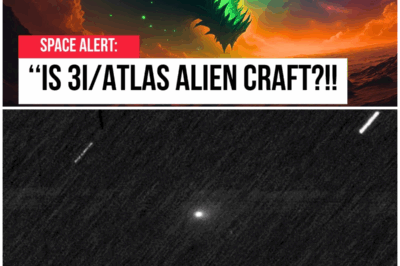
😱 Is 3I/ATLAS a Cosmic Seed or a Galactic Trojan Horse? Prepare to Be Amazed! 😱 – HTT
New Evidence Sheds Light on the Enigmatic 3I/ATLAS: A Cosmic Visitor Defying Expectations Since the dawn of telescopic astronomy, interstellar…

😱 From Waltz to Heartfelt Confession: Andre Rieu’s Emotional Birthday Surprise! 😱 – HTT
😱 From Waltz to Heartfelt Confession: Andre Rieu’s Emotional Birthday Surprise! 😱 What’s the one love song that always melts…
😱 From Wedding Fiddler to Billboard King: How Andre Rieu Redefined Classical Music! 😱 – HTT
😱 From Wedding Fiddler to Billboard King: How Andre Rieu Redefined Classical Music! 😱 Andre Rieu did the unthinkable. He…

😱 Heartbreak in Rock: The Real Reason Behind Ace Frehley’s Untimely Death! 😱 – HTT
😱 Heartbreak in Rock: The Real Reason Behind Ace Frehley’s Untimely Death! 😱 Ace Frehley, the legendary guitarist and founding…
End of content
No more pages to load






